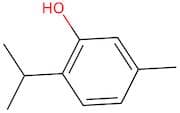
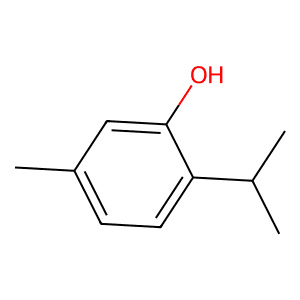
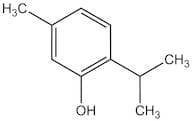
CAS 89-83-8
:Timolo
- 1-Methyl-3-hydroxy-4-isopropylbenzene
- 2-Hydroxy-1-isopropyl-4-methylbenzene
- 2-Isopropyl-5-Methylphenol
- 3-Hydroxy-p-cymene
- 3-Methyl-6-isopropylphenol
- 5-Methyl-2-(1-methylethyl)phenol
- 5-Methyl-2-isopropyl-1-phenol
- 5-Methyl-2-isopropylphenol
- 5-Methyl-2-propan-2-ylphenol
- 6-Isopropyl-3-methylphenol
- 6-Isopropyl-m-cresol
- Apiguard
- Nsc 11215
- Nsc 47821
- Nsc 49142
- T 0501
- Thyme camphor
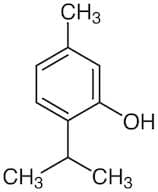
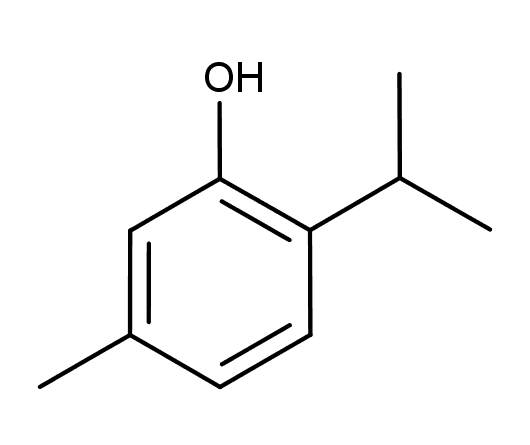
- Thymol
- Thymol Chrystals
- Timol
- m-Thymol
- p-Cymen-3-ol
- Phenol, 5-methyl-2-(1-methylethyl)-
- S NO 879
- THYMOL BLUE
- THYMOL BLUE INDICATOR SOLUTION
- FEMA 3066
- PHYMOLSULFONPHTHALEIN
- TB
- LABOTEST-BB LT00454334
- THYMOL BLUE ETHANOL (50)
- THYMOLSULFONEPHTHALEIN
- Vedi altri sinonimi
Thymol
CAS:Formula:C10H14OPurezza:>99.0%(GC)Colore e forma:White powder to lumpPeso molecolare:150.22Thymol, 98+%
CAS:This Thermo Scientific Chemicals brand product was originally part of the Alfa Aesar product portfolio. Some documentation and label information may refer to the legacy brand. The original Alfa Aesar product / item code or SKU reference has not changed as a part of the brand transition to Thermo SciFormula:C10H14OPurezza:98+%Colore e forma:White, Crystals or powder or crystalline powderPeso molecolare:150.22Thymol
CAS:Thymol analytical standard provided with w/w absolute assay, to be used for quantitative titration.Formula:C10H14OPurezza:(GC) ≥99%Colore e forma:SolidPeso molecolare:150.22Thymol
CAS:Monophenols not elsewhere specified or includedFormula:C10H14OColore e forma:White PowderPeso molecolare:150.104475-methyl-2-(propan-2-yl)phenol
CAS:Formula:C10H14OPurezza:99%Colore e forma:SolidPeso molecolare:150.2176Thymol
CAS:Formula:C10H14OPurezza:≥ 99.0%Colore e forma:White crystals or crystalline powderPeso molecolare:150.22Smart Solutions™ TerpiMix Kit 2500 μg/mL in Isopropanol
CAS:Prodotto controllato- 10458-14-7
- 105-87-3
- 106-22-9
- 106-24-1
- 106-25-2
- 111-02-4
- 112-14-1
- 1139-30-6
- 116-26-7
- 1196-01-6
- 123-35-3
- 124-76-5
- 125-12-2
- 127-91-3
- 13466-78-9
- 138-86-3
- 13877-91-3
- 2217-02-9
- 2244-16-8
- 22567-21-1
- 3387-41-5
- 4602-84-0
- 4630-07-3
- 464-43-7
- 464-45-9
- 4674-50-4
- 469-61-4
- 4695-62-9
- 470-82-6
- 489-86-1
- 498-15-7
- 499-75-2
- 502-61-4
- 515-69-5
- 527-84-4
- 535-77-3
- 5392-40-5
- 546-79-2
- 546-80-5
- 562-74-3
- 586-62-9
- 638-36-8
- 675-20-7
- 6753-98-6
- 7212-44-4
- 7541-49-3
- 76-22-2
- 77-53-2
- 7787-20-4
- 78-70-6
- 79-92-5
- 80-56-8
- 87-44-5
- 89-78-1
- 89-79-2
- 89-81-6
- 89-82-7
- 89-83-8
- 98-55-5
- 99-83-2
- 99-85-4
- 99-86-5
- 99-87-6
Colore e forma:KitThymol
CAS:Thymol, a monoterpene phenol in essential oils from Lamiaceae and others, has antioxidant and antimicrobial properties.Formula:C10H14OPurezza:99.88%Colore e forma:Colourless Solid CrystallinePeso molecolare:150.22Thymol
CAS:Monovalent phenolFormula:C10H14OPurezza:≥ 95.0 % (GC)Colore e forma:CrystalsPeso molecolare:150.22Thymol
CAS:Prodotto controllatoApplications Thymol is an antimicrobial compound which can increase the efficacy of antibiotics involving drug resistant bacteria. It inhibits growth and lactate production as well as reduces cellular glucose uptake within the bacteria.
Not a dangerous good if item is equal to or less than 1g/ml and there is less than 100g/ml in the package
References Palaniappan, K. et al.: Int. J. Food Microbio., 140, 164 (2010); Evans, J. et al.: Curr. Microbiol., 41, 336 (2000);Formula:C10H14OColore e forma:NeatPeso molecolare:150.22Thymol
CAS:Thymol is a naturally occurring phenolic compound, which is derived primarily from the essential oil of thyme (Thymus vulgaris) and other plants. It is known for its antimicrobial and antifungal properties and operates by disrupting the cellular membrane of microorganisms, leading to leakage of cellular components and eventual cell death. Thymol interacts with the lipid bilayer of cell membranes, increasing permeability and altering enzyme activity within the cells.
Formula:C10H14OPurezza:Min. 98 Area-%Colore e forma:PowderPeso molecolare:150.22 g/mol