Oligosaccaridi
Sottocategorie di "Oligosaccaridi"
- Glicosidi aminoetilici, glicosidi amminopropilici(14 prodotti)
- Glicani leganti Asn(33 prodotti)
- Oligosaccaridi biotinati(13 prodotti)
- Gruppi sanguigni e antigeni di Lewis(11 prodotti)
- Oligosaccaridi del gruppo sanguigno(13 prodotti)
- Cellooligosaccaridi(1 prodotti)
- Ciclodestrine(183 prodotti)
- Disaccaridi(190 prodotti)
- Oligosaccaridi dell'epitopo(19 prodotti)
- Fruttoligosaccaridi(2 prodotti)
- Oligosaccaridi funzionali(556 prodotti)
- Oligosaccaridi funzionalizzati(1 prodotti)
- Galactosamina(41 prodotti)
- Galattosio(261 prodotti)
- Galb (1-3) GalNAc(21 prodotti)
- Serie ganglio(11 prodotti)
- Serie Globo e Isoglobo(17 prodotti)
- Glucosamina(128 prodotti)
- Acidi glucuronici(52 prodotti)
- Glicoproteine, glicopeptidi(59 prodotti)
- Glicosaminoglicani(26 prodotti)
- Oligosaccaridi del latte umano(22 prodotti)
- O-Glicani etichettati(9 prodotti)
- Oligosaccaridi etichettati(36 prodotti)
- LacNAc(53 prodotti)
- Serie Lacto e Neolacto(14 prodotti)
- Latto-N-biosio(10 prodotti)
- Lattooligosaccaridi(7 prodotti)
- Oligosaccaridi fissati con linker(19 prodotti)
- Maltooligosaccaridi(6 prodotti)
- Oligosaccaridi del latte(31 prodotti)
- N-Glicani(149 prodotti)
- Glicosidi naturali(177 prodotti)
- Oligosaccaridi naturali(103 prodotti)
- O-Glicano(18 prodotti)
- Building Blocks di Oligosaccaridi(7 prodotti)
- Sostituzione di oligosaccaridi(2 prodotti)
- Oligosaccaridi per componente zucchero(225 prodotti)
- Oligose(24 prodotti)
- Altri Oligosaccaridi(14 prodotti)
- Oligomeri PEG(33 prodotti)
- Zuccheri fosfatati(17 prodotti)
- Zuccheri protetti(526 prodotti)
- Reagenti per la sintesi degli oligosaccaridi(254 prodotti)
- Glicani leganti Ser, Thr(9 prodotti)
- Oligosaccaridi sialilati(3 prodotti)
- Sfingoglicolipidi(42 prodotti)
- Aminoacidi dello zucchero, peptidi dello zucchero(20 prodotti)
- Antigeni dello zucchero(31 prodotti)
- Building Blocks Zuccherini per Oligosaccaridi Bersaglio(225 prodotti)
- Coniugati di zucchero(100 prodotti)
- Zuccheri solforati(16 prodotti)
- Tetrasaccaridi(34 prodotti)
- Trisaccaridi e oltre(95 prodotti)
- Xilooligosaccaridi(5 prodotti)
Trovati 2306 prodotti di "Oligosaccaridi"
Methyl 2-acetamido-2-deoxy-3-O-(a-D-galactopyranosyl)-a-D-galactopyranoside
Methyl 2-acetamido-2-deoxy-3-O-(a-D-galactopyranosyl)-a-D-galactopyranoside is a synthetic, fluorinated glycoside that is used as a building block for the synthesis of complex carbohydrates. Methyl 2-acetamido-2-deoxy-3-O-(a-D-galactopyranosyl)-a-D-galactopyranoside can be used in either Click or Fluorination reactions to synthesize oligosaccharides and monosaccharides. It has been shown to react with ethylene glycol to form methyl 2,6 -O-[(3,4,5,6 -tetra‑O‑acetyl‑β‑D‑galactopyranosyl)α -L‑idopyranosyl]-α -L‑idopyranose. Methyl 2,6 -Purezza:Min. 95%Glycyl-chitobiose
Glycyl-chitobiose is an oligosaccharide that can be synthesized from glycerol and chitobiose. This product is often used as a building block for the synthesis of complex carbohydrate molecules. The purity of Glycyl-chitobiose is greater than 98% and it has been modified with fluorine, methyl, and click chemistry. The CAS number for this product is 627-14-1.Formula:C18H32N4O11Purezza:Min. 95%Peso molecolare:480.47 g/molCarboxymethyl-dextran sodium 20-30% COOH, average molecular weight 150000
CAS:Drug carrier for cancer therapy & imaging, biocompatible, soluble, biodegradableColore e forma:PowderLewis B tetrasaccharide
CAS:Lewis B tetrasaccharide (LBT) is a glycosylated oligosaccharide that is found in the outer membrane of human pathogens, such as Helicobacter pylori. LBT has been shown to inhibit the growth of cancer cells and may be used as a potential therapeutic agent for cancer treatment. It has also been shown to have structural features similar to those found in inflammatory bowel disease patients, suggesting that it may play a role in regulating bowel inflammation. LBT is recognized by monoclonal antibodies and can be used to detect H. pylori in biological samples. Lewis B tetrasaccharide binds with methyl glycosides on human erythrocytes, which inhibits the polymerase chain reaction (PCR). This inhibition leads to reduced DNA synthesis and a decrease in bacterial replication, making it an effective antimicrobial agent.Formula:C26H45NO19Purezza:Min. 90%Colore e forma:White PowderPeso molecolare:675.63 g/mol2-O-(a-D-Galactopyranosyl)-D-glucopyranose
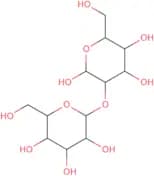
CAS:2-O-(a-D-Galactopyranosyl)-D-glucopyranose is a disaccharide consisting of two monosaccharides, glucose and galactose. It also contains a hydroxy group on the second carbon atom in the molecule. 2-O-(a-D-Galactopyranosyl)-D-glucopyranose is found in some plants including sugarcane, sugar beet, and sweet potatoes. This disaccharide is broken down by enzymes called beta-galactosidases into its two monosaccharides. Beta-galactosidases are used as an enzyme therapy to treat certain genetic disorders that affect the breakdown of carbohydrates.Formula:C12H22O11Purezza:Min. 95%Peso molecolare:342.3 g/molLactitol anhydrous
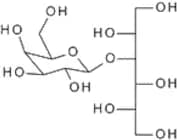
CAS:Lactitol is a polyol that is used as a sweetener and has the potential to cause diarrhea. It belongs to the group of sugar alcohols, which are not completely digested by humans. Lactitol is produced from lactose, which is derived from milk. The main clinical relevance of lactitol is its high intestinal permeability, low caloric value, and ability to lower blood glucose levels in diabetics. Lactitol undergoes microbial metabolism through the action of certain bacteria in the colon and can be found in products such as probiotics and food supplements. It has been shown to have beneficial effects on chronic viral hepatitis and may be used for treatment of bacterial translocation. Lactitol also inhibits pge2 production in mice with colitis, leading to decreased inflammatory responses in their small intestines and colon. This inhibition may also lead to suppression of tumor growth or promotion of apoptosis in colorectal cancer cells by inhibiting protein synthesis and cell division.br>Formula:C12H24O11Purezza:Min. 95%Colore e forma:PowderPeso molecolare:344.31 g/molDifucosyllacto-N-tetraose
Difucosyllacto-N-tetraose is a lacto-n-fucopentaose that has been shown to be secreted by human milk. The index of this oligosaccharide is not significantly different between breastfed and formula-fed infants, which indicates that it is not influenced by the type of infant feed. Difucosyllacto-N-tetraose can be used as a marker for the frequency of infections in neonates and infants, because its levels are decreased in cases of infection. This oligosaccharide is also related to the diversity of oligosaccharides in colostrum, as it is one component of a subset found only in colostrum samples from healthy mothers.
Formula:C38H65NO29Purezza:Min. 95%Peso molecolare:999.92 g/molLaminaripentaose
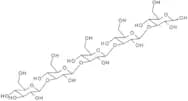
CAS:Ex algal/bacterial polysaccharides-value in b1-3 glucanase assays & diagnosticsFormula:C30H52O26Purezza:Min. 85 Area-%Colore e forma:PowderPeso molecolare:828.72 g/molLipopolysaccharide - from Porphyromonas gingivalis
CAS:Lipopolysaccharide (LPS) is a molecule that is produced by Porphyromonas gingivalis. This molecule is also found in the outer membranes of Gram-negative bacteria and has been shown to have many effects on animal tissues. LPS activates HIF-1α, which leads to the production of inflammatory cytokines such as necrosis factor (TNF), and interferon regulatory factors (IRFs). These molecules signal for the production of more LPS. LPS also causes tissue growth and development by activating growth factors such as insulin-like growth factor 1. LPS also activates immune cells through signaling with chemokine receptors, promoting inflammation.Purezza:Min. 95%Colore e forma:SolidLactobionic acid ethyl ester
Lactobionic acid ethyl ester is a custom synthesis of an oligosaccharide that is modified by fluorination, methylation, and click modification. Lactobionic acid ethyl ester is synthesized from the sugar D-glucose and the monosaccharide D-galactose. This product can be used as a substitute for sucrose in food products as it has similar taste, texture and sweetness. It also has many other applications such as being used in the manufacture of polysaccharides and complex carbohydrates.Purezza:Min. 95%4-Aminobutyl 1,3-a-1,6-a-D-mannotriose
4-Aminobutyl 1,3-a-1,6-a-D-mannotriose is a custom synthesis that belongs to the category of oligosaccharides and polysaccharides. It is an aminotriose with a methyl group at the C4 position. The fluorinated glucose moiety and the 4-aminobutylic acid residue are in an alpha configuration. This oligosaccharide has been modified by click chemistry and features high purity. The modification was carried out by condensing the sugar with a boronic acid and then reacting this with an azide group. The resulting product is then reacted with a maleimide to create a conjugate that can be used in bioconjugation reactions.Purezza:Min. 95%GM1-Pentasaccharide
CAS:GM1 pentasaccharide (sodium salt) has a core tetrasaccharide structure (Galβ1,3GalNAcβ1,4Galβ1,4Glc) with a single sialic acid residue linked α2,3 to the inner galactose residue (Ledeen, 2009). GM1 pentasaccahride is the carbohydrate moiety of GM1 ganglioside. GM1 ganglioside interacts and modulates tyrosine kinases, such a,s neural tropomyosin receptor kinase A (TrkA), by inducing the release of neurotrophins from fibroblast cells and the epidermal growth factor receptor (EGFR) (Higuero, 2009). GM1 ganglioside is also found in epithelial membranes; it is a key element for bacterial toxicity and viral infection as it acts as a receptor for the B-subunits of heat-labile toxin, cholera toxin, rotavirus, and simian virus 40. GM1 ganglioside also has the ability to bind amyloid-β proteins and is involved in Alzheimerâs pathogenesis (Chiricozzi, 2020).Formula:C37H62N2O29Purezza:Min. 95%Colore e forma:PowderPeso molecolare:998.88 g/mol6'-N-Glycolylneuraminyl-D-lactose sodium salt
6'-N-Glycolylneuraminyl-D-lactose sodium salt is a custom synthesis that provides high purity and custom synthesis. It is a complex carbohydrate with a CAS number of 24932-91-0 and an Oligosaccharide, Monosaccharide, saccharide Carbohydrate. This product is Fluorination, Glycosylation, Synthetic, Methylation, Modification.
Purezza:Min. 95%Raffinose-sp-biotin
Raffinose-sp-biotin is a Custom synthesis, Modification, Fluorination, Methylation, Monosaccharide, Synthetic, Click modification, Oligosaccharide, saccharide. It is available in CAS No. and has the molecular formula C6H14O6. Raffinose-sp-biotin is a polysaccharide with a complex carbohydrate structure.Purezza:Min. 95%Carboxymethyl cellulose sodium - Viscosity 1400 - 2000cps
CAS:Food additive; soil suspension polymer in detergents; thickening agentFormula:(C6H7O2(OH)k(OCH2COONa)m)nPurezza:Min. 95%Colore e forma:White PowderPeso molecolare:Polymer2-Azidoethyl 2-O-(2-acetamido-2-deoxy-b-D-glucopyranosyl)-a-D-mannopyranoside
2-Azidoethyl 2-O-(2-acetamido-2-deoxy-b-D-glucopyranosyl)-a-D-mannopyranoside is a carbohydrate that is a modification of the saccharide oligosaccharide. It has been synthesized by custom synthesis and has high purity, methylation, glycosylation and click modification.Formula:C16H28N4O11Purezza:Min. 95%Peso molecolare:452.41 g/mol1,4-b-D-Xylotetraose decasulfate sodium salt
1,4-b-D-Xylotetraose decasulfate sodium salt is a highly purified and custom synthesized carbohydrate. It is used as a reagent in biochemical research. 1,4-b-D-Xylotetraose decasulfate sodium salt can be modified with various reagents to produce desired properties for use in various applications. Modifications can include methylation, saccharide, Polysaccharide, Click modification, or Modification. Carbohydrate modifications can include Oligosaccharide or Custom synthesis. Fluorination of 1,4-b-D-Xylotetraose decasulfate sodium salt is an available modification that produces the product with high purity and reduced viscosity. 1,4-b-D-Xylotetraose decasulfate sodium salt has a CAS number of 52878-68-9 and is available for custom synthesis atPurezza:Min. 95%k-Carratetraitol disulfate disodium salt
k-carrageenan derived tetrasaccharide alcohol disulfate+(3-6 anhydrogalactose)Formula:C24H38O25S2Na2Purezza:Min. 95%Peso molecolare:836.66 g/molG1F Glycan, 2-AB labelled
G1F Glycan, 2-AB labelled is a complex carbohydrate that is modified by the addition of fluorine and saccharide. It can be custom synthesized to order with a purity of >98% and is available from Sigma-Aldrich.Purezza:Min. 95%Trehalose-6-vanadate
Trehalose-6-vanadate is a complex carbohydrate that has been modified by the addition of a fluorine atom to the sugar. It is synthesized from the sugar trehalose and vanadium pentoxide in a one-step reaction. Trehalose-6-vanadate can be used as a methylation reagent for saccharides, polysaccharides, oligosaccharides, and other carbohydrates. It can also be used in click chemistry, modification of proteins with carbohydrates, glycosylation reactions, and as a synthetic sugar. Trehalose-6-vanadate is highly pure and stable in solution.Purezza:Min. 95%