Oligosaccaridi
Sottocategorie di "Oligosaccaridi"
- Glicosidi aminoetilici, glicosidi amminopropilici(14 prodotti)
- Glicani leganti Asn(33 prodotti)
- Oligosaccaridi biotinati(13 prodotti)
- Gruppi sanguigni e antigeni di Lewis(11 prodotti)
- Oligosaccaridi del gruppo sanguigno(13 prodotti)
- Cellooligosaccaridi(1 prodotti)
- Ciclodestrine(183 prodotti)
- Disaccaridi(189 prodotti)
- Oligosaccaridi dell'epitopo(19 prodotti)
- Fruttoligosaccaridi(2 prodotti)
- Oligosaccaridi funzionali(554 prodotti)
- Oligosaccaridi funzionalizzati(1 prodotti)
- Galactosamina(41 prodotti)
- Galattosio(261 prodotti)
- Galb (1-3) GalNAc(21 prodotti)
- Serie ganglio(11 prodotti)
- Serie Globo e Isoglobo(17 prodotti)
- Glucosamina(128 prodotti)
- Acidi glucuronici(51 prodotti)
- Glicoproteine, glicopeptidi(59 prodotti)
- Glicosaminoglicani(26 prodotti)
- Oligosaccaridi del latte umano(22 prodotti)
- O-Glicani etichettati(9 prodotti)
- Oligosaccaridi etichettati(36 prodotti)
- LacNAc(53 prodotti)
- Serie Lacto e Neolacto(14 prodotti)
- Latto-N-biosio(10 prodotti)
- Lattooligosaccaridi(7 prodotti)
- Oligosaccaridi fissati con linker(19 prodotti)
- Maltooligosaccaridi(6 prodotti)
- Oligosaccaridi del latte(31 prodotti)
- N-Glicani(149 prodotti)
- Glicosidi naturali(177 prodotti)
- Oligosaccaridi naturali(103 prodotti)
- O-Glicano(18 prodotti)
- Building Blocks di Oligosaccaridi(7 prodotti)
- Sostituzione di oligosaccaridi(2 prodotti)
- Oligosaccaridi per componente zucchero(225 prodotti)
- Oligose(24 prodotti)
- Altri Oligosaccaridi(14 prodotti)
- Oligomeri PEG(33 prodotti)
- Zuccheri fosfatati(17 prodotti)
- Zuccheri protetti(526 prodotti)
- Reagenti per la sintesi degli oligosaccaridi(254 prodotti)
- Glicani leganti Ser, Thr(9 prodotti)
- Oligosaccaridi sialilati(3 prodotti)
- Sfingoglicolipidi(42 prodotti)
- Aminoacidi dello zucchero, peptidi dello zucchero(20 prodotti)
- Antigeni dello zucchero(31 prodotti)
- Building Blocks Zuccherini per Oligosaccaridi Bersaglio(225 prodotti)
- Coniugati di zucchero(100 prodotti)
- Zuccheri solforati(16 prodotti)
- Tetrasaccaridi(34 prodotti)
- Trisaccaridi e oltre(95 prodotti)
- Xilooligosaccaridi(5 prodotti)
Trovati 2317 prodotti di "Oligosaccaridi"
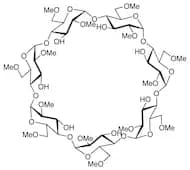
2,6-Di-O-methyl-β-cyclodextrin
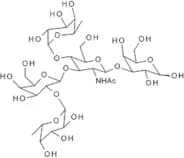
CAS:Formula:C56H98O35Purezza:>95.0%(HPLC)Colore e forma:White to Light yellow powder to crystalPeso molecolare:1,331.37Lewis B pentasaccharide
CAS:Lewis B pentasaccharide is a custom-synthesized carbohydrate that belongs to the Modification, saccharide, Oligosaccharide, sugar category. It is an oligosaccharide with a non-reducing end and a reducing end. Lewis B pentasaccharide is a complex carbohydrate that is synthesized from monosaccharides by glycosylation and methylation reactions. This product has high purity and it can be used in research for its fluoroquinolone resistance properties.Formula:C32H55NO24Purezza:Min. 95%Colore e forma:White SolidPeso molecolare:837.79 g/molLipopolysaccharides - from Escherichia coli O55:B5
CAS:Lipopolysaccharides are a heterogeneous group of molecules that include endotoxins, lipid A, and core oligosaccharide. They are released from the cell wall of gram-negative bacteria as a result of bacterial lysis. Lipopolysaccharides are potent activators of immune cells, inducing the secretion of pro-inflammatory cytokines such as tumor necrosis factor-α (TNF-α) and interleukin-1β (IL-1β). TNF-α is also known to induce the production of other pro-inflammatory cytokines including IL-6, IL-8, IL-10, and IL-12. Lipopolysaccharides have been shown to cause liver damage in animals by increasing plasma alanine aminotransferase levels. This may also be due to their ability to induce the production of malondialdehyde and c-reactive protein.Colore e forma:Off-White PowderMaltodextrin - dextrose equivalent 4.0-7.0
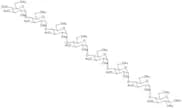
CAS:Ex starch-partial hydrolysis,food ingredient, moderatly sweet, easily digestedPurezza:Min. 95%Colore e forma:White PowderMaltooctaose hexacosaacetate
CAS:CO2-philic compound; used in pharmaceuticals and CO2-based processesFormula:C100H134O67Purezza:Min. 95%Colore e forma:PowderPeso molecolare:2,408.09 g/molGala1-3Galb1-3GlcNAc-HSA
Gala1-3Galb1-3GlcNAc-HSA is a synthetic glycosylation product of Galactose, Glucose and Galactosamine with Hexose. It is a complex carbohydrate that can be used to modify proteins with the sugar group. The sugar group is synthesized by the Click modification of a monosaccharide and then methylated. The sugar group is attached to HSA via an N-acetylhexosamine linker. This product has been shown to have high purity and can be used in many applications such as fluorination, methylation, click modification, or complex carbohydrate research.Purezza:Min. 95%Monofucosyl (1-2)-iso-lacto-N-octaose I
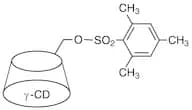
Monofucosyl (1-2)-iso-lacto-N-octaose I is an oligosaccharide found in human milkPurezza:Min. 95%Mono-6-O-mesitylenesulfonyl-γ-cyclodextrin
CAS:Formula:C57H90O42SPurezza:>90.0%(HPLC)Colore e forma:White to Almost white powder to crystalPeso molecolare:1,479.37Hyaluronic acid octasaccharide ammonium salt
Hyaluronic acid is a polysaccharide containing repeating disaccharide units of β-1,3-N-acetyl glucosamine and β-1, 4-glucuronicâ¯acid. A series of unsaturated oligosaccharides (oligouronic acids) are released from hyaluronic acid by the action of hyaluronidase on the umbilical cord (Weissman, 1954). This octasaccharide ammonium salt and other enzymatically produced polymer homologs have been of value in the study of hyaluronic acid metabolism in both healthy and diseased tissues (Hascall, 2019).Formula:C56H86N4O45Purezza:Min. 95 Area-%Colore e forma:PowderPeso molecolare:1,535.3 g/molGM2-Ganglioside
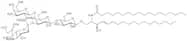
CAS:GM2 ganglioside (sodium salt) has a core trisaccharide structure (GalNAcβ1,4Galβ1,4Glc) with sialic acid linked α2,3 to the central galactose residue and ceramide linked β to position 1 on the reducing terminal glucose residue (Ledeen, 2009). GM2 ganglioside is present on neuronal cells and plays a key role in the regulation of dendritogenesis in cortical pyramidal neurons. In lysosomal storage disorders, such as, Tay-Sachs and Sandhoff disease, where hexosaminases A and B are deficient, GM2 ganglioside accumulates in the nervous system (Cachon-Gonzalez, 2018). GM2 ganglioside is also overexpressed in melanomas and other tumours of neuro-ecto origin (Yoshida, 2020). Moreover, the sugar moiety of the GM2 ganglioside is a receptor allowing the viral infection of cells with reovirus and rotavirus (Zhu, 2018).Purezza:Min. 96%Colore e forma:PowderGlycosaminoglycans
CAS:Glycosaminoglycans (GAGs) are polysaccharides that are found in the extracellular matrix and on the surface of cells. GAGs consist of a linear chain of repeating disaccharide units, with one or more sugar molecules linked by a glycosidic bond. They have been shown to be important for the function and structure of tissues, including those in the gastrointestinal tract. GAGs have been shown to stimulate cellular growth, regulate inflammatory responses, and promote wound healing. They have also been shown to inhibit activity of polymorphonuclear leucocytes (PMN), which play an important role in inflammation. One type of GAG is dextran sulfate, which has been used as a biological scaffold for tissue engineering applications. Glycosaminoglycans may also play a role in regulating immune responses through interaction with toll-like receptor 4 (TLR4).Purezza:Min. 95%Tri-guluronic acid sodium salt
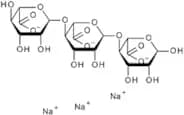
CAS:Tri-guluronic acid sodium salt (1,4-linked α-L-sodium guluronotriose) is one of a number of oligosaccharides obtained from alginate which is a polysaccharide in brown seaweeds containing: blocks of repeating mannuronic acid sequences (M-M-M-M etc), repeating guluronic acid sequences (G-G-G-G etc), and alternating M-G-M-G sequences. This oligosaccharide can be released by acid hydrolysis (Shimokawa, 1996) and a number of biological activities have been discussed in a recent review (Xing, 2020).
Formula:C18H23O19Na3Purezza:Min. 98 Area-%Colore e forma:White PowderPeso molecolare:612.33 g/molGD1b-Oligosaccharide
GD1b oligosaccharide (shown as ammonium salt) is the carbohydrate moiety in one of the major gangliosides in neuronal and glial membranes; it has a core tetrasaccharide structure (Galβ1,3GalNAcβ1,4Galβ1,4Glc) with its two sialic acids linked α2,3/α2,8 to the inner galactose residue (Ledeen, 2009). GD1b ganglioside acts as a receptor for BK virus as well as for heat-labile LTII-a toxin, produced by enteropathogenicâ¯E. coli. GD1b ganglioside also interacts with tetanus neurotoxin (TeNT) and is crucial for its entry into cells (Kolter, 2012). The functional significance of ammonia in the brain is not yet fully understood. However, NH4 + stimulates Na+, K+ activated ATPase causing stabilization of the neuronal membranes of which gangliosides are major structural components. Further, ammonia is known to inhibit lysosomal enzymes which include enzymes degrading gangliosides (Modi, 1994).
Formula:C48H77N3O37Na2Purezza:Min. 90%Colore e forma:White PowderPeso molecolare:1,334.1 g/molBlood group H pentaose type II
CAS:Blood group H pentaose type II is a carbohydrate. It is a saccharide with the molecular formula C5H11O4. The saccharide can be modified, for example by fluorination, methylation and glycosylation. The CAS number for this compound is 30517-76-1. This product is custom synthesized and has high purity and good quality.Formula:C32H55NO25Purezza:Min. 90%Colore e forma:PowderPeso molecolare:853.77 g/molGD1b-Ganglioside ammonium
CAS:GD1b ganglioside (shown as ammonium salt) is one of the major gangliosides in neuronal and glial membranes. It has a core tetrasaccharide structure (Galβ1,3GalNAcβ1,4Galβ1,4Glc) with its two sialic acids linked α2,3/α2,8 to the inner galactose residue, and ceramide linked β to position 1 on the reducing terminal glucose residue (Ledeen, 2009). GD1b ganglioside acts as a receptor for BK virus, as well as for heat-labile LTII-a toxin, produced by enteropathogenicâ¯E. coli. GD1b ganglioside also interacts with tetanus neurotoxin (TeNT) and is crucial for its entry into cells (Kolter, 2012). The functional significance of ammonia in the brain is not yet fully understood: see (Modi 1994).
Purezza:Min. 95%Monofucosyl-para-lacto-N-hexaose IV
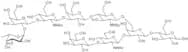
CAS:Monofucosyl-para-lacto-N-hexaose IV is a trisaccharide that belongs to the group of blood group antigens. It is found in human milk and can be used as an indicator for infant nutrition. Monofucosyl-para-lacto-N-hexaose IV is found in the cells of streptococcus, lactobacillus, and clostridium. It has been shown to be a potential biomarker for inflammatory bowel disease (IBD). This molecule has been used as an antigen in immunological assays. The sequences of monofucosyl-para-lacto-N-hexaose IV have been determined using chromatograms and profiles.Formula:C46H78N2O35Purezza:Min. 95%Colore e forma:PowderPeso molecolare:1,219.11 g/molFructooctasaccharide
Fructo-octasaccharide (FOS) is a synthetic, high-purity carbohydrate that is used in the production of various food and beverage products. FOS is produced by enzymatic synthesis from sucrose and has been modified to include a fluorination step. FOS can be used as a sugar substitute and is found in many foods such as breads, beverages, yogurt, ice cream, candy, and chewing gum. FOS has been shown to stimulate the growth of beneficial bacteria in the gastrointestinal tract and may help promote healthy digestion.Formula:C48H82O41Purezza:Min. 95%Colore e forma:PowderPeso molecolare:1,315.14 g/molLacto-N-fucopentaose I-BSA
Lacto-N-fucopentaose I-BSA is a Glycosylation, Oligosaccharide, sugar, Synthetic, Fluorination, Custom synthesis, Methylation, Monosaccharide, Polysaccharide, saccharide.Purezza:Min. 95%1,3-α-1,6-α-D-Mannotriose 1-O-propylamine acetate
1,3-a-1,6-a-D-Mannotriose 1-O-propylamine acetate salt is a modified oligosaccharide. It has been synthesized by the reaction of 1,3-a-1,6-a-D-mannopyranosyl bromide with proline amine acetate. This product is 98% pure and can be used as a complex carbohydrate in research or as a food additive. The CAS number for this product is 712092-14-8.Formula:C23H43O18NPurezza:Min. 95%Colore e forma:PowderPeso molecolare:621.58 g/molLividamine
CAS:Lividamine is a protein synthesis inhibitor that has biphasic responses in animal studies. Lividamine inhibits the enzyme catalysis of aminoglycosides, which are used for the treatment of bacterial infections. It also blocks the biosynthesis of polypeptides, which are essential for cell growth and division. Lividamine binds to the hydroxyl group or carboxylate group on an amino acid, cleaving it from the peptide chain and stopping protein synthesis. Lividamine has been shown to be effective against bacteria in vitro assays. Further research is required to determine its clinical properties.Formula:C12H25N3O6Purezza:Min. 95%Peso molecolare:307.34 g/mol