Prodotti biochimici e reagenti
Sottocategorie di "Prodotti biochimici e reagenti"
- Biomolecole(98.559 prodotti)
- Per obiettivo biologico(101.029 prodotti)
- Per uso/effetti farmacologici(6.952 prodotti)
- Composti relativi alla crioconservazione e crioconservanti(21 prodotti)
- Disinfettanti, additivi per fluidi per bagni di riscaldamento e composti correlati(28 prodotti)
- Ormoni(531 prodotti)
- Biologia vegetale(6.903 prodotti)
- Metaboliti secondari(14.369 prodotti)
Trovati 130609 prodotti di "Prodotti biochimici e reagenti"
C-peptide antibody
The C-peptide antibody is a monoclonal antibody that is used for various applications in medical research and diagnostics. It is designed to specifically target and bind to the C-peptide, a peptide released during the processing of proinsulin into insulin. This antibody has been extensively characterized and validated for its high specificity and sensitivity.
GS-9822
CAS:(2R)-2-[7-(4-Chlorophenyl)-5-methyl-2-[1-methyl-3-[1-(oxetan-3-yl)piperidin-4-yl]indazol-5-yl]-1,3-benzothiazol-6-yl]-2-[(2-methylpropan -2-yl)oxy]acetic acid is an inhibitor of Protein interactions, Activator, Ligand and a Research tool. It has High purity and is used in Life Sciences. CAS No. 2219362–41–9
Formula:C36H39ClN4O4SPurezza:Min. 95%Peso molecolare:659.2 g/molRef: 3D-UND36241
Prodotto fuori produzioneThalidomide-Cyanine 5
Please enquire for more information about Thalidomide-Cyanine 5 including the price, delivery time and more detailed product information at the technical inquiry form on this page
Formula:C52H60N6O13S2Purezza:90%MinPeso molecolare:1,041.2 g/molProlactin Receptor antibody
The Prolactin Receptor antibody is a growth factor that belongs to the class of monoclonal antibodies. It has neutralizing properties and can effectively inhibit the activity of prolactin, a hormone involved in lactation and reproductive functions. This antibody has been extensively studied in the field of Life Sciences and has shown promising results in various research applications.
MRTO4 antibody
MRTO4 antibody was raised using a synthetic peptide corresponding to a region with amino acids EQFPHSMEPQLRQLGLPTALKRGVVTLLSDYEVCKEGDVLTPEQARVLKL
CD51 antibody
The CD51 antibody is a monoclonal antibody that is used in the field of Life Sciences for various applications. It specifically targets the CD51 antigen, which is expressed on the surface of pluripotent cells and mesenchymal stem cells. The CD51 antibody can be used as a diagnostic reagent to detect the presence of this antigen in samples. Additionally, it has been shown to have neutralizing properties against certain virus surface antigens, making it a valuable tool in virology research. This antibody has also been found to have an impact on cell growth and differentiation, as well as the production of interleukin-6, an important cytokine involved in immune responses. With its high specificity and versatility, the CD51 antibody is an essential tool for researchers in various fields of study.ZO1 antibody
The ZO1 antibody is a highly effective monoclonal antibody that specifically targets CD33, a cell surface protein. This antibody is widely used in the field of life sciences for various applications. It has been shown to inhibit the growth of cancer cells, such as MCF-7 breast cancer cells, by blocking the action of growth factors and interfering with cell signaling pathways. Additionally, the ZO1 antibody has been used in research involving mesenchymal stem cells to study their differentiation potential and therapeutic applications. Furthermore, this antibody can be utilized in immunohistochemistry and western blotting assays to detect and quantify specific proteins of interest. With its exceptional specificity and sensitivity, the ZO1 antibody is an invaluable tool for scientists and researchers in their quest for new discoveries in the field of molecular biology.
LGALS3 antibody
LGALS3 antibody was raised using the N terminal of LGALS3 corresponding to a region with amino acids GASYPGAYPGQAPPGAYPGQAPPGAYPGAPGAYPGAPAPGVYPGPPSGPG
TTC14 Blocking Peptide
A synthetic peptide for use as a blocking control in assays to test for specificity of TTC14 antibody, catalog no. 70R-4867
Purezza:Min. 95%Zinviroxime
CAS:Zinviroxime is a potent and selective inhibitor of the ion channel TRPV1. It blocks the activity of this receptor and prevents the release of inflammatory mediators such as calcitonin gene-related peptide, substance P, and bradykinin. Zinviroxime has been shown to inhibit the binding of these mediators to their receptors on cells in culture. This inhibition causes pain relief in animal models. Zinviroxime also inhibits the activation of TRPV1 by capsaicin, an activator of TRPV1. The molecular weight for zinviroxime is 836 Daltons and its CAS number is 72301-78-1.
Formula:C17H18N4O3SPurezza:Min. 95%Peso molecolare:358.4 g/molRef: 3D-XCA30178
Prodotto fuori produzioneL-771688
CAS:L-771688 is a small molecule that has been shown to regulate protein interactions. It has been shown to activate peptide receptors and ion channels, which are important for many cellular functions. L-771688 is also a ligand for the antibody and receptor systems. This drug has been used as a research tool in cell biology and pharmacology studies.
Formula:C28H33F2N5O5Purezza:Min. 95%Peso molecolare:557.6 g/molFSL-1
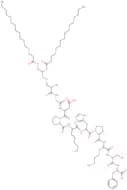
CAS:FSL-1 is an advanced antimicrobial agent, which is derived from fatty acids and modified through a synthesis process involving surface-active molecules. This compound exhibits enhanced antimicrobial efficacy through its unique mode of action that disrupts microbial cell membranes by integrating into the lipid bilayer, causing structural instability and leakage of cellular contents. Such action effectively eliminates a broad spectrum of bacteria and fungi.
Formula:C84H140N14O18SPurezza:Min. 95%Peso molecolare:1,666.2 g/mol4-[1-Hydroxy-2-[(1-methyl-2-phenoxyethyl)amino]propyl]phenyl pivalate
CAS:4-[1-Hydroxy-2-[(1-methyl-2-phenoxyethyl)amino]propyl]phenyl pivalate is an inhibitor of protein interactions that belongs to the group of peptides. The inhibition profile of this compound has been characterized by a number of different techniques, including fluorescence resonance energy transfer (FRET), surface plasmon resonance, and antibody labeling. 4-[1-Hydroxy-2-[(1-methyl-2-phenoxyethyl)amino]propyl]phenyl pivalate can be used as a research tool for studying receptor activation and ligand binding. It also serves as an immunological reagent for detecting the presence of specific proteins in cell culture.Formula:C23H31NO4Purezza:Min. 95%Peso molecolare:385.5 g/molRef: 3D-SCA16074
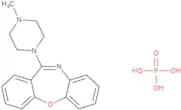
Prodotto fuori produzioneDechloroloxapine phosphate
CAS:Prodotto controllatoDechloroloxapine phosphate is a peptide that belongs to the class of protein ligands. It is an inhibitor of the muscarinic acetylcholine receptors and has been used as a research tool in cell biology, pharmacology, and life science. Dechloroloxapine phosphate binds to the receptor site on ion channels, thereby blocking their ability to open and close, inhibiting electrical current flow across the membrane. This peptide also interacts with antibodies and has been used as a reagent for immunological assays. Dechloroloxapine phosphate has a CAS number of 2058-53-9 and is made from pure material without any contaminants.
Formula:C18H22N3O5PPurezza:Min. 95%Peso molecolare:391.4 g/molTenascin antibody
The Tenascin antibody is a highly specialized recombinant protein that belongs to the class of chemokines. It is designed to target specific antigens and has been extensively studied in the field of Life Sciences. This antibody exhibits strong binding affinity towards glycoproteins, making it an ideal tool for research purposes. It has also been used in studies related to hyperammonemia and shows promising results in inhibiting the growth of cancer cells, such as MCF-7. The Tenascin antibody is available in both polyclonal and monoclonal forms, providing researchers with options based on their specific needs. With its ability to effectively neutralize target proteins, this antibody holds great potential for therapeutic applications, including the development of antibody-drug conjugates. Whether you're conducting cutting-edge research or exploring new avenues in drug discovery, the Tenascin antibody is a valuable tool that can significantly contribute to your scientific endeavors.







![4-[1-Hydroxy-2-[(1-methyl-2-phenoxyethyl)amino]propyl]phenyl pivalate](/_next/image/?url=https%3A%2Fstatic.cymitquimica.com%2Fproducts%2F3D%2Fthumb-webp%2FSCA16074.webp&w=3840&q=75)