Antibiotici
Gli antibiotici sono composti progettati per distruggere o inibire la crescita di vari microrganismi, svolgendo un ruolo cruciale nel trattamento delle infezioni e nella prevenzione della diffusione delle malattie. Questa categoria offre una gamma diversificata di ingredienti attivi specificamente per la ricerca nel campo biochimico. Questi composti sono strumenti essenziali nello studio dei meccanismi batterici, dei modelli di resistenza e nello sviluppo di nuovi agenti terapeutici. I ricercatori possono esplorare una vasta gamma di antibiotici per comprenderne gli effetti, ottimizzarne l'uso e sviluppare nuovi trattamenti per combattere le minacce microbiche emergenti. La disponibilità di uno spettro così ampio di antibiotici supporta la ricerca avanzata e l'innovazione in microbiologia e scienze farmaceutiche.
Sottocategorie di "Antibiotici"
- Antibiotici macrolidi(26 prodotti)
- Antibiotici steroidei(31 prodotti)
- Antibiotici tetraciclina(20 prodotti)
- antibiotici β-lattamici(11 prodotti)
Trovati 4100 prodotti di "Antibiotici"
Ordinare per
Purezza (%)
0
100
|
0
|
50
|
90
|
95
|
100
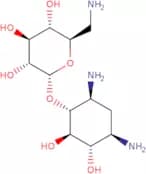
Kanamycin A Related Compound 1
CAS:<p>Kanamycin A Related Compound 1 is an analytical reference standard, which is derived from aminoglycoside antibiotics. Its source stems from the chemical structures related to the aminoglycoside class, primarily used to ensure precise identification and quantification of kanamycin residues or impurities in pharmaceutical formulations. The mode of action of Kanamycin A Related Compound 1 involves serving as a comparator or reference point in chromatographic and spectroscopic methods, facilitating accurate analysis by providing a consistent baseline for research laboratories.</p>Formula:C12H25N3O7Purezza:Min. 95%Peso molecolare:323.34 g/mol3'-N-Desmethyl-3'-N-formyl azithromycin
CAS:3'-N-Desmethyl-3'-N-formyl azithromycin is a semi-synthetic macrolide antibiotic, derived from the well-known azithromycin. It is created through structural modification, where the 3'-N-demethylated and 3'-N-formyl groups enhance its pharmacokinetic properties and potentially improve its antimicrobial efficacy.Formula:C38H70N2O13Purezza:Min. 95%Peso molecolare:762.97 g/molAphidicolin
CAS:<p>Aphidicolin is a tetracyclic diterpenoid that acts as a potent inhibitor of DNA polymerase. Derived from the fungus *Cephalosporium aphidicola*, it is primarily identified for its ability to impede DNA synthesis by targeting eukaryotic DNA polymerase α. This selective inhibition disrupts replication processes, making it a crucial tool for studying cell cycle dynamics.</p>Formula:C20H34O4Purezza:Min. 95%Peso molecolare:338.48 g/molCeftarolin fosamil
CAS:<p>Ceftaroline fosamil is an advanced antibiotic, which is a cephalosporin derived from synthetic sources with a broad spectrum of activity. It is a prodrug that, once metabolized, becomes active in the body, binding to penicillin-binding proteins (PBPs) of bacteria. This binding inhibits the proteins responsible for cell wall synthesis, leading to bacterial cell lysis and death.</p>Formula:C22H21N8O8PS4Purezza:Min. 95%Peso molecolare:684.69 g/molEnrofloxacin HCl
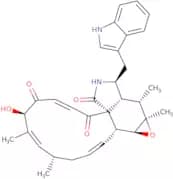
CAS:<p>Enrofloxacin HCl is a fluoroquinolone antibiotic, which is a synthetic compound derived from chemical synthesis. Its mode of action involves the inhibition of bacterial DNA gyrase and topoisomerase IV, critical enzymes in bacterial DNA replication and transcription processes. This action disrupts bacterial cellular division and transcription, leading to cell death.</p>Formula:C19H22FN3O3•HClPurezza:Min. 95%Peso molecolare:395.86 g/molChaetoglobosin A - From chaetomium globosum
CAS:<p>Chaetoglobosin A is a mycotoxin, which is a secondary metabolite produced by the fungus Chaetomium globosum. This compound exhibits its mode of action by disrupting the cytoskeletal elements within cells, primarily affecting actin polymerization. This interference leads to alterations in cell morphology and can induce apoptosis in certain cell lines.</p>Formula:C32H36N2O5Purezza:Min. 95%Peso molecolare:528.64 g/molCefonicid
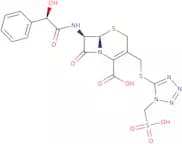
CAS:<p>Cefonicid is a semisynthetic cephalosporin antibiotic, which is derived from the naturally occurring compound cephalosporin C, obtained from the mold *Cephalosporium acremonium*. Its mode of action involves inhibiting bacterial cell wall synthesis by binding to penicillin-binding proteins, leading to cell lysis and death, thereby exhibiting bactericidal activity.</p>Formula:C18H16N6O8S3Purezza:Min. 95%Peso molecolare:540.55 g/molClindamycin-d3 hydrochloride
CAS:Prodotto controllatoClindamycin-d3 hydrochloride is an isotopically labeled pharmaceutical compound, specifically designed for use in the field of analytical chemistry and pharmacokinetics. It is derived from clindamycin, a known antibiotic sourced from modifications of the naturally occurring compound lincomycin, produced by the actinobacterium Streptomyces lincolnensis. The incorporation of deuterium atoms, replacing hydrogen, allows for its use in sophisticated analytical methods such as mass spectrometry, where it serves to trace the metabolic pathways and to quantify the bioavailability and distribution of clindamycin in biological systems with high precision.Formula:C18H30ClD3N2O5S•HClPurezza:Min. 95%Peso molecolare:464.46 g/molErythromycylamine
CAS:<p>Erythromycylamine is a semisynthetic antibiotic, which is derived from the parent compound erythromycin. This compound is sourced from the fermentation product of the bacterium *Saccharopolyspora erythraea*. Erythromycylamine acts by inhibiting bacterial protein synthesis, specifically targeting the 50S ribosomal subunit, which ultimately leads to the disruption of bacterial cell growth and replication.</p>Formula:C37H70N2O12Purezza:Min. 95%Peso molecolare:734.96 g/molLoracarbef monohydrate
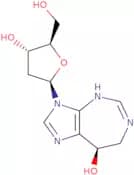
CAS:<p>Loracarbef monohydrate is a synthetic antibiotic, which is derived from carbacephem compounds with a mode of action that involves inhibiting bacterial cell wall synthesis. This is achieved by binding to penicillin-binding proteins, thereby blocking the cross-linking of peptidoglycan chains which are crucial for bacterial cell wall structural integrity.</p>Formula:C16H16ClN3O4·H2OPurezza:Min. 95%Peso molecolare:367.78 g/mol2'-Deoxycoformycin
CAS:<p>2'-Deoxycoformycin is a potent adenosine deaminase inhibitor, which is derived from the fermentation of Streptomyces antibioticus, a species of actinomycete bacteria. This compound acts by specifically inhibiting the enzyme adenosine deaminase, leading to an accumulation of toxic deoxyadenosine triphosphate in lymphocytes. This buildup hinders DNA synthesis, effectively suppressing the proliferation of lymphoid cells.</p>Formula:C11H16N4O4Purezza:Min. 95%Peso molecolare:268.27 g/molThiamphenicol
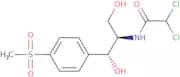
CAS:<p>Thiamphenicol is a semisynthetic derivative of chloramphenicol with action on bacterial protein synthesis inhibition and is used for treating bacterial infections, particularly in veterinary medicine.</p>Formula:C12H15Cl2NO5SPurezza:Min. 98 Area-%Colore e forma:PowderPeso molecolare:356.22 g/molCamptothecin
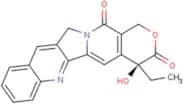
CAS:Camptothecin (CPT) belongs to the alkaloid group of natural products and is a specific DNA topoisomerase I (Topo I) inhibitor (IC50=679 nM) with specificity.Formula:C20H16N2O4Purezza:99.52% - 99.88%Colore e forma:Solid PowderPeso molecolare:348.35Ionomycin
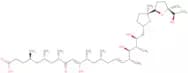
CAS:<p>Ionomycin is an ionophore compound with a mode of action that facilitates calcium ion transport across cell membranes. It is used in research to study calcium signaling and T-cell activation.</p>Formula:C41H72O9Purezza:Min. 98 Area-%Colore e forma:PowderPeso molecolare:709.01 g/molGemifioxacin
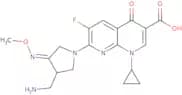
CAS:<p>Gemifloxacin is an antibacterial agent primarily classified as a fluoroquinolone antibiotic, which is a synthetic compound derived from chemical processes in pharmaceutical manufacturing. Its mechanism of action involves the inhibition of key bacterial enzymes, namely DNA gyrase and topoisomerase IV. These enzymes are crucial for bacterial DNA replication, transcription, repair, and recombination. By obstructing these enzymes, Gemifloxacin effectively inhibits bacterial cell division and growth, leading to the eradication of susceptible bacterial strains.</p>Formula:C18H20FN5O4Purezza:Min. 95%Peso molecolare:389.38 g/molPristinamycin IA
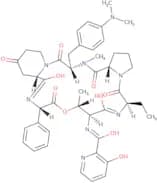
CAS:<p>Pristinamycin IA is a streptogramin antibiotic, which is a natural product derived from the bacterium *Streptomyces pristinaespiralis*. It operates by inhibiting bacterial protein synthesis through the disruption of ribosomal function, specifically targeting the 50S ribosomal subunit. This mode of action is effective in halting bacterial growth, making it particularly significant in combating resistant strains.</p>Formula:C45H54N8O10Purezza:Min. 95%Peso molecolare:866.96 g/molCycloheximide, Antibiotic for Culture Media Use Only
CAS:Cycloheximide, Antibiotic for Culture Media Use Only, is an antifungal agent derived from the Streptomyces griseus bacterium. Its primary mode of action involves the inhibition of eukaryotic protein synthesis by interfering with the translocation step on the 80S ribosome. This leads to rapid arrest of protein assembly, effectively limiting fungal and certain yeast growth in culture.Formula:C15H23NO4Peso molecolare:281.35 g/molRef: 3D-C-9217
10gPrezzo su richiesta25gPrezzo su richiesta50gPrezzo su richiesta100gPrezzo su richiesta250gPrezzo su richiesta-Unit-ggPrezzo su richiestaDecoyinine
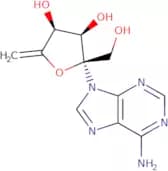
CAS:Decoyinine is an antibiotic compound, which is derived from the bacterium *Streptomyces hygroscopicus*. Its mode of action involves the inhibition of guanine nucleotide synthesis. By targeting the biosynthesis pathway of nucleotides, Decoyinine effectively impedes the growth and proliferation of bacterial cells.Formula:C11H13N5O4Purezza:Min. 95%Peso molecolare:279.25 g/molPuromycin aminonucleoside
CAS:<p>Inducer of apoptosis; translational inhibitor; aminonucleoside antibiotic</p>Formula:C12H18N6O3Purezza:Min. 95%Peso molecolare:294.31 g/molPNU 142300
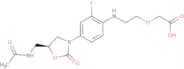
CAS:<p>PNU 142300 is a non-peptidyl anticoagulant, which is a synthetically derived small molecule. This compound is sourced from advanced chemical synthesis techniques that focus on mimicking biological activity through non-biological materials. PNU 142300 acts by specifically inhibiting factor Xa, a crucial enzyme in the coagulation cascade responsible for the conversion of prothrombin to thrombin. By targeting this enzyme, it effectively prevents the formation of blood clots, thereby exhibiting potent anticoagulant properties.</p>Formula:C16H20FN3O6Purezza:Min. 95%Peso molecolare:369.35 g/mol