Building Blocks
Sottocategorie di "Building Blocks"
- Acidi boronici e derivati dell'acido boronico(5.779 prodotti)
- Building Blocks Chirali(1.238 prodotti)
- Building Blocks Idrocarburici(6.099 prodotti)
- Building Blocks organici(60.997 prodotti)
Trovati 205208 prodotti di "Building Blocks"
4-Hydroxy-N-methylbenzamide
CAS:4-Hydroxy-N-methylbenzamide (4HMB) is an organic compound that consists of a benzene ring with a methyl group attached to the 4 position. It has been found to have amide, chloride and hydrogen bonding interactions with other molecules. The filtrate was collected by passing the reaction liquid through a filter paper. This stepwise process allowed for the isolation of 4HMB from the mixture of compounds called benzenes.
Formula:C8H9NO2Purezza:Min. 95%Peso molecolare:151.16 g/mol1-(1,2,3-Thiadiazol-4-yl)ethan-1-one
CAS:Versatile small molecule scaffold
Formula:C4H4N2OSPurezza:Min. 95%Peso molecolare:128.15 g/mol2,2,2-Trifluoroethyl N-[3-(cyclopentanesulfonyl)phenyl]carbamate
CAS:Versatile small molecule scaffold
Formula:C14H16F3NO4SPurezza:Min. 95%Peso molecolare:351.34 g/mol1-(3-Bromopropyl)naphthalene
CAS:Versatile small molecule scaffold
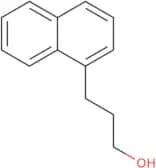
Formula:C13H13BrPurezza:Min. 95%Peso molecolare:249.15 g/mol3-(Naphthalen-1-yl)propan-1-ol
CAS:3-(Naphthalen-1-yl)propan-1-ol is a tannin isolated from the bark of the naphthalene tree. It has been shown to have hepatoprotective effects, normalizing hepatic enzyme activity and protecting against environmental pollution. 3-(Naphthalen-1-yl)propan-1-ol also has antidiabetic properties, and may act as an acetate extract by inhibiting the absorption of glucose in the gut. The laxative effect of 3-(Naphthalen-1-yl)propan-1-ol may be due to its ability to stimulate intestinal peristalsis.
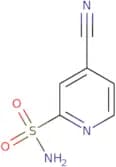
Formula:C13H14OPurezza:Min. 95%Peso molecolare:186.25 g/mol4-Cyanopyridine-2-sulfonamide
CAS:Versatile small molecule scaffold
Formula:C6H5N3O2SPurezza:Min. 95%Peso molecolare:183.19 g/molThieno[3,2-c]pyridin-4-ol
CAS:Thieno[3,2-c]pyridin-4-ol is a thienopyridone that is an inhibitor of the bromodomain. It has been shown to inhibit the bromodomain, which is a protein domain that also binds acetylated histones. The inhibition of this domain leads to chromatin condensation and DNA compaction, inhibiting transcription and replication. Thieno[3,2-c]pyridin-4-ol has been shown to have anti-inflammatory effects in vivo and in vitro.
Formula:C7H5NOSPurezza:Min. 95%Peso molecolare:151.19 g/mol[1-(6-Methylpyridazin-3-yl)pyrrolidin-2-yl]methanol
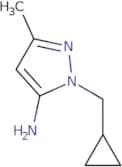
CAS:Versatile small molecule scaffoldFormula:C10H15N3OPurezza:Min. 95%Peso molecolare:193.25 g/mol1-(Cyclopropylmethyl)-3-methyl-1H-pyrazol-5-amine
CAS:Versatile small molecule scaffold
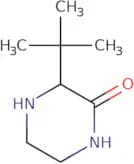
Formula:C8H13N3Purezza:Min. 95%Peso molecolare:151.21 g/mol3-tert-Butylpiperazin-2-one
CAS:Versatile small molecule scaffold
Formula:C8H16N2OPurezza:Min. 95%Peso molecolare:156.2 g/mol1-[(4-Chlorophenyl)phenylmethyl]piperazine
CAS:Prodotto controllato1-[(4-Chlorophenyl)phenylmethyl]piperazine is an analytical reagent that is used in the determination of meclozine, a drug used for the treatment of nausea and vomiting. 1-[(4-Chlorophenyl)phenylmethyl]piperazine is a nucleophile, which means that it can donate electrons to other molecules. It can be used as a catalyst to increase the rate of chemical reactions. 1-[(4-Chlorophenyl)phenylmethyl]piperazine may also be used in wastewater treatment because it has been shown to have phospholipidosis inhibiting properties. The levorotatory form (1R-enantiomer) of this compound has been shown to inhibit protein synthesis in vitro and is an amine oxidase inhibitor that binds to proteins with nitrogen atoms. This nucleophilic compound may also be converted into an n-oxide or dinucleotide phosphate by hydrochloric acid and
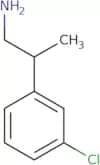
Formula:C17H19ClN2Purezza:Min. 95%Peso molecolare:286.8 g/mol2-(3-Chlorophenyl)propan-1-amine
CAS:Prodotto controllatoVersatile small molecule scaffold
Formula:C9H12ClNPurezza:Min. 95%Peso molecolare:169.65 g/molEthyl cyclobutylideneacetate
CAS:Ethyl cyclobutylideneacetate is a compound that is used as an intermediate in the synthesis of pyrimidine compounds. It has autophagy-inducing activity and can stimulate the growth of epidermal cells. This compound has not been shown to have any direct effects on kinases, but it is known to act as a modulator for factors such as epidermal growth factor, which can regulate cell proliferation. Ethyl cyclobutylideneacetate is active in the presence of solvates and regulators. The tautomers of this compound are stereoisomers that are also homologues, with some polymorphs possible depending on the solvent conditions.
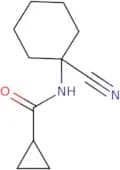
Formula:C8H12O2Purezza:Min. 95%Peso molecolare:140.18 g/molN-(1-Cyanocyclohexyl)cyclopropanecarboxamide
CAS:Versatile small molecule scaffold
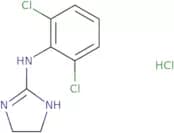
Formula:C11H16N2OPurezza:Min. 95%Peso molecolare:192.26 g/molClonidine hydrochloride
CAS:Clonidine hydrochloride is a drug used in the treatment of hypertension and other cardiac diseases. It belongs to the class of drugs called centrally acting alpha-2 adrenergic agonists. Clonidine hydrochloride is also used for its antihypertensive effects in patients with neurogenic orthostatic hypotension, diabetic neuropathy, and glomerular filtration rate. The long-term efficacy and safety profile of clonidine hydrochloride has been established in clinical trials that have shown it to be effective in reducing symptoms of chronic pain and opioid withdrawal, as well as improving quality of life. Clonidine hydrochloride may be administered orally or transdermally. Clonidine binds to both alpha-1 and alpha-2 adrenergic receptors, which are responsible for vasoconstriction, inhibition of renin secretion from the kidneys, decreased sympathetic nerve activity, and increased parasympathetic nerve activity. This drug also has a protective effect on bone cancer cells
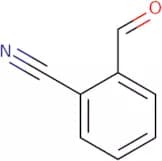
Formula:C9H9Cl2N3•HClPurezza:Min. 95%Colore e forma:PowderPeso molecolare:266.55 g/mol2-Cyanobenzaldehyde
CAS:2-Cyanobenzaldehyde is an aldehyde that reacts with nucleophiles such as trifluoromethanesulfonic acid to form a molecule. 2-Cyanobenzaldehyde has potent inhibitory activity against the kinase glycogen synthase kinase 3 (GSK3) and can be used to treat autoimmune diseases. It also reacts with hydrochloric acid in solution to form an intermediate, which is then reacted with glycine and ATP to produce a chiral compound. The product of this reaction has been shown to be active methylene, which was synthesized by asymmetric synthesis.
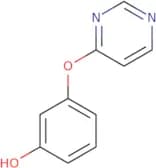
Formula:C8H5NOPurezza:Min. 95%Colore e forma:PowderPeso molecolare:131.13 g/mol3-(Pyrimidin-4-yloxy)phenol
CAS:Versatile small molecule scaffold
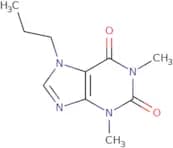
Formula:C10H8N2O2Purezza:Min. 95%Peso molecolare:188.18 g/mol1,3-Dimethyl-7-propyl-3,7-dihydro-1H-purine-2,6-dione
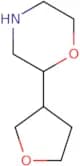
CAS:Prodotto controllatoVersatile small molecule scaffoldFormula:C10H14N4O2Purezza:Min. 95%Peso molecolare:222.24 g/mol2-(Oxolan-3-yl)morpholine
CAS:Versatile small molecule scaffold
Formula:C8H15NO2Purezza:Min. 95%Peso molecolare:157.21 g/mol2-Cyclohexylmorpholine
CAS:Versatile small molecule scaffold
Formula:C10H19NOPurezza:Min. 95%Peso molecolare:169.26 g/mol


![2,2,2-Trifluoroethyl N-[3-(cyclopentanesulfonyl)phenyl]carbamate](/_next/image/?url=https%3A%2Fstatic.cymitquimica.com%2Fproducts%2F3D%2Fthumb-webp%2FKZB44126.webp&w=3840&q=75)

![Thieno[3,2-c]pyridin-4-ol](/_next/image/?url=https%3A%2Fstatic.cymitquimica.com%2Fproducts%2F3D%2Fthumb-webp%2FCBA68592.webp&w=3840&q=75)
![[1-(6-Methylpyridazin-3-yl)pyrrolidin-2-yl]methanol](/_next/image/?url=https%3A%2Fstatic.cymitquimica.com%2Fproducts%2F3D%2Fthumb-webp%2FBAC25616.webp&w=3840&q=75)
![1-[(4-Chlorophenyl)phenylmethyl]piperazine](/_next/image/?url=https%3A%2Fstatic.cymitquimica.com%2Fproducts%2F3D%2Fthumb-webp%2FFC20350.webp&w=3840&q=75)