Building Blocks
Sottocategorie di "Building Blocks"
- Acidi boronici e derivati dell'acido boronico(5.780 prodotti)
- Building Blocks Chirali(1.241 prodotti)
- Building Blocks Idrocarburici(6.100 prodotti)
- Building Blocks organici(61.029 prodotti)
Trovati 205306 prodotti di "Building Blocks"
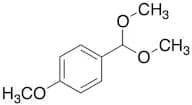
Anisaldehyde Dimethyl Acetal
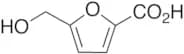
CAS:Prodotto controllatoFormula:C10H14O3Colore e forma:NeatPeso molecolare:182.225-Hydroxymethyl-2-furancarboxylic Acid
CAS:Stability Very Hygroscopic
Applications Oxidation of 5-Hydroxymethyl-2-furancarboxylic Acid is used for green synthesis of 2,5-Furandicarboxylic Acid (F863750), one of the most important chemical building blocks from biomass.
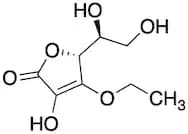
References Gupta, N., et al.: Green Chem., 13, 824 (2011);Formula:C6H6O4Colore e forma:NeatPeso molecolare:142.113-O-Ethyl-L-ascorbic Acid
CAS:Prodotto controllatoApplications 3-O-Ethyl-L-ascorbic Acid could be a useful stabilizing agent for a para-hydroxyacetophenone solution.
References Zhang, H., et al.: Faming Zhuanli Shenqing (2020), CN 111937874 AFormula:C8H12O6Colore e forma:NeatPeso molecolare:204.181-Iodo-3,6,9-trioxadecane
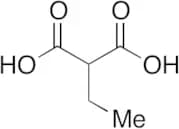
CAS:Prodotto controllatoFormula:C7H15IO3Colore e forma:ColourlessPeso molecolare:274.097Ethylmalonic Acid
CAS:Applications Ethylmalonic Acid is used as a diagnostic agent used in the diagnosis of Ethylmalonic encephalopathy which is a rare autosomal recessive inborn error of metabolism.
References Baertling, F. et al.: Eur. J. Pediat., 173, 1719 (2014); Sudo, Y. et al.: Hu,am Genome Var., 1, 15016 (2014);Formula:C5H8O4Colore e forma:NeatPeso molecolare:132.125-Hydroxymethyl-2-furaldehyde
CAS:Prodotto controllatoStability Light Sensitive, Very Hygroscopic
Applications An antioxidant for grape and apple juice.
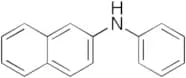
References Kim, K., et al.: Agric. Biol. Chem., 38, 53 (1974), Vichi, S., et al.: Food Chem., 102, 1260 (2007),Formula:C6H6O3Colore e forma:White To Dark BrownPeso molecolare:126.11N-Phenyl-2-naphthylamine
CAS:Prodotto controllatoApplications N-(Phenyl)-2-naphthylamine is a reagent in the preparation of unsymmetrical triaryldiamines as thermally stable hole transport layers for various organic LEDs.
References Koene, B. et al.: Chem. Mat., 10, 2235 (1998)Formula:C16H13NColore e forma:Beige To GreyPeso molecolare:219.28N,N,N',N'-Tetramethyl-p-phenylenediamine Dihydrochloride
CAS:Prodotto controllatoStability Hygroscopic
Applications N,N,N',N'-Tetramethyl-p-phenylenediamine dihydrochloride (cas# 637-01-4) is a useful compound for membrane-tethering cytochrome c to study its impact on cell death in yeast.
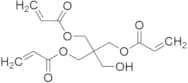
References Toth, A., et al.: Cell Death Dis., 11, 722 (2020)Formula:C10H16N2·2(HCl)Colore e forma:NeatPeso molecolare:237.17Pentaerythritol Triacrylate (Technical Grade)
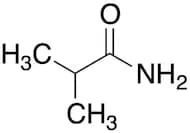
CAS:Prodotto controllatoFormula:C14H18O7Colore e forma:ColourlessPeso molecolare:298.29Isobutyramide
CAS:Prodotto controllatoApplications Isobutyramide
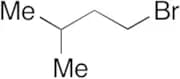
Formula:C4H9NOColore e forma:NeatPeso molecolare:87.121-Bromo-3-methylbutane
CAS:Prodotto controllatoApplications 1-Bromo-3-methylbutane, is used as an extraction solvent to determine various polycyclic aromatic hydrocarbons in water samples though dispersive liquid-liquid microextraction along with GC-MS (gas chromatography- mass spectrometry).
Not a dangerous good if item is equal to or less than 1g/ml and there is less than 100g/ml in the package
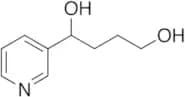
References Rezaee, M., et al.: J. Chromat. A., 1116, 1 (2006)Formula:C5H11BrColore e forma:NeatPeso molecolare:151.041-(3-Pyridyl)-1,4-butanediol
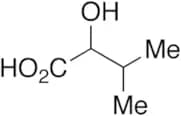
CAS:Prodotto controllatoFormula:C9H13NO2Colore e forma:NeatPeso molecolare:167.22-Hydroxy-3-methylbutyric Acid
CAS:Prodotto controllatoApplications 2-Hydroxy-3-methylbutyric Acid is a α-hydroxylated butyric acid derivative used as a marker in chemical diagnosis of organic aciduria and other inborn errors. 2-Hydroxy-3-methylbutyric Acid is also used as a metabolomic biomarkers in preeclampsia.
References Nakagawa, K. et al.: J. Chrom. B Anal. Technol. Biomed. Life Sci., 878, 942 (2010); Kenny, L.C. et al.: Reprod. Sci., 15, 591 (2008); Garcia, A. et al.: Clin. Chem., 44, 1905 (1999);Formula:C5H10O3Colore e forma:NeatPeso molecolare:118.131,5-Dibromopentane
CAS:Prodotto controllatoApplications 1,5-Dibromopentane is used as an alkylating agent in organic synthesis. 1,5-Dibromopentane is also used as a reagent to synthesize benzo[b]xanthone derivatives, compounds that have potential anticancer activity.
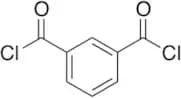
References Luo, L., et al.: J. Serb. Chem. Soc., 78, 1301 (2013); Royer, G. & Klotz, I.: J. Am. Chem. Soc., 91, 5885 (1969)Formula:C5H10Br2Colore e forma:NeatPeso molecolare:229.9409Isophthaloyl Chloride
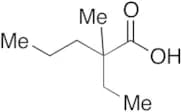
CAS:Prodotto controllatoFormula:C8H4Cl2O2Colore e forma:NeatPeso molecolare:203.022-Ethyl-2-methylpentanoic Acid
CAS:Prodotto controllatoApplications 2-Ethyl-2-methylpentanoic Acid is a derivative of 2,5-Dimethyl-2-ethylhexanoic Acid (D461540), used in biological studies to evaluate environmental chemicals for estrogenicity.
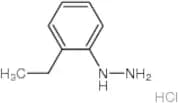
References Rabinowitz, J.R., et al.: Chem. Res. Toxicol.,22, 1594 (2009); Judson, R., et al.: Environ. Health Perspect, 117, 685 (2009)Formula:C8H16O2Colore e forma:Colourless OilyPeso molecolare:144.212-Ethylphenylhydrazine hydrochloride
CAS:Applications 2-Ethylphenylhydrazine, HCl
Not a dangerous good if item is equal to or less than 1g/ml and there is less than 100g/ml in the packageFormula:C8H13ClN2Colore e forma:NeatPeso molecolare:172.66