


Building Blocks
Sottocategorie di "Building Blocks"
- Acidi boronici e derivati dell'acido boronico(5.781 prodotti)
- Building Blocks Chirali(1.242 prodotti)
- Building Blocks Idrocarburici(6.101 prodotti)
- Building Blocks organici(61.038 prodotti)
Trovati 205338 prodotti di "Building Blocks"
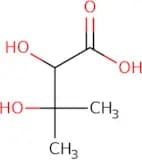
2,3-Dihydroxy-3-methylbutanoic acid
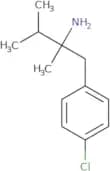
CAS:2,3-Dihydroxy-3-methylbutanoic acid (2,3DMB) is a hydrophobic molecule that is used as an activator of the butyric acid pathway. This activation mechanism has been shown in vitro with the use of 2,3DMB and racemase to convert isovaleric acid into butyric acid. The activation mechanism can be seen in vivo by synthesizing 2,3DMB from its constituent parts: magnesium ion and a monocarboxylic acid. The reaction occurs when magnesium ion binds to the carboxyl group of a monocarboxylic acid in the presence of water. In this reaction, water acts as a base to remove hydrogen ions from the carboxyl group and release protons. The protonated carboxyl group then reacts with magnesium ion to form an intermediate compound called Grignard reagent. The Grignard reagent will react with water to form anFormula:C5H10O4Purezza:Min. 95%Colore e forma:PowderPeso molecolare:134.13 g/mol1-(4-Chlorophenyl)-2,3-dimethylbutan-2-amine
CAS:4-Chloro-1-(4-chlorophenyl)butan-2-amine (PCPA) is a versatile building block in organic synthesis. It is used as a precursor to other chemicals, such as pharmaceuticals and pesticides. PCPA can be used to synthesize many complex compounds, such as 1-(4-chlorophenyl)-2,3-dimethylbutan-2-amine. PCPA is useful for the production of research chemicals and speciality chemical intermediates. This compound has a high quality and can be used as a reagent for further reactions.
Formula:C12H18ClNPurezza:Min. 95%Colore e forma:Clear LiquidPeso molecolare:211.73 g/molIndole-3-carbinol
CAS:Indole-3-carbinol is a fine chemical that has been used for research purposes as a reagent and speciality chemical. Indole-3-carbinol is also a versatile building block and reaction intermediate in organic synthesis, which has been used for the synthesis of many complex compounds. Indole-3-carbinol is also an important precursor to pharmaceuticals, including antiestrogens and anti-angiogenesis agents. Indole-3-carbinol has been shown to have antiinflammatory effects, which may be due to its ability to inhibit prostaglandin synthesis.
Formula:C9H9NOPurezza:Min. 99 Area-%Peso molecolare:147.18 g/molRef: 3D-I-2100
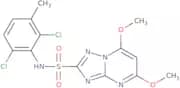
1kgPrezzo su richiesta50gPrezzo su richiesta100gPrezzo su richiesta250gPrezzo su richiesta500gPrezzo su richiesta-Unit-ggPrezzo su richiestaMetosulam
CAS:Metosulam is a triazolopyrimidine herbicide that inhibits the growth of weeds by interfering with plant photosynthesis. Metosulam binds to fatty acids and carbohydrates, which prevents these molecules from binding to the enzyme ATP synthase. This results in a loss of energy production, leading to cell death. Metosulam has been shown to cause chronic cough in mice when given at sublethal doses for long periods of time. The chronic cough was found to be due to an interactive effect between metosulam and polymeric matrix in the lungs that caused inflammation.
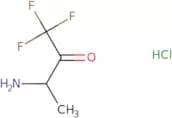
Formula:C14H13Cl2N5O4SPurezza:Min. 90%Colore e forma:Beige PowderPeso molecolare:418.26 g/mol3-Amino-1,1,1-trifluorobutan-2-one hydrochloride
CAS:3-Amino-1,1,1-trifluorobutan-2-one hydrochloride is a fine chemical that is used as a versatile building block in organic synthesis. This compound has been shown to be an effective intermediate for the synthesis of complex compounds. 3-Amino-1,1,1-trifluorobutan-2-one hydrochloride is also useful as a reactant for research and speciality chemicals with high quality and purity.Formula:C4H7ClF3NOPurezza:Min. 95%Peso molecolare:177.55 g/mol(N,N,Dimethyl)-(3-aminopropyl)sulfonamidehydrochloride
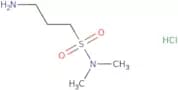
CAS:(N,N,Dimethyl)-(3-aminopropyl)sulfonamidehydrochloride is a fine chemical that can be used as a reagent for research or as a speciality chemical. It is also an intermediate for the synthesis of complex compounds and has versatile building blocks for organic synthesis. This compound is used in the preparation of pharmaceuticals, agrochemicals, and other useful chemicals. CAS No. 91893-74-2.Formula:C5H15ClN2O2SPurezza:Min. 95%Colore e forma:PowderPeso molecolare:202.7 g/mol4-Hydroxy-3-methoxybenzylamine hydrochloride
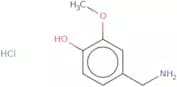
CAS:4-Hydroxy-3-methoxybenzylamine hydrochloride is a reagent, complex compound and useful intermediate for the production of speciality chemicals. CAS No. 7149-10-2 is not a hazardous chemical and does not pose any significant risk to human health or the environment when used as intended. This chemical has many uses including being a useful scaffold in organic synthesis, a useful building block for the preparation of other compounds, and a versatile building block for the preparation of various compounds. It also has many applications in research such as being an intermediate for the synthesis of other compounds, or as a reactant in various reactions.Formula:C8H12NO2ClPurezza:Min. 98 Area-%Colore e forma:White PowderPeso molecolare:189.64 g/mol(Propan-2-yl)[1-(thiophen-3-yl)ethyl]amine
CAS:Versatile small molecule scaffoldFormula:C9H15NSPurezza:Min. 95%Colore e forma:Clear LiquidPeso molecolare:169.29 g/mol3-Hydroxy-2,4,6-triiodobenzoic acid
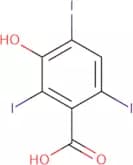
CAS:3-Hydroxy-2,4,6-triiodobenzoic acid (3HITBA) is a molecule that is found in the urine of patients with chronic kidney disease. It is present in group P2 of the periodic table. 3HITBA has been demonstrated to have anti-inflammatory properties and may be useful for the treatment of inflammatory diseases. 3HITBA has been shown to inhibit cancer cell growth by inhibiting DNA synthesis and protein synthesis. This molecule also has fluorescence properties and can be used to detect biological fluids such as blood or urine. The structural analysis of this molecule reveals that it contains intramolecular hydrogen bonds, which are important for its stability and activity.
Formula:C7H3O3I3Colore e forma:PowderPeso molecolare:515.81 g/mol7-Fluoro-4-(trifluoromethyl)-1H-indole
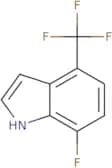
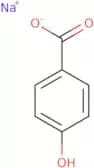
CAS:Versatile small molecule scaffoldFormula:C9H5F4NPurezza:Min. 95%Colore e forma:PowderPeso molecolare:203.14 g/mol4-Hydroxybenzoic acid sodium salt
CAS:4-Hydroxybenzoic acid sodium salt (4HBA) is a drug that is used in the treatment of bowel disease. It is an antimicrobial agent that has been shown to have activity against Gram-positive and Gram-negative bacteria, including Pseudomonas aeruginosa. 4HBA has also been shown to be effective in the treatment of ulcerative colitis and Crohn's disease by reducing the production of inflammatory cytokines. The mechanism of action for 4HBA is not fully understood, but it may be due to its ability to interfere with protein synthesis in bacteria, as well as inhibit antibody responses in humans. The structural biology studies on this compound have revealed that the α subunit can bind to the β subunit, which could affect its activity.Formula:C7H5O3NaPurezza:Min. 98 Area-%Colore e forma:White PowderPeso molecolare:160.1 g/mol3,5-Dihydroxy-2-naphthoic acid
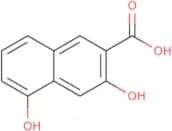
CAS:3,5-Dihydroxy-2-naphthoic acid (DHNA) is an organic compound with a red shift in the optical spectrum. DHNA is a regulatory domain found in functional groups, such as salicylic acid. It has been shown to inhibit bacterial growth and gram-negative organisms, including Escherichia coli and Pseudomonas aeruginosa. DHNA is also a potent inducer of triticum aestivum lysine carboxypeptidase A and B, which are proteases that function in protein digestion. This property may be due to its ability to bind to receptor subtypes of the epidermal growth factor type 2 receptor family.Formula:C11H8O4Purezza:Min. 95%Colore e forma:White PowderPeso molecolare:204.18 g/mol5-Hydroxymethyl-2-furancarboxylic acid
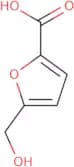
CAS:5-Hydroxymethylfurfural (5-HMF) is a structural analysis of the high values obtained in the reaction solution. 5-HMF is a polymerase chain reaction product that is obtained from p-hydroxybenzoic acid and malonic acid during the enzymatic conversion of carbohydrates. It can be used as a biocompatible polymer. The reaction mechanism for this process has been proposed to be through the formation of pyrazinoic acid, followed by an elimination reaction with chlorogenic acids. This mechanism is supported by modeling studies, which show that pyrazinoic acid is a key intermediate in the conversion of glucose to 5-HMF.Formula:C6H6O4Purezza:Min. 95%Colore e forma:White PowderPeso molecolare:142.11 g/molTricaine methanesulfonate
CAS:Tricaine methanesulfonate is a chemical that belongs to the group of anesthetics. It is used as a general anesthetic and to induce surgical anesthesia. Tricaine methanesulfonate has been shown to be effective in the treatment of pain, inflammation, and neurological disorders. Tricaine methanesulfonate also has a long half-life and does not cause histamine release or cardiovascular effects.
Formula:C9H11NO2·CH4O3SPurezza:Min. 98 Area-%Colore e forma:White PowderPeso molecolare:261.3 g/mol3,5,6-Trichlorosalicylic acid
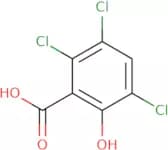
CAS:3,5,6-Trichlorosalicylic acid binds to the active site of bacterial 5-nitrosalicylic acid reductase and inhibits its activity. It is an inhibitor of proton-translocating ATPases. 3,5,6-Trichlorosalicylic acid has been shown to be effective against a variety of bacteria at low concentrations. 3,5,6-Trichlorosalicylic acid has also been shown to inhibit some physiological activities such as the light emission and chemiluminescent reaction of luciferin in fireflies. This chemical reacts with chloride ions to produce light.Formula:C7H3Cl3O3Purezza:Min. 95%Colore e forma:PowderPeso molecolare:241.46 g/mol4,5-Dichloro-3-hydroxypyridazine
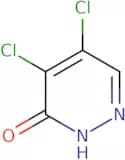
CAS:4,5-Dichloro-3-hydroxypyridazine is an organic compound that is used as a precursor to other compounds. It has been shown to be genotoxic and mutagenic in a number of assays with mammalian cells. 4,5-Dichloro-3-hydroxypyridazine reacts with phenols in the presence of Friedel-Crafts catalysts to form pyridine derivatives. It has also been shown to regulate transcriptional activity by binding to the prostacyclin receptor and α2-adrenergic receptor. This compound has been studied for its potential diagnostic value in the diagnosis of triticum aestivum (wheat) sensitivity.Formula:C4H2Cl2N2OPurezza:Min. 95%Colore e forma:PowderPeso molecolare:164.98 g/mol2-Hydroxyisoquinoline-1,3(2H,4H)-dione
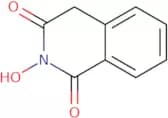
CAS:2-Hydroxyisoquinoline-1,3(2H,4H)-dione (2HIQ) is a potent anti-viral agent that has been shown to inhibit the replication of viruses in cell cultures. 2HIQ inhibits viral replication by binding to the enzyme reverse transcriptase and inhibiting its ability to synthesize DNA from RNA. This drug also has inhibitory properties against human immunodeficiency virus type 1 (HIV-1) and hepatitis C virus (HCV). 2HIQ binds to the active site of the enzyme HIV reverse transcriptase, which is a key enzyme in viral replication. It also binds to HCV NS5B polymerase, which is an essential protein in HCV replication. These interactions lead to inhibition of viral replication and thus prevention of disease progression.Formula:C9H7NO3Purezza:Min. 95%Colore e forma:Off-White To Brown SolidPeso molecolare:177.16 g/mol1-Hydroxyisoquinoline
CAS:1-Hydroxyisoquinoline is a molecule with a carbonyl group and is found in heart tissue. It has been proposed as a treatment for herpes simplex virus, but no studies have been done to confirm this. 1-Hydroxyisoquinoline can be prepared by reacting hydrochloric acid with sodium salts. This molecule also has the ability to inhibit cancer cells and may have potential as an anticancer agent. It also has anti-inflammatory properties, which may be due to its inhibition of prostaglandin synthesis. The mechanism of action for 1-hydroxyisoquinoline is not yet fully understood, but it inhibits the replication of DNA and RNA in cancer cells.Formula:C9H7NOPurezza:Min. 98 Area-%Colore e forma:White PowderPeso molecolare:145.16 g/molIndole-3-carboxaldehyde
CAS:Indole-3-carboxaldehyde is a versatile building block that can be used as an intermediate in the production of complex compounds. It is also a research chemical and reagent for speciality chemicals. Indole-3-carboxaldehyde has been shown to react with other chemicals to form high quality, useful intermediates or reaction components. This compound can also be used as a scaffold for chemical synthesis.Formula:C9H7NOPeso molecolare:145.16 g/molRef: 3D-I-2200
1kgPrezzo su richiesta100gPrezzo su richiesta250gPrezzo su richiesta500gPrezzo su richiesta2500gPrezzo su richiesta-Unit-kgkgPrezzo su richiestaBicyclo[2.1.1]hexane-1-carboxylic acid
CAS:Versatile small molecule scaffoldFormula:C7H10O2Purezza:Min. 95%Peso molecolare:126.15 g/mol


![(Propan-2-yl)[1-(thiophen-3-yl)ethyl]amine](/_next/image/?url=https%3A%2Fstatic.cymitquimica.com%2Fproducts%2F3D%2Fthumb-webp%2FAAC59964.webp&w=3840&q=75)



![Bicyclo[2.1.1]hexane-1-carboxylic acid](/_next/image/?url=https%3A%2Fstatic.cymitquimica.com%2Fproducts%2F3D%2Fthumb-webp%2FPCA72577.webp&w=3840&q=75)