Acidi carbossilici
Gli acidi carbossilici sono molecole organiche caratterizzate dalla presenza di un gruppo funzionale carbossilico (-COOH). Questi acidi sono fondamentali in varie reazioni chimiche, inclusa l'esterificazione, l'amidazione e la decarbossilazione. Gli acidi carbossilici sono ampiamente utilizzati nella produzione di prodotti farmaceutici, polimeri e agrochimici. In questa sezione, puoi trovare un gran numero di acidi carbossilici pronti all'uso. Presso CymitQuimica, forniamo un'ampia gamma di acidi carbossilici di alta qualità per supportare le tue applicazioni di ricerca e industriali.
Trovati 12454 prodotti di "Acidi carbossilici"
Ordinare per
Purezza (%)
0
100
|
0
|
50
|
90
|
95
|
100
Ref: IN-DA00DLG3
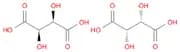
Prodotto fuori produzioneButanedioic acid, 2,3-dihydroxy-, (2R,3R)-rel-
CAS:Formula:C8H12O12Purezza:95%Colore e forma:LiquidPeso molecolare:300.1737Ref: IN-DA0011HB
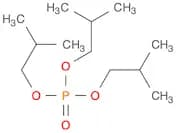
Prodotto fuori produzionePhosphoric acid, tris(2-methylpropyl) ester
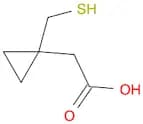
CAS:Formula:C12H27O4PPurezza:98%Colore e forma:LiquidPeso molecolare:266.3141Cyclopropaneacetic acid, 1-(mercaptomethyl)-
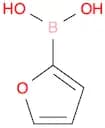
CAS:Formula:C6H10O2SPurezza:95%Colore e forma:SolidPeso molecolare:146.2074Boronic acid, B-2-furanyl-
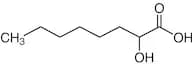
CAS:Formula:C4H5BO3Purezza:97%Colore e forma:SolidPeso molecolare:111.89172-Hydroxy-n-octanoic Acid
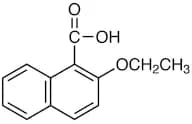
CAS:Formula:C8H16O3Purezza:>98.0%(T)Colore e forma:White to Almost white powder to crystalPeso molecolare:160.212-Ethoxy-1-naphthoic Acid
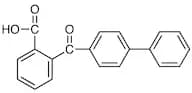
CAS:Formula:C13H12O3Purezza:>99.0%(T)(HPLC)Colore e forma:White to Almost white powder to crystalPeso molecolare:216.242-(4-Biphenylylcarbonyl)benzoic Acid
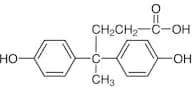
CAS:Formula:C20H14O3Purezza:>97.0%(GC)(T)Colore e forma:White to Almost white powder to crystalPeso molecolare:302.33Diphenolic Acid
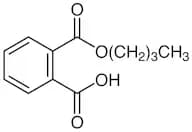
CAS:Formula:C17H18O4Purezza:>98.0%(GC)(T)Colore e forma:White to Light yellow powder to crystalPeso molecolare:286.33Monobutyl Phthalate
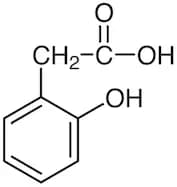
CAS:Formula:C12H14O4Purezza:>95.0%(GC)(T)Colore e forma:White to Almost white powder to crystalPeso molecolare:222.242-Hydroxyphenylacetic Acid
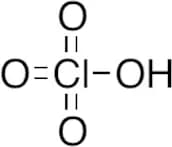
CAS:Formula:C8H8O3Purezza:>98.0%(GC)(T)Colore e forma:Light yellow to Yellow to Orange powder to crystalPeso molecolare:152.15Perchloric Acid (60%)
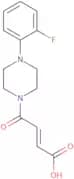
CAS:<p>Applications Perchloric Acid is a useful chemical reagent in the preparation of perchlorate salts. It is also known to be a strong oxidizer.<br> E0<br></p>Formula:ClHO4Purezza:60%Colore e forma:NeatPeso molecolare:100.45853-((2-Fluorophenyl)piperazinylcarbamoyl)prop-2-enoic acid
CAS:Prodotto controllato<p>Please enquire for more information about 3-((2-Fluorophenyl)piperazinylcarbamoyl)prop-2-enoic acid including the price, delivery time and more detailed product information at the technical inquiry form on this page</p>Formula:C14H15Fn2O3Purezza:Min. 80%Colore e forma:PowderPeso molecolare:278.29 g/molRef: 3D-FF168923
Prodotto fuori produzione2-Phenyl-4-quinolinecarboxylic acid
CAS:<p>2-Phenyl-4-quinolinecarboxylic acid is a nonsteroidal anti-inflammatory drug that is commonly used to treat bronchoconstrictor response and inflammatory bowel disease. It is also an antimicrobial agent, which can be used to treat infectious diseases. The compound was found to have structural similarity to other nonsteroidal anti-inflammatory drugs, such as ibuprofen and naproxen. 2-Phenyl-4-quinolinecarboxylic acid has shown the ability to inhibit leukemia inhibitory factor (LIF) production by lymphocytes, which may have a role in the development of leukemia. This drug also possesses antioxidative properties and has been shown to have high values in group P2 polymerase chain reactions.</p>Formula:C16H11NO2Purezza:Min. 98.5%Colore e forma:PowderPeso molecolare:249.26 g/molNonanoic acid
CAS:<p>Nonanoic acid is a fatty acid that is metabolized by the liver, and is used as a substrate in the film-forming test to measure the rate constant of glycol ethers. Nonanoic acid also has anti-inflammatory properties and can be used to treat skin diseases caused by bacteria. It can also be used as a therapeutic for people with chronic obstructive pulmonary disease (COPD). In mice, nonanoic acid has been shown to have an antibacterial effect on Gram-positive bacteria, including methicillin resistant Staphylococcus aureus (MRSA). This compound also prevents the activation of toll-like receptor 4 (TLR4) and TLR2 in human monocytes. Nonanoic acid is structurally similar to benzalkonium chloride and pelargonic acid, which are both antimicrobial agents.</p>Formula:C9H18O2Purezza:Min. 95 Area-%Colore e forma:Clear LiquidPeso molecolare:158.24 g/molRef: 3D-FN34493
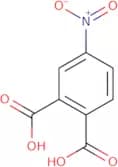
Prodotto fuori produzione4-Nitrophthalic acid
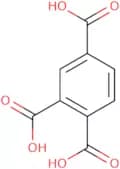
CAS:<p>4-Nitrophthalic acid is a white crystalline solid that has an acid and basic character. It has been shown to be antigenic, with a specific antibody able to bind to the 4-nitro group. The structure of 4-Nitrophthalic acid was determined using X-ray crystallography and NMR spectroscopy. The molecular weight of 4-Nitrophthalic acid is 177.2 g/mol, with a melting point of 174 °C and a boiling point of 341 °C. It is soluble in water and organic solvents such as ethanol, acetone, chloroform, ethyl ether, benzene, hexane, dichloromethane and ethyl acetate.</p>Formula:C8H5NO6Purezza:Min. 97 Area-%Colore e forma:White PowderPeso molecolare:211.13 g/mol1,2,4-Benzenetricarboxylic acid
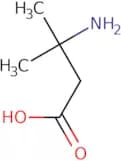
CAS:<p>1,2,4-Benzenetricarboxylic acid is a natural compound that belongs to the group of polyvinyl derivatives. It can be synthesized by reacting trimellitic anhydride with sodium salts in a reaction solution containing trifluoroacetic acid. The compound has been used as a component in analytical methods for determining the purity of polyvinyl chloride (PVC). 1,2,4-Benzenetricarboxylic acid is also known to react with human serum proteins and ester linkages to form carcinogenic compounds. 1,2,4-Benzenetricarboxylic acid reacts rapidly with the film of methyl ethyl ketone to form methyl ethyl benzoate.</p>Formula:C9H6O6Purezza:Min. 98 Area-%Colore e forma:White PowderPeso molecolare:210.14 g/mol3-Amino-3-methylbutanoic acid
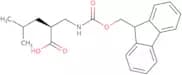
CAS:<p>3-Amino-3-methylbutanoic acid is a carbonaceous compound that can be synthesized from b-alanine and perchloroethylene. It is used in the manufacture of butanoic acid, which is an important industrial chemical. 3-Amino-3-methylbutanoic acid has been shown to exist as four isomers, each with a different molecular weight. The isomers are produced by a synthetic process involving the reaction of b-alanine and perchloroethylene. In an amination reaction, the compounds are heated in the presence of ammonia gas or ammonium chloride to form 3-amino-3-methylbutanoic acid.</p>Formula:C5H11NO2Purezza:Min 95%Colore e forma:PowderPeso molecolare:117.15 g/molFmoc-(S)-2-(aminomethyl)-4-methylpentanoic acid
CAS:<p>Fmoc-(S)-2-(aminomethyl)-4-methylpentanoic acid is a proteinogenic amino acid that is used in the production of casein and other dairy products. It is also found in wheat, where it can be converted to the essential amino acid methionine. Fmoc-(S)-2-(aminomethyl)-4-methylpentanoic acid is classified as a high-quality protein because it contains all eight essential amino acids (EAAs). It has been shown that when dietary intakes are low, malnourished children may benefit from increased intake of this amino acid.</p>Formula:C22H25NO4Purezza:Area-% Min. 95 Area-%Colore e forma:PowderPeso molecolare:367.44 g/mol