Glicoscienza
La glicosienza è lo studio dei carboidrati e dei loro derivati, nonché delle interazioni e delle funzioni biologiche a cui partecipano. Questo campo di ricerca è cruciale per comprendere una vasta gamma di processi biologici, tra cui il riconoscimento cellulare, la segnalazione, la risposta immunitaria e lo sviluppo delle malattie. La glicosienza ha importanti applicazioni nella biotecnologia, nella medicina e nello sviluppo di nuovi farmaci e terapie. Presso CymitQuimica, offriamo un'ampia selezione di prodotti di alta qualità e purezza per la ricerca in glicosienza. Il nostro catalogo comprende monosaccaridi, oligosaccaridi, polisaccaridi, glicoconiugati e reagenti specifici, progettati per supportare i ricercatori nei loro studi sulla struttura, funzione e applicazioni dei carboidrati nei sistemi biologici. Queste risorse sono destinate a facilitare scoperte scientifiche e applicazioni pratiche in vari ambiti delle bioscienze e della medicina.
Sottocategorie di "Glicoscienza"
- Amminozucchero(108 prodotti)
- Glico-anticorpi(282 prodotti)
- Glicolipidi(46 prodotti)
- Glicosaminoglicani (GAGs)(55 prodotti)
- Glicosidi(419 prodotti)
- Monosaccaridi(6.624 prodotti)
- Oligosaccaridi(3.682 prodotti)
- Polisaccaridi(503 prodotti)
Trovati 11046 prodotti di "Glicoscienza"
Ordinare per
Purezza (%)
0
100
|
0
|
50
|
90
|
95
|
100
Globo H pentenyl glycoside
CAS:<p>GloboH-pentanyl backbone for incorporation onto peptide or conjugated to protein</p>Purezza:Min. 95%D-Lactose monohydrate
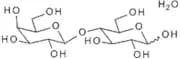
CAS:<p>Lactose is the principal sugar in human and most other mammalian milks, ( 4-O-(β-d-galactopyranosyl)-d-glucopyranose) (Collins, 2006). Lactose undergoes mutarotation; it is a reducing sugar and is significantly less soluble in water than sucrose. Lactose is much less sweet than sucrose (at ~1% about 0.15 (sucrose=1). The enzyme lactase (β-galactosidase), which is present in the small intestine, catalyzes hydrolysis of lactose to form glucose and galactose. Anhydrous lactose is an excipient, filler, diluent, and bulking agent in a wide variety of pharmaceutical tablets, capsules, powders and other preparations. Lactose also has applications as a nutrient and multi-functional ingredient in infant formulae, geriatric, dietetic and health foods (Linko, 1982).</p>Formula:C12H22O11·H2OPurezza:Min. 96 Area-%Colore e forma:White Off-White PowderPeso molecolare:360.31 g/molRef: 3D-OL02402
Prodotto fuori produzioneMethyl 2,3-di-O-p-toluenesulfonyl-6-O-trityl-a-D-glucopyranoside
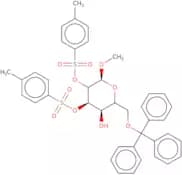
CAS:<p>Methyl 2,3-di-O-p-toluenesulfonyl-6-O-trityl-a-D-glucopyranoside is a custom synthesis of a natural product. It is an analogue of the disaccharide sucrose (CAS No. 69649-64-5). Methyl 2,3-di-O-p-toluenesulfonyl 6-[(trityloxy)methyl]-a-(1,2:4,5)-D glucopyranoside reacts with fluoride ion to form methyl 2,3 di -O - p - toluenesulfonyl 6-[(trityloxy)methyl]-a-(1,2:4,5)-D glucopyranoside fluoride ion. The monosaccharides are linked by glycosyl bonds and can be modified by different reactions such as oxidation or reduction. The saccharide can be modified</p>Formula:C40H40O10S2Purezza:Min. 95%Peso molecolare:744.87 g/mol2-Acetamido-2-deoxy-4-O-(b-D-galactopyranosyl)-D-glucopyranose
CAS:<p>2-Acetamido-2-deoxy-4-O-(b-D-galactopyranosyl)-D-glucopyranose LacNAc isomer. This compound has been shown to inhibit pro-inflammatory cytokines in human bronchial epithelial cell lines, which may be helpful in treating inflammatory conditions. The compound can be analyzed using high-performance liquid chromatography (HPLC), which separates molecules based on their chemical properties. The acid residues present in the molecule make it an ideal target for antibodies and polymer-based drug delivery systems. In host cells, this compound is involved in various biological processes related to cell adhesion and signaling.</p>Formula:C14H25NO11Purezza:Min. 95%Colore e forma:PowderPeso molecolare:383.35 g/molRef: 3D-OA174826
Prodotto fuori produzioneEthyl 2-acetamido-3,4,6-tri-O-acetyl-2-deoxy-b-D-thioglucopyranoside
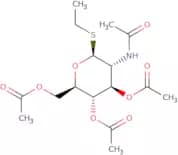
CAS:<p>Ethyl 2-acetamido-3,4,6-tri-O-acetyl-2-deoxy-b-D-thioglucopyranoside is a modified carbohydrate that has been synthesized by the click modification of an acetylated triose. This chemical was synthesized by reacting ethyl 2-(2'-deoxy-(1->4)-beta--D--glucopyranoside) with trimethylsilylacetamide and copper(I) chloride in dry tetrahydrofuran. This product has high purity and is used as a research tool for glycobiology.</p>Formula:C16H25NO8SPurezza:Min. 95%Colore e forma:White PowderPeso molecolare:391.44 g/mol4-Methoxyphenyl 2,4,6-tri-O-benzoyl-a-D-mannopyranoside
<p>4-Methoxyphenyl 2,4,6-tri-O-benzoyl-a-D-mannopyranoside is a glycosylation product of mannose with 4-methoxybenzoic acid. It is a complex carbohydrate that has been modified by methylation and click modification. The fluorination increases the reactivity of the hydroxyl groups on the sugar ring. This product can be synthesized in high purity and custom synthesis.</p>Formula:C34H30O10Purezza:Min. 95%Peso molecolare:598.6 g/molSialyl Lewis X methyl glycoside sodium salt
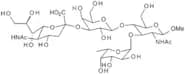
CAS:<p>Glycoside of Sialyl Lewis X</p>Formula:C32H54N2O23Purezza:Min. 95%Colore e forma:White PowderPeso molecolare:834.77 g/molRef: 3D-OS04855
Prodotto fuori produzione2-Deoxy-2-fluoro-D-glucose
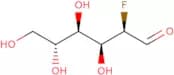
CAS:<p>Inhibitor of hexokinase isozymes and cellular glycosylation</p>Formula:C6H11FO5Purezza:Min. 95%Colore e forma:White PowderPeso molecolare:182.15 g/mol3-Deoxy-D-glucose
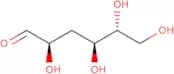
CAS:<p>3-Deoxy-D-glucose (3DG) is a molecule that belongs to the class of carbohydrates. It is an analog of D-glucose, which is the key substrate for the production of energy in mammalian cells. 3DG has been shown to inhibit the uptake of glucose by trypanosomes and also inhibits glycolysis in mammalian cells. The inhibition of glycolysis may be due to its ability to prevent the phosphorylation of glucose by hexokinase, thus blocking the conversion of glucose into glucose 6-phosphate. 3DG is biosynthesized from d-xylose, which is a five carbon sugar that can be oxidized to form CO2 and H2O.</p>Formula:C6H12O5Purezza:Min. 98 Area-%Colore e forma:White Off-White PowderPeso molecolare:164.16 g/molFucoidan, macrocystis pyrifera
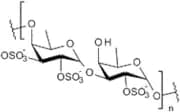
CAS:<p>A fucan sulphate found in brown marine algae (Phaeophyta-typically Fucus vesiculotus, Ascophyllum nodosum, Alaria and Macrocystis pyrifyra (illustrated) and has been shown to have anticoagulant activity. The main constituents are α-1,4 and α-1,2 linked L-fucose sulphates, although galactose also occurs and there are many variations of the basic structure found in different species of Phaeophyta.<br>The fucose content of this fucan is approx. 31% and it also contains galactose (approx. 2.2%), uronic acid (approx. 12.4%) and sulfate (approx. 32.5%).<br>The image was kindly provided by Prof Mike Guiry from Cork who runs ‘The Seaweed Site’.</p>Purezza:Min. 95%Colore e forma:White Powdera-Acetobromo-D-xylose
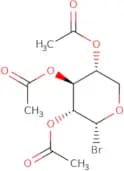
CAS:<p>a-Acetobromo-D-xylose is an oligosaccharide sugar used in glycosylation and polysaccharide modifications. It is synthesized by the fluorination of xylose with acetic acid, bromine, and a base. The product is purified by vacuum distillation and recrystallization. In addition to its use as a carbohydrate, this product can be modified using methylation or click chemistry to create derivatives.</p>Formula:C11H15BrO7Purezza:Min. 95%Peso molecolare:339.14 g/molMethyl 2,3,4,6-tetra-O-benzyl-D-galactopyranoside
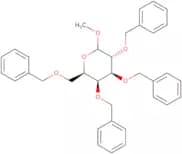
CAS:<p>Methyl 2,3,4,6-tetra-O-benzyl-D-galactopyranoside is a trisaccharide that binds to the fluorescent chromophore. It has been shown to have strong binding activity and can be used for the labeling of carbohydrates. Methyl 2,3,4,6-tetra-O-benzyl-D-galactopyranoside is also used in assays to detect toxins or as a fluorescent label for polymers. This compound can be synthesized by reacting methyl 4,6-dibenzyloxybenzoate with glucose in methanol.</p>Formula:C35H38O6Purezza:Min. 95%Colore e forma:PowderPeso molecolare:554.67 g/molRef: 3D-MM02503
Prodotto fuori produzioneBlood group A type 4 linear trisaccharide-NGL
<p>Useful oligosaccharide-lipid conjugate for raising antibodies.</p>Purezza:Min. 95%Cellobionic acid ammonium salt
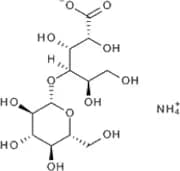
CAS:<p>Cellobionic acid is produced by oxidative enzymes working on cellulose. These compounds have found application in cosmetic antiaging formulations, moisturizers, and peels, and in treatment products to improve hyperpigmentation and acne. The bionic acids such as cellobionic acid offer the benefits of α-hydroxyacids without irritation. They also provide additional antioxidant/chelation, barrier strengthening, and moisturizing effects.</p>Formula:C12H25NO12Purezza:Min. 95%Colore e forma:Off-White PowderPeso molecolare:375.33 g/mol1,4-Anhydro-2,O:5,6-di-O-isopropylidene-2-C-(hydroxymethyl)-D-galactitol
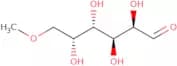
<p>1,4-Anhydro-2,O:5,6-di-O-isopropylidene-2-C-(hydroxymethyl)-D-galactitol is a custom synthesis. It is commonly used in the modification of saccharides and oligosaccharides to produce fluorinated derivatives with various functional groups. The preparation of this compound has been described by Click chemistry.</p>Purezza:Min. 95%6-O-Methyl-D-galactopyranose
CAS:<p>6-O-Methyl-D-galactopyranose is a monosaccharide that is an important component of the glycosidic linkage in the plant galactomannans. 6-O-Methyl-D-galactopyranose has been shown to be a good substrate for immobilized lectin, which can be used in ionization techniques as well as to characterize glycoproteins and glycopeptides. 6-O-Methyl-D-galactopyranose has also been used in the identification of blood groups and amino acid analysis.</p>Formula:C7H14O6Purezza:Min. 97 Area-%Colore e forma:White Off-White PowderPeso molecolare:194.18 g/molRef: 3D-MM67693
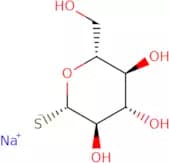
Prodotto fuori produzioneb-D-Thioglucose sodium salt
CAS:<p>Keratin-reducing component in cosmetic applications; used in Glc conjugation</p>Formula:C6H11NaO5SPurezza:Min. 95%Colore e forma:White PowderPeso molecolare:218.2 g/molUDP-a-D-galactose disodium salt
CAS:<p>UDP-a-D-galactose disodium salt is a nucleotide sugar that is used in the synthesis of oligosaccharides. It is also used to identify mammalian cells that express UDP-galactose:quinone oxidoreductase, which are responsible for synthesizing the sugar. It is a building block of the influenza virus and has been shown to inhibit viral growth by interfering with RNA synthesis. This compound can be synthesized using solid-phase synthesis or multienzyme strategy.</p>Formula:C15H22N2O17P2·2NaPurezza:Min. 95 Area-%Peso molecolare:610.27 g/molN-Acetyl-D-mannosamine
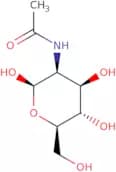
CAS:<p>N-Acetyl D-mannosamine (ManNAc) is an aldohexose (2-acetamido-2-deoxymannose) in which the axial hydroxyl group at position 2 is replaced by a N-acetyl group (Collins, 2006). It has been reported that N-acetyl D-mannosamine supplementation, may provide novel means to break the link between obesity and hypertension (Peng, 2019). N-Acetyl-D-mannosamine and N-acetyl-D-glucosamine are the essential precursors of sialic acid, the specific monomer of polysialic acid, a bacterial pathogenic determinant, for example, Escherichia coli K1 uses both amino sugars as carbon sources. It has been reported that ManNAc can be used as a treatment for hereditary inclusion body myopathy, an adult-onset, progressive neuromuscular disorder and also for renal disorders involving proteinuria and hematuria due to podocytopathy and/or segmental splitting of the glomerular basement membrane (Galeano, 2007).</p>Formula:C8H15NO6Purezza:Min. 98 Area-%Colore e forma:White PowderPeso molecolare:221.21 g/molRef: 3D-MA05269
Prodotto fuori produzioneCarboxymethyl-b-cyclodextrin sodium salt
<p>This beta-cyclodextrin (β-CD) derivative is a functionalized cyclic oligosaccharide composed of seven glucose units, characterized by a hydrophilic exterior and a lipophilic cavity (bigger than α-CD and smaller than γ-CDs), which allows it to encapsulate various guest molecules. This structural feature facilitates its use in multiple applications, including pharmaceuticals, food enhancement, and cosmetics. In the pharmaceutical industry, it enhances the solubility and stability of poorly water-soluble drugs, improving their bioavailability and efficacy while also masking unpleasant tastes. The food sector utilizes it as a stabilizer for flavors, colors, and nutrients, extending shelf life by protecting sensitive ingredients from degradation. In cosmetics, it serves as a complexing agent for fragrances and active components, ensuring their stability and controlled release. Its use expands to many other fields, including nanotechnology for drug delivery systems, environmental remediation for extracting organic pollutants, textiles for slow-release fragrances, and analytical chemistry for chiral separation.</p>Formula:C49H74O42·xNaPurezza:Min. 95%Colore e forma:White PowderPeso molecolare:1,335.09 g/mol