Glicoscienza
La glicosienza è lo studio dei carboidrati e dei loro derivati, nonché delle interazioni e delle funzioni biologiche a cui partecipano. Questo campo di ricerca è cruciale per comprendere una vasta gamma di processi biologici, tra cui il riconoscimento cellulare, la segnalazione, la risposta immunitaria e lo sviluppo delle malattie. La glicosienza ha importanti applicazioni nella biotecnologia, nella medicina e nello sviluppo di nuovi farmaci e terapie. Presso CymitQuimica, offriamo un'ampia selezione di prodotti di alta qualità e purezza per la ricerca in glicosienza. Il nostro catalogo comprende monosaccaridi, oligosaccaridi, polisaccaridi, glicoconiugati e reagenti specifici, progettati per supportare i ricercatori nei loro studi sulla struttura, funzione e applicazioni dei carboidrati nei sistemi biologici. Queste risorse sono destinate a facilitare scoperte scientifiche e applicazioni pratiche in vari ambiti delle bioscienze e della medicina.
Sottocategorie di "Glicoscienza"
- Amminozucchero(108 prodotti)
- Glico-anticorpi(282 prodotti)
- Glicolipidi(46 prodotti)
- Glicosaminoglicani (GAGs)(55 prodotti)
- Glicosidi(419 prodotti)
- Monosaccaridi(6.624 prodotti)
- Oligosaccaridi(3.682 prodotti)
- Polisaccaridi(503 prodotti)
Trovati 11046 prodotti di "Glicoscienza"
Ordinare per
Purezza (%)
0
100
|
0
|
50
|
90
|
95
|
100
Methyl 3,4,6-tri-O-acetyl-2-deoxy-2-phthalimido-b-D-thioglucopyranoside
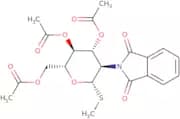
CAS:<p>Methyl 3,4,6-tri-O-acetyl-2-deoxy-2-phthalimido-b-D-thioglucopyranoside (MTATP) is a drug that has been shown to be effective in treating pancreatitis and colitis. It has also shown promise as an anticancer agent. MTATP is a small molecule that inhibits the growth of cancer cells by inhibiting the enzyme phosphodiesterase 4B. This enzyme plays a role in the regulation of intracellular signaling pathways and is involved in cell proliferation and differentiation. MTATP has been shown to inhibit the activity of this enzyme, preventing cancer cells from proliferating and promoting their differentiation instead.</p>Formula:C21H23NO9SPurezza:Min. 95%Colore e forma:White Off-White PowderPeso molecolare:465.47 g/molLactose - anhydrous
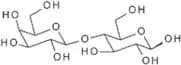
CAS:<p>Anhydrous lactose is an excipient, filler, diluent, and bulking agent in a wide variety of pharmaceutical tablets, capsules, powders and other preparations. It also has applications as a nutrient and multi-functional ingredient in infant formulae, geriatric, dietetic and health foods and may be used as an ingredient in culture media.</p>Formula:C12H22O11Purezza:Min. 98 Area-%Colore e forma:PowderPeso molecolare:342.3 g/molL-Erythrulose
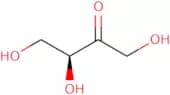
CAS:<p>L-Erythrulose is an organic compound that is a sugar alcohol. It can be synthesized from the aldol reaction of glycolaldehyde and dehydroascorbic acid, which are both found in natural sources. L-Erythrulose has shown to have intramolecular hydrogen transfer (H-transfer) reactions, where the hydroxyl group migrates from one C atom to another. This kinetic data was obtained using surface methodology on model systems containing l-erythrulose and bacteria with wild-type or mutant strains. The conformational properties of L-erythrulose were also investigated by comparing its chemical structures with those of other sugars.</p>Formula:C4H8O4Purezza:Min. 95%Colore e forma:Yellow Clear LiquidPeso molecolare:120.1 g/mol4-Methoxyphenyl 2,4,6-tri-O-(3,4,6-tri-O-benzyl-2-deoxy-2-phthalimido-β-D-glucopyranosyl)-3-O-benzyl-α-D-mannopyranoside
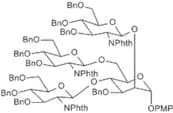
4-Methoxyphenyl 2,4,6-tri-O-(3,4,6-tri-O-benzyl-2-deoxy-2-phthalimido-b-D-glucopyranosyl)-3-O-(benzyl)aDmannopyranoside is a custom synthesis of an oligosaccharide. It is an acetal derivative of 4methoxyphenyl 2,4,6tri O-(3,4,6tri Obenzyl 2deoxy2 phthalimido b D glucopyranosyl) 3 O (benzyl) ad mannopyranoside with a methoxymethyl group at the C5 position and a benzyl ether moiety at the C6 position. The molecule contains a methylated sugar as well as fluorine modification on the ring oxygen atom. This molecule has a high purity and is offered in both monosFormula:C125H117N3O25Purezza:Min. 95%Peso molecolare:2,061.27 g/molN-Acetyl-2-O-methyl-α-D-neuraminic acid
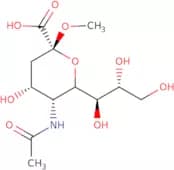
CAS:N-acetylneuraminic acid derivative and a useful tool for the study of sialic acid binding to its ligands. It was previously used for such purpose in studies on the influenza binding to hemagglutinin. This compound was also used for investigation of Clostridium botulinum toxin binding to various sugars.Formula:C12H21NO9Purezza:Min. 95%Colore e forma:White PowderPeso molecolare:323.3 g/mol5-Thio-D-glucose
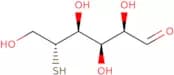
CAS:<p>Thiosugar hexokinase inhibitor; inhibits cellular transport of D-glucose</p>Formula:C6H12O5SPurezza:Min. 97 Area-%Colore e forma:White PowderPeso molecolare:196.22 g/mol1,2,3,4-Tetra-O-pivaloyl-6-O-(tert-butyldimethylsilyl)-a-D-mannopyranose
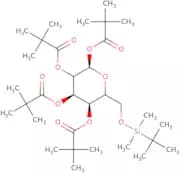
<p>1,2,3,4-Tetra-O-pivaloyl-6-O-(tert-butyldimethylsilyl)-a-D-mannopyranose is a synthetic compound that can be used as a fluorinated monosaccharide. It is synthesized from 1,2,3,4-tetra-O-pivaloyl-6-[(tert-butyldimethylsilyl)oxy]-aD mannopyranose. This product is also known as Tetra O Pivalate Mannose (TPM). This product has been shown to be effective in the synthesis of carbohydrates and complex carbohydrates.</p>Formula:C32H58O10SiPurezza:Min. 95%Peso molecolare:630.88 g/mol2,3,4,6-Tetra-O-methyl-D-glucose
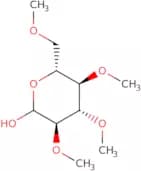
CAS:<p>methyl ether of glucose with the anomeric position free.</p>Formula:C10H20O6Purezza:Min. 95%Colore e forma:PowderPeso molecolare:236.26 g/molMethyl 2-deoxy-a-D-ribopyranoside
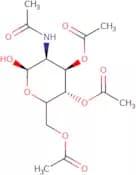
CAS:<p>Methyl 2-deoxy-a-D-ribopyranoside is a sugar molecule that is used in the synthesis of glycosides, saccharides, oligosaccharides, and polysaccharides. It has been shown to be an effective reagent for the fluorination of saccharides and sugars. Methyl 2-deoxy-a-D-ribopyranoside is also used for modification of complex carbohydrates and other organic molecules.</p>Formula:C6H12O4Purezza:Min. 95%Peso molecolare:148.16 g/mol2-Acetamido-3,4,6-tri-O-acetyl-2-deoxy-D-glucopyranose
CAS:<p>2-Acétamido-3,4,6-tri-O-acetyl-2-deoxy-D-glucopyranose is a cytotoxic glycoside that can be used as an intermediate in the synthesis of saponins. It has been shown to yield high yields of trifluoromethanesulfonate (TFM) when reacted with glycosyl acceptors such as albizia bark extract. The TFM may then be used for the synthesis of nitromethane and alcohols. This compound also reacts with oleanolic acid to form an anomeric mixture that can be used to yield 2,3,4,6 tetraacetylated 2 deoxyglucose.</p>Formula:C14H21NO9Purezza:Min. 95%Colore e forma:PowderPeso molecolare:347.32 g/mol1,2,3,4-Tetra-O-benzoyl-6-O-tert-butyldiphenylsilyl-b-D-glucopyranose
1,2,3,4-Tetra-O-benzoyl-6-O-tert-butyldiphenylsilyl-b-D-glucopyranose is a synthetic sugar that is used as an intermediate in the synthesis of a variety of saccharides. It is prepared by the benzoylation of glucose with 1,2,3,4 tetra O benzoyl chloride in the presence of tert butyldiphenylsilyl chloride. The product is then treated with hydrochloric acid to form the corresponding methyl ester. This compound has been shown to have high purity and excellent solubility in organic solvents.Formula:C50H46O10SiPurezza:Min. 95%Peso molecolare:835 g/mol1-O-(α-Glucopyranosyl)-D-mannitol dihydrate
CAS:<p>Inulin is a naturally occurring plant carbohydrate that is present in over 36,000 species of plants. Inulin can be found in the roots, tubers, and leaves of various plants. It is used as a food additive and as an ingredient in dietary supplements. Inulin has been shown to have clinical relevance for energy metabolism and fatty acid synthesis. It has also been shown to be effective against inflammatory bowel disease when used as a prebiotic. Isomalt (inositol hexaphosphate) is an artificial sweetener that is often used in sugar-free products such as chewing gum or candy. Anthelmintic drugs are medications that kill worms, which may include nematodes or cestodes. Probiotics are live bacteria that can provide health benefits to humans when consumed in adequate amounts. Acid formation refers to the process by which the stomach produces hydrochloric acid to digest food during digestion. Symptoms of bowel disease include diarrhea and abdominal pain. Water vapor refers to water molecules</p>Formula:C12H24O11•2H2OPurezza:Min. 95%Colore e forma:PowderPeso molecolare:380.34 g/mola-D-Maltose octaacetate
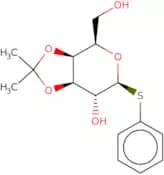
CAS:<p>Starch breakdown product; sweetening agent; fermentable intermediate in brewing</p>Formula:C28H38O19Purezza:Min. 95%Peso molecolare:678.59 g/molPhenyl 3,4-O-isopropylidene-b-D-thiogalactopyranoside
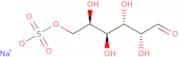
CAS:<p>Phenyl 3,4-O-isopropylidene-b-D-thiogalactopyranoside is a custom synthesis of the complex carbohydrate Oligosaccharide, Polysaccharide. It belongs to Modification, saccharide, Methylation, Glycosylation, Carbohydrate. Phenyl 3,4-O-isopropylidene-b-D-thiogalactopyranoside can be used for Click modification, sugar and High purity. This compound is Fluorinated and Synthetic.</p>Formula:C15H20O5SPurezza:Min. 95%Colore e forma:PowderPeso molecolare:312.38 g/molD-Galactose-6-O-sulphate sodium
CAS:D-Galactose-6-O-sulphate sodium salt is used as a diagnostic agent to measure the level of galactose in blood and tissues. The enzyme that hydrolyzes D-galactose-6-O-sulphate, galactose oxidase, is present in leukocytes and chorionic villi. The enzymatic assay for this chemical is based on the reaction between D-galactose and sulfite to form D-galactosulfonic acid. This reaction is catalysed by a sulphatase enzyme. A fluorimetric method can be used to measure the formation of D-galactosulfonic acid.Formula:C6H11O9SNaPurezza:Min. 95%Colore e forma:White PowderPeso molecolare:282.2 g/molEthyl 2,3,4,6-tetra-O-benzyl-b-D-thiogalactopyranoside
CAS:Ethyl 2,3,4,6-tetra-O-benzyl-b-D-thiogalactopyranoside is a synthetically produced saccharide typically used as a building block in oligo-saccharide synthesis.Formula:C36H40O5SPurezza:Min. 98 Area-%Peso molecolare:584.77 g/mol2,6-Dideoxy-D-arabino-hexose
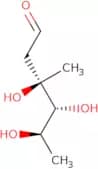
CAS:<p>2,6-Dideoxy-D-arabino-hexose is a hydrogenolysis product of 2,6-dideoxy-D-ribo-hexose. It has been shown to have a solvolytic activity and can be used for the dehalogenation of several halogenated compounds. 2,6-Dideoxy-D-arabino-hexose is also stereoselective and can be used as an estimator in population genetics. This sugar is also regulatory, catalytic, and crystalline. It is found in many carbohydrates, including weighting disaccharides such as sucrose.</p>Purezza:Min. 95%1,2,3,4-Tetra-O-pivaloyl-6-O-trityl-b-D-glucopyranose
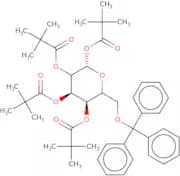
CAS:1,2,3,4-Tetra-O-pivaloyl-6-O-trityl-b-D-glucopyranose is a trityl derivative of glucose that can be used as a diagnostic agent for the assessment of cancer. When labeled with radioactive iodine, 1,2,3,4-Tetra-O-pivaloyl-6-O-trityl-b-D-glucopyranose has been shown to accumulate in bile and esophageal cancer cells. Magnetic resonance imaging (MRI) was used to evaluate the distribution of 1,2,3,4 tetra O pivaloyl 6 O trityl b D glucopyranose in patients with cirrhosis. The results suggest that this compound can be used as an indicator for the diagnosis of liver disease.Formula:C45H58O10Purezza:Min. 95%Peso molecolare:758.94 g/mol1,3,4,6-Tetra-O-acetyl-b-D-mannopyranose
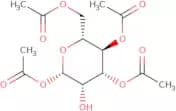
CAS:<p>1,3,4,6-Tetra-O-acetyl-b-D-mannopyranose is a radiopharmaceutical that is used to diagnose and evaluate malignant tumors. It is a diagnostic agent for the detection of cancerous cells in patients with suspected cancer. The molecule emits gamma radiation when it decays. This product has been tested in experimental studies on animals and humans with tumors. There are no known side effects or interactions with other drugs. 1,3,4,6-Tetra-O-acetyl-b-D-mannopyranose can be administered intravenously or orally and can be used to detect cancerous cells in the stomach and small intestine.</p>Formula:C14H20O10Purezza:Min. 95%Colore e forma:White PowderPeso molecolare:348.3 g/mol2,3,4,6-Tetra-O-benzyl-D-mannopyranosyl fluoride
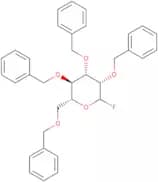
CAS:<p>2,3,4,6-Tetra-O-benzyl-D-mannopyranosyl fluoride is a glycosylamine that has been synthesized from l-threonine. The chemical structure of this compound can be classified as a pyranose sugar with an O-methylated benzyl group at the C2 position. This sugar is synthesized by reductive cleavage of the methyl ether and subsequent reaction with sodium borohydride. The conformational analysis of the molecule was performed using molecular mechanics calculations and quantum mechanical simulations. In addition, electron paramagnetic resonance (EPR) experiments were conducted to determine the chemical shift in the 1H NMR spectrum and to identify the acceptor or donor in the molecule. Trichloroacetimidates are used as monomers for this type of synthesis because they provide good yields and can be easily prepared by reacting chloroacetic acid with chloral hydrate.</p>Formula:C34H35FO5Purezza:Min. 95%Colore e forma:Yellow PowderPeso molecolare:542.64 g/molβ-D-Glucose-1-phosphate disodium
CAS:<p>b-D-Glucose-1-phosphate disodium salt is a white crystalline powder that is soluble in water, ethanol, and acetone. It is a monosaccharide with the molecular formula C6H12O6P2Na2. It has a molecular weight of 348.08 g/mol.</p>Formula:C6H13O9P•Na2Purezza:Min. 95%Colore e forma:PowderPeso molecolare:306.12 g/mol4,6-O-Benzylidene-D-glucose
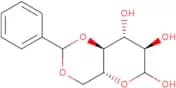
CAS:<p>4,6-O-Benzylidene-D-glucose is a potent inhibitor of the enzyme dibutyltin oxide, which is involved in the synthesis of energy. It has been shown to have clinical activity in rat cardiomyocytes and has been tested in clinical studies. 4,6-O-Benzylidene-D-glucose inhibits enzymes by forming hydrogen bonds with their substrates. This compound also interacts with hydrochloric acid to form a stable complex that prevents it from interacting with other molecules. 4,6-O-Benzylidene-D-glucose is rapidly broken down into glucose and benzaldehyde when it reacts with carbonyl groups or amines. The asymmetric synthesis of this compound can be achieved using an intramolecular hydrogen transfer reaction. <br>4,6-O-Benzylidene glucose is derived from D-mannose derivatives and contains a hydroxyl group on the central carbon</p>Formula:C13H16O6Purezza:Min. 98 Area-%Colore e forma:White PowderPeso molecolare:268.26 g/mol1,3,5-Tri-O-benzoyl-2-deoxy-2-bromo-α-L-arabinofuranose
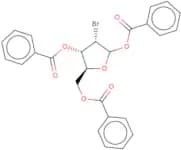
1,3,5-Tri-O-benzoyl-2-deoxy-2-bromo-alpha-L-arabinofuranose is a complex monosaccharide that can be used as a building block in the synthesis of various compounds. It is a derivative of the sugar arabinose, with the addition of benzoyl and bromo groups at specific positions. The compound has potential applications in the fields of organic chemistry and medicinal chemistry and is available for research.Formula:C26H21BrO7Purezza:Min. 95%Peso molecolare:524.04 g/mol2-Acetamido-3,4,6-tri-O-benzyl-2-deoxy-a-D-galactopyranosyl-(N-Fmoc)-L-threonine
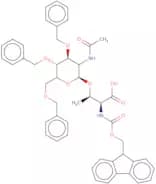
CAS:<p>2-Acetamido-3,4,6-tri-O-benzyl-2-deoxy-a-D-galactopyranosyl-(N-Fmoc)-L-threonine is a methylated sugar with a saccharide. It is custom synthesized by Click chemistry and modified to be an oligosaccharide. The CAS number for this product is 1398123-86-8. This product has a high purity level and is fluorinated. 2-Acetamido-3,4,6-triObenzyl2deoxyA D Galactopyranosyl-(N Fmoc)L Threonine can be used as a glycosylation agent in the synthesis of complex carbohydrates.</p>Formula:C48H50N2O10Purezza:Min. 95%Peso molecolare:814.92 g/molSucrose 6'-monophosphate dipotassium
CAS:Sucrose 6'-monophosphate dipotassium salt is a high purity, custom synthesis sugar. Click modification and fluorination of sucrose with potassium fluoride yields an oligosaccharide. Glycosylation and methylation of the saccharide with sodium methoxide yields a monosaccharide. Carbohydrates are defined as polyhydroxy aldehydes or ketones that contain either aldoses or ketoses. Complex carbohydrates are sugars that consist of two or more simple sugars linked together. Sucrose has six carbon atoms, 12 hydrogen atoms, six oxygen atoms, and two sulfur atoms in its molecular structure. The molecular formula for sucrose is C12H22O11S2K2O4P. The CAS number for sucrose is 36064-19-4. Molecular weight: 342.3 g/molFormula:C12H23O14P•K2Purezza:Min. 95%Colore e forma:PowderPeso molecolare:500.47 g/mol2-Azido-2-deoxy-3,5-O-benzylidene-D-xylono-1,4-lactone
<p>2-Azido-2-deoxy-3,5-O-benzylidene-D-xylono-1,4-lactone is a synthetic sugar that is used in the synthesis of glycosylation, methylation and click modification reactions. It has been shown to be a potential precursor for polysaccharides and fluorinated saccharides. This product can be custom synthesized and is available at high purity.</p>Purezza:Min. 95%2-O-Benzyl-1-C-(1-butyl)-3,4-di-O-isopropylidene-2,4-di-C-methyl-L-arabinopyranose
<p>2-O-Benzyl-1-C-(1-butyl)-3,4-di-O-isopropylidene-2,4-di-C-methyl-L-arabinopyranose is a fluorinated monosaccharide that has been synthesized by the glycosylation of 2,3,6,7,8,-pentaoxaheptane with 2,4,6,-triacetoxybenzaldehyde. The molecule is a complex carbohydrate and contains 10 identical units of D-(+)-glycero 1,2:5,6:8--octahydroquinoline. This compound is also known as 1-(2'-carboxyethyl)piperidine. The molecular weight of this compound is 476.11 and the CAS number is 324965-70-0. This compound was modified with methylation and click chemistry reactions to produce an amine group at the C</p>Purezza:Min. 95%Methyl α-L-acosamine
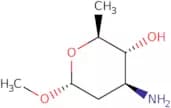
CAS:<p>Methyl a-L-acosamine is a glycosylation agent that can be used to modify complex carbohydrates. It can also be used in the methylation of saccharides, polysaccharides, and sugars. Methyl a-L-acosamine is made by reacting acetic anhydride with L-a-D-galactopyranosyl chloride. The CAS number for this product is 54623-23-3. This product can be custom synthesized to meet your specifications and has high purity.</p>Formula:C7H15NO3Purezza:Min. 95%Colore e forma:White To Off-White SolidPeso molecolare:161.2 g/molUDP-N-acetyl-D-mannosaminuronic acid
CAS:<p>UDP-N-acetyl-D-mannosaminuronic acid is a monosaccharide that is synthesized from UDP and N-acetyl-D-mannosamine. It is an important precursor for the synthesis of glycoproteins, lipopolysaccharides, and proteoglycans in bacteria. Mutants have been identified in Escherichia coli and Staphylococcus aureus that lack the enzyme UDP-N-acetylglucosamine 2’:3’ phosphotransferase, which is required for the biosynthesis of UDP-N-acetylglucosamine. The enzyme responsible for this reaction is acetamidase/uridine diphosphate mannosyltransferase. This enzyme catalyzes the transfer of mannose from uridine diphosphate (UDP) to N acetylglucosamine to form UDP N acetyl D mannosaminuronic acid</p>Formula:C17H25N3O18P2Purezza:Min. 95%Peso molecolare:621.3 g/molDelphinidin 3-galactoside chloride
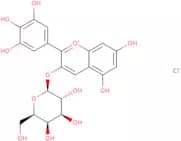
CAS:<p>Delphinidin 3-galactoside chloride is a natural organic compound that belongs to the flavonol glycosides. It is a pigment that has been identified in flowers and fruits, such as the fruit tree. This compound exhibits antioxidant properties and can scavenge radicals, which may be due to its ability to inhibit dehydroascorbate reductase activity. Delphinidin 3-galactoside chloride also has an effect on high cholesterol levels, which may be due to its ability to inhibit HMG-CoA reductase activity. In addition, it has been shown that this compound can inhibit the growth of human pathogens such as P. aeruginosa and S. aureus.</p>Formula:C21H21O12ClPurezza:Min. 95%Peso molecolare:500.84 g/molGalacturonan oligosaccharides DP25-DP50 sodium salt
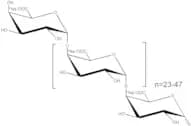
Mixed DP 25-50 Na galacturonans, (α-1,4 25-50 Na galacturonans) are derived from pectin or pectic acid, by enzymatic or partial acid hydrolysis. They are used in galacturonic acid metabolism research as a substrate to identify, differentiate, and characterize endo- and exopolygalacturonase(s) and gluconase(s). In recent studies, it has been shown that long oligogalacturonides (degree of polymerization (DP) from 25â50), help to induce plant defense signaling resulting in enhanced defenses to necrotrophic pathogens.Purezza:Min. 90 Area-%Colore e forma:Powdertert-Butyl β-D-glucopyranoside
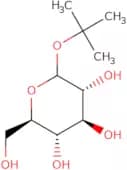
CAS:<p>tert-Butyl b-D-glucopyranoside is a monomer that belongs to the class of acrylic acid ester. It is used in polymer synthesis, as a photoinitiator and as a light stabilizer for polymers. The compound is resistant to heat and has a high degree of light transmittance. Tert-butyl b-D-glucopyranoside is soluble in chloroform and can be found in carbon tetrachloride solution with a transmittance of up to 83%. This compound can be used as an indexing agent for silicon wafers because it produces protrusions when immersed in chloroform.</p>Formula:C10H20O6Purezza:Min. 95%Colore e forma:PowderPeso molecolare:236.26 g/mol7-O-Galloyl-D-sedoheptulose
<p>7-O-Galloyl-D-sedoheptulose is a synthetic immunosuppressant that is orally administered. It has been shown to be synergistic with pro-inflammatory factors and fructus in mice. 7-O-Galloyl-D-sedoheptulose inhibits the production of pro-inflammatory factors by binding to the receptor α, which prevents the activation of transcription factor NFκB. This drug also inhibits the synthesis of urea nitrogen and pro-apoptotic protein. 7-O-Galloyl-D -sedoheptulose has been shown to be more effective than cyclosporine A in suppressing immune responses in mice and rats with rheumatoid arthritis.</p>Purezza:Min. 95%NGA1 N-Glycan
<p>NGA1 N-glycan is a modified oligosaccharide, carbohydrate, and complex carbohydrate. It is custom synthesized, high purity, and has CAS No. This monosaccharide is methylated and glycosylated. It has a sugar that has been fluorinated and saccharides.</p>Purezza:Min. 95%4-Aminophenyl β-D-glucuronide
CAS:<p>4-Aminophenyl b-D-glucuronide sodium is a glycosylation reagent used in the synthesis of complex carbohydrates, polysaccharides and oligosaccharides.</p>Formula:C12H15NO7Purezza:Min. 95%Peso molecolare:285.25 g/molMonofucosyl (1-2)-iso-lacto-N-octaose II
<p>Monofucosyl (1-2)-iso-lacto-N-octaose II is an oligosaccharide that is found in human milk</p>Purezza:Min. 95%UDP-2-ketopropyl-a-D-galactose
<p>UDP-2-ketopropyl-a-D-galactose is a synthetic compound that belongs to the group of oligosaccharides. It is an excellent candidate for glycosylation, methylation, and click modification. The product has a CAS number, which provides high purity and custom synthesis. The product is also a complex carbohydrate with a variety of modifications.</p>Purezza:Min. 95%3'-Sialyl Lewis X, sodium salt
CAS:<p>Sialyl Lewis X (SLeX) is a carbohydrate antigen, related to cell adhesion and it has been shown that inhibition of SLeX synthesis leads to decreased adhesion of trophoblast cells to endometrial epithelial cells (Collins, 2006). Sialyl Lewis X is displayed on the terminus of glycolipids that are present on the surface of white blood cells and it has been shown that SLeX has an important role in inflamation processes. The inital adhesion of white blood cells to a site of injury is mediated by E-selectins which are specific for SLeX. Cell-cell recognition between leukocytes and endothelial cells in blood is believed to occur in part through interactions between lectins and oligosaccharide ligands. SLeX is frequently expressed in human cancer cells and primary tumors. It has been demonstrated that SLeX was involved in the adhesion of tumor cells to vascular endothelium. The potential role of SLeX in the tumor metastatic process has been supported by several clinical studies (Liang, 2016).</p>Formula:C31H51N2NaO23Purezza:Min. 95%Colore e forma:White PowderPeso molecolare:842.73 g/molDi-N-acetyl-D-lactosamine
<p>Di-N-acetyl-D-lactosamine (DNL) is a sugar that is found in the mammalian tissues and can be used as a lectin to specifically bind to glycoproteins. It has been shown to have specificities for enteritis, and can be used to detect or analyze the sequences of oligosaccharides. DNL has been immobilized on silica gel, which was then reacted with lectins, such as concanavalin A, wheat germ agglutinin, and soybean agglutinin. This process allows for the detection of high-mannose-type oligosaccharides.</p>Formula:C28H48N2O21Purezza:Min. 95%Colore e forma:PowderPeso molecolare:748.68 g/molSucrose distearate - 30% monostearate
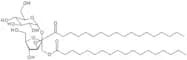
CAS:<p>The ‘tallowate’ esters are probably the best known derivatives of sucrose and many attempts have been made to commercialise them in order to exploit their excellent surfactant functionalities. The most functional products are the mono- and diesters of the tallow acids (stearic, palmitic, oleic) with hydrophile-lipophile balance (HLB) values that lend themselves to surfactant applications in foods and cosmetics. They also have other uses, for example in coating fruits with a semipermeable membrane that acts as a preservative. Manufacturing economics have prevented these products from mass production and they remain in niche applications.</p>Formula:C48H90O13Purezza:Min. 95%Colore e forma:PowderPeso molecolare:875.24 g/molD-Glucose-13C6
CAS:D-Glucose-13C6 is a complex carbohydrate, which is composed of a glucose molecule with one carbon atom labeled as C6. It is used to study the structure of carbohydrates and their interactions with proteins. D-Glucose-13C6 also has applications in the study of diseases such as Alzheimer's disease, Parkinson's disease, diabetes mellitus type 2, and cancer. In addition, this molecule can be used to measure plasma glucose concentrations in humans or animals. D-Glucose-13C6 is not active against bacteria such as Pseudomonas aeruginosa or Escherichia coli. The synthesis of D-glucose-13C6 requires anhydrous dextrose and unlabeled glucose.Formula:C6H12O6Purezza:Min. 98 Area-%Colore e forma:White PowderPeso molecolare:186.11 g/molNA4 Glycan, 2-AB labelled
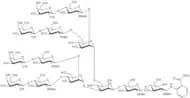
<p>NA4 Glycan, 2-AB labelled is a synthetic glycoconjugate. It is a glycosylation of an oligosaccharide and an amino acid residue with the modification of fluorination. NA4 Glycan, 2-AB labelled can be used for research purposes in methylation and Click chemistry. This product also has CAS No., which means it is custom synthesized to order. The purity of this product is high and it is synthetically produced, making it ideal for research purposes.</p>Purezza:Min. 95%2,3,6-Tri-O-benzyl-γ-cyclodextrin
<p>This gamma-cyclodextrin (γ-CD) derivative is a modified cyclic oligosaccharide composed of eight glucose units, featuring a larger cavity size than α- and β-cyclodextrins. This structural characteristic allows γ-CDs to form inclusion complexes with a wider range of guest molecules, making it particularly versatile in various industries. In the food sector, it is used as a carrier and stabilizer for flavors, fat-soluble vitamins, and polyunsaturated fatty acids, protecting volatile compounds from evaporation. In pharmaceuticals, it enhances the solubility and bioavailability of poorly water-soluble drugs and, thanks to its larger ring size, allows for the encapsulation of larger molecules or even entire drug molecules. γ-CDs and derivatives are also used for environmental remediation and, in analytical chemistry, for the extraction and concentration of target substances.</p>Formula:C216H224O40Purezza:Min. 95%Peso molecolare:3,460.07 g/mol2-Acetamido-3,4,6-tri-O-acetyl-2-deoxy-β-D-glucopyranosyl-Fmoc serine
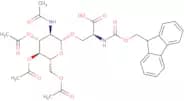
CAS:<p>2-Acetamido-3,4,6-tri-O-acetyl-2-deoxy-β-D-glucopyranosyl Fmoc serine is a modified sugar that is synthesized by the glycosylation of 2,3,4,6-tetra‑O‑acetyl‑2‑deoxy‑α‑D‑glucopyranose with an amino acid. It is used in peptide synthesis and as a building block for other oligosaccharides and saccharides. This compound has been shown to be useful in the production of complex carbohydrates.</p>Formula:C32H36N2O13Purezza:Min. 95 Area-%Colore e forma:White To Off-White SolidPeso molecolare:656.63 g/molEthyl 2,3-di-O-benzyl-4,6-O-benzylidene-a-D-thiomannopyranoside S-oxide
CAS:<p>Ethyl 2,3-di-O-benzyl-4,6-O-benzylidene-a-D-thiomannopyranoside S-oxide is a glycosylated compound that contains an O-(2,3) Dibenzyl side chain. This product is a white solid and can be used for the synthesis of other compounds. It has been shown to have antibacterial activity against Mycobacterium tuberculosis and may be used as a drug target for tuberculosis treatment. This product is also useful in the synthesis of oligosaccharides and polysaccharides.</p>Formula:C29H32O6SPurezza:Min. 95%Colore e forma:PowderPeso molecolare:508.63 g/molD-Turanose
CAS:<p>Turanose is a reducing analog of sucrose that is not metabolized by higher plants, but rather acquired through the action of sucrose transporters for intracellular carbohydrate signaling. In addition to its involvement in signal transduction, D-(+)-turanose can also be used as a carbon source by many organisms including numerous species of bacteria and fungi.</p>Formula:C12H22O11Purezza:Min. 98 Area-%Colore e forma:White PowderPeso molecolare:342.3 g/molLewis A tetrasaccharide
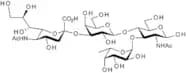
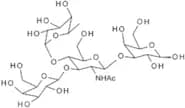
CAS:Lewis A tetrasaccharide is a glycosylated oligosaccharide with the following chemical structure: The Lewis A tetrasaccharide is a carbohydrate that has been modified with fluorination and methylation. This modification has been shown to increase its stability in aqueous environments. The Lewis A tetrasaccharide may be used as a synthetic monosaccharide for custom synthesis. It is also used as an intermediate for the synthesis of glycosylated oligosacscharsides.Formula:C26H45NO20Purezza:90%Colore e forma:White PowderPeso molecolare:691.64 g/mol1-O-Aminohexyl 3'-sialyllactose sodium
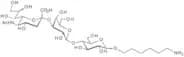
<p>Key synthetic precursor for the synthesis of lacto-oligosaccharides</p>Formula:C29H52N2O19•NaPurezza:Min. 95 Area-%Colore e forma:PowderPeso molecolare:755.71 g/molLaminaribiose
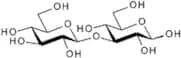
CAS:<p>Disaccharide; substrate for glucanases and laminaribiose phosphorylase</p>Formula:C12H22O11Purezza:Min. 95%Colore e forma:PowderPeso molecolare:342.3 g/mol2-O-a-D-Glucopyranosyl-D-galactopyranose
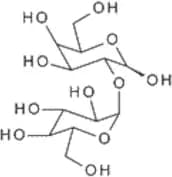
CAS:<p>2-O-a-D-Glucopyranosyl-D-galactopyranose is a synthetic monosaccharide that can be used as a glycosylate building block in the synthesis of oligosaccharides. It has been fluorinated, methylated, and click modified. This high purity material is available for custom synthesis. 2-O-a-D-Glucopyranosyl-D-galactopyranose is also known by its CAS number 7368-73-2.</p>Formula:C12H22O11Purezza:Min. 95%Colore e forma:White PowderPeso molecolare:342.3 g/mol