Glicoscienza
La glicosienza è lo studio dei carboidrati e dei loro derivati, nonché delle interazioni e delle funzioni biologiche a cui partecipano. Questo campo di ricerca è cruciale per comprendere una vasta gamma di processi biologici, tra cui il riconoscimento cellulare, la segnalazione, la risposta immunitaria e lo sviluppo delle malattie. La glicosienza ha importanti applicazioni nella biotecnologia, nella medicina e nello sviluppo di nuovi farmaci e terapie. Presso CymitQuimica, offriamo un'ampia selezione di prodotti di alta qualità e purezza per la ricerca in glicosienza. Il nostro catalogo comprende monosaccaridi, oligosaccaridi, polisaccaridi, glicoconiugati e reagenti specifici, progettati per supportare i ricercatori nei loro studi sulla struttura, funzione e applicazioni dei carboidrati nei sistemi biologici. Queste risorse sono destinate a facilitare scoperte scientifiche e applicazioni pratiche in vari ambiti delle bioscienze e della medicina.
Sottocategorie di "Glicoscienza"
- Amminozucchero(108 prodotti)
- Glico-anticorpi(282 prodotti)
- Glicolipidi(46 prodotti)
- Glicosaminoglicani (GAGs)(55 prodotti)
- Glicosidi(419 prodotti)
- Monosaccaridi(6.624 prodotti)
- Oligosaccaridi(3.682 prodotti)
- Polisaccaridi(503 prodotti)
Trovati 11046 prodotti di "Glicoscienza"
Ordinare per
Purezza (%)
0
100
|
0
|
50
|
90
|
95
|
100
GD3-Ganglioside sodium
CAS:<p>GD3 (shown as sodium salt) has a core disaccharide structure (Galβ1,4Glc) with two sialic acids linked α2,3/α2,8 to the non-reducing galactose residue and ceramide linked β to position 1 on the reducing terminal glucose residue (Ledeen, 2009). GD3 is a minor ganglioside in most normal tissues but plays a crucial role in the development of the brain; it is significantly reduced in adults. However, expression of GD3 is increased in pathological conditions, such as, cancers and neurodegenerative disorders (Malisan, 2002). GD3 was the first cancer-associated ganglioside discovered that promotes adhesion and invasion of cancers. GD3 and GD2 are highly expressed in a various malignant tumours and have become potential targets for next-generation cancer therapy (Liu, 2018).</p>Formula:C70H125N3O29·xNaPurezza:One SpotColore e forma:White/Off-White SolidPeso molecolare:1,472.74 g/mol1,2:5,6-Di-O-isopropylidene-3-O-p-toluenesulfonyl-α-D-allofuranose
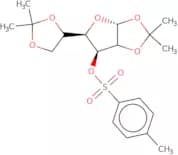
CAS:<p>1,2:5,6-Di-O-isopropylidene-3-O-p-toluenesulfonyl-a-D-allofuranose is a synthetic carbohydrate with a 5 carbon backbone. The methylation of the C1 and C2 carbon atoms is required to obtain this compound. It is used in the synthesis of complex carbohydrates. This product can be custom synthesized on request and has a purity of 99%.</p>Formula:C19H26O8SPurezza:Min. 95%Colore e forma:White To Off-White SolidPeso molecolare:414.47 g/mol4-O-(β-D-Mannopyranosyl)-D-mannose
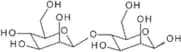
CAS:<p>One of the disaccharides produced during the acid reversion of D-mannose. This mannobiose is the major repeating unit in the mannose chains of plant mannans, galacto- and gluco-mannans. It has been isolated from partial acid hydrolysates of ivory-nut (Phytelephas, macrocarpa) mannan, guaran (Cyamopsis sp.), palmyra palm (Borassus flabelliferer), fenugreek (Trigonella foenum-graecum) and lucerne (Medicago saliva) galactomannans.</p>Formula:C12H22O11Purezza:Min. 95%Colore e forma:White PowderPeso molecolare:342.3 g/mol4-O-(a-D-Galactopyranosyl)-D-glucopyranose
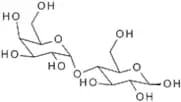
CAS:<p>Disaccharide is a carbohydrate with two simple sugars. It is soluble in water and has a density of 1.621 g/ml. Disaccharides are found in the tissues of many plants and animals, where they can be hydrolyzed by various enzymes to release monosaccharides. Disaccharides are also found in certain types of lichen and algae, where they are produced through photosynthesis. The most common disaccharides are sucrose, lactose, maltose, trehalose, and cellobiose. The simplest type of disaccharide is called a monosaccharide or sugar molecule. Monosaccarides have the same chemical formula but different physical forms that depend on their molecular mass (i.e., they may be a solid or liquid). Disaccharides can be classified as either sulfuric or organic solvent-soluble depending on whether they dissolve in sulfuric acid or an organic solvent such as ethanol or</p>Formula:C12H22O11Purezza:Min. 95%Colore e forma:PowderPeso molecolare:342.3 g/mol2-Keto-L-gulonic acid hydrate
CAS:<p>2-Keto-L-gluonic acid hydrate, also called 2-oxo-gulonic acid hydrate, L-xylo-2-hexulosonic acid hydrate (2-KLG) and D-sorbosonic acid hydrate, is an important intermediate in the synthesis of L-ascorbic acid (vitamin C) and can be produced by modified E. herbicola.</p>Formula:C6H10O7•(H2O)xPurezza:Min. 95%Colore e forma:PowderPeso molecolare:194.14 g/molEthyl 4,6-O-benzylidene-β-D-thiogalactopyranoside
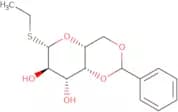
CAS:<p>Ethyl 4,6-O-benzylidene-b-D-thiogalactopyranoside is a synthetically produced carbohydrate typically used as a building block in oligo-saccharide synthesis.</p>Formula:C15H20O5SPurezza:Min. 95%Colore e forma:PowderPeso molecolare:312.39 g/mol5-Deoxy-L-arabinose
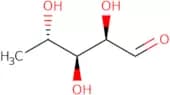
CAS:<p>5-Deoxy-L-arabinose is a tetramethylurea derivative that has been synthesized for the treatment of hyperphenylalaninemia, an atypical form of phenylketonuria. It is an analog of 5-deoxy-l-ribose and can be used to generate molybdate from ammonium molybdate. This product also has antiviral activity and can be used to inhibit the growth of filamentous fungi, such as Verticillium dahliae. 5-Deoxy-L-arabinose can be used as a phase separator in chromatography. It is stereoselective and does not react with acid catalysts.</p>Formula:C5H10O4Purezza:Min. 95%Colore e forma:Slightly Yellow Clear Viscous LiquidPeso molecolare:134.13 g/mol2,3-O-Isopropylidene-D-lyxonic acid-1,4-lactone
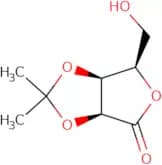
CAS:<p>2,3-O-Isopropylidene-D-lyxonic acid-1,4-lactone (2,3-OIPDL) is a fluorinated polysaccharide that is synthesized from glycosylation of 1,4-lactone with 2,3-O-isopropylidene D-lyxonic acid. This compound has been shown to have high purity and is used in the modification of carbohydrates.</p>Formula:C8H12O5Purezza:Min. 98 Area-%Colore e forma:White Off-White PowderPeso molecolare:188.18 g/molL-Xylonic acid-1,4-lactone
CAS:<p>L-Xylonic acid-1,4-lactone is an enzyme that functions as a glycolytic enzyme. It catalyzes the conversion of D-xylose to L-xylonic acid and L-xylonic acid-1,4-lactone. This enzyme is expressed in leukemia HL60 cells and is activated by acidic conditions. L-Xylonic acid-1,4-lactone has been shown to be catabolized by the enzyme xylanase. The kinetic properties of this reaction have been studied using mass spectrometric techniques and biochemical methods. The rate of the reaction was found to be dependent on the presence of divalent cations (Mg2+ or Ca2+) or monovalent ions (Na+ or K+). L-Xylonic acid 1,4 lactone also catabolizes glucose with a similar rate constant.</p>Formula:C5H8O5Purezza:Min. 95 Area-%Colore e forma:White PowderPeso molecolare:148.11 g/mol3-Deoxy-3,3-difluoro-1,2-O-Di-O-isopropylidene-a-D-glucofuranose
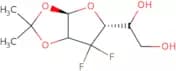
<p>3-Deoxy-3,3-difluoro-1,2-O-Di-O-isopropylidene-a-D-glucofuranose is an alpha, beta unsaturated carbonyl sugar. It can be used as a building block to synthesize oligosaccharides or glycosylations. It has been shown that 3DG reacts with the amino group of proteins and peptides leading to the formation of methylated sugars. This compound can also be used to modify saccharides such as by converting them into click or substitution derivatives. 3DG is readily available in high purity and is stable under a variety of conditions.</p>Formula:C9H14F2O5Purezza:Min. 95%Peso molecolare:240.2 g/molMethyl 6-O-tert-butyldimethylsilyl-2,3-O-isopropylidene-α-D-lyxo-hexopyranosid-4-ulose
<p>Methyl 6-O-tert-butyldimethylsilyl-2,3-O-isopropylidene-alpha-D-lyxo-hexopyranosid-4-ulose is a fluorinated sugar that can be used for the synthesis of oligosaccharides and carbohydrates. This sugar has been custom synthesized and has been modified with methylation and click chemistry. The CAS number for this product is 93558-18-7.</p>Purezza:Min. 95%4, 6- O- [(R) - Phenylmethylene] -a- D-glucopyranose
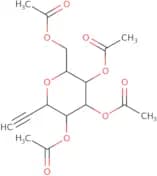
CAS:<p>4,6-O- (R)- Phenylmethylene -a- D-glucopyranose is a modification of the sugar glycoside glucose. This compound is synthesized from glucose by methylation and fluorination. The synthesis process begins with the addition of sodium borohydride to a solution of glucose in methanol. The next step involves the treatment of this mixture with phenylmagnesium bromide followed by phenylmethylene bromine. The final step involves heating the reaction mixture at reflux for 10 hours. 4,6-O- (R)- Phenylmethylene -a- D-glucopyranose is extremely pure and offers a wide range of applications in the fields of biochemistry, medicinal chemistry, and polymer science.</p>Formula:C13H16O6Purezza:Min. 95%Peso molecolare:268.26 g/mol2-C-(2,3,4,6-Tetra-O-acetyl-b-D-glucopyranosyl) ethyne
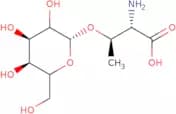
CAS:<p>2-C-(2,3,4,6-Tetra-O-acetyl-b-D-glucopyranosyl) ethyne is a fluorescent reagent that is used to detect glycosylation. It reacts with the glucose residue of an oligosaccharide or polysaccharide to form a fluorescent product. This product can be detected by fluorescence spectroscopy. 2-C-(2,3,4,6-Tetra-O-acetyl-b-D-glucopyranosyl) ethyne has been shown to react with Oligo 1 and Oligo 2 in the following reaction:<br>2-[(2,3,4,6 Tetra -O -acetyl -b -D -glucopyranosyl )ethynyl]</p>Formula:C16H20O9Purezza:Min. 95%Peso molecolare:356.32 g/molα-D-Mannopyranosyl L-threonine
CAS:<p>a-D-Mannopyranosyl L-threonine is a carbohydrate with the molecular formula C6H14O5. It is a white crystalline powder that has a sweet taste. This product can be used as an ingredient in food and beverage products, such as confectionery products, soft drinks, dairy products, baked goods, and chewing gum. It may also be used in pharmaceuticals, such as chewable tablets or capsules for oral use.</p>Formula:C10H19NO8Purezza:Min. 95%Colore e forma:PowderPeso molecolare:281.26 g/mol(2R,3S,4R)-2-Benzylamino-2-methyl-3,4-dihydroxypyrrolidine
<p>(2R,3S,4R)-2-Benzylamino-2-methyl-3,4-dihydroxypyrrolidine is a synthetic compound that can be used as a research tool for the study of protein glycosylation. It has been shown to be an efficient glycosylant and can be used in the synthesis of oligosaccharides and saccharides. The compound was first synthesized by adding two methyl groups to the amino group at the nitrogen atom in position 2 of pyrrolidine. This modification allows for the attachment of sugar molecules through an amide bond. (2R,3S,4R)-2-Benzylamino-2-methyl-3,4-dihydroxypyrrolidine is not currently used in any commercial products.</p>Purezza:Min. 95%L-Xylose
CAS:<p>L-Xylose is a monosaccharide that is found in many plants. It is used as a sweetener, and also has been shown to be beneficial in the treatment of diabetic neuropathy. L-Xylose can be metabolized by the enzyme xylitol dehydrogenase to produce energy for the cell. The enzyme catalyzes the conversion of xylitol to D-xylulose and then D-xylulose 1-phosphate, which can be converted into ATP for use by cells. L-Xylose is not metabolized by bacterial enzymes and does not affect blood sugar levels. L-Xylose has been shown to have an effect on taste perception, with a sweet taste at concentrations of 10 milligrams per liter (mg/L). This sweet taste is due to its hydroxymethyl group on the C2 position, which reacts with sodium ions in the mouth. The optimum pH for L-xylose</p>Formula:C5H10O5Purezza:Min. 99.0 Area-%Peso molecolare:150.13 g/molRef: 3D-X-8000
50gPrezzo su richiesta100gPrezzo su richiesta250gPrezzo su richiesta500gPrezzo su richiesta-Unit-ggPrezzo su richiestaMethyl 2-acetamido-4,6-di-O-acetyl-2,3-dideoxy-3-fluoro-D-mannopyranoside
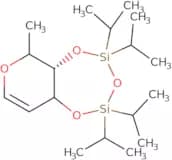
CAS:<p>Methyl 2-acetamido-4,6-di-O-acetyl-2,3-dideoxy-3-fluoro-D-mannopyranoside is a custom synthesis of a modified monosaccharide. It is fluorinated and methylated at the 2 and 6 positions respectively. The acetyl group at position 2 is replaced with an acetamido group to increase the stability of the molecule. This product has not been studied in vivo or in vitro. It is not on any international lists of prohibited substances and it is not banned by any sporting organization.</p>Formula:C13H20FNO7Purezza:Min. 95%Peso molecolare:321.3 g/mol3,4-O-(1',1',3',3'-Tetraisopropyl-1,3-disiloxanediyl)-L-rhamnal
CAS:<p>3,4-O-(1',1',3',3'-Tetraisopropyl-1,3-disiloxanediyl)-L-rhamnal is a synthetic sugar that is used as a building block for the synthesis of glycoproteins and other polymers. It can be methylated to give 3,4-O-(1',1',3',3'-tetramethyl-1,3-disiloxanediyl)-L-rhamnal, which is an inhibitor of protein glycosylation. 3,4-O-(1',1',3',3'-Tetraisopropyl-1,3-disiloxanediyl)-L-rhamnal has been fluorinated to give 3,4-O-(2'-fluoroethylidene) -L-rhamnal and used in Click chemistry reactions.</p>Formula:C18H36O4Si2Purezza:Min. 95%Peso molecolare:372.65 g/molD-Erythrono-1.4-lactone
<p>D-Erythrono-1.4-lactone is a carbohydrate that belongs to the group of oligosaccharides. It is a synthetic sugar with the CAS number 687-83-0. This carbohydrate is a monosaccharide with an oxygen atom in the alpha position, which has been fluorinated and methylated. The methylation on this sugar can be accomplished by either a glycosylation or click chemistry modification. This sugar can be used as an anti-tumor agent or as an adjuvant for chemotherapy treatments.</p>Purezza:Min. 95%2-Deoxy-2-fluoro-D-glucose
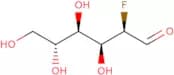
CAS:<p>Inhibitor of hexokinase isozymes and cellular glycosylation</p>Formula:C6H11FO5Purezza:Min. 95%Colore e forma:White PowderPeso molecolare:182.15 g/mol2, 5- Anhydro- 3- [(2, 5- anhydro- 3- azido- 3- deoxy- 4- O- tert.butyldimethylsilyl- L- xylonoyl) amino] - 3- deoxy- 4- O- tert but yldimethylsilyl-D-xylonic acid methyl ester
<p>2, 5-Anhydro-3- [(2, 5- anhydro- 3-azido- 3-deoxy- 4-O-tert.butyldimethylsilyl-L-xylonoyl) amino] -3-deoxy-[4-(2,5,-anhydro-, 3,4,6 -trioxo-, 2,5,-dideoxy-) -D--xylonic acid methyl ester] is a synthetic sugar with a fluorination group and is used as a building block for oligosaccharides and complex carbohydrates. This product is synthesized by the reaction of 2,5 anhydro D--mannitol with ethyl chloroformate followed by the addition of dimethylaminoazobenzene to form an azido sugar derivative. The product is then reacted with tert butyldimethylsilyl chloride to form the silylated derivative. The product has been</p>Purezza:Min. 95%D-Mannitol
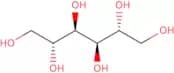
CAS:<p>Mannitol is a sugar alcohol occurring widely in plants and they are exudates, for example, in olive and plane trees (Collins, 2006). It is produced commercially by the catalytic hydrogenation of fructose (Zelin, 2019). Mannitol is used extensively in food and pharmaceutical industries because of its unique functional properties. It is about 50% as sweet as sucrose and has a desirable cooling effect often used to mask bitter tastes. Mannitol is non-cariogenic and has a low caloric content. Mannitol is an osmotic diuretic that is metabolically inert in humans and is used for: the promotion of diuresis before irreversible renal failure becomes established, the promotion of urinary excretion of toxic substances, as an Antiglaucoma agent, and as a renal function diagnostic aid (OâNeil, 2013). Additonally, in 2020, mannitol was approved by the FDA as add-on maintenance therapy for the control of pulmonary symptoms associated with cystic fibrosis in adult patients (McKenna, 2020).</p>Formula:C6H14O6Purezza:Min. 95%Colore e forma:White PowderPeso molecolare:182.17 g/molSucrose dodecanoate
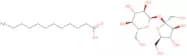
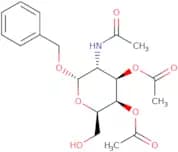
CAS:<p>Sucrose dodecanoate is a sugar ester that has been shown to be a 5-HT agonist. It is used as an absorption enhancer for the treatment of choroidal neovascularization. Sucrose dodecanoate was also found to have trypsin-like protease activity and cyclic peptide properties. This drug has been shown to increase insulin sensitivity and growth factor levels in animal models, which may be due to its effects on serine proteases. Sucrose dodecanoate is available as a pharmaceutical dosage form containing fatty acid esters at a concentration of 10%. It has a viscosity of approximately 100 cP, which is expected to provide good bioavailability.</p>Formula:C12H24O2•(C12H22O11)xColore e forma:Clear LiquidPeso molecolare:342.3 g/molBenzyl 2-acetamido-3,4-di-O-acetyl-2-deoxy-a-D-galactopyranoside
CAS:<p>Benzyl 2-acetamido-3,4-di-O-acetyl-2-deoxy-a-D-galactopyranoside is a glycosylation agent that is used in the synthesis of complex carbohydrate. It has the CAS No. 55652-76-1 and is custom synthesized to meet customers' requirements. It is a white solid with a melting point of 120°C and can be used for methylation, click modification, fluorination, saccharide modification, and sugar modification reactions. Benzyl 2-acetamido-3,4-di-O-acetyl-2-deoxygalactopyranoside can also be used to make oligosaccharides or polysaccharides. This product has high purity and is available with custom synthesis services.</p>Formula:C19H25NO8Purezza:Min. 95%Colore e forma:White To Off-White SolidPeso molecolare:395.4 g/molD-Threitol
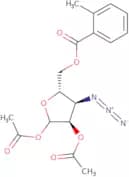
CAS:<p>D-Threitol is a carbohydrate that has been shown to have anti-microbial activity against a number of microbes, including E. coli, Klebsiella pneumoniae, Bacillus subtilis, and Staphylococcus aureus. It may also be useful in the treatment of microbial infections in the respiratory tract. D-Threitol is an analogue of threitol with an acyl chain at the 4 position instead of the 5 position. The allyl carbonate moiety can be cleaved by acid to form an acid complex, which is more stable than D-threitol. D-Threitol binds to antibody response sites on cells, thereby preventing cells from responding to pathogens or other foreign bodies by initiating appropriate immune responses. This binding also prevents bacteria from attaching themselves to cell walls.</p>Formula:C4H10O4Purezza:Min. 98 Area-%Colore e forma:PowderPeso molecolare:122.12 g/mol1,2-Di-O-acetyl-3-azido-3-deoxy-5-O-toluoyl-D-ribofuranose
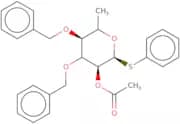
CAS:<p>1,2-Di-O-acetyl-3-azido-3-deoxy-5-O-toluoyl-D-ribofuranose is a synthetic sugar that can be modified to produce oligosaccharides or polysaccharides. It has a CAS number of 120143-22-8 and is composed of a sugar molecule with an acetyl group on the 2' position and toluene sulfonyl group on the 3' position. This modification can be used for glycosylation or methylation reactions. 1,2-Di-O-acetyl -3,4,6,-triaminopyrimidine is also known as fluorinated ribofuranose.</p>Formula:C17H19N3O7Purezza:Min. 95%Peso molecolare:377.35 g/mol1-S-Phenyl-2-O-acetyl-3,4-di-O-benzyl-a-L-thiorhamnopyranose
CAS:<p>1-S-Phenyl-2-O-acetyl-3,4-di-O-benzyl-a-L-thiorhamnopyranose is a fluorinated monosaccharide. It is a custom synthesis that is an oligosaccharide with complex carbohydrate. The sugar has been modified by glycosylation and polysaccharide. It also has click modification and methylation. 1-S-Phenyl-2-O-acetyl -3,4 di O benzyl a L thiorhamnopyranose is the CAS No. 636559 71 2. This product is high purity, making it suitable for industrial applications such as pharmaceuticals, agrochemicals, and cosmetics.</p>Formula:C28H30O5SPurezza:Min. 95%Peso molecolare:478.6 g/molMaltotriose
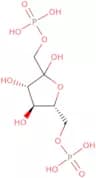
CAS:<p>Used to differentiate microorganisms based on their metabolic properties.</p>Formula:C18H32O16Purezza:Min. 95 Area-%Peso molecolare:504.44 g/molD-Fructose-1,6-diphosphate
CAS:<p>D-Fructose-1,6-diphosphate is a chemical that is found in the cytosol of cells. It is an intermediate in the metabolism of fructose and also has an important role in the synthesis of fatty acids and phospholipids. D-Fructose-1,6-diphosphate is an effective inhibitor of sodium succinate dehydrogenase, which converts succinate to fumarate. D-Fructose-1,6-diphosphate has a neutral pH profile and is not affected by changes in pH levels. The optimum pH for this compound is between 6.5 and 7.5. D-Fructose-1,6-diphosphate binds to proteins with unsaturated alkyl chains such as creatine kinase and glutamate dehydrogenase. It has been shown to have hemolytic effects on erythrocytes (red blood cells) at high concentrations, which may be due to its ability to bind</p>Formula:C6H14O12P2Purezza:(¹H-Nmr) Min. 95 Area-%Colore e forma:White PowderPeso molecolare:340.12 g/mol6-Deoxy-D-glucose
CAS:<p>Homomorph used to study the biological role of 6 hydroxyl group of glucose</p>Formula:C6H12O5Purezza:Min. 98 Area-%Colore e forma:White PowderPeso molecolare:164.16 g/mol1,4-b-D-Mannohexaose
CAS:<p>Isolated from ivory-nut mannan hydrolysates</p>Formula:C36H62O31Purezza:Min. 90 Area-%Colore e forma:White PowderPeso molecolare:990.86 g/mol1,2:3,5-Di-O-Isopropylidene-α-L-xylofuranose
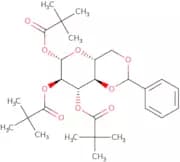
CAS:<p>1,2:3,5-Di-O-Isopropylidene-a-L-xylofuranose is a fluorinated sugar that is used as a building block in the synthesis of complex carbohydrates and oligosaccharides. It has a CAS number of 131156-47-3. 1,2:3,5-Di-O-Isopropylidene-a-L-xylofuranose is an active component in the modification of saccharide and polysaccharide structures by click chemistry. It can be modified with various functional groups such as methylation or monosaccharide to produce specific compounds. This product is available for custom synthesis.</p>Formula:C11H18O5Purezza:Min. 95%Colore e forma:PowderPeso molecolare:230.26 g/mol4,6-O-Benzylidene-1,2,3-tri-O-pivaloyl-b-D-glucopyranose
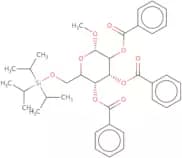
CAS:<p>4,6-O-Benzylidene-1,2,3-tri-O-pivaloyl-b-D-glucopyranose is a carbohydrate that belongs to the group of saccharides. It is a simple sugar that has been modified with fluorination. This compound has been synthesized by custom synthesis and has high purity and can be used in research. 4,6-O-Benzylidene-1,2,3-tri-O-pivaloyl-b-D-glucopyranose is not currently available on the market.</p>Formula:C28H40O9Purezza:Min. 95%Peso molecolare:520.63 g/molMethyl 2,3,4-tri-O-benzoyl-6-O-triisopropylsilyl-a-D-mannopyranoside
<p>Methyl 2,3,4-tri-O-benzoyl-6-O-triisopropylsilyl-a-D-mannopyranoside is a synthetic glycosylation agent with high purity and custom synthesis. The product is used to modify saccharides and oligosaccharides with the addition of the methyl group at C2 of the sugar. It can be used for modification of complex carbohydrates, fluorination, and saccharide. Methyl 2,3,4-tri-O-benzoyl-6-O-triisopropylsilyl-a -D -mannopyranoside has CAS No. 617069–91–8. The product can be synthesized in various configurations to meet customer needs.</p>Formula:C37H46O9SiPurezza:Min. 95%Peso molecolare:662.86 g/molD-Arabinose
CAS:<p>The aldopentose D-arabinose also known as aloinose, Aloe sugar, pectinose (Collins, 2006), is not as common in nature as its enantiomer L-arabinose. D-arabinose is a component of the polysaccharide in Aloe (Haynes, 1963) and is present in the unripe (green) tomato (Lycopersicon esculentum) (Chandra, 2009). The major cell wall carbohydrate of Corynebacterineae (a bacterial group that includes tuberculosis, leprosy and diphtheriae) is an arabinogalactan, a branched polysaccharide that is essential for the physiology of these bacteria. The arabinogalactan complex is often referred to as mycolyl-arabinogalactan-peptidoglycan complex. As arabinogalactan is made up of D-arabinofuranosyl and D-galactofuranosyl residues, a complete understanding of their biosynthethic pathways could provide suitable targets for new chemotherapeutics (Meniche, 2008).</p>Formula:C5H10O5Purezza:Min. 99 Area-%Colore e forma:PowderPeso molecolare:150.13 g/mol6-O-a-Maltosyl-b-cyclodextrin
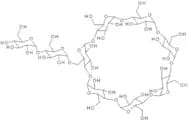
CAS:<p>This beta-cyclodextrin (β-CD) derivative is a functionalized cyclic oligosaccharide composed of seven glucose units, characterized by a hydrophilic exterior and a lipophilic cavity (bigger than α-CD and smaller than γ-CDs), which allows it to encapsulate various guest molecules. This structural feature facilitates its use in multiple applications, including pharmaceuticals, food enhancement, and cosmetics. In the pharmaceutical industry, it enhances the solubility and stability of poorly water-soluble drugs, improving their bioavailability and efficacy while also masking unpleasant tastes. The food sector utilizes it as a stabilizer for flavors, colors, and nutrients, extending shelf life by protecting sensitive ingredients from degradation. In cosmetics, it serves as a complexing agent for fragrances and active components, ensuring their stability and controlled release. Its use expands to many other fields, including nanotechnology for drug delivery systems, environmental remediation for extracting organic pollutants, textiles for slow-release fragrances, and analytical chemistry for chiral separation.</p>Formula:C54H90O45Purezza:Min. 95%Colore e forma:White PowderPeso molecolare:1,459.27 g/mol5-O-Benzoyl-1,2,-O-isopropylidene-3-deoxy-3-ethylidene-a-D-xylofuranoside
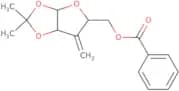
CAS:<p>5-O-Benzoyl-1,2,-O-isopropylidene-3-deoxy-3-ethylidene-a-D-xylofuranoside is a custom synthesis that is a modification of the natural product 5-O-(4'-methylbenzoyl)-1,2,-O-(isopropylidene)-3,5'-di--deoxyxylofuranoside. The fluorination and methylation reactions were carried out to produce the desired product. 5--O--Benzoyl--1,2,-O--isopropylidene--3,5'-di--deoxyxylofuranoside is a monosaccharide that is part of an oligosaccharide or polysaccharide. This compound has been synthesized by Click modification and glycosylation with sugar.</p>Purezza:Min. 95%1,2-Di-O-tert.butyldimethylsilyl-3,4:5,6-di-O-isopropylidene-D-glycero-a-D-talopyranoside
<p>This compound is a high purity, custom synthesis. It is a sugar that can be fluorinated and glycosylated. It also has the ability to be modified with methylation and modification. The CAS Number is 1213-78-3. This carbohydrate has many functions: it can act as an oligosaccharide or monosaccharide and can also be used as a complex carbohydrate.</p>Purezza:Min. 95%N-(2-Phenyl-1-cyano-3-butene)-2,3,4,6-tetra-O-pivaloyl-D-glucopyranoside
<p>N-(2-Phenyl-1-cyano-3-butene)-2,3,4,6-tetra-O-pivaloyl-D-glucopyranoside is a compound that is used as an intermediate in the synthesis of glycosylated polysaccharides. It has been used to synthesize saccharides and oligosaccharides with a wide range of compositions. This compound can be custom synthesized to meet your specifications.</p>Formula:C37H54NO9Purezza:Min. 95%Peso molecolare:656.84 g/molChitoheptaose 7HCl
CAS:<p>Chitoheptaose 7HCl is a synthetic, complex carbohydrate with a CAS number of 68232-35-9. This product is custom synthesized to order and can be modified according to your specifications. It is available in high purity.</p>Formula:C42H79N7O29·7HClPurezza:Min. 95 Area-%Colore e forma:PowderPeso molecolare:1,401.34 g/mol1,4:3,6-Dianhydro-D-mannitol
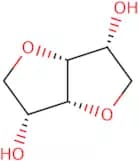
CAS:<p>Building block for polymers synthesis, ionic liquids and chiral auxiliaries</p>Formula:C6H10O4Purezza:Min. 95%Colore e forma:PowderPeso molecolare:146.14 g/molChitosan
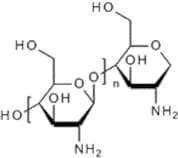
CAS:<p>Chitosan is the deacetylated form of chitin. The polysaccharide is deacetylated in order to render it soluble, which is then possible at pH values of less than 7 (normally in dilute acid). This then allows the material to be used in a number of industrial applications as a binder and film former.Molecular weight range 350 - 3500 Da.</p>Colore e forma:PowderMethyl glucoside dioleate
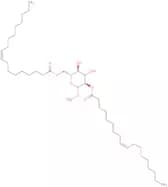
CAS:<p>Methyl glucoside dioleate is a fatty acid ester that is a cross-linking agent. It can be used as a neutralizer and surfactant in cosmetic products. Methyl glucoside dioleate has been shown to have synergistic effects with hyaluronic acid, which stimulates the production of collagen and elastin. It also has skin-softening properties due to its ability to form films on the skin surface and reduce water loss by forming a hydrophobic barrier. Methyl glucoside dioleate is not known to cause allergic reactions or other adverse effects when applied to humans, although there are no long-term studies on this topic.</p>Purezza:Min. 95%1-Deoxy-D- tagatofuranose
1-Deoxy-D-tagatofuranose is a sugar that is found in many plants. It is a monosaccharide with a carbohydrate group at the reducing end of the molecule. 1-Deoxy-D-tagatofuranose has been synthesized by Click chemistry, which enables selective modification of its hydroxyl groups. This sugar is methylated, glycosylated, and fluorinated to make it more stable and resistant to chemical degradation. 1-Deoxy-D-tagatofuranose has various applications such as use as a food additive and as a pharmaceutical drug in the treatment of cancer.Purezza:Min. 95%1,2:3,4-Di-O-isopropylidene-L-arabinopyranose
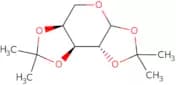
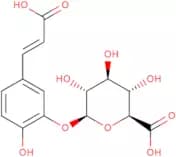
CAS:<p>1,2:3,4-Di-O-isopropylidene-L-arabinopyranose is a custom synthesis of 1,2:3,4-di-O-isopropylidene arabinopyranose. It is an oligosaccharide with a glycosylation and methylation that has a high purity with a CAS number of 212069-31-3. This complex carbohydrate can be modified to create new saccharides. The modification process includes fluorination and click chemistry reactions.</p>Formula:C11H18O5Purezza:Min. 95%Colore e forma:PowderPeso molecolare:230.26 g/molCaffeic acid 3-O-β-D-glucuronide
CAS:<p>Caffeic acid 3-O-b-D-glucuronide (3BGA) is a phenolic compound that is found in plants. It has been shown to inhibit the growth of viruses, including influenza virus, and chlorogenic acid isomers have been shown to inhibit the growth of bacteria. The highest concentration of 3BGA was found in the heartwood of the plant. Recent pharmacokinetic studies have shown that caffeic acid 3-O-b-D-glucuronide is metabolized by gut bacteria and excreted in human urine.</p>Formula:C15H16O10Purezza:Min. 95%Colore e forma:PowderPeso molecolare:356.28 g/molManninotriose
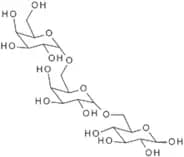
CAS:<p>Manninotriose is a mannose-containing oligosaccharide that has been found to have high resistance against enzymes. This mannose-containing oligosaccharide can be used as a biomarker for the detection of activated macrophages in biological samples, such as serum and urine. It is also used as an activator of monoclonal antibodies, which are used in the diagnosis of autoimmune diseases. Manninotriose may act as a signal peptide for the activation of enzyme activities, such as glycosyl transferase reactions and caffeic acid hydrolase.</p>Formula:C18H32O16Purezza:Min. 95 Area-%Colore e forma:White Off-White PowderPeso molecolare:504.44 g/mol2,3,4,6-Tetra-O-pivaloyl-D-glucopyranosyl amine
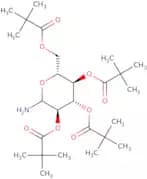
CAS:<p>2,3,4,6-Tetra-O-pivaloyl-D-glucopyranosyl amine is a monosaccharide that is custom synthesized and modified with fluorination. It also has saccharide properties such as methylation and glycosylation. This product can be used in the synthesis of complex carbohydrates or polysaccharides. It is a high purity compound with CAS No. 888963-33-5.</p>Formula:C26H45NO9Purezza:Min. 95%Peso molecolare:515.64 g/mol4-Methoxyphenyl 3-O-allyl-4,6-O-benzylidene-β-D-galactopyranoside
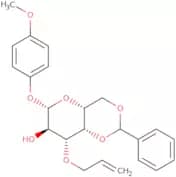
CAS:<p>4-Methoxyphenyl 3-O-allyl-4,6-O-benzylidene-b-D-galactopyranoside is a galactoside that is commonly found in plants. The biosynthesis of this molecule has been studied in the bacteria N. meningitidis and it has been shown that it can be synthesized from fatty acids. 4-Methoxyphenyl 3-O-allyl-4,6-O-benzylidene b -D -galactopyranoside can be used as a HIV drug, as it inhibits the growth of HIV cells by inhibiting protein synthesis and RNA transcription. This molecule is also able to inhibit cancer cell proliferation in vitro.</p>Formula:C23H26O7Purezza:Min. 95%Colore e forma:White Off-White PowderPeso molecolare:414.45 g/mol1,2,3,4-Tetra-O-benzyl-β-D-glucopyranoside
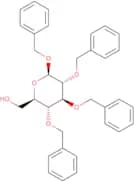
CAS:<p>1,2,3,4-Tetra-O-benzyl-β-D-glucopyranoside is a prodrug that becomes active after acetylation. It is an endogenous compound that has been shown to inhibit the synthesis of myelin and lipid peroxidation in rat brains. This drug has also been found to be effective in the treatment of amyotrophic lateral sclerosis (ALS). 1,2,3,4-Tetra-O-benzyl-β-D-glucopyranoside is unmodified and does not have any side effects on the nervous system. It can be used for the treatment of Parkinson's disease when combined with levodopa.</p>Formula:C34H36O6Purezza:Min. 95%Colore e forma:White Off-White PowderPeso molecolare:540.65 g/mol




![4, 6- O- [(R) - Phenylmethylene] -a- D-glucopyranose](/_next/image/?url=https%3A%2Fstatic.cymitquimica.com%2Fproducts%2F3D%2Fthumb-webp%2FMP163945.webp&w=3840&q=75)