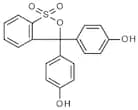
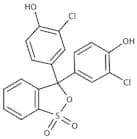
Indicatori
Gli indicatori sono sostanze utilizzate nelle titolazioni e in altre analisi chimiche per segnalare un cambiamento di pH o di composizione chimica. Sono essenziali per misurazioni precise sia in ambito di ricerca che industriale. Da CymitQuimica offriamo una selezione completa di indicatori progettati per garantire accuratezza e riproducibilità nelle applicazioni di laboratorio, incluse reazioni acido-base e redox.
Trovati 575 prodotti di "Indicatori"
Ordinare per
Purezza (%)
0
100
|
0
|
50
|
90
|
95
|
100
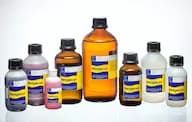
Reagecon Eriochrome Blue Black R Indicator Solution
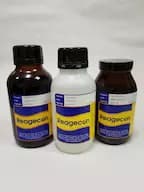
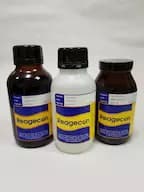
Reagecon's Eriochrome Blue Black R Indicator Solution is a high quality Indicator Solution produced from the highest quality raw materials and manufactured and tested under rigorous conditions. For manual titrations; indicator titrant or analyte change colour and this colour change is by far the most important method of end point detection, in such titrations. A high quality indicator solution such as Reagecon's Erichrome Blue Black R Indicator Solution facilitates end point detection, in a clear and unambiguous manner and is an imperative for accurate manual titrimetry.Colore e forma:LiquidReagecon Bromocresol Green Indicator 0.04% Solution
Reagecon's Bromocresol Green Indicator 0.04% Solution is a high quality Indicator Solution produced from the highest quality raw materials and manufactured and tested under rigorous conditions. For manual titrations; indicator titrant or analyte change colour and this colour change is by far the most important method of end point detection, in such titrations. A high quality indicator solution such as Reagecon's Bromocresol Green Indicator 0.04% Solution facilitates end point detection, in a clear and unambiguous manner and is an imperative for accurate manual titrimetry.Colore e forma:LiquidReagecon Fehlings No.2 Indicator Solution
Reagecon's Fehlings No.2 Indicator Solution is a high quality Indicator Solution produced from the highest quality raw materials and manufactured and tested under rigorous conditions. For manual titrations; indicator titrant or analyte change colour and this colour change is by far the most important method of end point detection, in such titrations. A high quality indicator solution such as Reagecon's Fehlings No.2 Indicator Solution facilitates end point detection, in a clear and unambiguous manner and is an imperative for accurate manual titrimetry.Colore e forma:LiquidReagecon Potassium Chromate Indicator 5% Solution
CAS:Reagecon's Potassium Chromate Indicator 5% Solution is a high quality Indicator Solution produced from the highest quality raw materials and manufactured and tested under rigorous conditions. For manual titrations; indicator titrant or analyte change colour and this colour change is by far the most important method of end point detection, in such titrations. A high quality indicator solution such as Reagecon's Potassium Chromate Indicator 5% Solution facilitates end point detection, in a clear and unambiguous manner and is an imperative for accurate manual titrimetry.Colore e forma:LiquidReagecon Malachite Green Indicator 0.05% (w/v) Solution
Reagecon's Malachite Green Indicator 0.05% (w/v) Solution is a high quality Indicator Solution produced from the highest quality raw materials and manufactured and tested under rigorous conditions. For manual titrations; indicator titrant or analyte change colour and this colour change is by far the most important method of end point detection, in such titrations. A high quality indicator solution such as Reagecon's Malachite Green Indicator 0.05% (w/v) Solution facilitates end point detection, in a clear and unambiguous manner and is an imperative for accurate manual titrimetry.Colore e forma:LiquidBromocresol Green - Methyl Red Solution [Mixed Indicator for Neutralization Titration]
Colore e forma:Red to Dark red to Brown clear liquidBromothymol Blue - Neutral Red Solution [Mixed Indicator for Neutralization Titration]
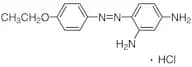
Colore e forma:Red clear liquid4-Ethoxychrysoidine Hydrochloride
CAS:Formula:C14H16N4O·HClPurezza:>95.0%(T)Colore e forma:Dark green to Dark red to Black powder to crystalPeso molecolare:292.77Titan Yellow
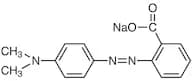
CAS:Formula:C28H19N5Na2O6S4Colore e forma:Light yellow to Amber to Dark green powder to crystalPeso molecolare:695.71Methyl Red (0.1% in ca. 95% Ethanol) [for Titration]
CAS:Formula:C15H15N3O2Colore e forma:Red clear liquidPeso molecolare:269.30Bromopyrogallol Red
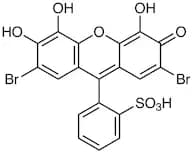
CAS:Formula:C19H10Br2O8SPurezza:min. 70.0 area%(HPLC)Colore e forma:Yellow to Dark green to Black powder to crystalPeso molecolare:558.15Methyl Purple Solution pH 4.8(Purple) - pH 5.4(Gray) - pH 5.8(Green)
Colore e forma:Green to Dark green clear liquid to cloudy liquid2,6-Dichloroindophenol Sodium Salt Dihydrate
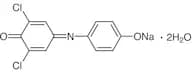
CAS:Formula:C12H6Cl2NNaO2·2H2OPurezza:>95.0%(T)Colore e forma:Green to Dark green powder to crystalPeso molecolare:326.10Phenol Red Sodium Salt
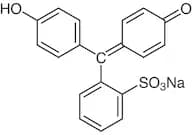
CAS:Formula:C19H13NaO5SPurezza:min. 90.0 area%(HPLC)Colore e forma:Orange to Amber to Dark red powder to crystalPeso molecolare:376.36Calcein (mixture of isomers) [for Fluorometric Determination of Ca]
CAS:Formula:C30H26N2O13Colore e forma:Orange to Brown powder to crystalinePeso molecolare:622.541,10-Phenanthroline Monohydrate
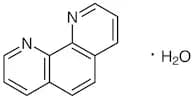
CAS:Formula:C12H8N2·H2OPurezza:>99.0%(T)(HPLC)Colore e forma:White to Almost white powder to crystalPeso molecolare:198.23Thymolphthalein (0.1% in ca. 95% Ethanol) [for pH Determination and Titration]
CAS:Formula:C28H30O4Colore e forma:Colorless to Almost colorless clear liquidPeso molecolare:430.54Phenolphthalein (0.1% in ca. 90% Ethanol) [for Titration]
CAS:Formula:C20H14O4Colore e forma:Colorless clear liquidPeso molecolare:318.33Phenolphthalein (1% in ca. 85% Ethanol) [for Titration]
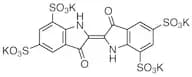
CAS:Formula:C20H14O4Colore e forma:Colorless clear liquidPeso molecolare:318.33Indigotetrasulfonic Acid Tetrapotassium Salt
CAS:Formula:C16H6K4N2O14S4Purezza:>90.0%(HPLC)Colore e forma:Red to Dark blue to Black powder to crystalPeso molecolare:734.86PAR [=4-(2-Pyridylazo)resorcinol] [Spectrophotometric reagent for transition metals]
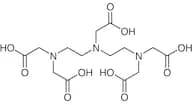
CAS:Formula:C11H9N3O2Purezza:>98.0%(T)(HPLC)Colore e forma:Orange to Amber to Dark red powder to crystalPeso molecolare:215.21Diethylenetriaminepentaacetic Acid
CAS:Formula:C14H23N3O10Purezza:>98.0%(T)Colore e forma:White powder to crystalPeso molecolare:393.35Bromophenol Blue (0.1% in ca. 50% Ethanol) [for Titration]
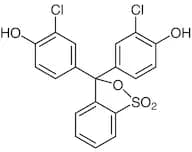
CAS:Formula:C19H10Br4O5SColore e forma:Orange to Brown to Dark red clear liquidPeso molecolare:669.96Chlorophenol Red
CAS:Formula:C19H12Cl2O5SPurezza:>90.0%(HPLC)Colore e forma:Light yellow to Brown powder to crystalPeso molecolare:423.26Calcein Sodium Salt (mixture of isomers) [for Fluorometric Determination of Ca]
Colore e forma:Light yellow to Amber to Dark green powder to crystalMethyl Red Sodium Salt
CAS:Formula:C15H14N3NaO2Colore e forma:Orange to Brown powder to crystalPeso molecolare:291.29TAN [=1-(2-Thiazolylazo)-2-naphthol] [Spectrophotometric reagent for transition metals]
CAS:Formula:C13H9N3OSPurezza:>99.0%(T)Colore e forma:Orange to Brown powder to crystalPeso molecolare:255.30Metacresol Purple
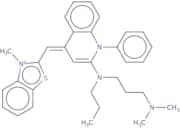
CAS:Formula:C21H18O5SColore e forma:Brown to Black powder to crystalPeso molecolare:382.43Quinaldine Red
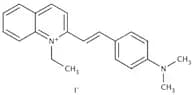
CAS:Formula:C21H23IN2Purezza:>95.0%(T)Colore e forma:Dark green to Dark purple to Black powder to crystalPeso molecolare:430.33Bromocresol Green (0.04% in ca. 50% Ethanol) [for Titration]
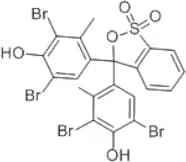
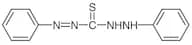
CAS:Formula:C21H14Br4O5SColore e forma:Light yellow to Amber to Dark green clear liquidPeso molecolare:698.01Dithizone
CAS:Prodotto controllatoFormula:C13H12N4SPurezza:>90.0%(E)Colore e forma:Brown to Black powder to crystalPeso molecolare:256.33Bromochlorophenol Blue
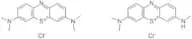
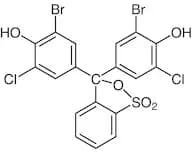
CAS:Formula:C19H10Br2Cl2O5SColore e forma:Light yellow to Brown powder to crystalPeso molecolare:581.05Methyl Red - Methylene Blue Solution [Mixed Indicator for Neutralization Titration]
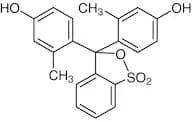
Colore e forma:Green to Dark green clear liquid to cloudy liquidBromothymol Blue (0.1% in ca. 50% Ethanol) [for Titration]
CAS:Formula:C27H28Br2O5SColore e forma:Light yellow to Brown clear liquidPeso molecolare:624.386-Carboxy-X-rhodamine
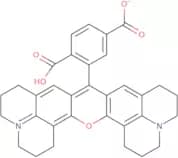
CAS:<p>Single isomer of 5(6)-ROX. It is a fluorescent dye used in RT-PCR methods as an internal reference to determine fluorescence variation that is not associated with the amplification process (plastic of the wells, small differences in concentration or volume, instrument measurements). It produces a constant fluorescence emission signal during the PCR process that is used to normalise the emission produced by the reporter. The fluorescence signal is compatible with most reporters. It is used to label the 5â end of oligonucleotides as a reporter in the presence of a quencher at the 3â end (dual labelled probe). During the amplification, the dye is cleaved, and the fluorescence increases proportionally with the amount of the specific sequence amplified during the PCR process. The development of the fluorescence signal is therefore specifically related to the amplification of the target sequence. 6-ROX with NHS-activated carboxylic acids reacts with primary amines.</p>Formula:C33H30N2O5Purezza:Min. 95%Colore e forma:Red PowderPeso molecolare:534.6 g/mol5(6)-Carboxyeosin diacetate
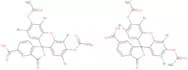
CAS:Brominated analog of carboxyfluorescein; singlet oxygen generatorFormula:C25H12Br4O9Purezza:Min. 95%Colore e forma:PowderPeso molecolare:775.97 g/molICG-alkyne
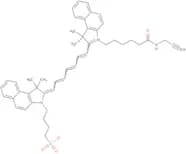
CAS:The non-invasive near-infrared fluorescence imaging dye ICG is used in ophthalmologic angiography to determine cardiac output and liver blood flow and function. The ICG alkyne can be used to label azido functionalised biomolecules eg glycans, lipids and peptides via click chemistry protocols.Formula:C48H53N3O4SPurezza:Min. 95%Colore e forma:PowderPeso molecolare:768 g/mol2',7'-Dichlorodihydrofluorescein diacetate
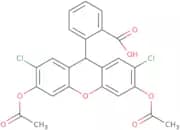
CAS:Cell permeable reagent for use in detection of peroxidase activityFormula:C24H16Cl2O7Purezza:Min. 97 Area-%Colore e forma:PowderPeso molecolare:487.29 g/molResorufin
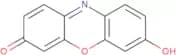
CAS:<p>The substructure resorufin is a fluorescent dye that changes color from orange to bright pink; excitation/emission maxima = 563/587 nm.</p>Formula:C12H7NO3Purezza:Min. 95 Area-%Colore e forma:Purple PowderPeso molecolare:213.19 g/mol6-NBDG
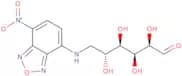
CAS:<p>Nonhydrolyzable fluorescent glucose analog used to monitor glucose uptake</p>Formula:C12H14N4O8Purezza:Min. 95%Colore e forma:PowderPeso molecolare:342.26 g/mol5-Carboxy-X-rhodamine, succinimidyl ester
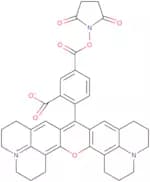
CAS:<p>Single isomer of 5(6)-ROX. It is a fluorescent dye used in RT-PCR methods as an internal reference to determine fluorescence variation that is not associated with the amplification process (plastic of the wells, small differences in concentration or volume, instrument measurements). It produces a constant fluorescence emission signal during the PCR process that is used to normalise the emission produced by the reporter. The fluorescence signal is compatible with that of most reporters. It is used to label the 5â end of oligonucleotides as a reporter in the presence of a quencher at the 3â end (dual labelled probe). During amplification, the dye is cleaved, and the fluorescence increases proportionally with the amount of the specific sequence amplified during the PCR process. The development of the fluorescence signal is therefore specifically related to the amplification of the target sequence. 6-ROX with NHS-activated carboxylic acids reacts with primary amines.</p>Formula:C37H33N3O7Purezza:Min. 95%Colore e forma:Red To Violet To Black SolidPeso molecolare:631.67 g/mol5-(6)-Carboxytetramethylrhodamine
CAS:<p>5-(6)-Carboxytetramethylrhodamine (TAMRA) is a fluorescent dye that is used as a probe for DNA-based analysis. It binds to the 5' end of dsDNA, forming an intrastrand duplex. The fluorescence of TAMRA increases when it binds to dsDNA and can be used as a measure of the amount of DNA in a sample. TAMRA has been shown to be useful in the diagnosis of bowel disease and in the investigation of gene expression during body formation. This dye is also used as a marker for covalent linkages and high molecular weight proteins such as cyclin D2.</p>Formula:C25H22N2O5Purezza:Min. 95 Area-%Colore e forma:Red PowderPeso molecolare:430.45 g/mol8-(4-Anilino) bodipy
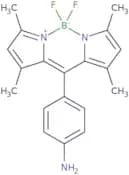
CAS:<p>Fluorescent probe</p>Formula:C19H20BF2N3Purezza:Min. 90 Area-%Colore e forma:PowderPeso molecolare:339.19 g/molIndocyanine green
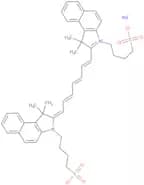
CAS:<p>Indocyanine green is a fluorescent dye with a variety of applications in medical imaging. It has been used to diagnose and evaluate the activity of cancer cells and brain functions. Indocyanine green has also been used as an angiographic agent for diagnosis of solid tumours. In addition, it can be used to evaluate liver function and the blood flow in the brain. The biological properties of indocyanine green have not yet been fully elucidated, but it is known that it binds to hepatocyte-like cells in culture and is found at high levels in human serum. This dye shows fluorescence when bound to DNA or RNA, which indicates its possible use as a molecular probe for detecting carcinoma cells. <br>Indocyanine green is a STT3B inhibitor and has been shown to prevent α-amanitin toxicity in mice (Wang et al, 2023). This means it could be a possible antidote to poisoning by Amanita, such as death cap mushroom Amanita phalloides, which is the cause of over 90% of fatal mushroom poisoning.</p>Formula:C43H47N2O6S2·NaPurezza:(%) Min. 95%Colore e forma:Green PowderPeso molecolare:774.96 g/mol8-Acetoxypyrene-1,3,6-trisulfonic acid trisodium salt
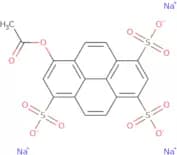
CAS:Fluorogenic substrate for esterase; cell-permeableFormula:C18H9Na3O11S3Purezza:Min. 98.0 Area-%Colore e forma:PowderPeso molecolare:566.42 g/mol5-Carboxytetramethylrhodamine
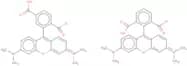
CAS:<p>5-Carboxytetramethylrhodamine - (TAMRA) is a widely employed fluorescent dye (orange/red) that is suitable for different uses. In PCR applications, it has been used as both a reporter at the 5â or as a quencher at the 3â end. TAMRA-labelled oligonucleotides have been used to study interactions with DNA or DNA/protein interactions. It is an excellent fluorescent acceptor for FRET applications with a suitable dye pair. It is used as a protein/antibody labelling agent for structural studies, immunochemistry and flow cytometry. Bioconjugation is generally performed through coupling of the carboxylic acid to a primary amine at the N-terminus of a protein, on lysine side chains or amino-modified oligonucleotide.</p>Formula:C25H22N2O5Purezza:Min. 95 Area-%Colore e forma:Green PowderPeso molecolare:430.45 g/mol5-Carboxyfluorescein
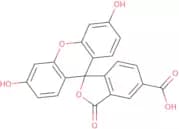
CAS:5-Carboxyfluorescein (5-FAM) is a self-quenching dye and one of the most common labelling agents for biomolecules, cell staining and localisation studies. The fluorescence is pH dependent, therefore it has been used to measure the internal pH of cells. As it is only membrane permeable to dead cells, it can be used as a staining agent to distinguish viable and non-viable cells. It is also used in PCR to label the 5â end of oligonucleotides in the presence of a quencher at the 3â end (dual labelled probe). During the amplification process, the dye is cleaved and the fluorescence increases proportionally with the amount of the specific sequence amplified during the PCR process. The development of the fluorescence signal is therefore specifically related to the amplification of the target sequence. The carboxylic acid can be activated to react with a primary amine.Formula:C21H12O7Purezza:Min. 98 Area-%Colore e forma:Yellow PowderPeso molecolare:376.32 g/molNucleic Acid Dye Green I - solution in DMSO (6.11 mg/ml)
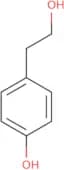
CAS:<p>Nucleic Acid Dye Green I is a DNA-staining dye that has found application in various high resolution assays for the detection of microbial or viral contaminant DNA.</p>Formula:C32H37N4SPurezza:Min. 95%Colore e forma:Clear LiquidPeso molecolare:509.73 g/mol4-Hydroxyphenethyl alcohol
CAS:<p>Produces a fluorogenic signal in the presence of peroxidase</p>Formula:C8H10O2Purezza:Min. 98 Area-%Colore e forma:PowderPeso molecolare:138.16 g/mol3-Bodipy-propanoic acid
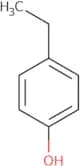
CAS:<p>Reactive fluorescent labeling reagent</p>Formula:C14H15BF2N2O2Colore e forma:Red PowderPeso molecolare:292.09 g/mol4-Ethylphenol
CAS:Produces a fluorogenic signal in the presence of peroxidaseFormula:C8H10OPurezza:Min. 95%Colore e forma:PowderPeso molecolare:122.16 g/mol6-Carboxytetramethyl rhodamine
CAS:<p>6-Carboxytetramethyl rhodamine is a fluorescent dye that is used to measure the presence of cancer cells in urine samples. It binds to human protein and has been shown to be a useful probe for fluorescence measurements. 6-Carboxytetramethyl rhodamine has also been used as a fluorescence probe for the detection of proliferative diabetic retinopathy and michaelis–menten kinetics in cyclic peptides.</p>Formula:C25H22N2O5Purezza:Min. 95%Colore e forma:PowderPeso molecolare:430.45 g/molCalmagite [Metal indicator for Ca, Mg etc.]
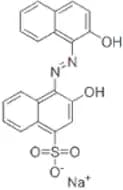
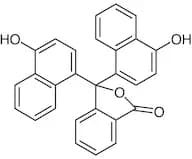
CAS:Formula:C17H14N2O5SColore e forma:Red to Dark blue to Black powder to crystalPeso molecolare:358.37α-Naphtholphthalein
CAS:Formula:C28H18O4Purezza:>98.0%(HPLC)Colore e forma:White to Brown powder to crystalPeso molecolare:418.45Variamine Blue B Sulfate (=4-Amino-4'-methoxydiphenylamine Sulfate) [for Iron-Titration]
CAS:Formula:C13H14N2O·H2SO4Purezza:>97.0%(N)Colore e forma:Gray to Dark blue to Black powder to crystalPeso molecolare:312.343-(2-Pyridyl)-5,6-bis(4-sulfophenyl)-1,2,4-triazine Disodium Salt
CAS:Formula:C20H12N4Na2O6S2Purezza:>95.0%(T)(HPLC)Colore e forma:Light yellow to Amber to Dark green powder to crystalPeso molecolare:514.44Arsenazo III [Spectrophotometric reagent for U, Th, Zr and other metals, Indicator for the precipitation titration of SO4 with Ba]
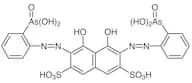
CAS:Formula:C22H18As2N4O14S2Purezza:>90.0%(T)Colore e forma:Dark green to Dark red to Black powder to crystalinePeso molecolare:776.36Reactive Red 21 (Remazol Red BB)
CAS:Formula:C26H19N4Na3O15S4Purezza:min. 98%Colore e forma:Dark red, PowderPeso molecolare:824.68New Methylene Blue N extrapure, 70%
CAS:Formula:C18H22ClN3SPurezza:70%Colore e forma:Dark green to dark brown, PowderPeso molecolare:347.91p-Xylenol Blue extrapure AR, 95%
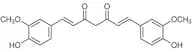
CAS:Formula:C23H22O5SPurezza:min. 95%Colore e forma:Brown to Very Dark Brown, PowderPeso molecolare:410.49Curcumin (Turmeric Yellow)
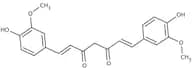
CAS:Formula:C21H20O6Purezza:min. 95%Colore e forma:Yellowish orange, PowderPeso molecolare:368.39Neutral Red (High Purity) ACS, ExiPlus, Multi-Compendial, 85%
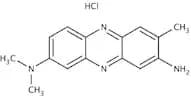
CAS:Formula:C15H17ClN4Purezza:min. 85%Colore e forma:Dark green to brown to black, PowderPeso molecolare:288.78Meldolas Blue extrapure
CAS:Formula:C18H15ClN2OColore e forma:Dark green to black powder, PowderPeso molecolare:378.92Xylene Cyanol FF
CAS:Formula:C25H27N2NaO6S2Colore e forma:Green, Crystalline powderPeso molecolare:538.6Resazurin Sodium extrapure AR, 20-30%
CAS:Colore e forma:Dark red to Dark green to Black, Powder or Crystalline powder, Clear, ClearSolochrom Dark Blue (Calcon), 50%
CAS:Formula:C20H13N2NaO5SColore e forma:Dark brown, PowderPeso molecolare:416.39Toluidine Blue O, 90%
CAS:Formula:C15H16ClN3SColore e forma:Dark greenish, PowderPeso molecolare:305.83Bromocresol Green (BCG) ACS, ExiPlus, Multi-Compendial
CAS:Formula:C21H14Br4O5SColore e forma:White to yellow to tan, Powder, Passes testPeso molecolare:698.04Azur II
CAS:Formula:C31H34Cl2N6S2Colore e forma:Greenish black, Crystalline powderPeso molecolare:625.68Erythrosin B, 90%
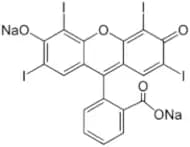
CAS:Formula:C20H6I4Na2O5Purezza:min. 90%Colore e forma:Red to dark brown, PowderPeso molecolare:879.86Azomethine H Monosodium Salt, 97%
CAS:Formula:C17H12NO8S2NaPurezza:min. 97%Colore e forma:Yellow to orange, PowderPeso molecolare:445.40Bromocresol Purple ACS, ExiPlus, Multi-Compendial
CAS:Formula:C21H16Br2O5SColore e forma:Pinkish - brown, Crystalline powderPeso molecolare:540.22Cresol Red
CAS:Formula:C21H18O5SColore e forma:Dark green or brown red, Crystalline powderPeso molecolare:382.434-Methoxyazobenzene (4-MAB) extrapure AR, 98%
CAS:Formula:C13H12N2OColore e forma:Orange brown, PowderPeso molecolare:212.25Evans Blue
CAS:Formula:C34H24N6O14S4Na4Colore e forma:Dark brown to black, Powder to crystals to granulesPeso molecolare:960.81Nigrosin (alcohol soluble)
CAS:Formula:C12H10N2O2·HClColore e forma:Black, PowderPeso molecolare:250.68Fast Blue B Salt (DBB)
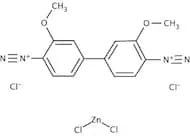
CAS:Formula:C14H12N4O2Cl2·ZnCl2Colore e forma:Yellowish green to blackish grey, PowderPeso molecolare:475.47Oil Red O for molecular biology, 75%
CAS:Formula:C26H24N4OColore e forma:Dark brown, PowderPeso molecolare:408.49Chromeazurol S (Chromazurol S)
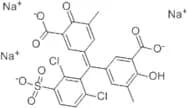
CAS:Formula:C23H13Cl2O9SNa3Colore e forma:Dark brownish black, PowderPeso molecolare:605.28Safranine O
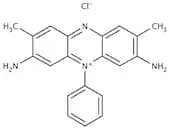
CAS:<p>Safranine O C.I. 50240 (Basic red 2)</p>Formula:C20H19N4ClColore e forma:Dark green, Crystalline powderPeso molecolare:350.844-Phenylazophenol (Solvent Yellow 7, 4-HAB) extrapure, 98%
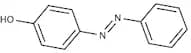
CAS:Formula:C12H10N2OPurezza:min. 98%Colore e forma:Yellowish brown to gold to orange, PowderPeso molecolare:198.23Brilliant Green
CAS:Formula:C27H34N2O4SColore e forma:Green, Crystalline powderPeso molecolare:482.63Titan Yellow, 65%
CAS:Formula:C28H19N5Na2O6S4Colore e forma:Brownish yellow, PowderPeso molecolare:695.73Brilliant Cresyl Blue
CAS:Formula:C17H20N3OClZnCl2Colore e forma:Green, Powder, Clear, BluePeso molecolare:385.96Xylenol Orange Tetrasodium Salt ACS
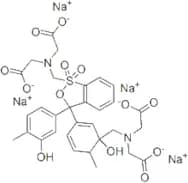
CAS:Formula:C31H28N2O13SNa4Colore e forma:Red to brown to black, Crystalline compound, Clear, RedPeso molecolare:760.59Tetrazolium Violet (high purity) extrapure AR, 98%
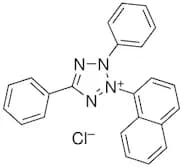
CAS:Formula:C23H17CIN4Purezza:min. 97%Colore e forma:Pale yellow to pale yellowish brown, PowderPeso molecolare:384.86Phenol Red ACS, ExiPlus, Multi-Compendial
CAS:Formula:C19H14O5SColore e forma:Dark red to Dark brown, Powder, Passes testPeso molecolare:354.38Methyl Red Sodium Salt (water soluble) ACS, 95%
CAS:Formula:C15H14N3NaO2Colore e forma:Orange, PowderPeso molecolare:291.28Chlorophenol Red
CAS:Formula:C19H12Cl2O5SColore e forma:Light yellow to green to brown, Powder, ClearPeso molecolare:423.27Amaranth (Acid Red 27) (C.I. 16185), 85-95%
CAS:Formula:C20H11N2Na3O10S3Colore e forma:Reddish brown to dark brown, Powder or CrystalPeso molecolare:604.46Bromocresol Green (BCG) extrapure AR
CAS:Formula:C21H14Br4O5SColore e forma:White to yellow to tan, Powder, Passes testPeso molecolare:698.04

![Bromocresol Green - Methyl Red Solution [Mixed Indicator for Neutralization Titration]](/_next/image/?url=https%3A%2Fstatic.cymitquimica.com%2Fproducts%2F3B%2Fthumb-webp%2FB0120.webp&w=3840&q=75)

![Bromothymol Blue - Neutral Red Solution [Mixed Indicator for Neutralization Titration]](/_next/image/?url=https%3A%2Fstatic.cymitquimica.com%2Fproducts%2F3B%2Fthumb-webp%2FN1190.webp&w=3840&q=75)

![Methyl Red (0.1% in ca. 95% Ethanol) [for Titration]](/_next/image/?url=https%3A%2Fstatic.cymitquimica.com%2Fproducts%2F3B%2Fthumb-webp%2FM0067.webp&w=3840&q=75)

![Calcein (mixture of isomers) [for Fluorometric Determination of Ca]](/_next/image/?url=https%3A%2Fstatic.cymitquimica.com%2Fproducts%2F3B%2Fthumb-webp%2FC0004.webp&w=3840&q=75)
![Thymolphthalein (0.1% in ca. 95% Ethanol) [for pH Determination and Titration]](/_next/image/?url=https%3A%2Fstatic.cymitquimica.com%2Fproducts%2F3B%2Fthumb-webp%2FT0130.webp&w=3840&q=75)
![Phenolphthalein (0.1% in ca. 90% Ethanol) [for Titration]](/_next/image/?url=https%3A%2Fstatic.cymitquimica.com%2Fproducts%2F3B%2Fthumb-webp%2FP0701.webp&w=3840&q=75)
![Phenolphthalein (1% in ca. 85% Ethanol) [for Titration]](/_next/image/?url=https%3A%2Fstatic.cymitquimica.com%2Fproducts%2F3B%2Fthumb-webp%2FP0700.webp&w=3840&q=75)
![PAR [=4-(2-Pyridylazo)resorcinol] [Spectrophotometric reagent for transition metals]](/_next/image/?url=https%3A%2Fstatic.cymitquimica.com%2Fproducts%2F3B%2Fthumb-webp%2FA5001.webp&w=3840&q=75)
![Bromophenol Blue (0.1% in ca. 50% Ethanol) [for Titration]](/_next/image/?url=https%3A%2Fstatic.cymitquimica.com%2Fproducts%2F3B%2Fthumb-webp%2FB0118.webp&w=3840&q=75)
![Calcein Sodium Salt (mixture of isomers) [for Fluorometric Determination of Ca]](/_next/image/?url=https%3A%2Fstatic.cymitquimica.com%2Fproducts%2F3B%2Fthumb-webp%2FC0003.webp&w=3840&q=75)
![TAN [=1-(2-Thiazolylazo)-2-naphthol] [Spectrophotometric reagent for transition metals]](/_next/image/?url=https%3A%2Fstatic.cymitquimica.com%2Fproducts%2F3B%2Fthumb-webp%2FA5003.webp&w=3840&q=75)

![Bromocresol Green (0.04% in ca. 50% Ethanol) [for Titration]](/_next/image/?url=https%3A%2Fstatic.cymitquimica.com%2Fproducts%2F3B%2Fthumb-webp%2FB0114.webp&w=3840&q=75)
![Methyl Red - Methylene Blue Solution [Mixed Indicator for Neutralization Titration]](/_next/image/?url=https%3A%2Fstatic.cymitquimica.com%2Fproducts%2F3B%2Fthumb-webp%2FM0161.webp&w=3840&q=75)
![Bromothymol Blue (0.1% in ca. 50% Ethanol) [for Titration]](/_next/image/?url=https%3A%2Fstatic.cymitquimica.com%2Fproducts%2F3B%2Fthumb-webp%2FB0113.webp&w=3840&q=75)





![Calmagite [Metal indicator for Ca, Mg etc.]](/_next/image/?url=https%3A%2Fstatic.cymitquimica.com%2Fproducts%2F3B%2Fthumb-webp%2FC0008.webp&w=3840&q=75)
![Variamine Blue B Sulfate (=4-Amino-4'-methoxydiphenylamine Sulfate) [for Iron-Titration]](/_next/image/?url=https%3A%2Fstatic.cymitquimica.com%2Fproducts%2F3B%2Fthumb-webp%2FM0495.webp&w=3840&q=75)