Antimicrobici
Sottocategorie di "Antimicrobici"
- Antibiotici(4.131 prodotti)
- Antimicotici(912 prodotti)
- Antiparassitari(706 prodotti)
- Antivirali(768 prodotti)
Trovati 2425 prodotti di "Antimicrobici"
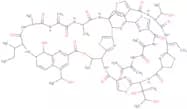
Thiostrepton
CAS:Thiostrepton is a thiopeptide antibiotic with action on bacterial protein synthesis by binding to the ribosome and is used for treating bacterial infections in veterinary medicine and research applications.Formula:C72H85N19O18S5Purezza:Min. 95%Colore e forma:White To Light (Or Pale) Yellow SolidPeso molecolare:1,664.89 g/molTridehydro pirlimycin
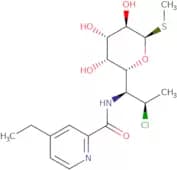
CAS:Tridehydro pirlimycin is an antibiotic compound, which is a synthetic derivative with origins in the lincosamide family. It is characterized by its ability to inhibit bacterial protein synthesis by binding to the 50S ribosomal subunit, leading to a bacteriostatic effect. The compound is primarily developed for its use in veterinary medicine, particularly in the treatment and management of bacterial infections in animals.
Formula:C17H25ClN2O5SPurezza:Min. 95%Peso molecolare:404.91 g/molβ-Lactoglobulin A from bovine milk
CAS:β-Lactoglobulin A is a whey protein found predominantly in bovine milk, characterized as a globular protein. It is sourced from the milk of cows and serves as a major component of whey, the liquid by-product of cheese production. The structure of β-Lactoglobulin A allows it to bind hydrophobic molecules, such as fatty acids and vitamins, which may facilitate their transport and absorption in the digestive tract.
Purezza:Min. 95%HCV-IN-31
CAS:HCV-IN-31 is a chemical inhibitor specifically designed for hepatitis C virus (HCV) research, which is synthesized through advanced organic chemistry techniques. It acts by interfering with the viral replication machinery, effectively reducing the replication rate of the virus in host cells. The inhibition mechanism primarily targets nonstructural proteins crucial for HCV RNA replication, thereby offering a potent blockade to viral proliferation.Formula:C12H17FN6O3Purezza:Min. 95%Peso molecolare:312.3 g/molOxpoconazole fumarate
CAS:Oxpoconazole fumarate is a systemic antifungal agent, which is a synthetic compound derived from chemical synthesis. It functions by inhibiting the biosynthesis of ergosterol, a critical component of fungal cell membranes, ultimately disrupting cell growth and replication. This inhibition interferes with the integrity and functionality of the fungal cell membrane, leading to cell death.
Formula:C42H52Cl2N6O8Purezza:Min. 95%Peso molecolare:839.8 g/molKanamycin sulfate
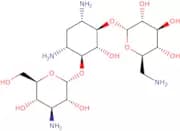
CAS:Kanamycin sulfate is an aminoglycoside antibiotic, derived from the bacterium *Streptomyces kanamyceticus*. Its mode of action involves binding to the 30S subunit of the bacterial ribosome, thereby inhibiting protein synthesis and ultimately leading to bacterial cell death. This mechanism is particularly effective against gram-negative bacteria and certain gram-positive bacteria.
Formula:C18H40N4O16SPurezza:Min. 95%Peso molecolare:600.6 g/mol21-Norrapamycin
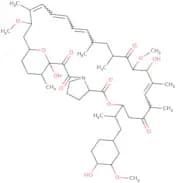
CAS:21-Norrapamycin is a macrocyclic lactone antibiotic, which is derived from the bacterium Streptomyces hygroscopicus. Its chemical structure is closely related to that of rapamycin, a well-known immunosuppressant. The mode of action of 21-Norrapamycin involves the inhibition of the mechanistic target of rapamycin (mTOR) signaling pathway. By binding to the FK506-binding protein 12 (FKBP12), it forms a complex that then inhibits mTOR, a crucial regulator of cell growth, proliferation, and survival.
Formula:C50H77NO13Purezza:Min. 95%Peso molecolare:900.1 g/molLoracarbef monohydrate
CAS:Loracarbef monohydrate is a synthetic antibiotic, which is derived from carbacephem compounds with a mode of action that involves inhibiting bacterial cell wall synthesis. This is achieved by binding to penicillin-binding proteins, thereby blocking the cross-linking of peptidoglycan chains which are crucial for bacterial cell wall structural integrity.
Formula:C16H16ClN3O4·H2OPurezza:Min. 95%Peso molecolare:367.78 g/molSulfadiazine
CAS:Sulfadiazine is a sulfonamide antibiotic with action on bacterial folate synthesis inhibition and is used for treating toxoplasmosis and urinary tract infections.Formula:C10H10N4O2SPurezza:Min. 95%Colore e forma:PowderPeso molecolare:250.28 g/molClomocycline
CAS:Clomocycline is an antibiotic, which is a derivative of tetracycline originating from Streptomyces species. The mechanism of action involves inhibition of bacterial protein synthesis by binding to the 30S ribosomal subunit. This action blocks the attachment of aminoacyl-tRNA to the acceptor site on the mRNA-ribosome complex, ultimately impeding the addition of amino acids to the growing peptide chain and thus hindering bacterial growth.Formula:C23H25ClN2O9Purezza:Min. 95%Peso molecolare:508.9 g/mol3-Chloro-10,11-dihydro-5H-dibenzo[B,D]azepine
CAS:3-Chloro-10,11-dihydro-5H-dibenzo[B,D]azepine is a tricyclic compound, which is typically synthesized through organic chemical processes involving multiple reaction steps to introduce the chloro and dihydro functionalities. With its distinct azepine ring structure, it acts primarily on the central nervous system by modulating neurotransmitter pathways, specifically targeting neurotransmitter reuptake.Formula:C14H12ClNPurezza:Min. 95%Peso molecolare:229.7 g/molLevofloxacin
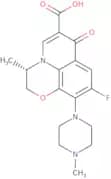
CAS:Levofloxacin is a fluoroquinolone antibiotic with a mode of action that inhibits bacterial DNA gyrase and topoisomerase IV. It is used for treating bacterial infections like pneumonia and urinary tract infections.Formula:C18H20FN3O4Purezza:Min. 95%Colore e forma:PowderPeso molecolare:361.37 g/mol7-Ethyl-10-(4-amino-1-piperidino)carbonyloxycamptothecin-d3
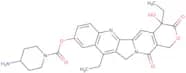
CAS:7-Ethyl-10-(4-amino-1-piperidino)carbonyloxycamptothecin-d3 is a synthetic chemical compound, which is a deuterated derivative of irinotecan. Deuteration involves the substitution of deuterium for hydrogen atoms, which is often utilized to enhance the metabolic stability and pharmacokinetic properties of compounds in research applications. The compound is derived from camptothecin, a natural alkaloid sourced from the Chinese tree Camptotheca acuminata.Formula:C28H30N4O6Purezza:Min. 95%Peso molecolare:521.6 g/molTigecycline hydrate
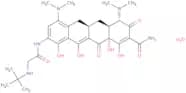
CAS:Inhibitor of protein synthesis; glycylcycline class
Formula:C29H39N5O8Purezza:Min. 95%Peso molecolare:585.65 g/molPazufloxacin
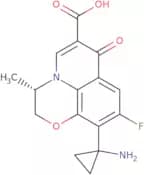
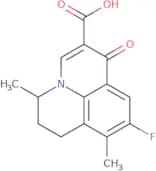
CAS:Pazufloxacin is an antibacterial agent, which is a synthetic derivative originating from the fluoroquinolone class of compounds. This source categorizes it alongside a group of broad-spectrum antibiotics known for their efficacy against a wide variety of bacterial pathogens. The mode of action of pazufloxacin involves the inhibition of bacterial DNA gyrase and topoisomerase IV. These are essential enzymes for bacterial DNA replication, transcription, repair, and recombination processes. By inhibiting these enzymes, pazufloxacin disrupts the bacterial DNA processes, ultimately leading to cell death.
Formula:C16H15FN2O4Purezza:Min. 95%Peso molecolare:318.3 g/molEthyl 6-fluoro-7-benzofurancarboxylate
CAS:Ethyl 6-fluoro-7-benzofurancarboxylate is a synthetic organic compound, belonging to the class of ester derivatives, which is primarily used in chemical research and potential pharmaceutical development. This compound is synthesized through a series of organic reactions involving fluorination and esterification processes, originating from precursors of benzofuran derivatives.
Formula:C11H9FO3Purezza:Min. 95%Peso molecolare:208.18 g/molIbafloxacin
CAS:Ibafloxacin is an antibacterial agent, which is a synthetic fluoroquinolone derived from quinolone compounds. It functions by inhibiting bacterial DNA gyrase and topoisomerase IV, enzymes crucial for DNA replication and transcription in bacteria. By preventing the supercoiling and uncoiling of bacterial DNA, ibafloxacin disrupts essential DNA processes, leading to bacterial cell death.Formula:C15H14FNO3Purezza:Min. 95%Peso molecolare:275.27 g/molN-(4-(4-Methylpiperidin-1-yl)-3-(trifluoromethyl)phenyl)-4-(morpholinomethyl)benzamide
CAS:N-(4-(4-Methylpiperidin-1-yl)-3-(trifluoromethyl)phenyl)-4-(morpholinomethyl)benzamide is a sophisticated chemical compound, classified as a synthetic small molecule. It is synthesized through a series of organic reactions, showcasing the intricate art of modern chemical synthesis and design.Formula:C25H30F3N3O2Purezza:Min. 95%Peso molecolare:461.5 g/molMagainin 2
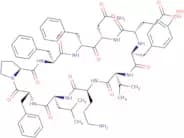
CAS:Magainin 2 is an antimicrobial peptide, which is derived from the skin of the African clawed frog, *Xenopus laevis*. This peptide is renowned for its membrane-disrupting mode of action, where it integrates into lipid bilayers of microbial cell membranes, ultimately leading to disruption and cell lysis. The mode of action is primarily through the formation of pores in the membrane, causing a loss of cellular contents and death of the microbial cell.Formula:C114H180N30O29SPurezza:Min. 95%Peso molecolare:2,466.9 g/molPyflubumide-des(2-methyl-1oxopropyl)
CAS:Pyflubumide-des(2-methyl-1oxopropyl) is a selective miticide, which is synthesized through advanced chemical processes. Its mode of action involves inhibiting cellular respiration in spider mites, specifically targeting the activity of mitochondrial complex II. This disrupts the energy production pathway, leading to pest mortality.
Formula:C21H25F6N3O2Purezza:Min. 95%Peso molecolare:465.4 g/molCefazolin, Antibiotic for Culture Media Use Only
CAS:Cefazolin is a semi-synthetic, non-beta lactam antibiotic used for the treatment of a variety of bacterial infections. It inhibits cell wall synthesis by binding to one or more of penicillin-binding proteins (PBPs), which are bacterial transpeptidases that crosslink peptidoglycan strands. Cefazolin binds to PBPs present on the surface of all Gram-negative bacteria as well as many Gram-positive bacteria. It is not effective against methicillin-resistant staphylococcus and MRSA unless combined with another antibiotic such as vancomycin or flucloxacillin. A study showed that cefazolin can decrease inflammation and tumor necrosis factor-beta levels in pregnant women with systemic inflammatory disease. It has been tested in the development of an anti-inflammatory agent for use in patients with autoimmune diseases such as rheumatoid arthritis and lupus erythe.Formula:C14H14N8O4S3Peso molecolare:454.51 g/molRef: 3D-W-107209
1kgPrezzo su richiesta250gPrezzo su richiesta500gPrezzo su richiesta-Unit-ggPrezzo su richiestaDoxycycline hydrochloride hemiethanolate hemihydrate, Antibiotic for Culture Media Use Only
CAS:Doxycycline is an antibiotic that inhibits bacterial growth by inhibiting protein synthesis, respiratory chain, DNA gyrase, DNA topoisomerase IV. Doxycycline inhibits papaverine by blocking the expression of both cytochrome P450 and epoxide hydrolase. Doxycycline is commonly found in studies for bacterial infections, drug therapy, histopathological studies, cell culture and chemometric analysis.
Formula:C22H24N2O8·HClH2OC2H6OPurezza:Min. 97.0 Area-%Peso molecolare:512.90 g/molRef: 3D-Q-201047
1kgPrezzo su richiesta100gPrezzo su richiesta250gPrezzo su richiesta500gPrezzo su richiesta2500gPrezzo su richiestaKanamycin A
CAS:Inhibitor of protein synthesis; aminoglycoside
Formula:C18H36N4O11Purezza:Min. 95%Colore e forma:White Clear LiquidPeso molecolare:484.5 g/molClindamycin 2-palmitate sulfoxide
CAS:Clindamycin 2-palmitate sulfoxide is a semisynthetic antibiotic, which is a derivative of clindamycin. It originates from lincomycin, a natural antibiotic produced by the bacterium *Streptomyces lincolnensis*. This compound functions as a prodrug, which is converted into its active form in the body. Its mode of action involves inhibiting bacterial protein synthesis by binding to the 50S subunit of the ribosome, thereby preventing the growth and replication of susceptible bacteria.
Formula:C34H64Cl2N2O7SPurezza:Min. 95%Peso molecolare:715.9 g/molNafcilllin sodium monohydrate
CAS:Nafcillin sodium monohydrate is a beta-lactam antibiotic, which is derived from the penicillin class of antimicrobials. It is specifically a semi-synthetic penicillin and is commonly sourced through chemical synthesis to enhance its stability and spectrum of activity. Nafcillin primarily exerts its bactericidal effects by inhibiting bacterial cell wall synthesis. It achieves this through its strong affinity for penicillin-binding proteins (PBPs), which are essential for maintaining the bacterial cell wall structure. By disrupting the formation of peptidoglycan cross-links, nafcillin effectively weakens the bacterial cell wall, leading to cell lysis and death, especially in gram-positive bacteria such as Staphylococcus aureus, including methicillin-sensitive strains (MSSA).Formula:C21H21N2O5SNa·H2OPurezza:Min. 95%Colore e forma:White to off-white solid.Peso molecolare:454.47 g/molAntimicrobial compound 1
CAS:Antimicrobial Compound 1 is a broad-spectrum antimicrobial agent, which is derived from natural sources, specifically from marine bacteria with known potent antimicrobial properties. This compound acts by targeting and disrupting the synthesis of bacterial cell walls, specifically inhibiting peptidoglycan cross-linking, which ultimately leads to cell lysis and death due to osmotic instability. Such a mechanism offers a robust approach to tackling Gram-positive and Gram-negative bacteria.
Formula:C18H30BrNO2Purezza:Min. 95%Peso molecolare:372.3 g/mol1-Ethyl-6-fluoro-7-(4-formylpiperazin-1-yl)-4-oxo-1,4-dihydroquinoline-3-carboxylic acid
CAS:1-Ethyl-6-fluoro-7-(4-formylpiperazin-1-yl)-4-oxo-1,4-dihydroquinoline-3-carboxylic acid is an advanced fluoroquinolone antibiotic, which is synthetically derived. This compound operates by efficiently inhibiting bacterial DNA gyrase and topoisomerase IV, enzymes which are critical for bacterial DNA replication, transcription, and repair. The inhibition of these enzymes interferes with the DNA processes, ultimately leading to bacterial cell death.Formula:C17H18FN3O4Purezza:Min. 95%Peso molecolare:347.34 g/molPC 190723
CAS:PC 190723 is a synthetic chemical compound, which is derived through targeted chemical synthesis processes involving precise organic reactions. Its mode of action involves disrupting cellular division by inhibiting specific protein functions essential for the mitotic process. This molecular interaction results in potent effects on cell division, making it a valuable tool for studying cellular mechanics and developing therapeutic strategies.
Formula:C14H8ClF2N3O2SPurezza:Min. 95%Peso molecolare:355.75 g/mol2-(2-Methyl-4-nitro-1H-imidazol-1-yl)ethyl benzoate
CAS:2-(2-Methyl-4-nitro-1H-imidazol-1-yl)ethyl benzoate is a synthetic chemical compound, classified as an organic ester. It originates from the reaction between benzoic acid and a derivative of nitroimidazole, a class of compounds known for their bioactivity. The molecular framework includes a benzoate ester linked to an imidazole ring, which is substituted with nitro and methyl groups, contributing to its unique characteristics.
Formula:C13H13N3O4Purezza:Min. 95%Peso molecolare:275.26 g/molCaerulomycin A
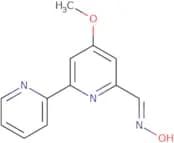
CAS:Caerulomycin A is a bioactive compound classified as a natural broad-spectrum antibiotic, which is derived from various Streptomyces species found in soil. Its mode of action involves inhibiting fungal and bacterial growth by interfering with essential cellular processes, effectively curbing the proliferation of pathogenic microorganisms. This potent molecule achieves its effects by binding to specific cellular targets, thereby disrupting cell wall synthesis and other critical metabolic pathways.Formula:C12H11N3O2Purezza:Min. 95%Peso molecolare:229.23 g/mol(+)-Oxanthromicin
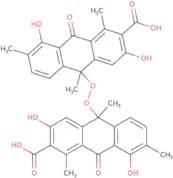
CAS:(+)-Oxanthromicin is a natural compound classified as a polyketide antibiotic, which is derived from certain strains of soil-dwelling actinomycetes. These microorganisms are known to produce a variety of biologically active secondary metabolites. The mode of action of (+)-Oxanthromicin involves the inhibition of specific bacterial enzymes, disrupting essential processes within the microbial cells. This interference can lead to growth inhibition or cell death, showcasing its potential as a therapeutic agent.
Formula:C36H30O12Purezza:Min. 95%Peso molecolare:654.6 g/molLedipasvir diacetone
CAS:Ledipasvir is a synthetic drug that inhibits the viral enzyme NS5A, which is necessary for viral replication. Ledipasvir has been shown to inhibit the growth of microorganisms such as bacteria and fungi. It also has antiviral properties, and is active against HIV-1. Ledipasvir can be used in chemotherapy to treat cancer and other diseases. This drug has high purity and is available at life science stores.Formula:C55H66F2N8O8Purezza:Min. 95%Peso molecolare:1,005.2 g/molLincomycin B hydrochloride
CAS:Inhibitor of protein synthesis; lincosamideFormula:C17H33ClN2O6SPurezza:Min. 95%Peso molecolare:428.97 g/molBorrelidin
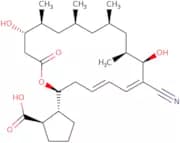
CAS:Borrelidin is a potent antibiotic of the polyketide class, which is isolated from various Streptomyces species. Its mode of action is characterized by its inhibition of threonyl-tRNA synthetase, effectively disrupting protein synthesis within bacteria. Additionally, Borrelidin is known for its unique anti-angiogenic properties, which result from the inhibition of endothelial cell proliferation, making it a compound of interest in cancer research.
Purezza:Min. 95%SP187
CAS:Please enquire for more information about SP187 including the price, delivery time and more detailed product information at the technical inquiry form on this page
Formula:C16H33NO5Purezza:Min. 95%Peso molecolare:319.44 g/molPF 1022A
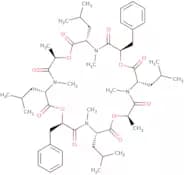
CAS:PF 1022A is a cyclooctadepsipeptide, which is a type of cyclic peptide composed of amino acids and hydroxy acids. It is derived from the fermentation products of the fungus *Mycelia sterilia*, a member of the *Rosellinia* genus. Its mode of action involves disrupting glutamate-gated chloride channels in parasitic nematodes, which leads to paralysis and eventual death of the parasite.
Formula:C52H76N4O12Purezza:Min. 95%Peso molecolare:949.18 g/molBephenium
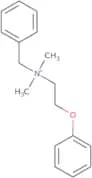
CAS:Bephenium is an anthelmintic agent, which is a type of product used to treat infections caused by parasitic worms. It originates from synthetic chemical processes specifically designed to combat nematode infestations. The mode of action involves disrupting the neuromuscular activity of susceptible parasitic worms, such as hookworms and roundworms, leading to their paralysis and eventual expulsion from the host organism.Formula:C17H22NOPurezza:Min. 95%Peso molecolare:256.36 g/mol10, 11-Dehydrocurvularin
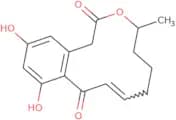
CAS:10, 11-Dehydrocurvularin is a fungal phytotoxin with heat shock response and immune-modulatory activitie. Curvularins inhibit the expression of the inducible nitric oxide synthase (iNOS), thereby acting as anti-inflammatory agents and immune system modulators
Purezza:Min. 95%Colore e forma:PowderDichlobentiazox
CAS:Dichlobentiazox is a fungicide, which is synthesized from synthetic chemical sources with a mode of action that targets specific fungal processes. It works by inhibiting the biosynthesis of essential cellular components in pathogenic fungi, thereby disrupting their growth and ability to proliferate.Formula:C11H6Cl2N2O3S2Purezza:Min. 95%Peso molecolare:349.2 g/molCefquinome sulfate
CAS:Cefquinome sulfate is a cephalosporin antibiotic, which is a synthetic, broad-spectrum antimicrobial agent. It is derived from the beta-lactam family, specifically designed to combat Gram-positive and Gram-negative bacterial pathogens. The mode of action involves inhibiting bacterial cell wall synthesis. It achieves this by binding to penicillin-binding proteins (PBPs) within the bacterial cell wall, ultimately leading to cell lysis and death due to the interruption of necessary cell wall components.
Formula:C23H26N6O9S3Purezza:Min. 95%Colore e forma:White To Light (Or Pale) Yellow To Beige To Light Brown SolidPeso molecolare:626.69 g/molCarbazomycin B
CAS:Carbazomycin B is a bioactive compound which is an antibiotic derived from the soil bacterium Streptomyces. This compound exhibits its mode of action by interfering with the synthesis of bacterial cell walls, which ultimately restricts the growth and proliferation of bacterial cells. The unique chemical structure of Carbazomycin B allows it to target specific pathways within bacterial organisms, making it an important tool in combating resistant strains.
Formula:C15H15NO2Purezza:Min. 95%Peso molecolare:241.28 g/molAqabamycin A
CAS:Aqabamycin A is an antibiotic compound, which is derived from marine microorganisms, specifically actinomycetes. These marine bacteria are known for producing a wide array of bioactive compounds, including antibiotics, due to their unique metabolites shaped by the oceanic environment. Aqabamycin A operates by inhibiting bacterial RNA polymerase, thereby disrupting the transcription process essential for bacterial protein synthesis. This specific mode of action targets the growth and replication of bacteria, making it a potent agent against pathogenic strains.Formula:C16H11NO3Purezza:Min. 95%Peso molecolare:265.26 g/molBCX 4430 hydrochloride
CAS:RNA polymerase (RdRp) inhibitor
Formula:C11H15N5O3Purezza:Min. 95%Peso molecolare:265.27 g/molTyrothricin
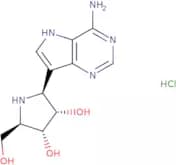
CAS:Tyrothricin is a peptide antibiotic, which is derived from the bacterium Bacillus brevis. This compound comprises a mixture of polypeptides, primarily gramicidin and tyrocidine, both of which are instrumental in its antimicrobial activity. The mode of action of tyrothricin involves disrupting bacterial cell membranes, leading to cell lysis and death. Gramicidin increases the permeability of the bacterial membrane to ions, while tyrocidine promotes disruption of membrane integrity, which together exert bactericidal and bacteriostatic effects.
Formula:C65H85N11O13Purezza:Min. 95%Peso molecolare:1,228.44 g/molCarumonam disodium
CAS:Carumonam disodium is a monobactam antibiotic, which is derived from microbial fermentation processes. Its mode of action involves binding to penicillin-binding proteins (PBPs) of susceptible Gram-negative bacteria. This binding inhibits the final transpeptidation step of peptidoglycan synthesis in the bacterial cell wall, leading to cell lysis and death.Formula:C12H14N6Na2O10S2Purezza:Min. 95%Peso molecolare:512.39 g/molCycloheximide, Antibiotic for Culture Media Use Only
CAS:Cycloheximide, Antibiotic for Culture Media Use Only, is an antifungal agent derived from the Streptomyces griseus bacterium. Its primary mode of action involves the inhibition of eukaryotic protein synthesis by interfering with the translocation step on the 80S ribosome. This leads to rapid arrest of protein assembly, effectively limiting fungal and certain yeast growth in culture.Formula:C15H23NO4Peso molecolare:281.35 g/molLobucavir
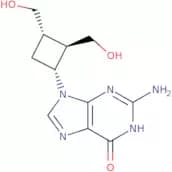
CAS:Lobucavir is an antiviral compound with a mode of action that inhibits viral DNA polymerase. It is used for treating infections caused by herpesviruses and hepatitis B virus.
Formula:C11H15N5O3Purezza:Min. 95%Peso molecolare:265.27 g/mol4-Epianhydrotetracycline
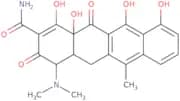
CAS:4-Epianhydrotetracycline is a chemical compound that is a derivative of tetracycline, a well-known antibiotic. It is primarily a byproduct arising from the chemical degradation of tetracycline antibiotics, occurring under acidic or basic conditions. The source of this compound is the structural transformation of tetracycline, resulting in an altered molecular configuration.
Formula:C22H22N2O7Purezza:Min. 95%Peso molecolare:426.4 g/molVancomycin hydrochloride from streptomyces orientalis
CAS:Vancomycin hydrochloride is a glycopeptide antibiotic, derived from the bacterium *Streptomyces orientalis*. This compound functions by inhibiting bacterial cell wall synthesis, specifically targeting the D-alanyl-D-alanine termini in peptidoglycan chains. It disrupts transglycosylation and transpeptidation, critical steps in cell wall biosynthesis, ultimately leading to cell lysis.Formula:C66H75Cl2N9O24·HClPurezza:Min. 95%Peso molecolare:1,485.71 g/mol





![3-Chloro-10,11-dihydro-5H-dibenzo[B,D]azepine](/_next/image/?url=https%3A%2Fstatic.cymitquimica.com%2Fproducts%2F3D%2Fthumb-webp%2FPBA60790.webp&w=3840&q=75)