Antimicrobici
Sottocategorie di "Antimicrobici"
- Antibiotici(4.132 prodotti)
- Antimicotici(886 prodotti)
- Antiparassitari(682 prodotti)
- Antivirali(765 prodotti)
Trovati 2438 prodotti di "Antimicrobici"
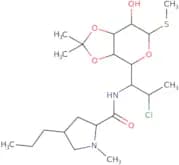
Clindamycin 3,4-isopropylidene
CAS:Clindamycin 3,4-isopropylidene is a semi-synthetic antibiotic derivative of clindamycin, which is derived from the bacterial species Streptomyces lincolnensis. This compound is synthesized through chemical modification, specifically forming an isopropylidene group at positions 3 and 4 of the clindamycin molecule. The inclusion of the isopropylidene moiety alters its physicochemical properties, potentially enhancing its stability or spectrum of activity.
Formula:C21H37ClN2O5SPurezza:Min. 95%Peso molecolare:465 g/molCefmetazole lactone
CAS:Cefmetazole lactone is an antibiotic, classified as a cephalosporin, which is a type of β-lactam antimicrobial compound. It is derived from the Cephalosporium fungus, known for its progenitor antimicrobial properties. As a second-generation cephalosporin, cefmetazole lactone operates by inhibiting bacterial cell wall synthesis, essentially interfering with the transpeptidation process of peptidoglycan, a critical component of the bacterial cell wall. This disruption leads to cell lysis and eventual bacterial death, mainly affecting Gram-positive and some Gram-negative bacteria.
Formula:C13H13N3O5S2Purezza:Min. 95%Peso molecolare:355.40 g/molTCMDC-135051
CAS:TCMDC-135051 is a synthetic ligand, which is derived from advanced combinatorial chemistry techniques. It operates as a potent modulator of specific receptor sites by selectively binding and altering their physiological activity. The source of TCMDC-135051's activity is its molecular architecture, designed to target epitopes with high affinity and precision. This targeted action makes TCMDC-135051 a valuable tool for probing cellular pathways and mechanisms, providing insights into complex biological processes.Formula:C29H33N3O3Purezza:Min. 95%Peso molecolare:471.6 g/molAphidicolin
CAS:Aphidicolin is a tetracyclic diterpenoid that acts as a potent inhibitor of DNA polymerase. Derived from the fungus *Cephalosporium aphidicola*, it is primarily identified for its ability to impede DNA synthesis by targeting eukaryotic DNA polymerase α. This selective inhibition disrupts replication processes, making it a crucial tool for studying cell cycle dynamics.Formula:C20H34O4Purezza:Min. 95%Peso molecolare:338.48 g/molDidesethyl chloroquine hydroxyacetamide-d4
CAS:Didesethyl chloroquine hydroxyacetamide-d4 is a deuterated pharmaceutical compound, which serves as a stable isotope-labeled analog. Such compounds are often synthesized in specialized laboratories for research purposes, providing insightful data on pharmacokinetics and metabolic pathways. The deuteration, involving the replacement of hydrogen atoms with deuterium, offers enhanced accuracy in mass spectrometry analysis due to its unique isotopic signature.
Formula:C16H20ClN3O2Purezza:Min. 95%Peso molecolare:325.82 g/mol1-Anthroylnitrile
CAS:1-Anthroylnitrile is a chemical compound, specifically an organic aromatic compound known as a polycyclic aromatic nitrile, which is synthesized from anthracene via nitrile substitution at the 1-position. With its aromatic structure, 1-Anthroylnitrile exhibits unique photophysical properties, functioning as a significant fluorescent probe due to its strong absorption and emission in the UV-visible spectrum.
Formula:C16H9NOPurezza:Min. 95%Peso molecolare:231.25 g/mol9,11Beta-Dichloro-17,21-dihydroxy-16beta-methyl-pregna-1,4-diene-3,20-dione dipropionate
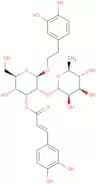
CAS:9,11Beta-Dichloro-17,21-dihydroxy-16beta-methyl-pregna-1,4-diene-3,20-dione dipropionate is a synthetic corticosteroid, which is derived from chemical synthesis in laboratories. It functions by mimicking the actions of naturally occurring corticosteroids in the body, modulating immune responses and suppressing inflammatory mediators at the cellular level.Formula:C28H36Cl2O6Purezza:Min. 95%Peso molecolare:539.50 g/molMagnoloside A
CAS:Magnoloside A is a bioactive compound, which is a natural product derived from the bark of the Magnolia plant. This compound is part of a group of phenolic glycosides that is extracted using advanced phytochemical techniques. Its mode of action primarily involves the inhibition of pro-inflammatory cytokines and modulation of various signaling pathways involved in inflammation and oxidative stress.
Formula:C29H36O15Purezza:Min. 95%Peso molecolare:624.6 g/molCefepime dihydrochloride monohydrate, Antibiotic for Culture Media Use Only
CAS:Cefepime dihydrochloride monohydrate is a fourth-generation cephalosporin antibiotic utilized in scientific research, specifically formulated for culture media applications. It is derived from semi-synthetic processes, showcasing a broad spectrum of activity predominantly against Gram-positive and Gram-negative bacteria. The mode of action of cefepime involves the inhibition of bacterial cell wall synthesis by binding to penicillin-binding proteins, which interferes with peptidoglycan cross-linking, ultimately leading to cell lysis and death.Formula:C19H28Cl2N6O6S2Purezza:Min. 98 Area-%Peso molecolare:571.5 g/mol2,4,5,6-Tetrachlorophenol-13C6
CAS:2,4,5,6-Tetrachlorophenol-13C6 is an isotopically labeled chemical compound, primarily used as a reference standard in analytical chemistry. This compound, derived from its non-labeled counterpart 2,4,5,6-tetrachlorophenol, is synthesized through the incorporation of carbon-13 isotopes. Its primary mode of action involves acting as a stable, traceable marker, facilitating accurate quantification and analysis of environmental samples, particularly in mass spectrometry.
Formula:C6H2Cl4OPurezza:Min. 95%Peso molecolare:237.8 g/molAtramycin A
CAS:Atramycin A is an antibiotic, which is derived from the Streptomyces genus, a prolific source of bioactive compounds. Streptomyces species are renowned for their ability to produce a vast array of secondary metabolites with diverse pharmacological activities. Atramycin A operates primarily through the inhibition of bacterial protein synthesis. It achieves this by binding to bacterial ribosomal subunits, thus interfering with peptide chain elongation and effectively halting bacterial growth.Formula:C25H24O9Purezza:Min. 95%Peso molecolare:468.50 g/molSideroxylin
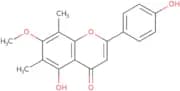
CAS:Sideroxylin is a C-methylated flavone with action as an antimicrobial agent against Staphylococcus aureus and is used for research on antimicrobial and anticancer properties.Formula:C18H16O5Purezza:Min. 95%Peso molecolare:312.3 g/molSSAA09E2
CAS:SSAA09E2 is a specialized chemical compound, which is a synthetic product used extensively in various industrial and research applications. This compound is derived from petrochemical sources, ensuring a high degree of purity and consistency. Its mode of action involves acting as a catalyst in chemical reactions, facilitating the transformation and modification of molecular structures without being consumed in the process.Formula:C16H20N4O2Purezza:Min. 95%Peso molecolare:300.36 g/mol6-Fluoro-1-(4-fluorophenyl)-4-oxo-7-piperazin-1-yl-1,8-naphthyridine-3-carboxylic acid
CAS:6-Fluoro-1-(4-fluorophenyl)-4-oxo-7-piperazin-1-yl-1,8-naphthyridine-3-carboxylic acid is a fluoroquinolone antibiotic, which is a synthetic product derived from naphthyridine. Its mode of action involves inhibiting bacterial DNA gyrase and topoisomerase IV, enzymes critical for DNA replication, transcription, and repair. This action results in the prevention of DNA supercoiling and introduces breaks within bacterial DNA, thereby leading to the death of the microorganism.
Formula:C19H16F2N4O3Purezza:Min. 95%Peso molecolare:386.4 g/molPicloxidina
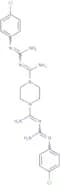
CAS:Picloxidina is a chlorhexidine-based antiseptic, which is a synthetic compound with broad-spectrum antimicrobial activity. Its mode of action involves disrupting microbial cell membranes, leading to leakage of cellular contents and subsequent cell death. Picloxidina has been utilized extensively in ophthalmology due to its effectiveness in controlling ocular infections.
Formula:C20H24Cl2N10Purezza:Min. 95%Peso molecolare:475.4 g/molArylpyrazol
CAS:Arylpyrazol is an advanced class of pesticide, originating from meticulous chemical synthesis. These compounds are primarily derived from pyrazole and aryl substituents, forming a class of sophisticated chemical agents. The mode of action of arylpyrazols involves interfering with nervous system functions of pests, specifically targeting their gamma-aminobutyric acid (GABA) receptor sites. This disruption in GABA neurotransmission leads to hyperexcitation of the pests' nervous system, eventually resulting in paralysis and death.
Formula:C13H9Cl3F2N4O3Purezza:Min. 95%Peso molecolare:413.6 g/molCefotiam
CAS:Cefotiam is a broad-spectrum cephalosporin antibiotic, which is a beta-lactam compound derived from the mold Acremonium. It functions by inhibiting bacterial cell wall synthesis, particularly by targeting penicillin-binding proteins, which leads to cell lysis and death in susceptible bacteria. This mechanism of action makes it effective against various Gram-positive and Gram-negative bacteria.
Formula:C18H23N9O4S3Purezza:Min. 95%Colore e forma:PowderPeso molecolare:525.62 g/molChevalone E
CAS:Chevalone E is a specialized nematicide, which is derived from natural plant sources. Its mode of action is based on disrupting the normal physiological processes of nematodes, thereby inhibiting their ability to infect and damage host plants. Chevalone E is particularly valued for its ability to target a broad range of nematode species, making it an effective tool in integrated pest management strategies.
Formula:C26H38O4Purezza:Min. 95%Peso molecolare:414.6 g/molAvermectin a1a
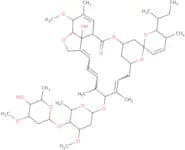
CAS:Avermectin A1a is a macrocyclic lactone used primarily as an anthelmintic and insecticide. It is derived from the fermentation of the soil bacterium *Streptomyces avermitilis*. The compound works through a neurotoxic mode of action, binding to glutamate-gated chloride channels in nerve and muscle cells of invertebrates, leading to paralysis and subsequent death of the parasites. This mechanism is highly specific, primarily affecting nematodes and arthropods.
Formula:C49H74O14Purezza:90%Peso molecolare:887.1 g/mol