Antimicrobici
Sottocategorie di "Antimicrobici"
- Antibiotici(4.132 prodotti)
- Antimicotici(886 prodotti)
- Antiparassitari(682 prodotti)
- Antivirali(765 prodotti)
Trovati 2438 prodotti di "Antimicrobici"
Cefotiam
CAS:Cefotiam is a broad-spectrum cephalosporin antibiotic, which is a beta-lactam compound derived from the mold Acremonium. It functions by inhibiting bacterial cell wall synthesis, particularly by targeting penicillin-binding proteins, which leads to cell lysis and death in susceptible bacteria. This mechanism of action makes it effective against various Gram-positive and Gram-negative bacteria.
Formula:C18H23N9O4S3Purezza:Min. 95%Colore e forma:PowderPeso molecolare:525.62 g/molGatifloxacin hydrochloride
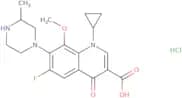
CAS:Gatifloxacin hydrochloride is a fluoroquinolone antibiotic, which is synthesized chemically from quinolone compounds. It exhibits its mode of action by inhibiting bacterial DNA gyrase and topoisomerase IV, essential enzymes responsible for DNA replication and transcription processes in bacteria. This disruption of DNA processes leads to bacterial cell death, making it effective against a wide range of Gram-positive and Gram-negative bacteria.Formula:C19H23ClFN3O4Purezza:Min. 95%Peso molecolare:411.86 g/molAspartocin D
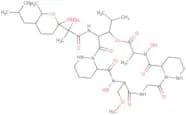
CAS:Aspartocin D is a peptide antibiotic, which is derived from microbial fermentation of certain actinomycetes. Its mode of action involves disrupting the integrity of fungal cell membranes, leading to increased permeability and eventual cell death. Aspartocin D is specifically effective against a range of fungal pathogens, making it a useful tool in the study and potential treatment of fungal infections.Formula:C57H89N13O20Purezza:Min. 95%Peso molecolare:1,276.40 g/molTetracycline hydrochloride, Antibiotic for Culture Media Use Only
CAS:Tetracycline hydrochloride is a broad-spectrum antibiotic and is an electron transfer agent. It has been shown to be effective against bacterial infections in humans and has been used in cultures for the prevention of bacterial contamination. As an electron transfer agent, it is used in electron microscopy to study the surface of biological cells. Tetracycline hydrochloride enters bacterial cells by diffusion and interacts with the cytoplasmic membrane, where it induces a redox reaction that leads to cell death. The efficacy of tetracycline hydrochloride in treating candida albicans (yeast) was studied using in-vitro activity and showed that carboxymethyl chitosan nanoparticles were able to enhance the treatment efficiency.Formula:C22H25ClN2O8Purezza:Min. 88.0 Area-%Peso molecolare:480.90 g/molRef: 3D-T-1961
1kgPrezzo su richiesta5kgPrezzo su richiesta10kgPrezzo su richiesta25kgPrezzo su richiesta2500gPrezzo su richiesta-Unit-kgkgPrezzo su richiestaDequalinium chloride
CAS:Dequalinium chloride is a novel, broad spectrum antimicrobial agent with a mechanism of action that inhibits the mitochondria-dependent respiratory chain. Studies have shown that it inhibits the growth of resistant microorganisms in cell-based experiments and in bacterial infections. Dequalinium chloride also has cytopathic effects on thp-1 cells, which are specific for Mycobacterium tuberculosis. In addition to inhibiting mitochondria-dependent respiration, this compound also increases acetylcholine receptor sensitivity in A549 lung cancer cells. Dequalinium chloride is a quaternary ammonium cation and has been shown to be effective against clinical isolates and inhibitory concentrations of a variety of virus species, including human rhinovirus (HRV) and Coxsackie virus type B4 (CoxB4).
Formula:C30H40Cl2N4Purezza:Min. 95.0 Area-%Peso molecolare:527.57 g/molRef: 3D-W-105841
5gPrezzo su richiesta10gPrezzo su richiesta25gPrezzo su richiesta50gPrezzo su richiesta100gPrezzo su richiesta-Unit-ggPrezzo su richiestaSteffimycin B
CAS:Steffimycin B is an anthracycline antibiotic, which is a metabolite produced by certain Streptomyces species. This compound functions by intercalating into DNA, thereby inhibiting the synthesis of nucleic acids and disrupting essential cellular processes. Its mode of action involves preventing the replication and transcription of bacterial DNA, leading to cell death. Steffimycin B has been primarily explored for its antibiotic properties, particularly in research settings for its potential to combat specific bacterial infections. Additionally, its structural similarities to other anthracyclines suggest potential use in studying mechanisms of drug resistance and interactions with DNA. Further investigation may reveal additional therapeutic applications or synergistic effects in combination with other antimicrobial agents.Formula:C29H32O13Purezza:Min. 95%Peso molecolare:588.6 g/molAzddmec
CAS:Please enquire for more information about Azddmec including the price, delivery time and more detailed product information at the technical inquiry form on this pageFormula:C10H14N6O3Purezza:Min. 95%Peso molecolare:266.26 g/mol1-(4-Pentyloxy-3-trifluoromethylphenyl)-3-(pyridine-3-carbonyl)thiourea
CAS:1-(4-Pentyloxy-3-trifluoromethylphenyl)-3-(pyridine-3-carbonyl)thiourea is a synthetic compound employed largely in biochemical research and potential medicinal applications. As a small molecule derivative, it is synthesized through meticulous organic chemistry protocols designed to yield compounds with specific biophysical properties. The compound acts primarily by modulating distinct biochemical pathways, interacting with molecular targets such as enzymes or receptors, thereby influencing biological processes at the cellular level.Formula:C19H20F3N3O2SPurezza:Min. 95%Peso molecolare:411.4 g/molClindamycin palmitate hydrochloride
CAS:Clindamycin palmitate hydrochloride is a semisynthetic antibiotic prodrug, which is derived from the lincomycin family, originally sourced from the bacterium *Streptomyces lincolnensis*. This compound functions through its conversion into the active form, clindamycin, once inside the body. Clindamycin acts by inhibiting bacterial protein synthesis, binding to the 50S subunit of the bacterial ribosome, thereby impeding peptide chain initiation and elongation.Formula:C34H63ClN2O6SPurezza:Min. 95%Peso molecolare:663.4 g/molDioxohongdenafil
CAS:Dioxohongdenafil is a synthetic compound, which is a type of pharmaceutical analog. It is derived from sildenafil, a well-known phosphodiesterase type 5 (PDE5) inhibitor, originally conceptualized through chemical modification of the parent compound. The mode of action of Dioxohongdenafil involves competitive inhibition of the PDE5 enzyme, leading to an increase in cyclic guanosine monophosphate (cGMP) levels. This biochemical alteration results in vasodilation and increased blood flow, mimicking the therapeutic mechanism observed in sildenafil.
Formula:C25H30N6O5Purezza:Min. 95%Peso molecolare:494.5 g/molThiadiazin
CAS:Thiadiazin is a synthetic compound, belonging to the class of heterocyclic chemical substances, which is primarily derived from chemical synthesis processes involving sulfur, nitrogen, and carbon atoms. It is characterized by a five-membered ring structure containing both sulfur and nitrogen atoms, which contributes to its diverse chemical properties.
Formula:C12H22N4S4Purezza:Min. 95%Peso molecolare:350.6 g/molParecoxib sodium
CAS:Prodotto controllatoParecoxib sodium is a nonsteroidal anti-inflammatory drug (NSAID) prodrug, which is synthesized pharmaceutically. It exerts its therapeutic effects through the selective inhibition of cyclooxygenase-2 (COX-2) enzymes. This inhibition reduces the synthesis of prostaglandins, compounds involved in the mediation of inflammation and pain, thereby providing analgesic and anti-inflammatory effects.
Formula:C19H17N2NaO4SPurezza:Min. 95%Peso molecolare:392.4 g/molHaloxyfop-phenol
CAS:Haloxyfop-phenol is a selective herbicide, which is a synthetic chemical compound derived from aryloxyphenoxypropionate. It acts as an acetyl-CoA carboxylase (ACCase) inhibitor, targeting the enzyme critical for fatty acid synthesis in grasses. This mode of action disrupts lipid production in susceptible grass species, leading to cessation of growth and eventual plant death.Formula:C12H7ClF3NO2Purezza:Min. 95%Peso molecolare:289.64 g/molAurantimycin A
CAS:Aurantimycin A is an antibiotic compound, which is a polypeptide derived from the bacterium genus *Streptomyces*, a type of Actinobacteria. This compound exhibits its mode of action through inhibition of bacterial protein synthesis, specifically by interfering with the ribosomal function, thereby preventing the growth and proliferation of susceptible bacterial strains. The potent activity of Aurantimycin A against Gram-positive bacteria makes it a crucial tool in microbial and biochemical research.Formula:C38H64N8O14Purezza:Min. 95%Peso molecolare:857 g/mol2-Ethylhexyl 4-(4-chloro-2-methylphenoxy)butyrate
CAS:2-Ethylhexyl 4-(4-chloro-2-methylphenoxy)butyrate is a pre-emergent herbicide, which is synthesized from phenoxyalkanoic acid derivatives. Its mode of action involves inhibiting essential plant lipid synthesis pathways, specifically targeting the acetyl-coenzyme A carboxylase (ACCase) enzyme. This enzyme is pivotal for fatty acid synthesis, which is critical for the development of cellular lipids necessary for plant growth and survival.
Formula:C19H29ClO3Purezza:Min. 95%Peso molecolare:340.9 g/mol21-Norrapamycin
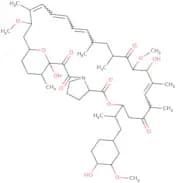
CAS:21-Norrapamycin is a macrocyclic lactone antibiotic, which is derived from the bacterium Streptomyces hygroscopicus. Its chemical structure is closely related to that of rapamycin, a well-known immunosuppressant. The mode of action of 21-Norrapamycin involves the inhibition of the mechanistic target of rapamycin (mTOR) signaling pathway. By binding to the FK506-binding protein 12 (FKBP12), it forms a complex that then inhibits mTOR, a crucial regulator of cell growth, proliferation, and survival.
Formula:C50H77NO13Purezza:Min. 95%Peso molecolare:900.1 g/molClindamycin-2,3-diphosphate
Clindamycin-2,3-diphosphate is a biochemical compound, which is derived from the antibiotic clindamycin, sourced through chemical modification to include diphosphate groups. Its mode of action involves inhibiting bacterial protein synthesis by binding to the 50S ribosomal subunit, thus interfering with peptide chain initiation and elongation. This disruption effectively halts bacterial growth, particularly in Gram-positive bacteria, and is crucial in combatting infections resistant to other antibiotics.Formula:C18H35ClN2O11P2SPurezza:Min. 95%Peso molecolare:584.94 g/molIbafloxacin
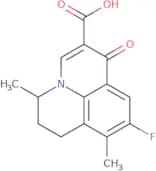
CAS:Ibafloxacin is an antibacterial agent, which is a synthetic fluoroquinolone derived from quinolone compounds. It functions by inhibiting bacterial DNA gyrase and topoisomerase IV, enzymes crucial for DNA replication and transcription in bacteria. By preventing the supercoiling and uncoiling of bacterial DNA, ibafloxacin disrupts essential DNA processes, leading to bacterial cell death.Formula:C15H14FNO3Purezza:Min. 95%Peso molecolare:275.27 g/molNybomycin
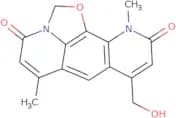
CAS:Nybomycin is a quinolone-based antibiotic, which is a synthetic derivative originally derived from actinomycetes, a type of filamentous bacteria known for producing numerous bioactive compounds. Its mode of action involves targeting and inhibiting bacterial DNA gyrase and topoisomerase IV, enzymes critical for DNA replication and transcription. This mechanism disrupts DNA synthesis, thereby exerting bactericidal effects on susceptible bacterial populations.
Formula:C16H14N2O4Purezza:Min. 95%Peso molecolare:298.29 g/molDoxycycline hydrochloride hemiethanolate hemihydrate, Antibiotic for Culture Media Use Only
CAS:Doxycycline is an antibiotic that inhibits bacterial growth by inhibiting protein synthesis, respiratory chain, DNA gyrase, DNA topoisomerase IV. Doxycycline inhibits papaverine by blocking the expression of both cytochrome P450 and epoxide hydrolase. Doxycycline is commonly found in studies for bacterial infections, drug therapy, histopathological studies, cell culture and chemometric analysis.
Formula:C22H24N2O8·HClH2OC2H6OPurezza:Min. 97.0 Area-%Peso molecolare:512.90 g/molRef: 3D-Q-201047
1kgPrezzo su richiesta100gPrezzo su richiesta250gPrezzo su richiesta500gPrezzo su richiesta2500gPrezzo su richiesta