Terpenoidi
I terpenoidi, noti anche come isoprenoidi, sono la più grande classe di composti organici naturali, derivati da unità di isoprene a cinque atomi di carbonio. Si trovano in una varietà di piante e sono noti per le loro proprietà aromatiche, oltre al loro ruolo nella difesa e nella segnalazione delle piante. I terpenoidi sono stati ampiamente studiati per i loro effetti terapeutici, tra cui proprietà antinfiammatorie, antimicrobiche e antitumorali. Sono utilizzati nelle industrie farmaceutiche, cosmetiche e alimentari per i loro benefici per la salute e le qualità aromatiche. Da CymitQuimica troverete un'ampia selezione di terpenoidi, essenziali per la ricerca in biologia vegetale, farmacologia e sintesi di prodotti naturali.
Sottocategorie di "Terpenoidi"
- Diterpeni (C₂₀)(671 prodotti)
- Emiterpeni (C₅)(21 prodotti)
- Monoterpeni (C₁₀)(709 prodotti)
- Sesquiterpeni (C₂₅)(452 prodotti)
- Tetraterpeni (C₄₀)(63 prodotti)
- Triterpeni (C₃₀)(1.130 prodotti)
Trovati 1423 prodotti di "Terpenoidi"
Ordinare per
Purezza (%)
0
100
|
0
|
50
|
90
|
95
|
100
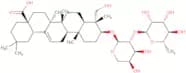
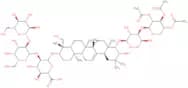
Asiaticoside A
CAS:Pentacyclic triterpene; anti-inflammatory, anti-oxidant & anti-ageingFormula:C48H78O20Purezza:Min. 95%Colore e forma:White PowderPeso molecolare:975.12 g/molDigoxin
CAS:Digoxin and its derivatives are the most widely used as cardiac glycosides. Digoxin is isolated from the foxglove plant, Digitalis lanata, and has pharmacokinetic properties that are intermediate between digitoxin and the short acting strophanthus glycosides. Digoxin is regarded as the drug of choice for the treatment of congestive heart failure as its main assets are the rapid onset of action, good absorption ratio and the medium half-life which makes toxic reactions easier to manage (Albrecht, 1999).Formula:C41H64O14Purezza:Min. 95%Colore e forma:PowderPeso molecolare:780.94 g/molα-Hederin
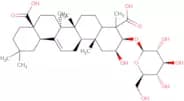
CAS:Antispasmodic, moliscicidic, anthelmithic and inhibitor of cell proliferationFormula:C41H66O12Purezza:Min. 98 Area-%Colore e forma:White PowderPeso molecolare:750.96 g/molMedicagenic acid 3-O-glucoside
CAS:<p>Medicagenic acid 3-O-glucoside is a bioactive phytochemical compound, which is a type of saponin glucoside. It is derived from the genus Medicago, particularly from species such as alfalfa, known for their medicinal and nutritional properties. The mode of action of Medicagenic acid 3-O-glucoside involves interactions with cellular membranes, where it can influence permeability and modulate immune responses. These interactions are attributed to its surfactant properties that enable the saponin to disrupt lipid bilayers and influence signal transduction pathways that mediate inflammatory and immune processes.</p>Formula:C36H56O11Purezza:Min. 95%Colore e forma:PowderPeso molecolare:664.82 g/molCimigenoside
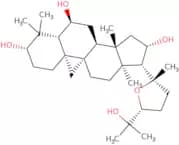
CAS:Cimigenoside is a naturally occurring triterpene saponin, which is a phytochemical compound extracted primarily from the roots of the Cimicifuga species, such as Cimicifuga racemosa, commonly known as black cohosh. The source of this compound is rooted in traditional medicinal practices, where these plants have been used for their therapeutic benefits.Formula:C35H56O9Purezza:Min. 95%Colore e forma:Off-White PowderPeso molecolare:620.81 g/molCycloastragenol
CAS:<p>Triterpenoid saponin with many suggested pharmacological properties</p>Formula:C30H50O5Purezza:Min. 98 Area-%Colore e forma:White PowderPeso molecolare:490.72 g/molLasiokaurin
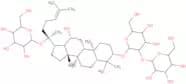
CAS:Lasiokaurin is a sesquiterpene lactone, which is a type of terpenoid compound primarily found in certain plant species. It is derived from the plants of the Asteraceae family, where it is biosynthesized as part of the plant's secondary metabolites. This compound is characterized by its complex structure, which includes a lactone ring, contributing to its biological activity.Formula:C22H30O7Purezza:Min. 95%Colore e forma:Yellow PowderPeso molecolare:406.47 g/molGinsenoside Rd
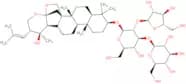
CAS:<p>Ginsenoside Rd is a bioactive compound, classified as a saponin, which is derived from the roots of Panax ginseng. This ginsenoside is a dammarane-type triterpenoid saponin and is one of the major active components found in ginseng extracts. The mode of action of Ginsenoside Rd involves multiple biochemical pathways, including anti-inflammatory, antioxidant, and neuroprotective effects. It modulates signaling pathways such as MAPK and PI3K/Akt, resulting in diverse biological activities.</p>Formula:C48H82O18Purezza:Min. 95%Colore e forma:White PowderPeso molecolare:947.18 g/molVerbenalin
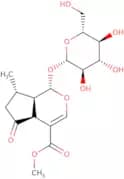
CAS:<p>Verbenalin is an iridoid glycoside, which is a naturally occurring compound sourced from the plant genus Verbena, notably from Verbena officinalis. It is characterized by its cyclic monoterpene structure linked to a sugar moiety. This compound is known for its biological activity, primarily influencing the nervous system.</p>Formula:C17H24O10Purezza:Min. 95%Peso molecolare:388.37 g/molBetulinic Acid
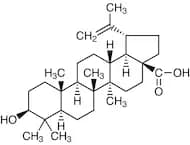
CAS:Formula:C30H48O3Purezza:>97.0%(GC)(T)Colore e forma:White to Light yellow to Light orange powder to crystalPeso molecolare:456.713-Acetyl-beta-boswellic acid
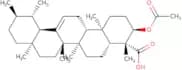
CAS:<p>3-Acetyl-beta-boswellic acid is a pentacyclic triterpenoid compound, which is derived from the resin of the Boswellia serrata tree. It exhibits significant biological activity, mainly due to its anti-inflammatory properties. The mode of action primarily involves the inhibition of 5-lipoxygenase, an enzyme crucial in the biosynthesis of leukotrienes, which are mediators in inflammatory and allergic responses. Additionally, it has been shown to modulate various signaling pathways and transcription factors involved in inflammation.</p>Formula:C32H50O4Purezza:Min. 95%Peso molecolare:498.74 g/molAbsinthin
CAS:Absinthin is a sesquiterpene lactone, which is a naturally occurring chemical compound derived from the Artemisia absinthium plant, commonly known as wormwood. It is primarily extracted from the aerial parts of this perennial herb. Absinthin's mode of action involves its interaction with cell membrane components and enzyme systems, potentially influencing various biochemical pathways. Its structure allows it to engage in specific binding interactions that can impact cellular processes.Formula:C30H40O6Purezza:Min. 95 Area-%Colore e forma:PowderPeso molecolare:496.64 g/molIpsenol
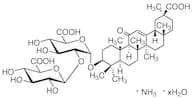
CAS:Pheromone of Ips bark beetlesFormula:C10H18OPurezza:Min. 95 Area-%Colore e forma:Colorless Clear LiquidPeso molecolare:154.25 g/molMonoammonium Glycyrrhizinate
CAS:Formula:C42H65NO16Purezza:>75.0%(HPLC)Colore e forma:White to Light yellow powder to crystalPeso molecolare:839.97Ginsenoside Rd
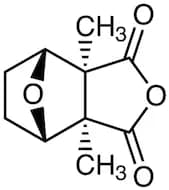
CAS:Formula:C48H82O18Purezza:>98.0%(HPLC)Colore e forma:White to Almost white powder to crystalPeso molecolare:947.17Cantharidin
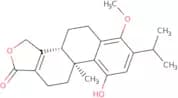
CAS:Formula:C10H12O4Purezza:>98.0%(GC)Colore e forma:White to Almost white powder to crystalPeso molecolare:196.20Triptophenolide methyl ether
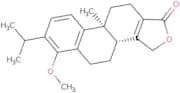
CAS:<p>Triptophenolide methyl ether is a bioactive compound, classified as a terpene, derived from natural plant sources. It is primarily isolated from the roots of species within the *Tripterygium* genus. Terpenes are a large and varied class of organic compounds produced by a variety of plants, known for their aromatic qualities and biological activity.</p>Formula:C21H26O3Purezza:Min. 95%Peso molecolare:326.43 g/mol1-(1,5-Dimethyl-5-hexen-1-yl)-4-methyl-1,4-cyclohexadiene
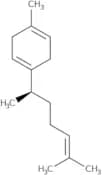
CAS:1-(1,5-Dimethyl-5-hexen-1-yl)-4-methyl-1,4-cyclohexadiene is a sesquiterpene compound, which is biosynthetically derived from plant sources. These compounds are typically synthesized through the mevalonate pathway in plants and have a wide range of functionalities due to their diverse structural framework. The mode of action of this compound is often linked to its interaction with cellular receptors, membrane permeability, and its ability to interfere with various biochemical pathways. Terpene compounds like this one can have bioactive properties, influencing processes such as inflammation, oxidative stress, or microbial growth.Formula:C15H24Purezza:Min. 95%Colore e forma:Colorless PowderPeso molecolare:204.35 g/molGinsenoside Rk2
CAS:Ginsenoside Rk2 is a bioactive compound, specifically a saponin, which is extracted from the root of Panax ginseng, a plant traditionally used in Asian medicine. The mode of action of Ginsenoside Rk2 involves modulating various cellular pathways, including influencing gene expression and enzyme activity, which contribute to its diverse physiological effects. It has been studied for its potential to impact cell signaling mechanisms, including those involved in inflammation, oxidative stress, and apoptosis.Formula:C36H60O7Purezza:Min. 95%Colore e forma:PowderPeso molecolare:604.86 g/molChrysanthellin A
CAS:Chrysanthellin A is a sesquiterpene lactone, which is a type of natural bioactive compound. It is isolated from Chrysanthellum americanum, a flowering plant belonging to the Asteraceae family. The mode of action of Chrysanthellin A involves modulating inflammatory pathways and potentially inhibiting certain enzymes involved in metabolic processes.Formula:C58H94O25Purezza:Min. 95%Colore e forma:PowderPeso molecolare:1,191.35 g/molGinsenoside Rb1 - 94%
CAS:Ginsenoside Rb1 - 94% is a bioactive compound, which is a major ginsenoside found in Panax ginseng, a plant species with a long history of medicinal use. It is extracted through meticulous processes to ensure high purity, focusing on the retention of its bioactive properties.Formula:C54H92O23Purezza:Min. 95%Colore e forma:PowderPeso molecolare:1,109.29 g/molLinalool - synthetic grade
CAS:<p>Linalool - synthetic grade is a versatile terpene alcohol, which is synthetically produced from petrochemicals. Its mode of action involves interacting with olfactory receptors, which contributes to its characteristic floral aroma. Additionally, linalool is involved in various biochemical transformations, often acting as an intermediate in chemical reactions due to its reactive functional groups.</p>Formula:C10H18OPurezza:Min. 95%Colore e forma:Colorless Clear LiquidPeso molecolare:154.25 g/molBakuchiol
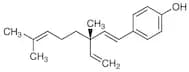
CAS:Formula:C18H24OPurezza:>98.0%(HPLC)Colore e forma:Colorless to Yellow clear liquidPeso molecolare:256.39Soyasaponin Aa
CAS:<p>Soyasaponin Aa is a bioactive compound, specifically a type of saponin, which is derived from soybeans. As a secondary metabolite produced by plants, Soyasaponin Aa is characterized by its amphipathic structure, which allows it to interact with both lipid and aqueous environments. Its mode of action involves disrupting lipid membranes, which can lead to various biological effects, including cytotoxicity to certain cancer cells, cholesterol-lowering properties, and the modulation of immune responses.</p>Formula:C64H100O31Purezza:Min. 95 Area-%Colore e forma:PowderPeso molecolare:1,365.46 g/molanti-(1R)-(+)-Camphorquinone 3-Oxime
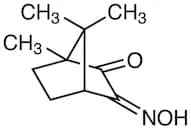
CAS:Formula:C10H15NO2Purezza:>95.0%(GC)(N)Colore e forma:White to Orange to Green powder to crystalPeso molecolare:181.24Asiatic Acid
CAS:Formula:C30H48O5Purezza:>97.0%(T)Colore e forma:White Solid FormPeso molecolare:488.71(+)-Menthyl Acetate
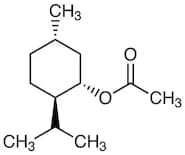
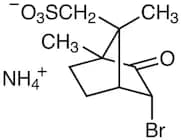
CAS:Formula:C12H22O2Purezza:>98.0%(GC)Colore e forma:Colorless to Almost colorless clear liquidPeso molecolare:198.31(-)-3-Bromocamphor-8-sulfonic Acid Ammonium Salt
CAS:Formula:C10H18BrNO4SPurezza:>97.0%(T)Colore e forma:White to Light yellow to Light orange powder to crystalPeso molecolare:328.22Melanin, from Sepia officinalis
CAS:Melanin is a natural pigment, which is derived from Sepia officinalis, commonly known as the common cuttlefish. This pigment is a complex biopolymer sourced from the ink sac of the cuttlefish, a cephalopod that produces ink as a defense mechanism. The mode of action of melanin involves its unique ability to absorb a broad range of the electromagnetic spectrum, providing effective protection against ultraviolet radiation. Additionally, it exhibits remarkable antioxidant properties due to its free radical scavenging abilities.Formula:C18H10N2O4Peso molecolare:318.28 g/molCannabigerovarinic acid
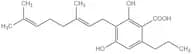
CAS:Carboxylic acid with phenol functionFormula:C20H28O4Purezza:≥ 90.0 % (HPLC)Colore e forma:PowderPeso molecolare:332.43Α-onocerin
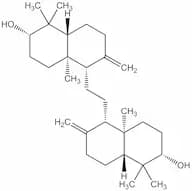
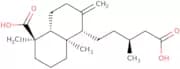
CAS:Cyclic alcoholFormula:C30H50O2Purezza:≥ 95.0 % (HPLC)Colore e forma:CrystalsPeso molecolare:442.73Benzoylpaeoniflorin
CAS:Prodotto controllato<p>Applications Benzoylpaeoniflorin is a derivative of Paeoniflorin (P133830), a monoterpene glycoside with potential anti-inflammatory activity. Paeoniflorin inhibits monocyte phagocytosis, or the TNF-α and PGE-2 production of monocytes.<br>References Zhu, X. et al.: Nat. Prod. Res., 28, 301(2014); Di, W. et al.: Int. Immunopharmacol.,, 14, 172 (2012);<br></p>Formula:C30H32O12Colore e forma:Off-WhitePeso molecolare:584.57Glycyrrhetic acid 3-O-b-D-glucuronide
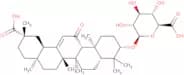
CAS:<p>Glycyrrhetic acid 3-O-b-D-glucuronide is a bioactive compound derived from the root of the licorice plant (Glycyrrhiza glabra). Licorice has been used for centuries in traditional medicine, and this compound is one of its active components. The compound functions by modulating inflammatory pathways, primarily through inhibiting enzymes like cyclooxygenase and phospholipase A2, which play key roles in the inflammatory response. In addition, it exhibits effects on glucocorticoid metabolism, enhancing the activity of endogenous glucocorticoids and subsequently leading to anti-inflammatory and immune-modulating effects.</p>Formula:C36H54O10Purezza:Min. 95%Peso molecolare:646.81 g/molHomoarbutin
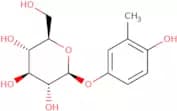
CAS:Homoarbutin is a skin-brightening agent, which is sourced from certain plant species known for their medicinal properties. It operates through the inhibition of tyrosinase, an enzyme critical in the biosynthetic pathway of melanin production. By effectively reducing melanin synthesis, Homoarbutin helps mitigate hyperpigmentation and provides a more even skin tone.Purezza:Min. 95%Bacopaside II
CAS:<p>Triterpene saponin</p>Formula:C47H76O18Purezza:Min. 95%Peso molecolare:929.1 g/molGinsenoside Rk3
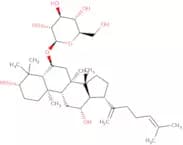
CAS:Ginsenoside Rk3 is a bioactive compound, classified as a saponin, which is derived from the root of the Panax ginseng plant. This specific ginsenoside is produced through the steaming and processing of ginseng, which alters its chemical structure, resulting in various pharmacological properties. Ginsenoside Rk3 acts primarily by modulating signaling pathways and interacting with cellular receptors, leading to diverse biological activities.Formula:C36H60O8Purezza:Min. 95%Colore e forma:PowderPeso molecolare:620.86 g/molBritannin
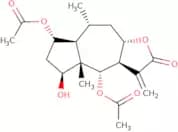
CAS:<p>Britannin is a sesquiterpene lactone, which is a type of organic compound found in certain plants. It is primarily derived from species within the Asteraceae family, known for its rich concentration of bioactive constituents. The mode of action of Britannin involves the inhibition of key signaling pathways and enzymes responsible for inflammatory responses and microbial growth. This unique mechanism disrupts the processes necessary for these biological functions, thereby exerting its therapeutic effects.</p>Formula:C19H26O7Purezza:Min. 95%Peso molecolare:366.41 g/mol(+)-Sativene
CAS:(+)-Sativene is a sesquiterpene compound, which is a type of naturally occurring hydrocarbon. It is derived from various plant sources, including certain species of the Cannabis genus and other aromatic plants. As a member of the terpenoid family, (+)-Sativene is characterized by its distinctive hydrocarbon structure, contributing to its presence in essential oils and its role in natural plant fragrances.Formula:C10H9ClN2Purezza:Min. 95%Peso molecolare:192.64 g/molcis-Nerolidol
CAS:Essential oil; used as flavouring agent and as a scentFormula:C15H26OPurezza:Min. 95%Peso molecolare:222.37 g/molNeotriptophenolide
CAS:Neotriptophenolide is a synthetic compound that belongs to the class of bioactive alkaloids. It is derived from a rational synthesis process, leveraging advanced organic chemistry techniques to replicate and improve upon naturally occurring compounds. The mode of action of Neotriptophenolide involves specific interactions with cellular receptors and enzymes, influencing various biochemical pathways essential for cellular regulation and signaling.Purezza:Min. 95%Helenalin
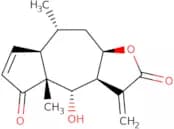
CAS:<p>Helenalin is a sesquiterpene lactone, which is a secondary metabolite derived from plants, specifically from the Arnica species. This compound is characterized by its molecular framework containing a cyclodecadiene ring along with an α-methylene-γ-lactone ring, conferring its biological activities. Helenalin exerts its effects primarily by inhibiting key transcription factors such as NF-κB and other molecules involved in critical signaling pathways. This mode of action results from its ability to form adducts with thiol groups of cysteine residues on these proteins, thus altering their activity and inhibiting inflammatory responses.</p>Purezza:Min. 95%Pinifolic acid - Pinus sylvestris (Scots pine)
CAS:<p>Pinifolic acid is a bioactive compound, which is derived from Pinus sylvestris (Scots pine), a species of pine native to Eurasia. This compound is extracted from the needles and bark of the tree, recognized for its rich content of polyphenolic compounds. The mode of action of pinifolic acid involves potent antioxidant activity, which is facilitated by its ability to scavenge free radicals and thereby reduce oxidative stress at the cellular level. The bioactive components are believed to interact with various biochemical pathways, potentially exerting anti-inflammatory and protective effects on various tissues.</p>Formula:C20H32O4Purezza:Min. 95%Peso molecolare:336.47 g/molCycloartenol acetate
CAS:<p>Cycloartenol acetate is a natural triterpenoid, which is primarily derived from plant sources. It serves as a key intermediate in the biosynthesis of sterols, crucial components of plant cell membranes. The compound is synthesized in the plant's cellular systems through the cyclization process from 2,3-oxidosqualene, utilizing cycloartenol synthase enzymes. This enzymatic modification marks the diverging point between plant sterol and steroid biosynthesis pathways, distinguishing it from similar pathways in animals and fungi.</p>Formula:C32H52O2Purezza:Min. 95%Peso molecolare:468.75 g/molKansuiphorin C
CAS:Kansuiphorin C is a diterpenoid ester that is a naturally occurring compound isolated from the root tubers of Euphorbia kansui. This compound belongs to a class of chemical compounds known for their potential therapeutic properties. Kansuiphorin C functions primarily through a mechanism that involves the induction of cytotoxicity in cancerous cells, provoking cell death through pathways that promote apoptosis.Purezza:Min. 95%Rotundone - 30%
CAS:Peppery aroma constituent of essential oil of Cyperus rotundus (nutgrass)Formula:C15H22OPurezza:Min. 95%Peso molecolare:218.33 g/molβ-Hederin
CAS:Beta-Hederin is a saponin, which is a type of soap-like compound, derived from the leaves of the ivy plant, Hedera helix. Saponins are glycosides characterized by their ability to form stable, soap-like foams in aqueous solutions. This particular compound is notable for its amphiphilic nature, allowing it to interact with biological membranes.Purezza:Min. 97 Area-%Carotol
CAS:<p>Primary component found in carrot seed oil</p>Formula:C15H26OPurezza:Min. 95%Peso molecolare:222.37 g/molEsculentoside H
CAS:<p>Esculentoside H is a naturally occurring triterpenoid saponin, which is derived from the plant Phytolacca esculenta, commonly known as the pokeweed. This compound has garnered significant interest due to its unique mode of action as an anti-inflammatory and immunomodulatory agent. By modulating cellular signaling pathways, Esculentoside H can inhibit the expression of pro-inflammatory cytokines and suppress the activation of NF-kB, a key transcription factor involved in inflammatory responses.</p>Formula:C48H76O21Purezza:Min. 95%Peso molecolare:989.1 g/mol8,11,13-Totaratrien-13-ol - Thuja plicata (western red cedar)
CAS:8,11,13-Totaratrien-13-ol is a sesquiterpene alcohol, which is a bioactive compound derived from the heartwood of Thuja plicata, commonly known as western red cedar. This source is renowned for its complex mixture of organic compounds, which contribute to the wood's natural resistance to decay and pests.Formula:C20H30OPurezza:Min. 95%Peso molecolare:286.45 g/molGibberellic acid methyl ester
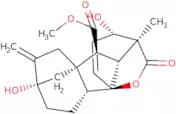
CAS:Gibberellic acid methyl ester is a specialized plant growth regulator, which is synthetically derived from the naturally occurring gibberellins found in plants. These gibberellins are vital phytohormones that regulate various aspects of growth and development in higher plants. Gibberellic acid methyl ester functions by mimicking these natural gibberellins, interacting with plant cellular processes to stimulate and enhance growth. Its mode of action involves promoting cell elongation, division, and differentiation, thereby accelerating plant growth and influencing the lifecycle.Formula:C20H24O6Purezza:Min. 95%Peso molecolare:360.4 g/mol