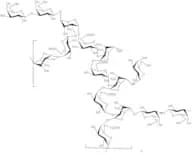
Polisaccaridi
I polisaccaridi sono composti organici formati dall'unione di più monomeri, che sono legati insieme da legami glicosidici per creare molecole grandi e spesso ramificate. Questi carboidrati complessi svolgono ruoli cruciali in varie funzioni biologiche, tra cui lo stoccaggio di energia, il supporto strutturale e la comunicazione cellulare. In questa sezione, troverai una vasta gamma di polisaccaridi essenziali per la ricerca in biochimica, biologia molecolare e glicoscienze. Questi composti sono vitali per studiare le vie metaboliche, le strutture della parete cellulare e il potenziale terapeutico dei carboidrati. Da CymitQuimica, offriamo polisaccaridi di alta qualità per supportare la tua ricerca scientifica, garantendo precisione e affidabilità nei tuoi risultati sperimentali.
Trovati 503 prodotti di "Polisaccaridi"
Ordinare per
Purezza (%)
0
100
|
0
|
50
|
90
|
95
|
100
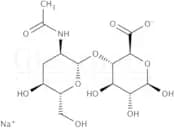
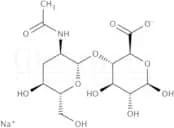
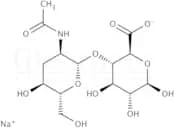
Hyaluronic acid sodium salt, m.w. 350KDa, Ph. Eur. grade
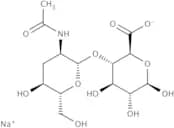
CAS:Formula:(C14H20NNaO11)nPurezza:95.0 - 105.0 %Colore e forma:White powderHyaluronic acid sodium salt, m.w. 1.0MDa, Ph. Eur. grade, low endotoxin
CAS:Formula:(C14H20NNaO11)nPurezza:95.0 - 105.0 % (dried basis)Colore e forma:White to almost white powder, hygroscopicAgar, low gel strength, suitable for microbiology
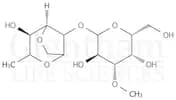
CAS:Formula:(C12H18O9)nColore e forma:Off-white to cream or light-brown powderPeso molecolare:-Agarose, low EEO, GlenBiol™, suitable for molecular biology
CAS:Colore e forma:White or off-white powderPeso molecolare:-Hyaluronic acid sodium salt, m.w. 1.5MDa
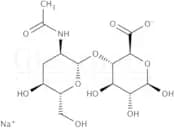
CAS:Formula:(C14H20NNaO11)nPurezza:≥ 91.0% (Sodium Hyaluronate)Colore e forma:White or almost white powderPeso molecolare:~1,500,000Hyaluronic acid sodium salt, m.w. 50,000 - 100,000
CAS:Formula:(C14H21NaNO11)nPurezza:≥ 95.0%Colore e forma:White powderPeso molecolare:50,000 - 100,000Chitosan (10 - 120 cps); from Aspergillus niger
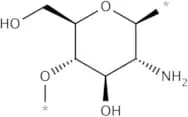
CAS:Formula:C6H11NO4nColore e forma:Off-white to light-yellow or pale tan powderCarboxymethylcellulose sodium salt, medium viscosity
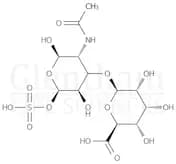
CAS:Formula:C6H7O2(OH)x(OCH2COONa)ynPurezza:≥ 99.5%Colore e forma:Free flowing white or off-white powderPeso molecolare:~250,000Chondroitin sulfate A sodium salt
CAS:Formula:(C14H19NO14SNa2)nPurezza:≥ 90.0%Colore e forma:White to beige powderPeso molecolare:-Hyaluronic acid sodium salt, m.w. 750 kDa - 1.0 MDa
CAS:Formula:(C14H21NaNO11)nPurezza:≥ 91.0%Colore e forma:White or almost white powderPeso molecolare:0.75 - 1.0 MDaStarch, powder, from potato
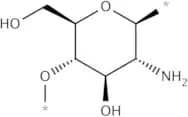
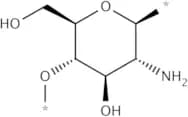
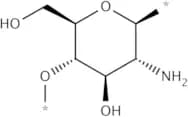
CAS:Formula:(C6H10O5)nColore e forma:White or off-white powderPeso molecolare:-Chitosan (30 - 100 cps); low molecular weight
CAS:Formula:C6H11NO4nPurezza:≥ 90.0%Colore e forma:White to light-tan powderPeso molecolare:250,000 (avg.)Inulin
CAS:Formula:(C6H10O5)nPurezza:≥ 90.0% (dry basis)Colore e forma:White powderPeso molecolare:(162.14)nGellan Gum, high acyl
CAS:Purezza:≥ 85%Colore e forma:White to off-white or cream powderPeso molecolare:-Chitosan (5 cps); ultra low molecular weight
CAS:Formula:C6H11NO4nPurezza:≥ 90.0%Colore e forma:White to light-tan powderPeso molecolare:20,000 (avg.)Hyaluronic acid sodium salt, m.w. 1.75MDa, Ph. Eur. grade, low endotoxin
CAS:Formula:(C14H20NNaO11)nPurezza:95.0 - 105.0 % (dried basis)Colore e forma:White to almost white powder, hygroscopicHydroxyethyl cellulose, very low viscosity
CAS:Colore e forma:White, off-white to light-yellow or faint beige powderPeso molecolare:~30,000 (avg.)Chitosan (10 - 120 cps); fungal origin
CAS:Formula:C6H11NO4nColore e forma:Off-white to light-yellow or pale tan powderChitin, from squid, 5mm flakes
CAS:Formula:C8H13NO5nColore e forma:Off-white, pale beige or yellow-orange fine flakesChitosan (3000 - 6500 cps); very high molecular weight
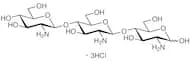
CAS:Formula:C6H11NO4nPurezza:≥ 90.0%Colore e forma:White to light-tan powderPeso molecolare:2,100,000 (avg.)Chitotriose Trihydrochloride
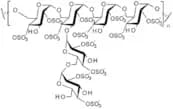
CAS:Formula:C18H35N3O13·3HClPurezza:>85.0%(qNMR)Colore e forma:White to Almost white powder to crystalPeso molecolare:610.86Dextran Sulfate Sodium from Dextran of Mw. Approx. 8000
CAS:Colore e forma:White to Light yellow powder to crystalEthyl Cellulose [45-55mPa·s, 5% in Toluene + Ethanol (80:20) at 25°C]
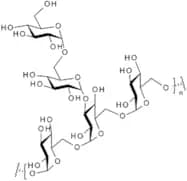
CAS:Colore e forma:White to Almost white powder to lumpAmylopectin (Amylose free), from Waxy Corn
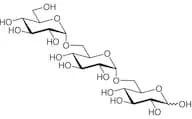
CAS:Formula:(C6H10O5)nColore e forma:White to Almost white powder to crystalIsomaltotriose
CAS:Formula:C18H32O16Purezza:>95.0%(HPLC)Colore e forma:White to Almost white powder to crystalPeso molecolare:504.44Ethyl Cellulose [9-11mPa·s, 5% in Toluene + Ethanol (80:20) at 25°C]
CAS:Colore e forma:White to Almost white powder to crystalDextran Sulfate Sodium from Dextran of Mw. Approx. 40000
CAS:Colore e forma:White to Light yellow powder to crystalD-Galactan [for Plant-based Organic Molecular Catalyst]
CAS:Colore e forma:White to Light yellow to Light orange powder to crystalEthyl Cellulose [90-110mPa·s, 5% in Toluene + Ethanol (80:20) at 25°C]
CAS:Colore e forma:White to Light yellow powder to crystalChitosan (30 - 100 cps); low molecular weight, non-animal from fermentation, suitable for biotechnology
CAS:Formula:C6H11NO4nColore e forma:White powderChitosan (300 - 1000 cps); medium molecular weight, non-animal from fermentation, suitable for biotechnology
CAS:Formula:C6H11NO4nColore e forma:White powderChitosan (5 cps); ultra low molecular weight, non-animal from fermentation, suitable for biotechnology
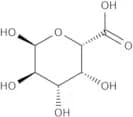
CAS:Formula:C6H11NO4nColore e forma:White powderPolygalacturonic acid
CAS:Formula:(C6H8O6)nPurezza:≥ 85.0%Colore e forma:Off-white to beige or yellow powderPeso molecolare:-Chitosan (2000 - 3500 cps); very high molecular weight
CAS:Formula:C6H11NO4nPurezza:≥ 90.0%Colore e forma:White to light-tan powderPeso molecolare:1,800,000 (avg.)Chitosan (10 cps); very low molecular weight, non-animal from fermentation, suitable for biotechnology
CAS:Formula:C6H11NO4nColore e forma:White powderChitosan (100 - 300 cps); low molecular weight, non-animal from fermentation, suitable for biotechnology
CAS:Formula:C6H11NO4nColore e forma:White powderChondroitin sulfate sodium, from bovine origin
CAS:Formula:C13H21NO15SColore e forma:White to off-white powderPeso molecolare:463.37Starch (Smithies); for electrophoresis
CAS:Formula:(C6H10O5)nColore e forma:White powderPeso molecolare:(162.14)n1V209
CAS:<p>1V209 (TLR7 agonist T7) is a Toll-like receptor 7 (TLR7) agonist and has anti-tumor effects.</p>Formula:C16H17N5O5Purezza:99.61%Colore e forma:SolidPeso molecolare:359.34D-(+)-Cellopentaose
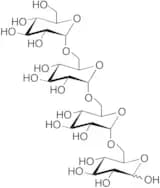
CAS:Prodotto controllato<p>Applications D-(+)-Cellopentaose (cas# 2240-27-9) is a compound useful in organic synthesis.<br></p>Formula:C30H52O26Colore e forma:NeatPeso molecolare:828.72Isomaltotetraose
CAS:Prodotto controllato<p>Applications Isomaltotetraose, can be used for immunizication of hybridoma antibodies. the use of synthetic glycolipids as antigens enables one to study the gene control of antibody responses to glycolipids and to investigate the combining-site specificities of antibodies to a single antigenic determinant.<br>References Lai, E., et al.: Mol. Immunology, 22(9), 1021 (1985); Chen, H. T., et al.: Mol. Immunology, 24(4), 333 (1987);<br></p>Formula:C24H42O21Colore e forma:NeatPeso molecolare:666.58Scleroglucan (Technical Grade)
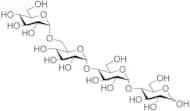
CAS:Prodotto controllato<p>Applications Scleroglucan is a natural polymer produced by fungi, especially those of the genus Sclerotium. Scleroglucan fluids have been used to trap and treat Cr(VI) in environmental applications.<br>References Brigand, G.: Industrial Gums (Third Edition), pp. 461 (1993); Pensini, E.; et al.: Colloids Surf., A, 559, 191 (2018);<br></p>Formula:C24H40O21Colore e forma:NeatPeso molecolare:664.566-α-D-Glucopyranosyl Maltotriose
CAS:<p>Stability Hygroscopic<br>Applications Sugar composition of sake.<br>References Giri, N.Y., et al.: Arch. Biochem. Biophysics, 145, 505 (1971a<br></p>Formula:C24H42O21Colore e forma:NeatPeso molecolare:666.58Polyglycoplex
<p>PolyGlycopleX (PGX) is produced from a mixture containing proprietary proportions of three polysaccharides, konjac glucomannan, xanthan gum and sodium alginate. Recent hydrodynamic, rheological and analytical studies have shown that the unexpectedly high viscosity of solutions of PGX is consistent with an interaction between a konjac glucomannan, xanthan gum complex and sodium alginate to form a new, ternary complex in solution. Human and animal feeding studies have shown that PGX can be used to control weight, lower the glycaemic index of foods and postprandial glycaemia.</p>Purezza:Min. 95%Colore e forma:PowderLaminaran - from Laminaria cloustoni
CAS:<p>Laminaran is a polysaccharide that co-occurs with fucoidan and alginate in brown seaweeds such as Laminaria digitata, Laminaria cloustoni, Eisenia bicyclis and Thallus laminariae. It is a β-1,3-linked glucan which it is claimed stimulates the immune system in mammals and fish.<br>The image was kindly provided by Prof Mike Guiry from Cork who runs ‘The Seaweed Site’.</p>Purezza:Min. 95%Colore e forma:PowderFucoidan - Sargassum
CAS:A fucan sulphate found in brown marine algae (Phaeophyta-typically Fucus vesiculotus, Sargassum (illustrated), Alaria and Cladosiphon) and has been shown to have anticoagulant activity. The main constituents are α-1,4 and α-1,2 linked L-fucose sulphates although galactose and L-fucose are also present, our product contains approximately 20% L-fucose, and there are many variations of the basic structure found in different species of Phaeophyta. The image was kindly provided by Prof Mike Guiry from Cork who runs ‘The Seaweed Site’.Purezza:Min. 95%Colore e forma:PowderNigeran
CAS:<p>Nigeran is a polysaccharide found in the cell wall of lower fungi. In certain Aspergillus and Penicillium spp., nigeran was first isolated from Penicillium expansum and Aspergillus niger (illustrated). The polysaccharide contains unbranched α-D- glucopyranose residues linked 1,3 and 1,4. Nigeran is part of the hyphal cell wall, where it can contribute up to 40 % of the cell dry weight. The polysaccharide occupies several domains or location on the hyphal wall and is highly crystalline in vivo. Deposition of nigeran is primarily at the outer surface of the hyphal wall.</p>Purezza:Min. 95%Colore e forma:PowderGlycogen - from oyster
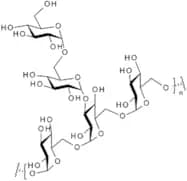
CAS:<p>Glycogen is a highly branched polysaccharide of glucose that serves as a form of energy storage in animals and fungi. It is the main storage form of glucose in the body. In humans, glycogen is made and stored primarily in liver and muscle cells and functions as the second most important energy storage molecule to fat which is held in adipose tissue. Glycogen is analogous to starch and has a structure similar to amylopectin, but is more extensively branched and compact than starch. It occurs as granules in the cytosol/cytoplasm in many cell types, and plays an important role in the glucose cycle.</p>Formula:C24H42O21Colore e forma:PowderPeso molecolare:666.58 g/molChitosan - water soluble
CAS:<p>Chitosan is the deacetylated form of chitin. The polysaccharide is deacetylated in order to render it soluble, which is then possible at pH values of less than 7 (normally in dilute acid). This then allows the material to be used in a number of industrial applications as a binder and film former.MW typically 10-100kDa.</p>Colore e forma:Off-White PowderChitosan - Molecular weight 310,000-375,000
CAS:<p>Chitosan is the deacetylated form of chitin. The polysaccharide is deacetylated in order to render it soluble, which is then possible at pH values of less than 7 (normally in dilute acid). This then allows the material to be used in a number of industrial applications as a binder and film former.</p>Colore e forma:Beige PowderDextran 40 - MW 35,000 to 45,000
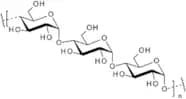
CAS:<p>Dextran is α-(1,6)-linked α-D-glucan with α-(1,3)-linked glucose branch points produced by fermentation of Leuconostoc mesenteroides via the action of the enzyme dextransucrase on sucrose. The main use for native dextran is as an extender in blood transfusions and products having a range of sharp cutoff molecular weights are produced commercially for this and other applications. A complex of iron with dextran, known as iron dextran, is used as a source of iron for baby piglets which are often anaemic at birth.</p>Purezza:Min. 95%Colore e forma:White PowderDextran sulfate sodium salt - MW 4500-5500
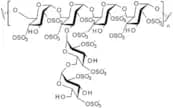
CAS:<p>Dextran sulphate is a dextran derivative whose ulcer (colitis) -causing properties were first reported in hamsters and extrapolated a few years later to mice and rats. The exact mechanisms through which dextran sulphate induces intestinal inflammation are unclear but may be the result of direct damage of the monolayer of epithelial cells in the colon, leading to the crossing of intestinal contents (for e.g. commensal bacteria and their products) into underlying tissue and therefore induction of inflammation. The dextran sulphate sodium induced ulceration model in laboratory animals has some advantages when compared to other animal models of colitisdue to its simplicity and similarities to human inflammatory bowel disease.</p>Purezza:Min. 95%Colore e forma:PowderLaminaran - from Thallus laminariae
CAS:Laminaran is a polysaccharide that co-occurs with fucoidan and alginate in brown seaweeds such as Laminaria digitata, Laminaria cloustoni, Eisenia bicyclis and Thallus laminariae. It is a β-1,3-linked glucan which it is claimed stimulates the immune system in mammals and fish. The image was kindly provided by Prof Mike Guiry from Cork who runs ‘The Seaweed Site’.Colore e forma:PowderMannan (ex Saccharomyces cerevisiae)
CAS:<p>The main cell-wall components of baker’s yeast (Saccharomyces cerevisiae) as well as β-glucan are mannans with an α-1,6 mannose backbone and α-1,2 and α-1,3 mannose branches.<br>The image was kindly provided by Dr. Chris Lawson.</p>Colore e forma:White Slightly Brown PowderDextran 5 - MW 4,000 to 6,000
CAS:<p>Dextran is α-(1,6)-linked α-D-glucan with α-(1,3)-linked glucose branch points produced by fermentation of Leuconostoc mesenteroides via the action of the enzyme dextransucrase on sucrose. The main use for native dextran is as an extender in blood transfusions and products having a range of sharp cut-off molecular weights are produced commercially for this and other applications. A complex of iron with dextran, known as iron dextran, is used as a source of iron for baby piglets which are often anaemic at birth.</p>Colore e forma:White PowderSephadex G50
CAS:Sephadex G-50 is a highly purified, high molecular weight, cellulose-based polymer that is used as a solid support in chromatography. The size of the gel particles can be varied by changing the concentration of the gel solution. It has a number of different uses, such as purification of proteins and other macromolecules, separation of DNA fragments, and the enzymatic synthesis of oligosaccharides. Sephadex G-50 is a synthetic material that is modified with organic or inorganic compounds to increase its chemical reactivity. This product can also be used for glycosylation and methylation reactions.Colore e forma:PowderDextran sulfate sodium salt - MW 40,000
CAS:<p>Dextran sulphate is a dextran derivative whose ulcer (colitis) -causing properties were first reported in hamsters and extrapolated a few years later to mice and rats. The exact mechanisms through which dextran sulphate induces intestinal inflammation are unclear but may be the result of direct damage of the monolayer of epithelial cells in the colon, leading to the crossing of intestinal contents (e.g., commensal bacteria and their products) into underlying tissue and therefore induction of inflammation. The dextran sulphate sodium induced ulceration model in laboratory animals has some advantages when compared to other animal models of colitis, due to its simplicity and has many similarities to human inflammatory bowel disease.</p>Colore e forma:Off-White PowderDextran 10 - MW 9,000 to 11,000
CAS:<p>Dextran is α-(1,6)-linked α-D-glucan with α-(1,3)-linked glucose branch points produced by fermentation of Leuconostoc mesenteroides via the action of the enzyme dextransucrase on sucrose. The main use for native dextran is as an extender in blood transfusions and products having a range of sharp cutoff molecular weights are produced commercially for this and other applications. A complex of iron with dextran, known as iron dextran, is used as a source of iron for baby piglets which are often anaemic at birth.</p>Colore e forma:White PowderRhamnogalacturonan - from soy bean
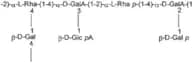
CAS:Pectin is a highly complex polysaccharide matrix that is found in the primary walls of dicotyledenous and monocotyledenous plants and gymnosperms, including soy plants. A key fragment of this complex is rhamnogalacturonan I, containing a backbone of the repeating disaccharide [-4)-α-D-GalpA-(1,2)-α-L-Rhap-(1,]. Several applications for RG1 have been described including drug targeting to the colon via the oral administration route for local treatment of e.g. inflammatory bowel disease and colonic cancer. This has several advantages such as needle-free administration and low infection risk and in the gastro-intestinal tract RG-I is only degraded by the action of the colonic microflora. High purity rhamnogalacturonan I is also used in research, biochemical enzyme assays and in vitro diagnostic analysis.Purezza:Min. 95%Colore e forma:SolidColominic acid sodium salt
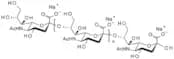
CAS:<p>Colominic acid (polysialic acid) is a linear small polysaccharide containing α-2,8-linked sialic acid (neurominic acid) with (n = 8 to >100) residues. Polysialic acid is an unusual post translational modification polysaccharide that is widely expressed in nature in bacterial capsules, fish, sea urchin eggs, embryonic tissues, amphibians, animal and human brains, and in a various cancers. The major carrier of polysialic acids in mammals is the neural cell adhesion molecule (a glycoprotein that belongs to the immunoglobulin superfamily).Average molecular weight for this product is :50000-60000</p>Purezza:Min. 98 Area-%Colore e forma:White Off-White PowderCarboxymethyl-dextran sodium salt - Average MW 20,000
CAS:<p>Sodium carboxymethyl dextran is a white, odourless and tasteless powder, which is freely soluble in water or electrolyte solutions. Applications that have been described for carboxymethyl dextran include carriers of paramagnetic contrast agents, preparation of conjugates of pharmacologically active compounds and carboxymethyl dextrans in biosensors. A number of other uses in cosmetics, agriculture, foods, paints and textiles have been the subject of patent applications.</p>Colore e forma:PowderHydroxyethyl cellulose - Viscosity 2400 to 2800(1% aqueous solution)
CAS:<p>Water thickener; rheological control additive; has industrial appplications</p>Purezza:Min. 95%Gum karaya
CAS:<p>Gum karaya is exuded from Sterculia urens, a bushy tree found in dry regions of North India. Due to its extensive swelling capacity in water it is used as a laxative and as a denture adhesive. The structure consists of D-galactose, D-glucuronic acid and L-rhamnose but the detailed molecular structure is still incompletely known.</p>Purezza:Min. 95%Colore e forma:PowderChondroitin sulfate A sodium salt - Average MW 10,000 - 30,000
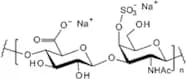
CAS:<p>The disaccharide repeating unit of chondroitin sulphate consists of N-acetyl galactosamine sulphate linked β1,4 to glucuronic acid. Each monosaccharide may be left unsulphated, sulphated once, or sulphated twice. The most common pattern has the hydroxyl groups of the 4 and 6 positions of the N-acetyl-galactosamine sulphated, with some chains having the position 2 of the glucuronic acid sulphated.</p>Purezza:Min. 90%Colore e forma:White Off-White PowderChondroitin sulfate A sodium salt - 90%, from Bovine Cartilage
CAS:<p>Food additive, applied in pharmaceuticals and beauty products.</p>Purezza:Min. 90%Colore e forma:White PowderHydroxypropyl cellulose - Average MW 50,000 - 1250,000
CAS:<p>In water, hydroxypropyl cellulose forms liquid crystals with many mesophases depending on concentration. These mesophases include isotropic, anisotropic, nematic and cholesteric, the latter resulting in many colors such as violet, green and red. Pharmaceutical applications include treatments for medical conditions such as dry eye syndrome (keratoconjunctivitis sicca), recurrent corneal erosions, decreased corneal sensitivity, exposure and neuroparalytic keratitis. It is also used as a binder in tablets. Hydroxypropylcellulose is also used as a thickener, a binder and emulsion stabiliser in foods with E number E463. HPC is used as a support matrix for DNA separations by capillary and microchip electrophoresis.</p>Purezza:Min. 95%Colore e forma:Clear LiquidRhamnogalacturonan - from Okra
CAS:<p>Rhamnogalacturonan is a natural polysaccharide that is a major component of plant cell walls. It can be synthesized in the laboratory and modified with different functional groups to alter its properties. Rhamnogalacturonan has been shown to have anti-inflammatory, antioxidant, and immunomodulatory activities. It also has the ability to inhibit bacterial growth and stimulate phagocytosis by macrophages. This product has a high purity, is custom synthesized, and can be modified with different functional groups.</p>Purezza:Min. 95%Polymannuronic acid sodium salt - Average MW < 5000 Da
CAS:<p>Polymannuronic acid is produced from alginates by partial hydrolysis and chromatography of brown algae such as Laminaria digitata, Ascophyllum nodosum and Fucus spp.<br>The image was kindly provided by Prof Mike Guiry from Cork who runs ‘The Seaweed Site’.</p>Colore e forma:Powder















![Ethyl Cellulose [45-55mPa·s, 5% in Toluene + Ethanol (80:20) at 25°C]](/_next/image/?url=https%3A%2Fstatic.cymitquimica.com%2Fproducts%2F3B%2Fthumb-webp%2FE0266.webp&w=3840&q=75)


![Ethyl Cellulose [9-11mPa·s, 5% in Toluene + Ethanol (80:20) at 25°C]](/_next/image/?url=https%3A%2Fstatic.cymitquimica.com%2Fproducts%2F3B%2Fthumb-webp%2FE0265.webp&w=3840&q=75)


![D-Galactan [for Plant-based Organic Molecular Catalyst]](/_next/image/?url=https%3A%2Fstatic.cymitquimica.com%2Fproducts%2F3B%2Fthumb-webp%2FG0665.webp&w=3840&q=75)

![Ethyl Cellulose [90-110mPa·s, 5% in Toluene + Ethanol (80:20) at 25°C]](/_next/image/?url=https%3A%2Fstatic.cymitquimica.com%2Fproducts%2F3B%2Fthumb-webp%2FE0290.webp&w=3840&q=75)