Antibiotici Naturali e Semisintetici
Gli antibiotici naturali e semisintetici sono caratterizzati da strutture chimiche con anelli eterociclici e gruppi funzionali attivi che inibiscono la crescita dei microrganismi. Le loro strutture permettono loro di interagire con i processi vitali dei batteri, rendendoli utili nel trattamento delle infezioni batteriche. Gli antibiotici semisintetici possono essere modificati per migliorare lo spettro di attività o la resistenza alla degradazione.
Presso CymitQuimica, offriamo antibiotici naturali e semisintetici di alta qualità per la ricerca in microbiologia e lo sviluppo farmaceutico.
Trovati 6345 prodotti di "Antibiotici Naturali e Semisintetici"
Ordinare per
Purezza (%)
0
100
|
0
|
50
|
90
|
95
|
100
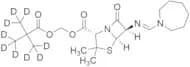
Sultamicillin EP Impurity C (Ampicillin, Piperacillin EP Impurity A)
CAS:Formula:C16H19N3O4SPeso molecolare:349.41N-Nitroso Benzylpenicillin Potassium EP Impurity E (N-Nitroso Benzylpenicillin (Benzathine), Benzylpenicillin Sodium EP Impurity E, N-Nitroso Benzylpenicillin (Procaine) EP Impurity B) (Mixture of Diastereomers)
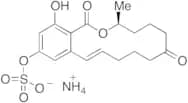
Formula:C16H19N3O6SPeso molecolare:381.40Zearalenone 4-Sulfate Ammonium Salt
CAS:Prodotto controllatoFormula:C18H25NO8SColore e forma:NeatPeso molecolare:415.46Fumonisin B3
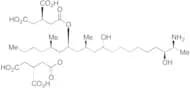
CAS:Prodotto controllato<p>Stability Hygroscopic<br>Applications Fumonisin B3 is a mycotoxin present in corn. Fungal metabolite believed to cause leukoencephalomalacia in horses.<br>References Azcona-Olivera, J. et al.: J. Agric. Food Chem., 40, 531 (1992); Hopmans, E. et al.: J. Agric. Food Chem., 41, 1655 (1993); Monbaliu, S., et al.: J. Agric. Food Chem., 58, 10475 (2010), Klosowski, G., et al.: Biores. Technol., 101, 9723 (2010), Soerensen, L., et al.: Anal. Bioanal. Chem., 398, 1535 (2010),<br></p>Formula:C34H59NO14Colore e forma:BeigePeso molecolare:705.83β-Zearalenol-d4 (Major)
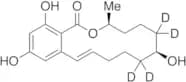
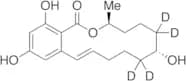
CAS:Prodotto controllato<p>Stability Light Sensitive<br>Applications Isotope labelled β-Zearalenol is an more active metabolite of Zearalenone (Z270500), a estrogenic mycotoxin produced by Fusarium fungi commonly found in grains.<br> Not a dangerous good if item is equal to or less than 1g/ml and there is less than 100g/ml in the package<br>References Olsen, M., et al.: Acta Pharmacol. Toxicol., 48, 15 (1981), Chang, W., et al.: Food Chem. Toxicol., 22, 887 (1984), El Golli, E., et al.: Toxicol Lett., 166, 122 (2006), Hassen, W., et al.: Toxicology, 232, 294 (2007), Benzoni, E., et al.: Reprod. Toxicol., 25, 461 (2008),<br></p>Formula:C18H20D4O5Colore e forma:NeatPeso molecolare:324.4T-2 Toxin
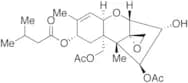
CAS:Prodotto controllato<p>Applications T-2 Toxin is a tricothecene mycotoxin produced by fungi of the genus Fusarium. T-2 Toxin induces DNA damage and cell death on prolonged administration.Environmental contaminants; Food contaminants<br> Not a dangerous good if item is equal to or less than 1g/ml and there is less than 100g/ml in the package<br>References Kim, C., et al.: Cancer Res., 57, 3115 (1997), Bottrel, R., et al.: Antimicrob. Agents Chemother., 1999, 43, 856 (1999), Murray, P., et al.: J. Immunol., 178, 2623 (2007), Choi, H., et al.: Toxicol. Appl. Pharmacol., 240, 46 (2009), Amuzie, C., et al.: Toxicol. Sci., 113, 412 (2010),<br></p>Formula:C24H34O9Colore e forma:White SolidPeso molecolare:466.52Deoxynivalenol
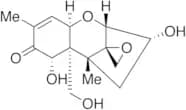
CAS:Prodotto controllato<p>Applications Deoxynivalenol is a tricothecene mycotoxin and potent protein synthesis inhibitor. Deoxynivalenol exhibits cytotoxic activity in vivo via the ribotoxic stress response. Deoxynivalenol induces p38-mediated gene expression and apoptosis in leukocytes; activity results in systemic expression of interleukin-6 (IL-6) and other proinflammatory cytokines. Also induces migration of NF-κB into the nucleus.Environmental contaminants; Food contaminants<br> Not a dangerous good if item is equal to or less than 1g/ml and there is less than 100g/ml in the package<br>References Bae, et al.: Toxicol. Sci., 105, 59 (2008), Shi, et al.: Toxicol. Sci., 109, 247 (2009), Krishnaswamy, et al.: Free Radic. Biol. Med., 49 50 (2010),<br></p>Formula:C15H20O6Colore e forma:NeatPeso molecolare:296.32Zearalenone
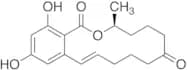
CAS:<p>Applications Estrogenic mycotoxin produced by Fusarium fungi commonly found in grains. One of a group of compounds known as resorcylic acid lactones.Environmental contaminants; Food contaminants<br> Not a dangerous good if item is equal to or less than 1g/ml and there is less than 100g/ml in the package<br>References Tanaka, T., et al.: J. Agric. Food Chem., 36, 979 (1988), Hamilton, S., et al.: Anticancer Res., 16, 3597 (1996), Hecht, S., et al.: Cancer Lett., 150, 49 (2000), Hussein, H., et al.: Toxicology, 167, 101 (2001), Lim, H., et al.: J. Immunol., 175, 4180 (2005),<br></p>Formula:C18H22O5Colore e forma:White To Light BrownPeso molecolare:318.36Ref: TR-Z270500
Prodotto fuori produzioneFumonisin B1
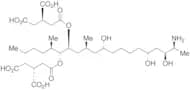
CAS:<p>Stability Hygroscopic<br>Applications A mycotoxin produced by mold associated with corn. Fungal metabolite believed to cause leukoencephalomalacia in horses.Environmental contaminants; Food contaminants<br>References Monbaliu, S., et al.: J. Agric. Food Chem., 58, 10475 (2010), Klosowski, G., et al.: Biores. Technol., 101, 9723 (2010), Soerensen, L., et al.: Anal. Bioanal. Chem., 398, 1535 (2010),<br></p>Formula:C34H59NO15Colore e forma:NeatPeso molecolare:721.83HT-2 Toxin (>85%)
CAS:Prodotto controllato<p>Stability Hygroscopic<br>Applications HT-2 Toxin is a trichothecene group mycotoxin. HT-2 Toxin is the 4-hydroxy analogue of T-2 Toxin (T002980) which has been shown to induce DNA damage and cell death on prolonged administration.Environmental contaminants; Food contaminants<br> Not a dangerous good if item is equal to or less than 1g/ml and there is less than 100g/ml in the package<br>References Weidner, M. et al.: J. Agric. Food Chem., 60, 5676 (2012); Choi, H. et al.: Toxicol. Appl. Pharmacol., 240, 46 (2009); Amuzie, C. et al.: Toxicol. Sci., 113, 412 (2010);<br></p>Formula:C22H32O8Purezza:>85%Colore e forma:Off-WhitePeso molecolare:424.48rac Zearalenone-d6 (major)
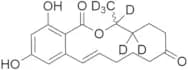
CAS:Prodotto controllatoFormula:C18H16D6O5Colore e forma:NeatPeso molecolare:324.40α-Zearalenol-d4 (Major)
CAS:Prodotto controllato<p>Applications α-Zearalenol-d4 is the isotope labelled metabolite of Zearalenone (Z270500), an estrogenic mycotoxin produced by Fusarium fungi commonly found in grains.<br>References Olsen, M., et al.: Acta Pharmacol. Toxicol., 48, 15 (1981), Chang, W., et al.: Food Chem. Toxicol., 22, 887 (1984), El Golli, E., et al.: Toxicol Lett., 166, 122 (2006), Hassen, W., et al.: Toxicology, 232, 294 (2007), Benzoni, E., et al.: Reprod. Toxicol., 25, 461 (2008),<br></p>Formula:C18H20D4O5Colore e forma:NeatPeso molecolare:324.4rac Zearalenone-d6
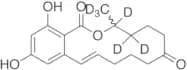
CAS:Prodotto controllato<p>Applications Estrogenic mycotoxin produced by Fusarium fungi commonly found in grains. One of a group of compounds known as resorcylic acid lactones.Environmental contaminants; Food contaminants<br> Not a dangerous good if item is equal to or less than 1g/ml and there is less than 100g/ml in the package<br>References Tanaka, T., et al.: J. Agric. Food Chem., 36, 979 (1988), Hamilton, S., et al.: Anticancer Res., 16, 3597 (1996), Hecht, S., et al.: Cancer Lett., 150, 49 (2000), Hussein, H., et al.: Toxicology, 167, 101 (2001), Lim, H., et al.: J. Immunol., 175, 4180 (2005),<br></p>Formula:C18H16D6O5Colore e forma:BeigePeso molecolare:324.40