Nucleosidi e Nucleotidi
I nucleosidi sono composti formati da una base azotata legata a uno zucchero (ribosio o desossiribosio). Quando un gruppo fosfato viene aggiunto al nucleoside, si forma un nucleotide. Questi composti sono fondamentali nella biologia cellulare, poiché i nucleotidi sono i mattoni essenziali del DNA e dell’RNA, responsabili dell’archiviazione e della trasmissione delle informazioni genetiche. I nucleosidi trovano applicazione nel trattamento delle malattie virali, agendo come inibitori della replicazione virale. I nucleotidi, oltre al loro ruolo strutturale negli acidi nucleici, sono coinvolti nei processi energetici, come la sintesi dell’ATP.
Presso CymitQuimica, offriamo un’ampia gamma di nucleosidi e nucleotidi essenziali per la ricerca in biologia molecolare, virologia e farmacologia.
Trovati 3429 prodotti di "Nucleosidi e Nucleotidi"
Ordinare per
Purezza (%)
0
100
|
0
|
50
|
90
|
95
|
100
Remdesivir related compound 5
CAS:<p>Remdesivir related compound 5 is a plant extract that inhibits the growth of wheat. Remdesivir related compound 5 contains allelopathy, which is the ability to inhibit the growth of other plants by releasing substances from its roots or leaves. A study was conducted in which wheat seeds were treated with extracts of this plant and it was found that there was a significant decrease in the growth of the plants. This may be due to the inhibition of protein synthesis and cell division, as shown in other studies.</p>Formula:C21H27N2O7PPurezza:Min. 95%Peso molecolare:450.42 g/mol1-C-4-Chloro-3-[(4-ethoxyphenyl)methyl]phenyl]-D-glucopyranose
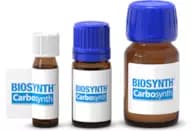
CAS:<p>1-C-4-Chloro-3-[(4-ethoxyphenyl)methyl]phenyl]-D-glucopyranose is a natural product. It is an API impurity that has been synthesized by the custom synthesis process. 1-C-4-Chloro-3-[(4-ethoxyphenyl)methyl]phenyl]-D-glucopyranose has been shown to have pharmacological activity in research and development studies and as a potential drug product.</p>Formula:C21H25ClO7Purezza:Min. 95%Peso molecolare:424.87 g/mol1-[2,3-O-Isopropylidene-b-D-ribofuranosyl]-1,2,4-triazole-3-carboxylic acid methyl ester
CAS:<p>1-[2,3-O-Isopropylidene-b-D-ribofuranosyl]-1,2,4-triazole-3-carboxylic acid methyl ester is a synthetic compound that has been shown to inhibit the growth of Mycobacterium tuberculosis in culture. The metabolite is used as an impurity standard for HPLC analysis of this active compound. It has not yet been approved for use as a drug product.</p>Formula:C12H17N3O6Purezza:Min. 95%Peso molecolare:299.28 g/molN-[(S)-(4-Nitrophenoxy)phenoxyphosphinyl]-L-alanine 2-ethylbutyl ester
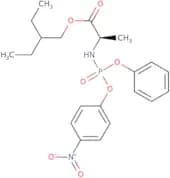
CAS:<p>Remdesivir impurity</p>Formula:C21H27N2O7PPurezza:Min. 95%Colore e forma:White Off-White PowderPeso molecolare:450.42 g/molDapagliflozin Impurity 17
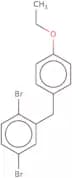
CAS:<p>Dapagliflozin Impurity 17 is a research and development impurity standard for HPLC. It is a natural product and is registered under CAS No. 1807632-93-4. Dapagliflozin Impurity 17 is a metabolite of dapagliflozin, an oral anti-diabetic drug that has been shown to be effective in the treatment of type 2 diabetes. This impurity standard has been synthesized as a research tool for the study of metabolism and pharmacokinetics, as well as analytical methods validation.</p>Formula:C15H14Br2OPurezza:Min. 95%Peso molecolare:370.08 g/mol3'-Deoxy-3'-chlorothymidine
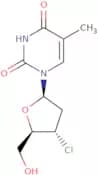
CAS:<p>3'-Deoxy-3'-chlorothymidine is an antiviral compound that is synthesized by the on-line coupling of 2,4-dichlorobenzoyl chloride with 3,4-dideoxycytidine. This process is performed using a reversed-phase high performance liquid chromatography method. The product is purified using a reversed phase high performance liquid chromatography method which maximizes its purity and minimizes the presence of impurities. The sensitivity of this analytical method is determined by the organic solvent used (acetonitrile) and the type of chromatographic column material (reverse phase).</p>Formula:C10H13ClN2O4Purezza:Min. 95%Peso molecolare:260.67 g/mol1-b-D-Ribofuranosyl-1,2,4-triazole-3-carboxylic acid
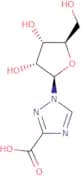
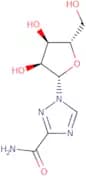
CAS:<p>1-b-D-Ribofuranosyl-1,2,4-triazole-3-carboxylic acid (1bRT) is an amide that inhibits the growth of viruses by inhibiting the viral enzyme thiosemicarbazide. It has been shown to be active against specific viruses such as HIV and retroviruses. 1bRT is used to treat lung diseases caused by viruses, including bronchiolitis, pneumonia, and pulmonary fibrosis. It also has antibacterial properties. Studies have shown that 1bRT reduces the number of bacteria in body fluids and helps to prevent respiratory infections and other bacterial infections in people with weakened immune systems due to AIDS or cancer treatment.</p>Formula:C8H11N3O5Purezza:Min. 95%Peso molecolare:229.19 g/molTriphenylmethanol
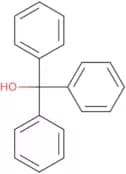
CAS:<p>Triphenylmethanol (TPM) is an inhibitor of the enzyme alcohol dehydrogenase. It is synthesized by reacting p-hydroxybenzoic acid with a hydroxyl group in the presence of trifluoroacetic acid and potassium carbonate. The reaction solution was then analyzed by x-ray crystallography, revealing the molecular structure of TPM. TPM binds to the metal ion in a hydroxyl group, preventing alcohol dehydrogenase from oxidizing ethanol to acetaldehyde. This mechanism also explains why TPM inhibits other enzymes that use this same metal ion cofactor such as carboxypeptidase A and aminopeptidase P, which are involved in protein synthesis and degradation.</p>Formula:C19H16OPurezza:Min. 95%Colore e forma:White Beige Slightly Yellow PowderPeso molecolare:260.33 g/molL-Valine 2-hydroxyethyl ester tosylate
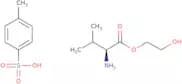
CAS:<p>L-Valine 2-hydroxyethyl ester tosylate (L-V2HT) is a drug product that is synthesized by custom synthesis. It has high purity, analytical, and natural properties. L-V2HT is metabolized through a number of metabolic transformations, including hydrolysis by esterases or glucuronidases, oxidation by cytochrome P450 enzymes, reduction by glutathione reductase, or conjugation with glucuronic acid. The active form of L-V2HT is metabolized through a number of metabolic transformations, including hydrolysis by esterases or glucuronidases, oxidation by cytochrome P450 enzymes, reduction by glutathione reductase, or conjugation with glucuronic acid. L-V2HT also specifically binds to markers expressed at high levels in Mycobacterium tuberculosis strains (e.g., ESX-1 secretion system protein) and inhibits cell</p>Formula:C14H23NO6SPurezza:Min. 95%Peso molecolare:333.4 g/molLevovirin
CAS:Prodotto controllato<p>Levovirin is an antiviral agent that belongs to the class of ribonucleotide reductase inhibitors. It is a potent inhibitor of hepatitis C virus replication and has been shown to be active against HIV in vitro. Levovirin acts as a competitive inhibitor of the NS3 protease, which is responsible for processing viral proteins. This inhibition prevents the production of new virus particles and the spread of infection. Levovirin also has immunomodulatory effects, which may provide therapeutic benefits in autoimmune diseases such as rheumatoid arthritis or Crohn's disease.</p>Formula:C8H12N4O5Purezza:Min. 95%Peso molecolare:244.2 g/mol1-(2-Deoxy-β-D-xylofuranosyl)-5-methyluracil
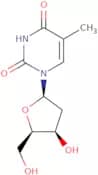
CAS:<p>1-(2-Deoxy-beta-D-xylofuranosyl)-5-methyluracil (1DXP) is a nucleoside that inhibits the enzyme UDP glucose pyrophosphorylase. This enzyme is involved in the synthesis of uridine nucleotides, which are required for RNA and DNA synthesis. 1DXP has been shown to be effective against hepatitis B virus and lymphocytic leukemia cells in vitro. The mechanism of action of 1DXP is not well understood, but it may be related to the inhibition of protein synthesis or cellular metabolism. It may also inhibit the enzyme amino transferase, which is important for the synthesis of aromatic amino acids such as phenylalanine and tyrosine.</p>Formula:C10H14N2O5Purezza:Min. 95%Peso molecolare:242.23 g/molAciclovir EP impurity J
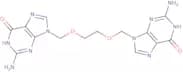
CAS:<p>Aciclovir EP impurity J is a drug product that is used as an analytical standard in HPLC. Aciclovir EP impurity J is the natural metabolite of aciclovir, which is an antiviral drug. It is not active against herpesviruses but has been shown to inhibit the growth of human cells infected with cytomegalovirus. Aciclovir EP impurity J has been studied for its effects on drug metabolism and pharmacokinetics. Aciclovir EP impurity J has been shown to be excreted primarily in urine, with some excretion in the feces.</p>Formula:C14H16N10O4Purezza:Min. 95%Peso molecolare:388.34 g/molDecitabine related compound A
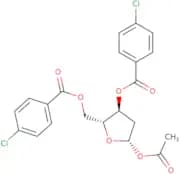
CAS:<p>Decitabine related compound A is an impurity that is found in the API, decitabine. It is an analytical standard for HPLC measurements and a reference material for impurity testing. It is also used as a pharmacopoeia standard for pharmacopoeias such as European Pharmacopoeia, USP, and Japanese Pharmacopoeia. Decitabine related compound A has been synthesized from natural sources such as plant-derived alkaloids and synthetically produced in the laboratory. CAS No. 1019659-87-0</p>Formula:C21H18Cl2O7Purezza:Min. 95%Colore e forma:SolidPeso molecolare:453.27 g/molent-Lamivudine
CAS:<p>Enantiomer of Lamivudine</p>Formula:C8H11N3O3SPurezza:Min. 95%Peso molecolare:229.26 g/molRemdesivir impurity 5
CAS:<p>Remdesivir impurity 5 is a metabolite that is generated in the body following metabolism and excretion of remdesivir. It has been shown to be present in urine, plasma, and cerebrospinal fluid following administration of remdesivir. Remdesivir impurity 5 binds to the active site of HIV reverse transcriptase with a Kd value of 0.5 nM. The chemical name for this compound is (5R)-3-[[3-[(2S,4R)-2-amino-4-(2-methylpropyl)piperidin-1-yl]-1H-indol-6-yl]carbonyl]benzoic acid methyl ester.</p>Formula:C21H27N2O7PPurezza:Min. 95%Peso molecolare:450.42 g/molDapagliflozin Impurity 2
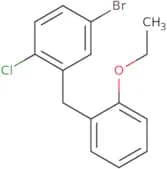
CAS:<p>Dapagliflozin impurity 2 is an impurity of dapagliflozin. It has been shown to be metabolized by erythrocytes and to be excreted in urine. Dapagliflozin impurity 2 has been identified in the USP Reference Standard for Dapagliflozin Impurity 2 (1830346-16-1). This material is available for custom synthesis, research, and development.</p>Formula:C15H14BrClOPurezza:Min. 95%Peso molecolare:325.63 g/molRemdesivir related compound 9
CAS:<p>Remdesivir related compound 9 is a drug product that is an analytical standard. It is a natural API impurity, which has been synthesized for use as an impurity standard. This compound has been custom synthesized to be used as a research and development chemical. CAS No. 1439900-56-7 is the number of this synthetic drug product. It can be used in HPLC standards and it meets pharmacopoeia requirements for purity. The niche market for this compound is high purity analytical standards, including HPLC standards.</p>Formula:C21H27N2O7PPurezza:Min. 95%Peso molecolare:450.42 g/mol1-C-4-Chloro-3-[(4-ethoxyphenyl)methyl]phenyl]- D-glucitol
CAS:<p>This compound is a research and development impurity standard with a custom synthesis. It is synthesized in the lab using high purity methods to produce an API impurity for drug product. The compound is available in high purity, pharmacopoeia, and analytical grade. This compound is used as an analytical reference standard. Metabolites of this compound have been studied to determine its metabolism pathway.</p>Formula:C21H27ClO7Purezza:Min. 95%Peso molecolare:426.89 g/molRemdesivir impurity 14
<p>Remdesivir impurity 14 is a research and development product that belongs to the class of drugs. It is a synthetic metabolite with high purity. Remdesivir impurity 14 meets the pharmacopoeia standard for drug products and drug development. It has been synthesized to be used as an analytical standard for HPLC analysis of remdesivir. This product also has niche applications in metabolism studies, because it is a natural metabolite with its own metabolic pathway.</p>Formula:C18H18N5O7PPurezza:Min. 95%Peso molecolare:447.34 g/molRemdesivir impurity 1
CAS:<p>Remdesivir impurity 1 is a drug product, analytical and Metabolism studies. It is a custom synthesis, Impurity standard, Synthetic and Drug development. Remdesivir impurity 1 is an API impurity that is a natural and has CAS No. 1355049-95-4. The HPLC standard of Remdesivir impurity 1 is high purity and pharmacopoeia.</p>Formula:C12H13N5O4Purezza:Min. 95%Peso molecolare:291.26 g/mol

![1-C-4-Chloro-3-[(4-ethoxyphenyl)methyl]phenyl]-D-glucopyranose](/_next/image/?url=https%3A%2Fstatic.cymitquimica.com%2Fproducts%2F3D%2Fthumb-webp%2FIC181108.webp&w=3840&q=75)
![1-[2,3-O-Isopropylidene-b-D-ribofuranosyl]-1,2,4-triazole-3-carboxylic acid methyl ester](/_next/image/?url=https%3A%2Fstatic.cymitquimica.com%2Fproducts%2F3D%2Fthumb-webp%2FNI16557.webp&w=3840&q=75)
![N-[(S)-(4-Nitrophenoxy)phenoxyphosphinyl]-L-alanine 2-ethylbutyl ester](/_next/image/?url=https%3A%2Fstatic.cymitquimica.com%2Fproducts%2F3D%2Fthumb-webp%2FFN176472.webp&w=3840&q=75)

![1-C-4-Chloro-3-[(4-ethoxyphenyl)methyl]phenyl]- D-glucitol](/_next/image/?url=https%3A%2Fstatic.cymitquimica.com%2Fproducts%2F3D%2Fthumb-webp%2FIC181107.webp&w=3840&q=75)