Sali metallici
Trovati 2872 prodotti di "Sali metallici"
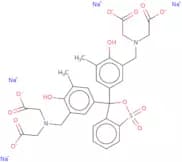
Xylenol orange tetrasodium salt
CAS:Xylenol orange tetrasodium salt is a fluorescent dye that can be used to measure the degree of mineralization in animal tissue. The dye is composed of xylenol, which is a fatty acid, and sodium chloride. Xylenol orange tetrasodium salt is used for measuring the rate of enzyme reactions by incubating it with the enzyme and measuring the formation rate. It has been shown to have damaging effects on mitochondria and tissues when exposed to an acidic environment. Xylenol orange tetrasodium salt binds to the membrane potential of cells in order to measure reactive oxygen species (ROS) production. This dye can also be used as a marker for autofluorescence of mitochondria and lipase activity.
Formula:C31H28Na4O13SN2Colore e forma:PowderPeso molecolare:760.58 g/molN-(Aminoethyl)-5-naphthylamine-1-sulfonic acid sodium
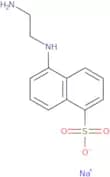
CAS:N-(Aminoethyl)-5-naphthylamine-1-sulfonic acid sodium salt (NAES) is a fluorescent dye that has been used to study the structure of proteins. NAES binds to acceptor sites on the protein, which can be either amino acid side chains or other ions in solution. The fluorescence of NAES depends on the environment and the number of acceptors present. This dye has been used in assays for staphylococcus, as it is resistant to staining by Gram stain and stains brightly with fluorescence assay. NAES has also been shown to have a high kinetic rate and sensitivity, making it an effective virus assay.
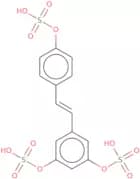
Formula:C12H14N2O3S•NaPurezza:Min. 95%Peso molecolare:289.31 g/moltrans-Resveratrol-3,4',5-trisulfate trisodium salt
CAS:Trans-resveratrol-3,4',5-trisulfate trisodium salt is a fine chemical that can be used as a building block for research chemicals and pharmaceuticals. It is often used as a reagent in organic synthesis, due to its solubility in organic solvents. This compound has been shown to have activity against Alzheimer's disease. Trans-resveratrol-3,4',5-trisulfate trisodium salt also has anti-inflammatory properties.Formula:C14H9Na3O12S3Purezza:Min. 95%Colore e forma:PowderPeso molecolare:534.38 g/molTri-sodium citrate
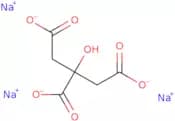
CAS:Sodium citrate is widely used as an excipient in the pharmaceutical industry. It helps regulate the pH as a stabilizer or an alkalizing agent. Sodium citrate can also bind to certain metal ions in drug formulations providing stability and avoiding ht interference with the drug's main activity. In the food industry, its main use is as a food preservative.
Formula:C6H5Na3O7Purezza:Min. 98%Colore e forma:White Off-White PowderPeso molecolare:258.07 g/molAmfenac sodium salt hydrate
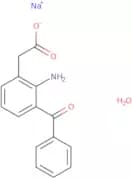
CAS:Amfenac sodium salt hydrate is a nonsteroidal anti-inflammatory drug that inhibits prostaglandin synthesis. It has been shown to have minimal toxicity and inhibit the production of PGE2 in vitro. Amfenac sodium salt hydrate has also been shown to have anti-inflammatory properties in vivo, as it was able to inhibit bowel disease in rats. Amfenac sodium salt hydrate also has a protective effect against mitochondrial membrane depolarization in basic fibroblasts, which may be due to its ability to maintain levels of ATP.
Formula:C15H14NNaO4Purezza:Min. 95%Colore e forma:PowderPeso molecolare:295.27 g/molRef: 3D-FA17348
Prodotto fuori produzioneCopper (I) chloride
CAS:Copper (I) chloride is a chemical compound that is made up of copper and chlorine. It has an ideal pH of 5.8 and reacts with water to form cuprous chloride, which can be used in the production of nitric acid. Copper (I) chloride also forms insoluble complexes with fatty acids, amines, and nitrogen atoms. Copper (I) chloride has been shown to inhibit the growth of some bacteria, such as Staphylococcus aureus, by inhibiting protein synthesis. This inhibition may be due to the structural similarities between copper (I) chloride and copper (II) sulfate, which inhibits protein synthesis by binding to ribosomes. Copper (I) chloride has also been shown to cause autoimmune diseases in mice because it contains hydroxyl groups that are similar to those found on human thyroglobulin proteins. The resulting immune response leads to an inflammatory reaction that damages tissues in the body.br>br>
Formula:CuClColore e forma:Yellow Clear LiquidPeso molecolare:99 g/molRef: 3D-FC32568
Prodotto fuori produzioneCarboxyethylsilanetriol sodium salt - 25% in water
CAS:Carboxyethylsilanetriol sodium salt - 25% in water is a reagent that is used to form complex compounds. It can be used as a reaction component or a building block to create more complex compounds, such as new medicines. Carboxyethylsilanetriol sodium salt - 25% in water has been shown to be an efficient and versatile scaffold for the production of fine chemicals and research chemicals. CAS No. 18191-40-7 is a speciality chemical that can react with other organic compounds to form new compounds for research purposes. Carboxyethylsilanetriol sodium salt - 25% in water is a useful intermediate and building block for various synthetic reactions because it can easily react with other organics to form new compounds which are useful in pharmaceuticals, agrochemicals, and other industries.
Formula:C3H6Na2O5SiPurezza:Approximately 25%Colore e forma:Clear LiquidPeso molecolare:196.14 g/molMetamizol sodium monohydrate
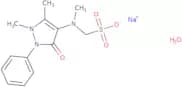
CAS:Metamizol sodium monohydrate is a nonsteroidal anti-inflammatory drug that is used as an analgesic and antipyretic. Metamizol sodium monerate is metabolized in the liver via cytochrome P450 (CYP) to form metamizole. It has been shown to inhibit chemiluminescence of polycyclic aromatic hydrocarbons using a dipyrone-treated biological sample, and the rate constant for this inhibition has been determined by the use of a chemiluminescence method. An analytical method for metamizol sodium monohydrate has also been developed using polymerase chain reaction (PCR) amplification of DNA sequences from human squamous cells, which can be used for forensic purposes. Metamizol sodium monohydrate has shown anti-inflammatory activity against rat paw edema and carrageenan-induced inflammation in rats, but it can cause side effects such as dizziness, drowsiness, headache, nausea,
Formula:C13H16N3O4S•H2O•NaPurezza:Min. 95%Peso molecolare:351.36 g/molSilver trifluoromethanesulfonate
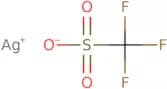
CAS:Silver trifluoromethanesulfonate is a silver salt that is used in carbohydrate chemistry. It can be used for the synthesis of coumarin derivatives, which are important for the development of pharmaceuticals and other organic compounds. The reaction with acylating agents produces an acylated silver ion that reacts with amines to form a cationic polymerization. This polymerization is activated by the presence of high salt or amines, and proceeds with high efficiency. The asymmetric synthesis of carbohydrates using this method has been demonstrated using x-ray diffraction data and nmr spectroscopic data.
Formula:CAgF3O3SPurezza:Min. 95%Colore e forma:White PowderPeso molecolare:256.94 g/molSodium metasilicate pentahydrate
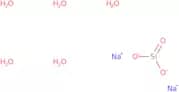
CAS:Sodium metasilicate pentahydrate is a white powder that is soluble in water and alcohol. It is used as an acidity regulator, sequestering agent, and buffer in detergent compositions. Sodium metasilicate pentahydrate has been shown to inhibit the growth of bacteria by binding to fatty acids in their cell walls and preventing the formation of cell walls. The molecule also inhibits the polymerase chain reaction (PCR) by binding to DNA-dependent RNA polymerase, thereby preventing transcription and replication. Electrochemical impedance spectroscopy has been used to measure the effect of this compound on particle size distribution and flow system performance.
Formula:Na2SiO3•(H2O)5Purezza:(Na₂O) 28.8 To 29.8%Colore e forma:White PowderPeso molecolare:212.14 g/molBromocresol green, sodium salt
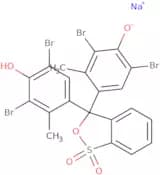
CAS:Bromocresol green is a dye that is used in biological assays to measure the kinetics of fluorescence. It is a type of tryptophan-releasing compound that releases a yellowish-green light when it absorbs light at wavelengths between 350 and 450 nm. Bromocresol green has been quantified by measuring the intensity of the fluorescence emission as a function of time. This can be done visually or using an instrument called a fluorometer, which detects changes in light intensity over time. Bromocresol green can be used to detect the presence of amino acid residues in proteins through protonation reactions with their tryptophan residues and subsequent quenching with acetonitrile. The bromocresol green dye is also used in lithographic printing, where it serves as an acceptor for electrons from an arene (aromatic hydrocarbon). This process generates energy for lithography and also provides contrast between regions with different electron densities.
Formula:C21H14Br4O5SNaColore e forma:PowderPeso molecolare:721 g/molRef: 3D-FB01465
Prodotto fuori produzioneCesium chloride
CAS:Cesium chloride is a cationic salt that is used in research as a model system for nuclear DNA. It has been used to study the response element of the nitrate reductase gene and the polymerase chain reaction. Cesium chloride has been found to be an optimum concentration of 0.5mM for 3T3-L1 preadipocytes, which are cells that play a role in obesity and bowel disease. Cesium chloride also has been shown to inhibit papillary muscle contraction and whole-cell recordings from live cells. The compound may have therapeutic potential for treating heart failure by inhibiting diatomic molecule activity in the heart.
Formula:CsClColore e forma:White PowderPeso molecolare:168.36 g/molSodium fluorosilicate
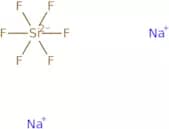
CAS:Prodotto controllatoSodium fluorosilicate is an inorganic acid that can be prepared by dissolving sodium carbonate and hydrogen fluoride in water. It is used as a sample preparation agent for electrochemical impedance spectroscopy, as well as a reagent for the determination of acidic properties. Sodium fluorosilicate has been shown to inhibit the growth of epidermal cells, which may be due to its ability to cause an increase in the mitochondrial membrane potential. This compound also inhibits the synthesis of proteins from RNA, which may result from its coordination geometry or hydrogen-bonding interactions. Sodium fluorosilicate has been used in analytical methods involving x-ray diffraction data and plasma mass spectrometry.
Formula:Na2SiF6Purezza:Min. 95%Peso molecolare:188.06 g/molPotassium pyrophosphate
CAS:Potassium pyrophosphate is a salt of pyrophosphoric acid, which is a weak acid with pKa = 2.8. It is used in the laboratory to generate phosphate ions from adenosine triphosphate (ATP) and magnesium ions. This reaction is used for the synthesis of nucleotides. Potassium pyrophosphate also inhibits bacterial growth by binding to an enzyme that is necessary for the synthesis of adenine nucleotide, which is essential for protein synthesis.
Formula:K4P2O7Colore e forma:White Off-White PowderPeso molecolare:330.34 g/molRef: 3D-FP63067
Prodotto fuori produzioneTris(2,4-pentanedionato)chromium(III)
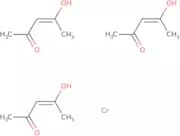
CAS:Tris(2,4-pentanedionato)chromium(III) is a chemical compound that is stable in the presence of acids and bases. It has been characterized using thermodynamic data, electrochemical impedance spectroscopy, and laser ablation. Tris(2,4-pentanedionato)chromium(III) has a high resistance to oxidation and reduction reactions. The phase transition temperature for this compound is -35 °C. Tris(2,4-pentanedionato)chromium(III) can be used as an oxidation catalyst for organic compounds. It can also be used to catalyze the decomposition of water vapor into hydrogen and oxygen gas.
Formula:C15H21CrO6Purezza:Min. 95%Colore e forma:Red PowderPeso molecolare:349.32 g/molSodium phosphate monobasic
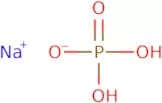
CAS:Sodium phosphate monobasic is a salt of sodium and phosphoric acid. It is used as a buffer to maintain the pH of an aqueous solution at the desired level. The pH of this solution can be adjusted by adding either acid or base. Sodium phosphate monobasic has been shown to react with calcium pantothenate, sodium salts, and ambroxol hydrochloride injection in a model system to produce hydrogen phosphate and water vapor. This reaction is the first step in the production of hydrogen phosphate, which is an important intermediate for many chemical reactions.
Formula:H3O4P·NaColore e forma:White Off-White PowderPeso molecolare:120.98 g/molRef: 3D-FS42365
Prodotto fuori produzioneSodium dodecyl sulfate, crystalline
CAS:Sodium dodecyl sulfate (SDS) is a surfactant that is commonly used in detergents and as a laboratory reagent. It is also an antimicrobial agent and has been shown to be effective against bacterial cells. The solubility of SDS in water is dependent on the pH, with optimum concentrations at pH 7.4 and 8.2. Cell lysis can be induced by SDS at concentrations of 0.1% or greater, which can be monitored using plasma mass spectrometry. SDS has been used as an experimental model for autoimmune diseases, such as systemic lupus erythematosus and rheumatoid arthritis, to study disease progression and treatment efficacy. In these studies, laser ablation was used to create lesions in the skin of mice to simulate chronic inflammatory processes that are characteristic of autoimmune diseases. Crystalline cellulose was found to have high values for sodium dodecyl sulfate adsorption when compared with other
Formula:C12H26O4S•NaPurezza:Min 99%Colore e forma:PowderPeso molecolare:289.39 g/molNetobimin sodium salt
CAS:Netobimin sodium salt is a versatile building block with a CAS number of 88254-99-3. It is used in the synthesis of complex compounds and research chemicals, as well as in the preparation of reagents, specialty chemicals, and useful intermediates. Netobimin sodium salt can be used as a reaction component or scaffold for generating high-quality compounds. Netobimin sodium salt has been shown to be a useful intermediate for synthesizing pharmaceuticals, agrochemicals, and other fine chemicals.
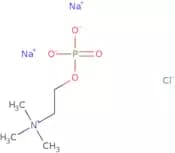
Formula:C14H19N4O7S2NaPurezza:Min. 95 Area-%Colore e forma:Yellow PowderPeso molecolare:442.45 g/molPhosphocholine chloride sodium salt hydrate
CAS:Phosphocholine chloride sodium salt hydrate is an organic compound that is used as a cross-linking agent in the production of polymers. It is also used as a reactant in ring-opening reactions and as an intermediate in the synthesis of pyridinium salts. This product has been shown to be metabolized by human serum to form fatty acids, which may play a role in metabolic disorders such as obesity and diabetes. The reagent can also be used for the chromatographic determination of cholesterol and other lipids.
Formula:C5H13ClNNa2O4P·xH2OPurezza:Min. 95%Colore e forma:White PowderPeso molecolare:263.58 g/molRef: 3D-FP75522
Prodotto fuori produzionePhenol red sodium salt
CAS:Phenol red is a pH indicator that finds broad applications from chemistry to microbiology. Colour varies from yellow at pH<6.8 (lmax 443nm) through to light red/pink at 6.8<pH<8.2 (lmax 570 nm) to vivid purple/red at pH>8.2. It is widely used in cell culture to monitor pH and for colorimetric titration. For example, phenol red can be used to quantify Br- content in sea or fresh water. It is added to VTM as pH indicator, at the concentration of 10mg/ml, maintaining a pink colour at neutral pH.
Formula:C19H13NaO5SColore e forma:Slightly Brown Red PowderPeso molecolare:376.36 g/mol