Sali metallici
Trovati 2872 prodotti di "Sali metallici"
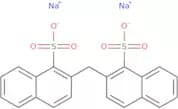
Disodium methylenebisnaphthalenesulfonate
CAS:Disodium methylenebisnaphthalenesulfonate is an organic compound that belongs to the group of bisnaphthyl-sulfones. It is a white solid with a melting point of 236°C. Disodium methylenebisnaphthalenesulfonate is used as a reagent in organic synthesis and as a building block for other compounds. The compound has been shown to be useful in the synthesis of 2-amino-5-methyl-1,3,4-thiadiazole derivatives, which are important building blocks for pharmaceuticals. Disodium methylenebisnaphthalenesulfonate can also be used as a scaffold for complex compounds with new or unknown structures.
Formula:C21H16O6S2·2NaPurezza:Min. 95%Colore e forma:Beige To Brown SolidPeso molecolare:474.46 g/molRef: 3D-FD158454
Prodotto fuori produzioneSodium 1-decanesulfonate
CAS:Sodium 1-decanesulfonate is a chemical compound that has been shown to have an inhibitory effect on the drug transporter P-glycoprotein. The inhibition of this transporter by sodium 1-decanesulfonate may be due to its ability to bind to the drug in the membrane, thereby preventing it from being transported out of the cell. Sodium 1-decanesulfonate was also found to increase the amount of sn-38, a radioactive form of sodium, in metastatic colorectal cancer cells. It has also been shown that sodium 1-decanesulfonate is thermally stable and chemically stable at high temperatures. This compound can be used as a standard in analytical methods such as titration calorimetry and polyvinyl chloride (PVC) analysis. Sodium 1-decanesulfonate can also be used as a fluorescent dye for particle size distribution measurements.
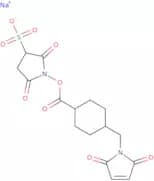
Formula:C10H22O3S•NaPurezza:Min. 95%Colore e forma:PowderPeso molecolare:245.34 g/molSulfo-SMCC sodium
CAS:Crosslinker reacting rapidly with primary amines. It is used as a protein crosslinker where it reacts with cysteine to yield specific conjugates. The cyclohexane bridge confers added stability to the maleimide group making it ideal for maleimide activation of proteins. It is soluble in water and many other aqueous buffers although it is less stable then in DMSO or DMF.
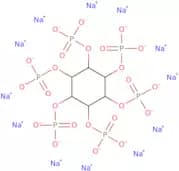
Formula:C16H17N2O9SNaPurezza:Min. 95 Area-%Colore e forma:White Off-White PowderPeso molecolare:436.37 g/molSodium phytate
CAS:Chelator of multivalent metal ions; food perservative; antioxidant
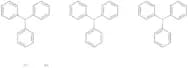
Formula:C6H6Na12O24P6Colore e forma:White PowderPeso molecolare:923.82 g/molTris(triphenylphosphine)rhodium(I) chloride
CAS:Homogeneous hydrogenation catalyst
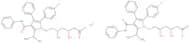
Formula:C54H45ClP3RhPurezza:Min. 95%Colore e forma:PowderPeso molecolare:925.21 g/molAtorvastatin calcium
CAS:HMG-CoA reductase inhibitor; anti-hypercholesterolemia agent
Formula:C66H68CaF2N4O10Purezza:Min. 97 Area-%Colore e forma:White PowderPeso molecolare:1,155.34 g/molCalcium oxide
CAS:Prodotto controllatoCalcium oxide is a chemical compound that is used in the process of wastewater treatment. It removes phosphorus from sewage by forming insoluble calcium phosphate and prevents the release of phosphate into natural waterways. Calcium oxide also has been shown to remove chromium, nickel, copper, and zinc from wastewater. The removal of these metals may be due to the oxidation of metal hydroxides which are then precipitated by calcium oxides or through the formation of insoluble metal oxides. Calcium oxide can also be used to remove potassium dichromate from water vapor. Calcium oxide is an oxidizing agent that can react with metals at high temperatures and can be used as a catalyst for many reactions. The activity index for calcium oxide ranges between 1-3 and its surface methodology is Langmuir adsorption isotherm.
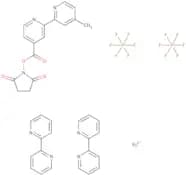
Formula:CaOPurezza:Min. 95%Colore e forma:PowderPeso molecolare:56.08 g/molBis(2,2'-bipyridine)-4'-methyl-4-carboxybipyridine-ruthenium N-succinimidyl ester-bis(hexafluorophosphate)
CAS:Bis(2,2'-bipyridine)-4'-methyl-4-carboxybipyridine-ruthenium N-succinimidyl ester-bis(hexafluorophosphate) is a molecule that inhibits the activity of matrix metalloproteinases. It binds to the active site of the enzyme and blocks its activity. This drug has been shown to be effective in inhibiting the activity of MMPs in cells, but not in tissue culture because it does not cross cell membranes. Bis(2,2'-bipyridine)-4'-methyl-4-carboxybipyridine-ruthenium N-succinimidyl ester-bis(hexafluorophosphate) has also been shown to have a low detection limit and can detect low levels of matrix metalloproteinase activity in cells.
Formula:C36H29F12N7O4P2RuPurezza:Min. 95%Colore e forma:PowderPeso molecolare:1,014.66 g/molRef: 3D-FB29197
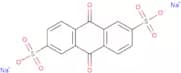
Prodotto fuori produzioneAnthraquinone-2,6-disulfonic acid disodium
CAS:Anthraquinone-2,6-disulfonic acid disodium salt is a reactive, redox potential chemical that has been shown to be stable to intermolecular hydrogen bonding and crystalline in structure. It has the ability to react with carbon sources and can be used as a catalyst in coordination chemistry. Anthraquinone-2,6-disulfonic acid disodium salt has been shown to have fluorescence properties under UV light and FTIR spectroscopy.Formula:C14H6Na2O8S2Purezza:Min. 95%Colore e forma:Beige PowderPeso molecolare:412.3 g/molLithium sulfate, anhydrous
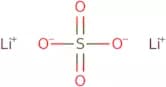
CAS:Lithium sulfate is a compound that has been used in experimental solubility data. It is soluble in water and does not react with most other compounds. Lithium sulfate has shown to be an intramolecular hydrogen bond donor and acceptor, as well as an intermolecular hydrogen bond donor. The structural analysis of this compound was carried out by X-ray diffraction on lithium sulfate hydrate crystals at room temperature. The structure of the hydrate was found to be a monoclinic crystal with space group P2/c. The heat capacity of lithium sulfate was measured using a constant pressure apparatus and the thermal expansion coefficient was determined using zirconium oxide as a reference material. Lithium sulfate has shown electrochemical impedance spectroscopy properties which reveal that it is an ionic conductor.
Formula:Li2SO4Purezza:Min. 95%Colore e forma:White PowderPeso molecolare:109.95 g/molPotassium DL-aspartate hemihydrate
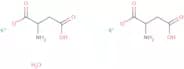
CAS:Potassium DL-aspartate hemihydrate is a versatile building block that can be used as a reagent and as a speciality chemical. It is useful for research and development, as well as for the production of high-quality compounds and intermediates. This compound can be used in organic synthesis reactions and has been shown to be useful in the construction of scaffolds.
Formula:C4H7NO4H2O·KPurezza:Min. 95%Colore e forma:White PowderPeso molecolare:181.21 g/molZinc acetate
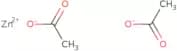
CAS:Zinc acetate is a chemical compound that contains zinc, oxygen, and carbon. It is used in the treatment of infectious diseases, such as bowel disease. Zinc acetate also functions as an antiseptic and astringent. The reaction mechanism for this compound is ionotropic gelation. This process involves the formation of hydrogen bonds between molecules that are then converted to a solid state. Zinc acetate will react with phosphorus pentoxide to form zinc phosphate, which can be used as a structural analysis for x-ray diffraction data. In addition, it has been shown to have high values when nitrogen atoms are present and zinc acetate is also soluble in water vapor and reacts with copper chloride to form zirconium oxide.
Formula:C4H6O4ZnPurezza:Min. 95%Colore e forma:PowderPeso molecolare:183.47 g/molIralukast Na
CAS:Iralukast Na is a leukotriene receptor antagonist that prevents bronchoconstrictor response. It binds to the cystic fibrosis transmembrane conductance regulator (CFTR) and blocks the binding of leukotrienes, which are potent bronchoconstrictors. Iralukast Na also blocks the activity of inflammatory cells and reduces bowel inflammation. Iralukast Na has been shown to be effective in treating asthma, inflammatory bowel disease, and other autoimmune diseases.
Formula:C38H36F3NaO8SPurezza:Min. 95%Peso molecolare:732.19807(R)-3-Hydroxybutyric acid sodium
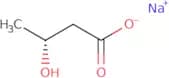
CAS:Chiral intermediate in the biosynthesis and metabolism of fatty acids
Formula:C4H8O3•NaColore e forma:PowderPeso molecolare:127.09 g/molRef: 3D-FH09770
Prodotto fuori produzione2,3-Diphospho-D-glyceric acid pentasodium salt
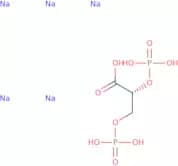
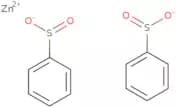
CAS:2,3-Diphospho-D-glyceric acid pentasodium salt is a pyridine complex that is found in nature as a constant. It is also synthesized by humans and can be formed in the laboratory. 2,3-Diphospho-D-glyceric acid pentasodium salt is reactive and has been shown to be useful for producing radical species. This compound has been analysed in the human body at physiological concentrations and has been shown to interact with endogenous molecules such as lipids. The interaction of this compound with lipids could be due to its ability to form emulsions.Formula:C3H3Na5O10P2Purezza:Min. 95%Colore e forma:PowderPeso molecolare:375.95 g/molZinc benzenesulfinate dihydrate
CAS:Zinc benzenesulfinate dihydrate is a white crystalline powder. It is soluble in water and has a molecular weight of 306.3. Zinc benzenesulfinate dihydrate can be used as a research chemical, reagent, or speciality chemical in the synthesis of other compounds. Zinc benzenesulfinate dihydrate can also be used as a reaction component in the synthesis of other compounds, or as an intermediate or scaffold for complex compounds.
Formula:C6H6O2S•(H2O)2•Zn0Purezza:Min. 95%Colore e forma:White To Off-White SolidPeso molecolare:421.81 g/molRef: 3D-FZ45907
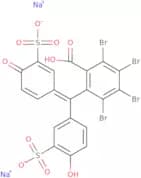
Prodotto fuori produzioneSulfobromophthalein disodium salt hydrate
CAS:Sulfobromophthalein disodium salt hydrate is a fluorescent chemical that is used as a marker for renal function. It is most commonly used to assess the function of proximal tubules in the kidney and to assess the presence of cancer cells in various tissues. The uptake of sulfobromophthalein by the renal proximal tubules can be measured with an assay involving caco-2 cells. Multidrug resistance-associated protein (MRP) and other efflux pumps are expressed in these cells, which limits the amount of drug that can be absorbed into the cell. MRP also plays a role in multidrug resistance by pumping drugs back out of cells into the extracellular fluid, preventing them from being reabsorbed into circulation. This causes higher concentrations of drugs to accumulate inside the cell, leading to apoptosis. Sulfobromophthalein has been shown to attenuate cancer progression, as well as reduce multidrug resistanceFormula:C20H8Br4O10S2·2Na·xH2OColore e forma:White PowderPeso molecolare:838 g/molGuanosine-5'-triphosphate Disodium Salt (~85%)
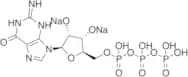
CAS:Prodotto controllatoApplications Guanosine-5'-triphosphate disodium salt (CAS# 56001-37-7) is a nucleotide used in the preparation of photoreactive GTP affinity probes, and in inhibitors of eukaryotic initiation factor eIF-4E.
References George Cisar, E. A.; J. Am. Chem. Soc., 135, 4676 (2013); Ghosh, P.; et al.: Bioorg. Med. Chem. Lett., 16, 750 (2006).Formula:C10H14N5O14P3Na2Purezza:~85%Colore e forma:NeatPeso molecolare:567.14Ref: TR-G838608
Prodotto fuori produzionePotassium Hydroxide (Semiconductor Grade)
CAS:Prodotto controllatoApplications Potassium Hydroxide is inorganic compound and strong base with many applications. It is used in the production of biodiesel. Potassium Hydroxide is also used in the manufacture of soaps.
Not a dangerous good if item is equal to or less than 1g/ml and there is less than 100g/ml in the package
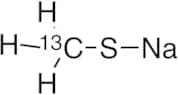
References Nadarajan, R., Ismail, R.: J. Surfactants Deterg., 14, 463 (2011); Hajek, M., et al.: Fuel, 96, 85 (2012);Formula:HKOColore e forma:NeatPeso molecolare:56.11Sodium Methanethiolate-13C
CAS:Prodotto controllatoApplications Sodium Methanethiolate-13C, is the labeled analogue of Sodium Methanethiolate (S644805), used as a nucleophile in organic synthesis. Sodium methanethiolate is also being used as a reagent to synthesize thiol-based suberoylanilide hydroxamic acid (SAHA) analogues, compounds that act as potent histone deacetylase inhibitors.
References Bergman, A. & Wachtmeister, Chemosphere, 7, 949 (1978); Suzuki, T.,et al.: Bioorg. Med. Chem. Lett., 14, 3313 (2004)Formula:CH3NaSPurezza:>90%Colore e forma:NeatPeso molecolare:71.082