Substrati enzimatici
Sottocategorie di "Substrati enzimatici"
Trovati 1433 prodotti per "Substrati enzimatici". Vengono mostrati i primi 500.
4-Nitrophenyl-alpha-D-maltopyranoside
CAS:Chromogenic α-maltosidase substrate yielding a yellow solution upon cleavage.Formula:C18H25NO13Purezza:Min. 98.0 Area-%Peso molecolare:463.40 g/mol4-Methylumbelliferyl a-L-idopyranosiduronic acid sodium salt
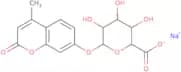
CAS:PAIRED PRODUCT AVAILABLE: alpha-L-iduronidase Enzyme, FI179383.
4MU-alpha-L-idopyranosiduronic acid is a fluorogenic substrate for alpha-L-iduronidase. Active alpha-L-iduronidase cleaves the MU moiety from the synthetic substrate, which results in release of a fluorescent signal (Ex 360 nm / Em 455 nm). The reaction is stopped by the addition of sodium carbonate. 4MU-alpha-L-idopyranosiduronic acid is used in alpha-L-iduronidase assays in the context of biochemical characterisation of samples from patients affected by lysosomal storage disease mucopolysaccharidosis I (MPS I).Formula:C16H15NaO9Purezza:Min. 98 Area-%Colore e forma:White PowderPeso molecolare:374.27 g/mol3-Indolyl β-D-galactopyranoside
CAS:Chromogenic substrate for β-D-galactosidase, yielding a blue precipitate upon cleavage.Formula:C14H17NO6Purezza:Min. 95%Colore e forma:PowderPeso molecolare:295.29 g/mol4-Nitrophenyl b-L-arabinofuranoside
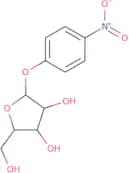
CAS:Chromogenic substrate targeting alpha-L-arabinofuranosidase
Purezza:Min. 95%Colore e forma:White/Off-White SolidPeso molecolare:271.22 g/mol4-Nitrophenyl a-D-mannopyranoside
CAS:4-Nitrophenyl a-D-mannopyranoside is a chromogenic pNP enzyme substrate that enables the detection and quantification of a-D-mannosidase activity in various biological samples through a colorimetric assay. The hydrolysis of the substrate by the enzyme releases 4-nitrophenol, a yellow compound whose absorption can be measured spectrophotometrically. Applications for this substrate span biomedical research, disease diagnostics, and industrial enzyme production.
Formula:C12H15NO8Purezza:Min. 98.0 Area-%Colore e forma:Off-White PowderPeso molecolare:301.25 g/mol5-Bromo-4-chloro-3-indoxyl-1-acetate
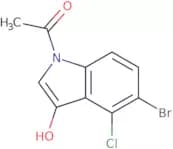
CAS:5-Bromo-4-chloro-3-indoxyl-1-acetate is a chromogenic substrate used to detect the specific enzymatic activity of esterase. After cleavage, 5-bromo-4-chloro-indoxyl is released, resulting in a blue to blue-green color change in bacterial colonies or media. 5-Bromo-4-chloro-3-indoxyl-1-acetate is used in bacterial esterase activity assays (e.g. Pseudomonas spp.).
Purezza:Min. 95%Colore e forma:PowderPeso molecolare:288.52 g/molDDAO galactoside
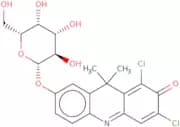
CAS:The DDAO molecule [7-hydroxy-9H-(1, 3-dichloro-9, 9 dimethylacridin-2-one] is used as a stain and a dye in molecular biology, due to its ability to bind intracellular and extracellular DNA. DDAO galactoside is a fluorogenic substrate for galactosidase.
Purezza:Min. 95%Colore e forma:PowderPeso molecolare:470.3 g/molDehydroluciferin
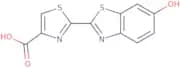
CAS:Dehydroluciferin is a bioluminescence probe that is a potent inhibitor of the firefly luciferase reaction. It is a byproduct of the oxidation of luciferin, the substrate for firefly luciferase, which catalyzes the bioluminescence reaction. It can also form during the synthesis or storage of luciferin. Its presence can potentially lead to issues in bioluminescent assays.Formula:C11H6N2O3S2Purezza:Min. 97 Area-%Colore e forma:PowderPeso molecolare:278.31 g/molLuc-Salmonella
Luc-Salmonella is a conjugate of the enzyme luciferase and the substrate 5-bromo-4-chloro-3-indolyl phosphate. Luc-Salmonella has been used for diagnostic purposes in the detection of bacteria in culture media, as well as in environmental and food testing. Luc-Salmonella can be used to detect Salmonella, which is a bacterium that can cause gastrointestinal disease. Luminescence is measured using a luminometer or fluorimeter with an excitation wavelength of 485 nm and emission wavelengths at 510 nm. Luminescence from Luc-Salmonella is typically measured after 1 hour incubation with bacterial cells.
Luc-Salmonella has been shown to have high purity and quality due to its unique composition of enzyme substrate. This product has been tested for contamination by sensitive assays such as chemiluminescence, bioluminescence, or fluorescence. The purity level of Luc-SalPurezza:Min. 96 Area-%Ref: 3D-L-8281
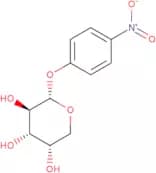
-Unit-mgmgPrezzo su richiesta5mgPrezzo su richiesta10mgPrezzo su richiesta25mgPrezzo su richiesta50mgPrezzo su richiesta100mgPrezzo su richiesta4-Nitrophenyl a-L-arabinopyranoside
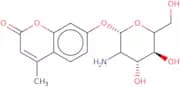
CAS:Substrate for a-L-arabinopyranosidaseFormula:C11H13NO7Purezza:Min. 98 Area-%Colore e forma:White PowderPeso molecolare:271.22 g/mol4-Methylumbelliferyl b-D-glucosaminide - Moscerdam™ biochemical purity
CAS:A substrate used for the diagnosis of Sanfilippo disease C (MPS III C).
Formula:C16H19NO7Purezza:Min. 98 Area-%Colore e forma:White PowderPeso molecolare:337.32 g/molL-Serine 7-amido-4-methylcoumarin hydrochloride
CAS:L-Serine 7-amido-4-methylcoumarin hydrochloride is a fluorogenic peptide substrate for peptidases. This AMC peptide substrate is normally used to rapidly profile the N-terminal specificity of proteases.
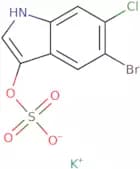
Formula:C13H15ClN2O4Peso molecolare:298.72 g/mol5-Bromo-6-chloro-3-indolyl sulfate potassium salt
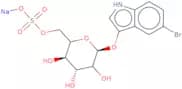
CAS:5-Bromo-6-chloro-3-indolyl sulfate potassium salt is a fluorogenic substrate that can be used for food testing. It is a conjugate of 5-bromo-6-chloroindolylsulfate and potassium, which is dissolved in buffer solution. This product can also be used as a chromogenic substrate in environmental testing, an enzyme substrate in diagnostics, and a ligand for bioluminescence. It has high purity and quality, and can be used for chemiluminescence or bioluminescence. The CAS number for this product is 6581-24-4.Formula:C8H4BrClNO4S·KPurezza:Min. 95%Colore e forma:PowderPeso molecolare:364.64 g/mol5-Bromo-3-indolyl-beta-D-galactopyranoside-6-sulfate sodium salt
CAS:5-Bromo-3-indolyl-beta-D-galactopyranoside-6-sulfate sodium salt is a lapis substrate, a chromogenic substrate that yields a deep blue color after cleavage. It is used in sulfatase activity assays and for the diagnosis of Mucopolysaccharidosis IVA (Morquio A).Formula:C14H15BrNNaO9SPurezza:Min. 95%Colore e forma:PowderPeso molecolare:476.23 g/mol1-Naphthyl β-D-mannopyranoside
CAS:1-Naphthyl β-D-mannopyranoside is a chromogenic (also fluorogenic) substrate. After cleavage, 1-naphthol is released and is used to quantify beta-mannosidase activity.Formula:C16H18O6Purezza:Min. 95%Colore e forma:PowderPeso molecolare:306.31 g/molNaphthol AS-E acetate
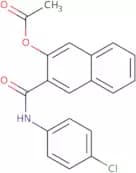
CAS:Modified naphtol AS substrate used in histochemical and cytochemical staining
Formula:C19H14ClNO3Purezza:Min. 95%Peso molecolare:339.77 g/molMonofluoresceinated mannitol
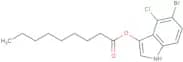
Monofluoresceinated mannitol is a fluorescently labeled form of mannitol. It is used as a tracer for metabolism studies.Formula:C27H24O12Purezza:Min. 95%Colore e forma:PowderPeso molecolare:540.46 g/mol5-Bromo-4-chloro-3-indolyl nonanoate
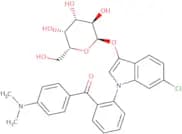
CAS:5-Bromo-4-chloro-3-indolyl nonanoate is a fluorogenic substrate that is used in the detection of enzymes. The substrate reacts with various enzymes and produces a fluorescent product, which can be detected using a fluorimeter or luminometer. It has been shown to be active against β-galactosidase, α-chymotrypsin, and β-glucuronidase. This compound may also be used as an enzyme substrate for the detection of bacteria in culture media or for food testing. 5-Bromo-4-chloro-3 indolyl nonanoate is not mutagenic or genotoxic when tested on bacterial cells.Formula:C17H21BrClNO2Purezza:Min. 95%Peso molecolare:386.71 g/molAldol® 518 alpha-D-galactopyranoside, Biosynth Patent: EP 2427431 and US 8940909
CAS:Aldol® 518 alpha-D-galactopyranoside is a chromogenic and fluorogenic enzyme substrate used for detection of alpha-galactosidase activity. The enzyme substrate is cleaved by alpha-galactosidase positive bacteria and yeasts in liquid or solid media, yielding red color and red fluorescence signal. Aldol® 518 alpha-D-galactopyranoside can also be used to detect alpha-galactosidase (encoded by the Mel1 gene) in yeast gene reporter assays or for identification of alpha-gal positive transformants on agar plates. Aldol® 518 alpha-D-galactopyranoside can be used under aerobic and anaerobic conditions.Formula:C29H29ClN2O7Purezza:Min. 95.0 Area-%Peso molecolare:553.01 g/mol2-Chloro-4-nitrophenyl a-D-maltotrioside
CAS:2-Chloro-4-nitrophenyl a-D-maltotrioside (2CNP) is a potent hypoglycemic agent that has been shown to decrease postprandial blood glucose levels in humans. 2CNP is a white crystalline solid that is soluble in water and ethanol. The transfer reactions of 2CNP are enhanced by benzalkonium chloride, which forms an organic complex with the drug. The optimum concentration for the hypoglycemic effect of 2CNP is determined to be 10 μM, which can be detected using an optical sensor. This compound also inhibits α-amylase and other enzymes involved in carbohydrate metabolism, leading to the accumulation of glycogen and lowering the blood glucose level.
Formula:C24H34CiNO18Purezza:Min. 95%Colore e forma:Off-White Yellow PowderPeso molecolare:659.98 g/mol