Substrati enzimatici
Sottocategorie di "Substrati enzimatici"
Trovati 1526 prodotti di "Substrati enzimatici"
H-Pro-Arg-4mbna
CAS:H-Pro-Arg-4mbna is a chromogenic substrate that is specifically cleaved by trypsin, a serine protease involved in protein digestion, and thrombin, that cleave peptide bonds. Upon hydrolysis, the bond between the proline and arginine is cleaved, releasing 4MβNA. This leads to a colorimetric change that can be detected spectrophotometrically. This substrate is commonly used in the study of trypsin activity, as well as in the development of assays for the diagnosis and monitoring of pancreatic diseases, such as pancreatitis and cystic fibrosis, which are associated with trypsin dysfunction.Formula:C22H30N6O3Purezza:Min. 95%Peso molecolare:426.5 g/mol2-Nitrophenyl 2-acetamido-2-deoxy-a-D-galactopyranoside
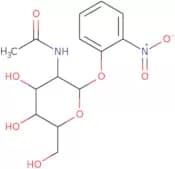
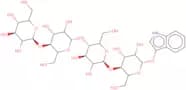
CAS:2-Nitrophenyl 2-acetamido-2-deoxy-a-D-galactopyranoside is a fluorogenic substrate that is used in enzyme assays. It can be used as a chromogenic substrate or conjugate with an enzyme to detect the presence of glucose.Purezza:Min. 95%Peso molecolare:342.3 g/mol3-Indolyl b-D-cellotetraoside
3-Indolyl b-D-cellotetraoside is a chemiluminescent substrate that is used as an indicator in the detection of aminoglycosides. The ligand is a cell wall component that has been shown to bind specifically to the active site of bacterial β-lactamases, which are enzymes that catalyze the hydrolysis of β-lactam antibiotics. 3-Indolyl b-D-cellotetraoside can be used for bacterial identification and enumeration, food testing, and enzyme substrate for diagnostics. It fluoresces in response to electron excitation with a wavelength of about 590 nm.Purezza:Min. 95%Peso molecolare:781.71 g/mol4-Methylumbelliferyl 4,6-O-benzylidene-b-D-galactopyranoside
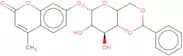
4-Methylumbelliferyl 4,6-O-benzylidene-b-D-galactopyranoside is a fluorogenic substrate that is used in the detection of galactosidases. It has been shown to be a potent inhibitor of these enzymes and can be used to study the activity of various galactosidases. This substrate is used in the measurement of carbohydrate metabolism, including glycolysis and glycogenolysis. 4-Methylumbelliferyl 4,6-O-benzylidene-b-D-galactopyranoside has been shown to produce chemiluminescence when reacted with horseradish peroxidase and hydrogen peroxide. It also produces bioluminescence when exposed to luciferase and adenosine triphosphate (ATP).Purezza:Min. 95%Peso molecolare:426.42 g/molAldol® 479 acetate, Biosynth Patent: EP 2427431 and US 8940909
CAS:Prodotto controllatoAldol acetate is a chromogenic substrate that is used in food testing and diagnostics. Aldol acetate can be used in the detection of aminopeptidase and dipeptidyl peptidase activities, as well as in the determination of urinary proteins. Aldol acetate can also be used to detect anaerobic bacteria. This compound is conjugated with various ligands for use in immunoassays, such as beta-galactosidase, beta-glucuronidase, alpha-naphthyl phosphate ester, and phenyl phosphate ester. This product has been shown to be useful for chemiluminescent assays of DNA polymerases and reverse transcriptases in environmental samples. It has also been shown to be useful for bioluminescent assays of DNA polymerases and reverse transcriptases in environmental samples.
Formula:C25H22N2O3Purezza:Min. 95.0 Area-%Peso molecolare:398.45 g/molRef: 3D-A-4729_P00
1gPrezzo su richiesta5gPrezzo su richiesta10gPrezzo su richiesta2500mgPrezzo su richiestaAldol® 491 acetate, Biosynth Patent: EP 2427431 and US 8940909
CAS:Aldol 491 acetate is a food and environmental testing chemical, which can be used for the detection of bacteria. Aldol 491 acetate provides a chromogenic substrate for the detection of enzymes and can be used as a substrate in enzyme-linked immunosorbent assay (ELISA) procedures. Aldol 491 acetate also has chemiluminescent properties and can be used as a fluorogenic substrate.Formula:C22H17NO4Purezza:Min. 95 Area-%Peso molecolare:359.37 g/molRef: 3D-A-4739_P00
1gPrezzo su richiesta5gPrezzo su richiesta10gPrezzo su richiesta2500mgPrezzo su richiesta-Unit-ggPrezzo su richiestaAldol® 518 β-D-cellobioside, Biosynth Patent: EP 2427431 and US 8940909
CAS:Aldol® 518 beta-D-cellobioside is a chromogenic substrate for the detection of glycosidases. Aldol® 518 beta-D-cellobioside reacts with enzymes such as alpha-amylase, beta-galactosidase, and alpha-glucosidase to produce a fluorescent product. This product is detected by spectrophotometer, fluorometer, or luminometer. The fluorescence intensity is proportional to the concentration of the enzyme in the sample. It has been shown that Aldol® 518 beta-D-cellobioside can be used as a substitute for conventional substrates in food testing and diagnostics, such as staining and culture media. It also has applications in environmental testing and enzyme substrate assays.Formula:C35H39ClN2O12Purezza:Min. 95 Area-%Peso molecolare:715.15 g/molRef: 3D-A-4751_P00
1gPrezzo su richiesta5gPrezzo su richiesta10gPrezzo su richiesta2500mgPrezzo su richiesta-Unit-ggPrezzo su richiestaN-(4,4-Difluoro-5,7-dimethyl-4-bora-3a,4a-diaza-s-indacene-3-dodecanoyl)sphingosyl 1-b-D-galactopyranoside
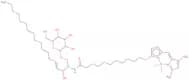
N-(4,4-Difluoro-5,7-dimethyl-4-bora-3a,4a-diaza-s-indacene-3-dodecanoyl)sphingosyl 1bDgalactopyranoside is a fluorescent reagent. It has been used to detect the presence of boron in biological samples and as a substrate for enzymes. This product is also used in the diagnosis of tuberculosis and other bacterial infections. N-(4,4-Difluoro-5,7-dimethyl-4bora3a,4adiazasindacene 3dodecanoyl)sphingosyl 1bDgalactopyranoside is not intended for use in humans or animals and should be handled with care. This product is not available for sale in the state of California.Purezza:Min. 95%Peso molecolare:861.95 g/mol(4-Nitrophenyl)methyl-b-D-glucopyranoside
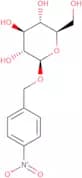
CAS:This product is a fluorogenic substrate that is used in the detection of enzymes in biological systems. It is also used as a ligand to study enzyme activity and can be used to quantify enzyme activity. This product is made from high-purity, high-quality reagents and is often used as an enzyme substrate in diagnostic kits for food testing, environmental testing, and detection of bacteria with the help of chemiluminescence. The CAS number for this product is 700368-52-1. This product can be used for fluorescence staining and bioluminescence.Purezza:Min. 95%Peso molecolare:315.28 g/mol6'-(O-(Carboxymethyl))-2',7'-dichlorofluoroscein 3'-(O-(N-acetyl-b-D-glucosamide))
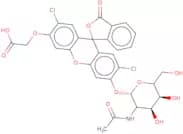
6'-(O-(Carboxymethyl))-2',7'-dichlorofluoroscein 3'-(O-(N-acetyl-b-D-glucosamide)) is a chemiluminescent substrate that can be used in the detection of ligands. This product has a CAS number of 44636-76-8 and is available at a purity level of 98%. It has been tested for bacterial contamination, as well as for adverse effects on culture media and environmental testing. 6'-(O-(Carboxymethyl))-2',7'-dichlorofluoroscein 3'-(O-(N-acetyl-b-D-glucosamide)) is an enzymatic substrate that can be used in diagnostic applications such as the detection of fluorescence, staining, and bioluminescence. It has also been shown to be useful in food testing.Purezza:Min. 95%Peso molecolare:662.44 g/mol2-Nitrophenyl 6-O-DMT-b-D-galactopyranoside
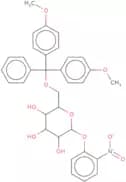
N-Acetyl-2-nitrophenyl 6-O-DMT-b-D-galactopyranoside is a fluorogenic substrate that is used in enzyme and chromogenic assays, including the determination of aminoglycoside activity. This product has been shown to be suitable for detection of bacterial contamination in food products and environmental samples. N-Acetyl-2-nitrophenyl 6-O-DMT-b-D-galactopyranoside reacts with aminoglycosides at the O4 position, forming a fluorescent product that can be measured using a fluorometer.Purezza:Min. 95%Peso molecolare:603.62 g/molOctyl 4-nitrophenyl hexyl phosphonate
CAS:Octyl 4-nitrophenyl hexyl phosphonate is a lipase suicide inhibitor that is a chromogenic substrate for lipases which upon enzymatic action, binds irreversibly to the lipase and inactivates it. The substrate can be used for the determination of active sites in lipases, especially in lipases preferring hydrophobic leaving groups.Purezza:Min. 95%Peso molecolare:399.464-Methylumbelliferyl N-acetyl-4,7,8,9-tetra-O-acetyl-a-D-neuraminic acid methyl ester
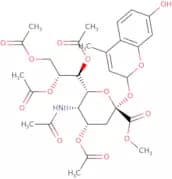
CAS:4-Methylumbelliferyl N-acetyl-4,7,8,9-tetra-O-acetyl-a-D-neuraminic acid methyl ester (4MU) is a chemiluminescence substrate. It is used in the detection of an enzyme involved in the synthesis of glycoproteins and glycolipids. The enzyme conjugates 4MU with a sugar molecule to form a fluorescent product. This product can be detected by its emission of light at 560 nm when illuminated with light at 450 nm.Purezza:Min. 95%Peso molecolare:649.6 g/mol[2-Methoxy-4-(2-nitrovinyl)phenyl] b-D-galactopyranoside
CAS:[2-Methoxy-4-(2-nitrovinyl)phenyl] b-D-galactopyranoside (MNVP-gal) is a chromogenic enzyme substrate that is commonly used to detect the activity of beta-galactosidase in biological samples. MNVP-gal produces a distinctive magenta color when hydrolyzed by beta-galactosidase, making it particularly useful for applications where visual detection is necessary. This substrate is also resistant to endogenous proteases, making it well-suited for use in cellular and tissue preparations.Purezza:Min. 95%Peso molecolare:357.31 g/mol3-Indolyl-b-D-cellobioside
CAS:3-Indolyl-b-D-cellobioside is a fluorogenic substrate for alkaline phosphatase. It can be used in food testing, environmental testing, and diagnostics. 3-Indolyl-b-D-cellobioside is a chromogenic substrate for beta-galactosidase. It can be used in staining and enzyme substrates. 3-Indolyl-b-D-cellobioside is also a ligand for alkaline phosphatase. It can be used in conjugates and chemiluminescence or bioluminescence reactions. 3-Indolyl -b -D -cellobioside is a high purity product with high quality standards that are suitable for use in culture media.br>br> 3 - Indolyl - b - D - cellobioside CAS No . 914912 - 14 - 4 Food testing StPurezza:Min. 95%Peso molecolare:457.43 g/molN-Methyl-3-indolyl a-D-arabinopyranoside
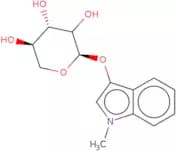
3-indolyl-N-methyl a-D-arabinopyranoside is a fluorogenic substrate for the detection of beta-galactosidase. It also has been used as a chromogenic substrate for the detection of beta-glucuronidase. This product can be conjugated to an enzyme and used in enzyme substrates for the detection of beta-galactosidase, beta-glucuronidase, and other enzymes. 3-indolyl-N-methyl a-D-arabinopyranoside is also commonly used in culture media to detect bacteria and yeast.Purezza:Min. 95%Peso molecolare:279.29 g/mol4-Nitrophenyl hepta-O-acetyl-1-thio-b-lactoside
CAS:4-Nitrophenyl hepta-O-acetyl-1-thio-b-lactoside is an inorganic molecule that binds to the surface of bacteria. It has been used as a fingerprinting tool for a variety of organisms, including corynebacterium glutamicum. The molecule can be used to measure the metabolic activity of corynebacterium glutamicum with a technique called incremental acidification. This technique is based on the observation that the concentration of 4-nitrophenol decreases by one unit for each glucose metabolized by corynebacterium glutamicum. The use of 4NPHTBL and other primers can also be useful in diagnosing patients with autoimmune diseases such as celiac disease and inflammatory bowel disease.Purezza:Min. 95%2-Nitrophenyl 6-O-trityl-b-D-galactopyranoside
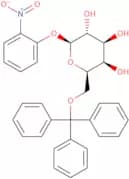
CAS:2-Nitrophenyl 6-O-trityl-b-D-galactopyranoside is a chromogenic enzyme substrate used in assays to detect galactosidase activity. It is a derivative of galactose that can be hydrolyzed by galactosidase to release the yellow-colored 2-nitrophenyl group, which can be detected spectrophotometrically. The trityl group helps to stabilize the molecule and prevent undesired hydrolysis during storage. This substrate is commonly used in the study of carbohydrate metabolism and in the detection of galactosidase activity in microorganisms.Purezza:Min. 95%Peso molecolare:543.56 g/mol4-Nitrophenyl (N-acetyl-a-neuraminosyl)-(2,3)-O-b-D-galactopyranosyl-(1,3)-2-acetamido-2-deoxy-b-D-galactopyranoside
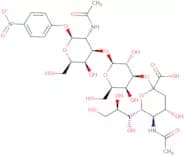
CAS:4-Nitrophenyl (N-acetyl-a-neuraminosyl)-(2,3)-O-b-D-galactopyranosyl-(1,3)-2-acetamido-2-deoxy-b-D-galactopyranoside is a fluorogenic substrate that is used in the detection of enzyme activity. It reacts with a specific enzyme to produce light. This product has been shown to be useful for detecting β -galactosidase, β -glucuronidase, α -mannosidase, and lactose permeases. The product is also used in the diagnosis of urinary tract infections and other diseases. This product is not intended for use in humans or animals.Purezza:Min. 95%Peso molecolare:795.7 g/molAquaSpark® H2S/-SH probe, TFA salt, Ramot at Tel-Aviv University Ltd. Patent family WO 2017/130191
AquaSpark® H2S/-SH is a chemiluminescent probe for the detection of sulfides and thiols. The chemiluminescence obtained through sulfide is 3-5 fold higher than chemiluminescence obtained through thiols. AquaSpark® H2S/-SH probe was used in a study identifying antibiotic-resistant bacterial strains by detecting the beta-lactamase-driven hydrolysis of beta-lactam antibiotics, where hydrogen sulfide is a biodegradation metabolite (Popat Gholap et al, 2021).Formula:C35H31ClF3NO9S2Purezza:Min. 95%Peso molecolare:766.2 g/mol





![[2-Methoxy-4-(2-nitrovinyl)phenyl] b-D-galactopyranoside](/_next/image/?url=https%3A%2Fstatic.cymitquimica.com%2Fproducts%2F3D%2Fthumb-webp%2FEM06779.webp&w=3840&q=75)