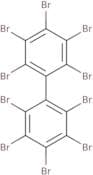
CAS 13654-09-6
:decabromo-1,1'-bifenil
Descrição:
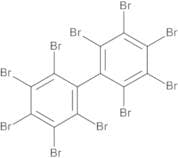
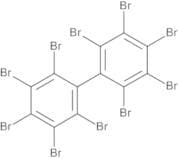
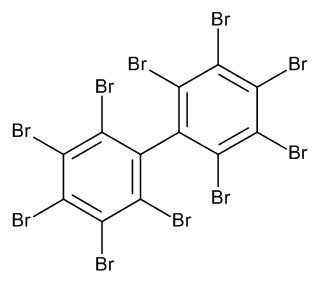
decabromo-1,1'-bifenil, com o número CAS 13654-09-6, é um retardante de chama bromado que pertence à classe de éteres de difenilo polibromados. É caracterizado pelo seu alto teor de bromo, que aumenta sua eficácia como retardante de chama ao inibir a combustão. Este composto é tipicamente um sólido branco a off-white à temperatura ambiente e é insolúvel em água, mas pode se dissolver em solventes orgânicos. Sua estabilidade térmica é significativa, permitindo que suporte altas temperaturas sem se decompor. decabromo-1,1'-bifenil é utilizado principalmente em várias aplicações, incluindo têxteis, plásticos e eletrônicos, para reduzir a inflamabilidade. No entanto, preocupações sobre sua persistência ambiental e potencial toxicidade levaram a um aumento do escrutínio e regulamentação. Sabe-se que se bioacumula em organismos vivos, levantando questões relacionadas ao seu impacto ecológico a longo prazo. Como resultado, alternativas ao decabromo-1,1'-bifenil estão sendo exploradas na indústria para mitigar esses riscos ambientais e à saúde.
Fórmula:C12Br10
InChI:InChI=1/C12Br10/c13-3-1(4(14)8(18)11(21)7(3)17)2-5(15)9(19)12(22)10(20)6(2)16
Chave InChI:InChIKey=AQPHBYQUCKHJLT-UHFFFAOYSA-N
SMILES:BrC1=C(C(Br)=C(Br)C(Br)=C1Br)C2=C(Br)C(Br)=C(Br)C(Br)=C2Br
Sinónimos:- 1,1'-Biphenyl, 2,2',3,3',4,4',5,5',6,6'-decabromo-
- 1,1′-Biphenyl, 2,2′,3,3′,4,4′,5,5′,6,6′-decabromo-
- 2,2',3,3',4,4',5,5',6,6'-Decabromobiphenyl
- 2,2′,3,3′,4,4′,5,5′,6,6′-Decabromo-1,1′-biphenyl
- 2,2′,3,3′,4,4′,5,5′,6,6′-Decabromobiphenyl
- Adine 0102
- Bb 209
- Berkflam B 10
- Biphenyl, decabromo-
- Decabromobiphenyl
- Decabromodiphenyl
- Flammex B 10
- Hsdb 7349
- Pbb 209
- Perbromobiphenyl
- Polybrominated biphenyls
- Rbf 102
- Decabromo-1,1'-biphenyl
- Decabromobiphenyl,35 μL/mL in Isooctane
- flammexb10
- adine0102
- DECA-BB
- DECABROMOBIPHENYLS
- decabromo-bipheny
- DECABROMOBIPHENYL (35 UG/ML IN ISOOCTANE)
- PBB NO 209
- Nicotinic Acid Impurity 58
- DECABB (PBB-209)
- 2,2’,3,3’,4,4’,5,5’,6,6’-decabromo-1’-biphenyl
- 11'-Biphenyl22'33'44'55'66'-decabromo-
- Perbromo-1,1'-biphenyl
- PBB-No. 209 25
- PBB No. 209 10 μg/mL in Cyclohexane
- 1,1’-biphenyl,2,2’,3,3’,,4’,5,5’,6,6’-decabromo-(decabromobiphenyl)
- 1’-Biphenyl,2,2’,3,3’,4,4’,5,5’,6,6’-decabromo-1
- Decarbromobiphenyl
- 237-137-2
- 2,2 ', 3,3', 4,4 ', 5,5', 6,6 '- Decabromobiphenyl (BB-209)
- 1,1’-(biphenyl,2,2’,3,3’,,4’,5,5’,6,6’-decabromo-
- PBB-No. 209 50 μg/mL in Isooctane
- Ver mais sinónimos
Ordenar por
Pureza (%)
0
100
|
0
|
50
|
90
|
95
|
100
6 produtos.
PBB Mix 5 10 µg/mL in Cyclohexane
CAS:Produto Controlado- 115245-07-3
- 115245-08-4
- 13029-09-9
- 13654-09-6
- 16400-50-3
- 2052-07-5
- 2113-57-7
- 53592-10-2
- 57422-77-2
- 59080-32-9
- 59080-33-0
- 59080-34-1
- 59080-35-2
- 59080-36-3
- 59080-37-4
- 59080-39-6
- 59080-40-9
- 59261-08-4
- 60044-24-8
- 60044-25-9
- 67888-96-4
- 92-66-0
- 92-86-4
Fórmula:C12H4Br6Cor e Forma:MixturePeso molecular:627.58PBB No. 209 10 µg/mL in Cyclohexane
CAS:Produto ControladoFórmula:C12Br10Cor e Forma:Single SolutionPeso molecular:943.17PBB-No. 209 50 µg/mL in Isooctane
CAS:Produto ControladoFórmula:C12Br10Cor e Forma:Single SolutionPeso molecular:943.17Decabromobiphenyl
CAS:Produto ControladoApplications Decabromobiphenyl is a flame retardant and a standard for environmental testing and research.
Not a dangerous good if item is equal to or less than 1g/ml and there is less than 100g/ml in the package
References EPA. Method 1668, (EPA 821-R-00-002) (1999); Zeng, L., et al.: Environ. Sci. Technol. 48, 12586 (2014)Fórmula:C12Br10Cor e Forma:ColourlessPeso molecular:943.17Decabromobiphenyl
CAS:Produto ControladoDecabromobiphenyl is a brominated flame retardant that has been detected in human serum, fish, and sediments. It is used as an analytical method for the determination of polybrominated diphenyl ethers (PBDEs) in environmental samples. Decabromobiphenyl binds to the receptor site for thyroid hormone, which may cause significant cytotoxicity and is associated with a number of health effects. Decabromobiphenyl can be eliminated from the body by treatment with metal hydroxides or fatty acids, although this process may not be complete. Decabromobiphenyl can also bind to cationic polymers such as polystyrene sulfonate and polyethyleneimine, which make it difficult to remove from contaminated water.Fórmula:C12Br10Pureza:Min. 95%Peso molecular:943.17 g/mol