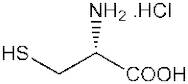
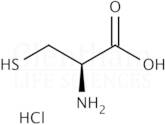
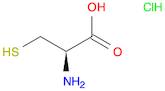
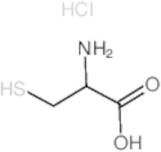
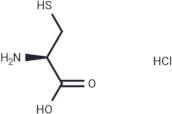
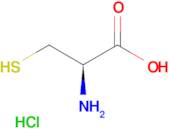
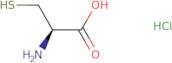
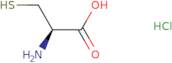
CAS 52-89-1
:L-(+)-Cloridrato de cisteína
- (2R)-2-Amino-3-sulfanylpropanoic acid hydrochloride
- (R)-1-Carboxy-2-mercaptoethanaminium chloride
- (R)-Cysteine hydrochloride
- <span class="text-smallcaps">L</span>-(+)-Cysteine hydrochloride
- <span class="text-smallcaps">L</span>-Cysteine, hydrochloride (1:1)
- Cisteina, Clorhidrato
- Cske 200
- Cystein chloride
- Cysteine Chlorhydrate
- Cysteine Hydrochloride
- Cysteine chlorohydrate
- Cysteine, Hydrochloride, L-
- Cysteine, hydrochloride, <span class="text-smallcaps">L</span>-
- Cysteinhydrochlorid
- L-Cystein.Hcl
- L-Cysteine Hydrochloride Anhydrous
- L-Cysteine, hydrochloride (1:1)
- Wr 348
- L-Cysteine, hydrochloride
- Di-isopropyl nahpthalene
- L-cysteine hcl cell culture tested
- L-Cysteine HCl anhydrate
- L-Cysteine hydrochloride
- L-Cysteine HCl
- cysteine, chloride (1:1)
- H-Cys-OH.HCl
- L-Cysteine Hcl Anhydrous
- 2-(2-Methoxy Ethoxy) Acetaldehyde Dimethyl Actal
- (R)2-AMINO-3-THIOPROPANOIC ACID HYDROCHLORIDE
- CYS, HCL
- CYSTEINE HCL, L-
- 3-Mercaptoalanine hydrochloride
- L-CYSTEINE MONOHYDROCHLORIDE
- CYSTEINE HCL
- 2-AMINO-3-MERCAPTOPROPIONIC ACID
- (r)-cysteinehydrochloride
- EK 2367
- Ver mais sinónimos
- Preços em ordem crescente
- Preços em ordem decrescente
- Menor grau de pureza
- Maior grau de pureza
- Estimativa de entrega mais rápida
L-Cysteine hydrochloride, anhydrous, 98%
CAS:L-cysteine hydrochloride, anhydrous, 52-89-1, is the salt form of the non-essential amino acid L-cysteine and is often used as a media supplement for cell culture. Learn more.Fórmula:C3H8ClNO2SPureza:98%Cor e Forma:White, Crystals or powder or crystalline powderPeso molecular:157.61L-Cysteine hydrochloride
CAS:L-Cysteine hydrochlorideFórmula:C3H8ClNO2SPureza:≥98%Peso molecular:157.62L-Cysteine hydrochloride
CAS:L-Cysteine hydrochlorideFórmula:C3H7NO2S·ClHCor e Forma:SolidPeso molecular:157.61912L-Cysteine hydrochloride, anhydrous
CAS:Fórmula:C3H7NO2S·HClPureza:98.0 - 102.0 %Cor e Forma:White crystalline powder or crystalsPeso molecular:157.62L-Cysteine hydrochloride, anhydrous, 99%
CAS:Fórmula:C3H7NO2S·HClPureza:(Titration) 99.0 - 101.0 % (dried basis)Cor e Forma:White crystalline powder or colourless crystalsPeso molecular:157.62L-Cysteine Hydrochloride
CAS:Applications L-Cysteine Hydrochloride
Fórmula:C3H7NO2S·HClCor e Forma:NeatPeso molecular:157.62L-Cysteine hydrochloride
CAS:L-Cysteine hydrochloride (L-Cysteine HCl) is a conditionally essential amino acid. L-Cysteine suppresses ghrelin and reduces appetite in rodents and humansFórmula:C3H8ClNO2SPureza:99.77% - 99.89%Cor e Forma:SolidPeso molecular:157.62L-Cysteine hydrochloride anhydrous
CAS:Fórmula:C3H8ClNO2SPureza:95%Cor e Forma:SolidPeso molecular:157.61H-Cys-OH·HCl
CAS:(R)-2-Amino-3-mercaptopropanoic acid hydrochlorideFórmula:C3H8ClNO2SPureza:95%Peso molecular:157.62L-Cysteine hydrochloride anhydrous
CAS:L-Cysteine hydrochloride anhydrous is an amino acid that is used in the treatment of bowel disease. It is also a precursor for glutathione, which has antioxidant properties and helps maintain iron homeostasis. L-Cysteine hydrochloride anhydrous has been shown to inhibit the oxidation of proteins by reacting with reactive oxygen species (ROS) such as nitric oxide, superoxide, and hydrogen peroxide. This amino acid also interacts with toll-like receptor 4 (TLR4), which may account for its natural anti-inflammatory properties. L-Cysteine hydrochloride anhydrous can be synthesized from cysteine and glutamic acid using a CDNA clone encoding the enzyme cystathionine β-synthase. The synthesis of this amino acid requires a number of biochemical reactions including hydrogen bonding interactions with inhibitor molecules such as dihydrofolate reductase, metalloproteases, and thiored
Fórmula:C3H7NO2S·HClCor e Forma:White Off-White PowderPeso molecular:157.62 g/molL-Cysteine hydrochloride anhydrous
CAS:Please enquire for more information about L-Cysteine hydrochloride anhydrous including the price, delivery time and more detailed product information at the technical inquiry form on this page
Fórmula:C3H7NO2S·HClPeso molecular:157.62 g/mol