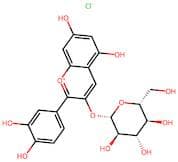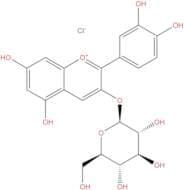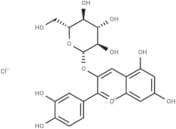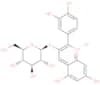
CAS 7084-24-4
:Cianidina 3-glicosídeo
Descrição:
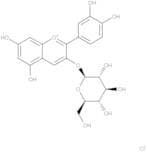
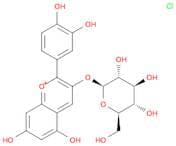
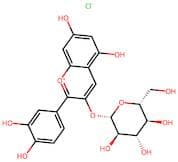
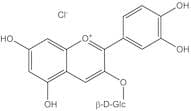
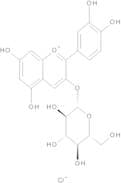
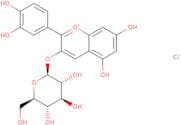
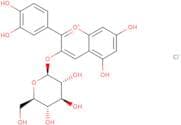
Cianidina 3-glicosídeo é uma antocianina que ocorre naturalmente, um tipo de pigmento flavonoide responsável pelas cores vermelha, roxa e azul em muitas frutas e vegetais. É comumente encontrada em frutas vermelhas, repolho roxo e outras fontes vegetais. A fórmula química de Cianidina 3-glicosídeo é C21H21O11, e seu peso molecular é de aproximadamente 449,39 g/mol. Este composto é conhecido por suas propriedades antioxidantes, que podem ajudar a combater o estresse oxidativo em sistemas biológicos. Cianidina 3-glicosídeo apresenta solubilidade em água e é estável em condições ácidas, tornando-se um composto valioso em aplicações de alimentos e bebidas para coloração natural. Além disso, tem sido estudado por seus potenciais benefícios à saúde, incluindo efeitos anti-inflamatórios e anticancerígenos. Seu número CAS, 7084-24-4, é um identificador único que ajuda na classificação e regulação de substâncias químicas. No geral, Cianidina 3-glicosídeo é significativo não apenas por suas contribuições estéticas aos alimentos, mas também por suas propriedades potencialmente promotoras da saúde.
Fórmula:C21H21ClO11
InChI:InChI=1/C21H20O11/c22-7-16-17(27)18(28)19(29)21(32-16)31-15-6-10-12(25)4-9(23)5-14(10)30-20(15)8-1-2-11(24)13(26)3-8/h1-6,16-19,21-22,27-29H,7H2,(H3-,23,24,25,26)/p+1/t16-,17-,18+,19-,21-/m1/s1
Chave InChI:InChIKey=YTMNONATNXDQJF-UBNZBFALSA-N
SMILES:O(C=1C(=[O+]C2=C(C1)C(O)=CC(O)=C2)C3=CC(O)=C(O)C=C3)[C@@H]4O[C@H](CO)[C@@H](O)[C@H](O)[C@H]4O.[Cl-]
Sinónimos:- 1-Benzopyrylium, 2-(3,4-dihydroxyphenyl)-3-(β-<span class="text-smallcaps">D</span>-glucopyranosyloxy)-5,7-dihydroxy-, chloride
- 1-Benzopyrylium, 2-(3,4-dihydroxyphenyl)-3-(β-<span class="text-smallcaps">D</span>-glucopyranosyloxy)-5,7-dihydroxy-, chloride (1:1)
- 1-Benzopyrylium, 2-(3,4-dihydroxyphenyl)-3-(β-D-glucopyranosyloxy)-5,7-dihydroxy-, chloride
- 1-Benzopyrylium, 2-(3,4-dihydroxyphenyl)-3-(β-D-glucopyranosyloxy)-5,7-dihydroxy-, chloride (1:1)
- 2-(3,4-Dihydroxyphenyl)-3-(β-D-glucopyranosyloxy)-5,7-dihydroxy-1-benzopyryliumchlorid
- 2-(3,4-dihydroxyphenyl)-3-(β-D-glucopyranosyloxy)-5,7-dihydroxy-1-benzopyrylium chloride
- 3,3',4',5,7-Pentahydroxyflavylium chloride, 3-glucoside
- 3,3′,4′,5,7-Pentahydroxyflavylium chloride, 3-glucoside
- 3-(β-<span class="text-smallcaps">D</span>-Glucopyranosyloxy)-3′,4′,5,7-tetrahydroxyflavylium chloride
- 3-(β-D-Glucopyranosyloxy)-3',4',5,7-tetrahydroxyflavylium chloride
- 3-O-(β-<span class="text-smallcaps">D</span>-Glucopyranosyl)cyanidin
- 3-O-(β-D-Glucopyranosyl)cyanidin
- Asterin
- Chrysanthemin
- Chrysanthenin
- Chrysontemin
- Cyanidin 3-O-glucoside chloride
- Cyanidin 3-O-β-<span class="text-smallcaps">D</span>-glucopyranoside
- Cyanidin 3-O-β-D-glucopyranoside
- Cyanidin 3-O-β-glucopyranoside
- Cyanidin 3-glucoside chloride
- Cyanidin 3-monoglucoside
- Cyanidin 3-β-<span class="text-smallcaps">D</span>-glucopyranoside
- Cyanidin 3-β-D-glucopyranoside
- Cyanidin 3-β-O-glucoside
- Cyanidin 3-β-glucopyranoside
- Cyanidin 3-β-glucoside
- Cyanidin-3-Glucoside
- Cyanidol 3-glucoside
- Glucocyanidin
- Kuromanin
- Kuromanin Chloride
- Kuromanine
- chlorure de 2-(3,4-dihydroxyphenyl)-3-(β-D-glucopyrannosyloxy)-5,7-dihydroxy-1-benzopyrylium
- cloruro de 2-(3,4-dihidroxifenil)-3-(β-D-glucopiranosiloxi)-5,7-dihidroxi-1-benzopirilio
- CYANIDIN-3-O-BETA-GLUCOPYRANOSIDE
- Cyanidin-3-O-glucoside chloride, froM GlycineMax (L.) Merr.
- cyanidol3-glucoside
- Cyanidin 3-O-β-glucopyranoside chloride
- CYANIDIN3-O-BETA-D-GLUCOSIDE
- CYANIDIN-3-O-GLUCOSIDE CHLORIDE(KUROMANIN CHLORIDE)(RG)
- 2-(3,4-Dihydroxyphenyl)-3-(.beta.-D-glucopyranosyloxy)-5,7-dihydroxy-1-benzopyryliumchloride
- Cyanidin-3-O-
- glucoside chloride
- 1-benzopyrylium,5,7-dihydroxy-2-(3,4-dihydroxyphenyl)-3-(beta-d-glucopyranosyl
- C-3-G
- KUROMANIN CHLORIDE WITH HPLC
- ASTERIN hplc
- Asterin, Chrysanthemin, Cyanidin 3-O-glucoside chloride
- C3G
- KUROMANINE CHLORIDE
- cyanidin3-monoglucoside
- Cyanidin-3-O-glucoside Chloride (15 mg)
- CYANIDIN3-O-BETA-D-GLUCOPYRANOSIDE
- CYANIDIN-3-O-GLUCOSIDE CHLORIDE(KUROMANIN CHLORIDE)(SH)
- CYANIDIN-3-O-GLUCOSIDE CHLORIDE, KuroManin chloride
- cyanidin3-o-glucoside
- cyanidin3-beta-glucoside
- cyanidine3-glucoside
- cyanidin-3-O-glu
- Ver mais sinónimos
Ordenar por
Pureza (%)
0
100
|
0
|
50
|
90
|
95
|
100
13 produtos.
Kuromanin chloride
CAS:Kuromanin chloride analytical standard provided with w/w absolute assay, to be used for quantitative titration.Fórmula:C21H21O11ClPureza:(HPLC) ≥96%Cor e Forma:PowderPeso molecular:484.82Cyanidin-3-O-glucoside Chloride
CAS:Other glycosides, natural or reproduced by synthesis, and their salts, ethers, esters and other derivativesFórmula:C21H21O11ClCor e Forma:Dark Violet PowderPeso molecular:484.077241-Benzopyrylium, 2-(3,4-dihydroxyphenyl)-3-(β-D-glucopyranosyloxy)-5,7-dihydroxy-, chloride (1:1)
CAS:Fórmula:C21H21ClO11Pureza:95%Cor e Forma:SolidPeso molecular:484.83782-(3,4-Dihydroxyphenyl)-3-(β-D-glucopyranosyloxy)-5,7-dihydroxy-1-benzopyrylium chloride
CAS:2-(3,4-Dihydroxyphenyl)-3-(β-D-glucopyranosyloxy)-5,7-dihydroxy-1-benzopyrylium chlorideFórmula:C21H21O11·ClPureza:98%Cor e Forma: dark brown powderPeso molecular:484.84g/molCyanidin-3-O-glucoside
CAS:Fórmula:C21H21ClO11Pureza:≥ 95.0%Cor e Forma:Red to dark red or red-brown powderPeso molecular:484.84Cyanidin-3-glucoside chloride
CAS:Cyanidin-3- O -glucoside, is one of the main component of mulberry anthocyanins,has protective effects from blackberry extract against peroxynitrite-induced endothelial dysfunction and vascular failure.Fórmula:C21H21ClO11Pureza:95%~99%Cor e Forma:Yellow powderPeso molecular:484.838Kuromanin chloride
CAS:Kuromanin chloride (Chrysontemin chloride) is potent antioxidants and free radical scavengers, may act as modulators of gene regulation and signal transductionFórmula:C21H21ClO11Pureza:97.27% - 99.84%Cor e Forma:SolidPeso molecular:484.84Ref: TM-T3406
1mg34,00€2mg48,00€5mg78,00€1mL*10mM (DMSO)84,00€10mg104,00€25mg195,00€50mg290,00€100mg434,00€Cyanidin 3-O-Glucoside Chloride (Kuromanin Chloride)
CAS:Fórmula:C21H21O11·ClPeso molecular:449.39 35.45Cyanidin 3-glucoside chloride
CAS:Natural glycosideFórmula:C21H21O11ClPureza:≥ 98.0 % (HPLC)Cor e Forma:PowderPeso molecular:484.84Cyanidol 3-Glucoside
CAS:Stability Hygroscopic
Applications Cyanidol 3-Glucoside is a anthocyanin that is naturally occurring in various fruits, vegetable and plants. Cyanidol 3-Glucoside is known to exhibit high antioxidant capacity and neuroprotective effects by triggering mobilization of cellular free sialic acid and utilizing it as an additional biological antioxidant in brain neural cells.
References Damar, I., et al.: Food. Chem., 135, 2910 (2012); Kim, S.M., et al.: Life. Sci., 90, 874 (2012); Asada, T., et al.: J. Agri. Chem., 60, 10634 (2012);Fórmula:C21H21O11·ClCor e Forma:NeatPeso molecular:484.84Cyanidin-3-O-glucoside chloride
CAS:Cyanidin-3-O-glucoside chloride, also called C3G, Asterin, Chrysanthemin and Kuromanin chloride, is a naturally occurring anthocyanin. C3G is the 3-glucoside of cyanidin, a pigment commonly found in red berries. Cyanidin-3-O-glucoside chloride is found in some plants and fruits and is the major anthocyanin in purple corn. C3G has been investigated for anti-inflammatory properties in inflamed human intestinal epithelial cells and in cancer chemoprevention.Fórmula:C21H21O11•xClPureza:Min. 95%Cor e Forma:Red PowderPeso molecular:484.852-(3,4-Dihydroxyphenyl)-3-(β-D-glucopyranosyloxy)-5,7-dihydroxy-1-benzopyrylium chloride
CAS:Anthocyanins are a group of pigments responsible for blue, red or purple colors of flowers, leafs and fruits such as blueberries, raspberries and grapes. The color of anthocyanins depends largely on their structure (for example on the position and type of sugars attached), as well as on external factors like pH. Recently, a new blue wine product was invented, which was made adopting anthocyanins and some indole-type compounds in the wine making process. Interestingly, anthocyanins are generally thought to have the function in protecting the plant from excessive sun exposure, and are also considered to be healthy for human consumption.Fórmula:C21H21ClO11Pureza:Min. 95.0 Area-%Peso molecular:484.84 g/mol