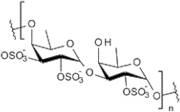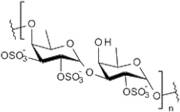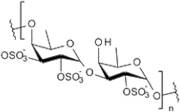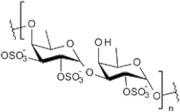
CAS 9072-19-9
:Fucoidano
- Dh 0201
- Fuco'min
- Fucoidin
- Fucoidine
- Limuveil HV
- Nemacystus mucilage
- Sea Alga-F
- Fucoidan
- Fucoidan
- Fucoidan, Fraction 7, Fucus vesiculosus
- FUCOIDAN FROM FUCUS VESICULOSUS, 9-10% S ULFUR
- FF7
- Sulfated algal polysaccharide
- fucoidan from fucus vesiculosus
- FUCOIDAN, FRACTION 7
- Ver mais sinónimos
- Preços em ordem crescente
- Preços em ordem decrescente
- Menor grau de pureza
- Maior grau de pureza
- Estimativa de entrega mais rápida
Fucoidan (Technical Grade)
CAS:Produto ControladoApplications Fucoidan is a polysaccharide composed predominantly of sulfated fucose.
Fórmula:C5H3N5O2Cor e Forma:NeatFucoidan
CAS:Fucoidan is found in various species of brown seaweed and algae,with anticancer, antiviral, neuroprotective, immune-modulating.Fórmula:C8H16O7SPureza:≥98%Cor e Forma:White SolidPeso molecular:256.273Fucoidan, macrocystis pyrifera
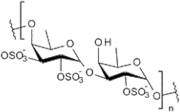
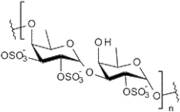
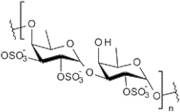
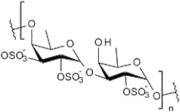
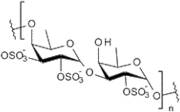
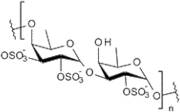
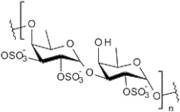
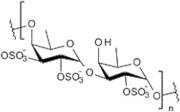
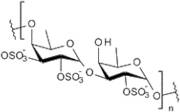
CAS:A fucan sulphate found in brown marine algae (Phaeophyta-typically Fucus vesiculotus, Ascophyllum nodosum, Alaria and Macrocystis pyrifyra (illustrated) and has been shown to have anticoagulant activity. The main constituents are α-1,4 and α-1,2 linked L-fucose sulphates, although galactose also occurs and there are many variations of the basic structure found in different species of Phaeophyta.
The fucose content of this fucan is approx. 31% and it also contains galactose (approx. 2.2%), uronic acid (approx. 12.4%) and sulfate (approx. 32.5%).
The image was kindly provided by Prof Mike Guiry from Cork who runs ‘The Seaweed Site’.Pureza:Min. 95%Cor e Forma:White PowderFucoidan, fucus vesiculosus
CAS:A fucan sulphate found in brown marine algae (Phaeophyta-typically fucus vesiculosus (illustrated), Ascophyllum nodosum, Alaria and Macrocystis pyrifyra and has been shown to have anticoagulant activity. The main constituents are α-1,4 and α-1,2 linked L-fucose sulphates although galactose also occurs and there are many variations of the basic structure found in different species of Phaeophyta. The image was kindly provided by Prof Mike Guiry from Cork who runs ‘The Seaweed Site’.Pureza:Min. 95%Cor e Forma:White PowderFucoidan - Laminaria japonica
CAS:A fucan sulphate found in brown marine algae (Phaeophyta-typically Fucus serratus, Ascophyllum nodosum, Laminaria japonica (illustrated) and Macrocystis pyrifyra) and has been shown to have anticoagulant activity. The main constituents are α-1,4 and α-1,2 linked L-fucose sulphates although galactose also occurs and there are many variations of the basic structure found in different species of Phaeophyta. The image was kindly provided by Prof Mike Guiry from Cork who runs ‘The Seaweed Site’.Pureza:Min. 95%Cor e Forma:Off-White Slightly Brown PowderFucoidan, durvillea
CAS:A fucan sulphate found in brown marine algae (Phaeophyta-typically Fucus vesiculotus, Durvillea (illustrated), Alaria and Cladosiphon) and has been shown to have anticoagulant activity. The main constituents are α-1,4 and α-1,2 linked L-fucose sulphates although galactose also occurs and there are many variations of the basic structure found in different species of Phaeophyta. The image was kindly provided by Prof Mike Guiry from Cork who runs ‘The Seaweed Site’.Pureza:Min. 95%Cor e Forma:White PowderFucoidan - Ascophyllum nodosum, analytical grade
CAS:A fucan sulphate found in brown marine algae (Phaeophyta-typically Fucus vesiculotus, Ascophyllum nodosum (illustrated), Alaria and Cladosiphon) and has been shown to have anticoagulant activity. The main constituents are α-1,4 and α-1,2 linked L-fucose sulphates although galactose also occurs and there are many variations of the basic structure found in different species of Phaeophyta.Molecular weight cut off at 300kDa.The image was kindly provided by Prof Mike Guiry from Cork who runs ‘The Seaweed Site’.Cor e Forma:PowderFucoidan, cladosiphon
CAS:A fucan sulphate found in brown marine algae (Phaeophyta-typically Fucus vesiculotus, Ascophyllum nodosum, Alaria and Cladosiphon (illustrated) and has been shown to have anticoagulant activity. The main constituents are α-1,4 and α-1,2 linked L-fucose sulphates although galactose also occurs and there are many variations of the basic structure found in different species of Phaeophyta. The image was kindly provided by Prof Mike Guiry from Cork who runs ‘The Seaweed Site’.Pureza:(Fucoidan) Reported (%)Cor e Forma:White PowderFucoidan - Sargassum
CAS:A fucan sulphate found in brown marine algae (Phaeophyta-typically Fucus vesiculotus, Sargassum (illustrated), Alaria and Cladosiphon) and has been shown to have anticoagulant activity. The main constituents are α-1,4 and α-1,2 linked L-fucose sulphates although galactose and L-fucose are also present, our product contains approximately 20% L-fucose, and there are many variations of the basic structure found in different species of Phaeophyta. The image was kindly provided by Prof Mike Guiry from Cork who runs ‘The Seaweed Site’.Pureza:Min. 95%Cor e Forma:PowderFucoidan, ecklonia
CAS:A fucan sulphate found in brown marine algae (Phaeophyta-typically Fucus vesiculotus, Ecklonia (illustrated), Alaria and Cladosiphon) and has been shown to have anticoagulant activity. The main constituents are α-1,4 and α-1,2 linked L-fucose sulphates although galactose also occurs and there are many variations of the basic structure found in different species of Phaeophyta. The image was kindly provided by Prof Mike Guiry from Cork who runs ‘The Seaweed Site’.Pureza:Min. 95%Cor e Forma:White PowderFucoidan, laminaria digitata
CAS:A fucan sulphate found in brown marine algae (Phaeophyta-typically Fucus serratus, Ascophyllum nodosum, Laminaria digitata (illustrated) and Macrocystis pyrifyra) and has been shown to have anticoagulant activity. The main constituents are α-1,4 and α-1,2 linked L-fucose sulphates although galactose also occurs and there are many variations of the basic structure found in different species of Phaeophyta.
The image was kindly provided by Prof Mike Guiry from Cork who runs ‘The Seaweed Site’.Cor e Forma:PowderFucoidan, fucus serratus
CAS:A fucan sulphate found in brown marine algae (Phaeophyta-typically Fucus serratus, Ascophyllum nodosum (illustrated), Laminaria japonica and Macrocystis pyrifyra) and has been shown to have anticoagulant activity. The main constituents are α-1,4 and α-1,2 linked L-fucose sulphates although galactose also occurs and there are many variations of the basic structure found in different species of Phaeophyta.
The image was kindly provided by Prof Mike Guiry from Cork who runs ‘The Seaweed Site’.Pureza:Min. 95%Cor e Forma:White PowderFucoidan - Ascophyllum nodosum
CAS:Please enquire for more information about Fucoidan - Ascophyllum nodosum including the price, delivery time and more detailed product information at the technical inquiry form on this pageCor e Forma:PowderFucoidan - Alaria
CAS:A fucan sulphate found in brown marine algae (Phaeophyta-typically Fucus serratus, Ascophyllum nodosum, Alaria (illustrated) and Macrocystis pyrifyra and has been shown to have anticoagulant activity. The main constituents are α-1,4 and α-1,2 linked L-fucose sulphates although galactose also occurs and there are many variations of the basic structure found in different species of Phaeophyta. The image was kindly provided by Prof Mike Guiry from Cork who runs ‘The Seaweed Site’.Pureza:Min. 95%Cor e Forma:PowderFucoidan, Lessonia nigrescens
CAS:A fucan sulphate found in brown marine algae (Phaeophyta-typically Fucus vesiculotus, Ascophyllum nodosum, Alaria and Lessonia nigrescens (illustrated) and has been shown to have anticoagulant activity. The main constituents are α-1,4 and α-1,2 linked L-fucose sulphates although galactose also occurs and there are many variations of the basic structure found in different species of Phaeophyta. The image was kindly provided by Prof Mike Guiry from Cork who runs ‘The Seaweed Site’.Pureza:Min. 95%Cor e Forma:White Powder