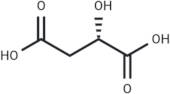
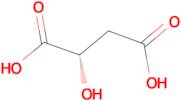
CAS 97-67-6
:Ácido L-málico
Descrição:
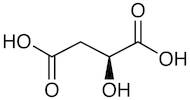
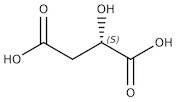
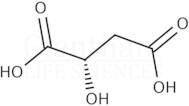
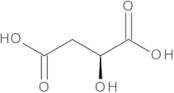
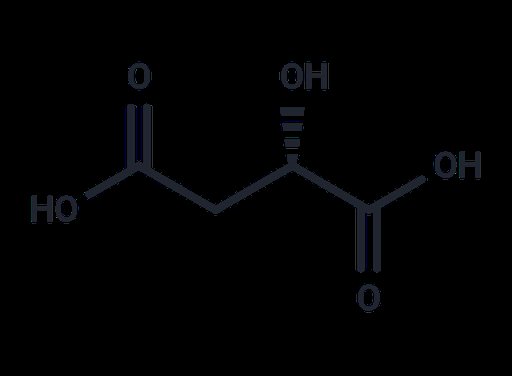
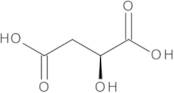
Ácido L-málico, com o número CAS 97-67-6, é um composto orgânico que ocorre naturalmente e é classificado como um ácido dicarboxílico. É um sólido cristalino incolor e sem odor que é solúvel em água e tem um sabor ligeiramente azedo, comumente encontrado em várias frutas, particularmente maçãs. Ácido L-málico desempenha um papel crucial no ciclo de Krebs, uma via metabólica chave para a produção de energia em organismos vivos. Sua fórmula molecular é C4H6O5, e apresenta dois grupos funcionais carboxila (-COOH), que contribuem para sua acidez e reatividade. Ácido L-málico é utilizado na indústria alimentícia como um agente aromatizante e acidulante, melhorando o sabor de bebidas e doces. Além disso, tem aplicações nas indústrias cosmética e farmacêutica devido à sua capacidade de atuar como regulador de pH e agente quelante. O composto é geralmente reconhecido como seguro (GRAS) quando utilizado em produtos alimentícios, e sua natureza biodegradável o torna uma opção ambientalmente amigável em várias aplicações.
Fórmula:C4H6O5
InChI:InChI=1S/C4H6O5/c5-2(4(8)9)1-3(6)7/h2,5H,1H2,(H,6,7)(H,8,9)/t2-/m0/s1
Chave InChI:InChIKey=BJEPYKJPYRNKOW-REOHCLBHSA-N
SMILES:[C@H](CC(O)=O)(C(O)=O)O
Sinónimos:- (-)-(S)-Malic acid
- (-)-<span class="text-smallcaps">L</span>-Malic acid
- (-)-Hydroxysuccinic acid
- (-)-L-Malic acid
- (-)-Malic acid
- (2S)-2-Hydroxybutanedioic acid
- (2S)-2-Hydroxysuccinic acid
- (2S)-Malic acid
- (S)-2-Hydroxysuccinic acid
- <span class="text-smallcaps">L</span>-Apple acid
- Acide L-malique
- Apple acid
- Butanedioic acid, 2-hydroxy-, (2S)-
- Butanedioic acid, hydroxy-, (S)-
- L-Apfelsaure
- Malic Acid, L-
- Malic acid, <span class="text-smallcaps">L</span>-
- Nsc 9232
- S-2-Hydroxybutanedioic acid
- acido L-malico
- L-Hydroxysuccinic acid
- (S)-(-)-Hydroxysuccinic acid
- L-Maleic Acid
- (2S)-2-hydroxybutanedioate
- Butanedioic acid, hydroxy-, (2S)-
- (S)-HYDROXYBUTANEDIOIC ACID
- HYDROXYBUTANEDIOIC ACID
- L-(-)-APPLE ACID
- 1-HYDROXYSUCCINIC ACID
- L-HYDROXYBUTANEDIOIC ACID
- 2-HYDROXYSYCCINIC ACID
- (S)-2-HYDROXYBUTANEDICARBOXYLIC ACID
- L(-)-MALATE
- NATURAL APPLE ACID
- Ver mais sinónimos
Filtrar por
Percentagem de pureza
0
100
|
0
|
50
|
90
|
95
|
100
- Preços em ordem crescente
- Preços em ordem decrescente
- Menor grau de pureza
- Maior grau de pureza
- Estimativa de entrega mais rápida
L-(-)-Malic Acid
CAS:Fórmula:C4H6O5Pureza:>98.0%(T)Cor e Forma:White to Almost white powder to crystalPeso molecular:134.09L-(-)-Malic acid, 99%
CAS:L-(-)-Malic acid is used as a food additive, Selective -amino protecting reagent for amino acid derivatives. Versatile synthon for the preparation of chiral compounds including -opioid receptor agonists, 1,25-dihydroxyvitamin D3 analogue, and phoslactomycin B. This Thermo Scientific Chemicals brandFórmula:C4H6O5Pureza:99%Cor e Forma:White, Powder or crystals or crystalline powderPeso molecular:134.09L-(-)-Malic acid, 97%
CAS:L-(-)-Malic acid is used as Selective -amino protecting reagent for amino acid derivatives. Versatile synthon for the preparation of chiral compounds including -opioid rece. It also acts as active ingredient in many sour or tart foods. It is used as synthesizing disincrustant and fluorescent whiteniFórmula:C4H6O5Pureza:97%Cor e Forma:White, Crystals or powder or crystalline powderPeso molecular:134.09L-Malic acid, ≥99%
CAS:Thermo Scientific L-Malic acidFórmula:C4H6O5Pureza:99%Cor e Forma:White crystalline powderPeso molecular:134.09L-(-)-Malic acid
CAS:Fórmula:C4H6O5Pureza:(Titration) ≥ 99.0%Cor e Forma:White to almost white powder or crystalsPeso molecular:134.09(S)-(-)-Malic-2,3,3-d3 Acid93% enantiomeric purity)
CAS:Fórmula:HOOCCD2CD(OH)COOHPureza:98 atom % DCor e Forma:White SolidPeso molecular:137.04035(S)-Malic acid (Standard)
CAS:(S)-Malic acid (Standard) is a reference standard for the natural fruit acid, used in quantitative analysis and quality control.Fórmula:C4H6O5Peso molecular:134.09L-(-)-Malic Acid
CAS:Applications The naturally occuring isomer is the L-form which has been found in apples and many other fruits and plants. Selective α-amino protecting reagent for amino acid derivatives. Versatile synthon for the preparation of chiral compounds including κ-opioid receptor agonists, 1α,25-dihydroxyvitamin D3 analogue, and phoslactomycin B.
References Rindi, G., et al.: Biochem. J., 80, 214 (1961), Wolfgang, M., et al.: J. Biol. Chem., 281, 37265 (2006), Navarro, D., et al.: Metab. Brain Dis., 23, 115 (2008),Fórmula:C4H6O5Cor e Forma:NeatPeso molecular:134.09L-(-)-Malic acid
CAS:L-(-)-Malic acidFórmula:C4H6O5Pureza:98%Cor e Forma:White SolidPeso molecular:134.08743(S)-Malic acid
CAS:(S)-Malic acid ((S)-2-Hydroxysuccinic acid) is a naturally occurring dicarboxylic acid that is the source of the sweet and sour flavour of fruits.Fórmula:C4H6O5Pureza:99.72% - 99.98%Cor e Forma:White SolidPeso molecular:134.09