Substratos Fluorescentes
Foram encontrados 369 produtos de "Substratos Fluorescentes"
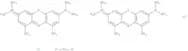
1,9-Dimethyl-methylene blue zinc chloride
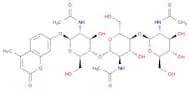
CAS:1,9-Dimethyl-methylene blue zinc chloride double salt is a fluorescent dye that has been used in the study of hyaluronic acid and mesenchymal stem cells. The compound absorbs light at a wavelength of 580 nm, which is the same as the absorption wavelength for hyaluronic acid and mesenchymal stem cells. 1,9-Dimethyl-methylene blue zinc chloride double salt can be used to measure the amount of these compounds in tissues. This dye also shows sensitivity to artifacts such as hemolysis and lipemia, making it useful for research purposes.Fórmula:(C18H22ClN3S)2•ZnCl2Pureza:Min. 95%Cor e Forma:PowderPeso molecular:832.11 g/mol4-METHYLUMBELLIFERYL-N,N',N''-TRIACETYL-β-CHITOTRIOSIDE
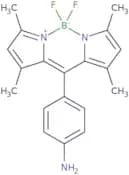
CAS:Fórmula:C34H47N3O18Cor e Forma:SolidPeso molecular:785.74638-(4-Anilino) bodipy
CAS:Fluorescent probe
Fórmula:C19H20BF2N3Pureza:Min. 90 Area-%Cor e Forma:PowderPeso molecular:339.19 g/molRef: 3D-FA17933
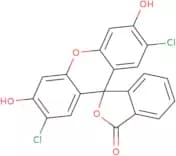
Produto descontinuado2,7-Dichlorofluorescein
CAS:Fluorophore used in biological assays and for labeling cells and tissues
Fórmula:C20H10Cl2O5Pureza:Min. 95%Cor e Forma:PowderPeso molecular:401.2 g/molRef: 3D-FD52655
Produto descontinuadoAf488-alkyne
CAS:Please enquire for more information about Af488-alkyne including the price, delivery time and more detailed product information at the technical inquiry form on this page
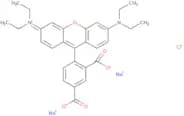
Fórmula:C24H17N3O10S2Pureza:Min. 95%Peso molecular:571.5 g/molRhodamine WT, 20% aqueous solution
CAS:Rhodamine is a fluorescent compound that, in a 20% aqueous solution, serves as an effective fluorescent probe for detecting nitrite ions (NO2). When exposed to ultraviolet light, it undergoes a remarkable color change in response to nitrite presence. Beyond nitrite detection, rhodamine also interacts with various chemical substances, including organic solvents commonly found in wastewater treatment systems, which shows its potential, especially in environmental monitoring and analytical chemistry applications. This 20% solution is 20% w/w. Our sales mass in g is the final mass of the solution.
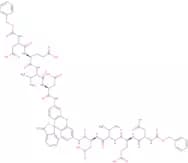
Fórmula:C29H29N2O5·Cl·2NaPureza:Min. 95%Cor e Forma:Clear LiquidPeso molecular:567 g/mol(Z-Asp-Glu-Val-Asp)2-Rhodamine 110
CAS:Fluorogenic dye targeting caspase 3
Fórmula:C72H78N10O27Pureza:Min. 95%Peso molecular:1,515.44 g/molRef: 3D-FA110985
Produto descontinuadoBP Fluor 488 hydrazide
CAS:Green fluorescent dye used for labelling aldehydes or ketones in polysaccharides or glycoproteins with an excitation peak at 499 nm and an emission peak at 520 nm. Frequently employed in microscopy and flow cytometry.
Fórmula:C21H16N4O10S2Peso molecular:548.51 g/molRef: 3D-FB184557
Produto descontinuado