Substratos Fluorescentes
Foram encontrados 369 produtos de "Substratos Fluorescentes"
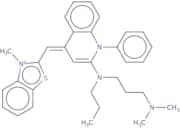
Nucleic Acid Dye Green I - solution in DMSO (6.11 mg/ml)
CAS:Nucleic Acid Dye Green I is a DNA-staining dye that has found application in various high resolution assays for the detection of microbial or viral contaminant DNA.Fórmula:C32H37N4SPureza:Min. 95%Cor e Forma:Clear LiquidPeso molecular:509.73 g/mol5-Carboxy-X-rhodamine, succinimidyl ester
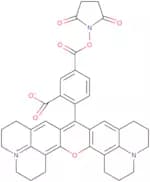
CAS:Single isomer of 5(6)-ROX. It is a fluorescent dye used in RT-PCR methods as an internal reference to determine fluorescence variation that is not associated with the amplification process (plastic of the wells, small differences in concentration or volume, instrument measurements). It produces a constant fluorescence emission signal during the PCR process that is used to normalise the emission produced by the reporter. The fluorescence signal is compatible with that of most reporters. It is used to label the 5â end of oligonucleotides as a reporter in the presence of a quencher at the 3â end (dual labelled probe). During amplification, the dye is cleaved, and the fluorescence increases proportionally with the amount of the specific sequence amplified during the PCR process. The development of the fluorescence signal is therefore specifically related to the amplification of the target sequence. 6-ROX with NHS-activated carboxylic acids reacts with primary amines.Fórmula:C37H33N3O7Pureza:Min. 95%Cor e Forma:Red To Violet To Black SolidPeso molecular:631.67 g/mol6-Carboxytetramethyl rhodamine
CAS:6-Carboxytetramethyl rhodamine is a fluorescent dye that is used to measure the presence of cancer cells in urine samples. It binds to human protein and has been shown to be a useful probe for fluorescence measurements. 6-Carboxytetramethyl rhodamine has also been used as a fluorescence probe for the detection of proliferative diabetic retinopathy and michaelis–menten kinetics in cyclic peptides.
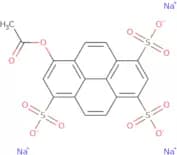
Fórmula:C25H22N2O5Pureza:Min. 95%Cor e Forma:PowderPeso molecular:430.45 g/mol8-Acetoxypyrene-1,3,6-trisulfonic acid trisodium salt
CAS:Fluorogenic substrate for esterase; cell-permeableFórmula:C18H9Na3O11S3Pureza:Min. 98.0 Area-%Cor e Forma:PowderPeso molecular:566.42 g/mol6-NBDG
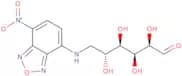
CAS:Nonhydrolyzable fluorescent glucose analog used to monitor glucose uptakeFórmula:C12H14N4O8Pureza:Min. 95%Cor e Forma:PowderPeso molecular:342.26 g/mol5-Carboxyfluorescein
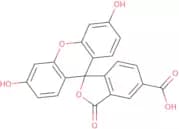
CAS:5-Carboxyfluorescein (5-FAM) is a self-quenching dye and one of the most common labelling agents for biomolecules, cell staining and localisation studies. The fluorescence is pH dependent, therefore it has been used to measure the internal pH of cells. As it is only membrane permeable to dead cells, it can be used as a staining agent to distinguish viable and non-viable cells. It is also used in PCR to label the 5â end of oligonucleotides in the presence of a quencher at the 3â end (dual labelled probe). During the amplification process, the dye is cleaved and the fluorescence increases proportionally with the amount of the specific sequence amplified during the PCR process. The development of the fluorescence signal is therefore specifically related to the amplification of the target sequence. The carboxylic acid can be activated to react with a primary amine.Fórmula:C21H12O7Pureza:Min. 98 Area-%Cor e Forma:Yellow PowderPeso molecular:376.32 g/mol2',7'-Dichlorodihydrofluorescein diacetate
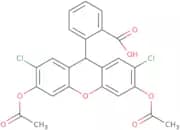
CAS:Cell permeable reagent for use in detection of peroxidase activityFórmula:C24H16Cl2O7Pureza:Min. 97 Area-%Cor e Forma:PowderPeso molecular:487.29 g/mol3-Bodipy-propanoic acid
CAS:Reactive fluorescent labeling reagentFórmula:C14H15BF2N2O2Cor e Forma:Red PowderPeso molecular:292.09 g/molResorufin
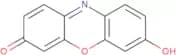
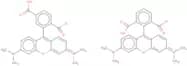
CAS:The substructure resorufin is a fluorescent dye that changes color from orange to bright pink; excitation/emission maxima = 563/587 nm.Fórmula:C12H7NO3Pureza:Min. 95 Area-%Cor e Forma:Purple PowderPeso molecular:213.19 g/mol6-Carboxy-X-rhodamine
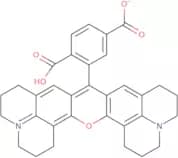
CAS:Single isomer of 5(6)-ROX. It is a fluorescent dye used in RT-PCR methods as an internal reference to determine fluorescence variation that is not associated with the amplification process (plastic of the wells, small differences in concentration or volume, instrument measurements). It produces a constant fluorescence emission signal during the PCR process that is used to normalise the emission produced by the reporter. The fluorescence signal is compatible with most reporters. It is used to label the 5â end of oligonucleotides as a reporter in the presence of a quencher at the 3â end (dual labelled probe). During the amplification, the dye is cleaved, and the fluorescence increases proportionally with the amount of the specific sequence amplified during the PCR process. The development of the fluorescence signal is therefore specifically related to the amplification of the target sequence. 6-ROX with NHS-activated carboxylic acids reacts with primary amines.
Fórmula:C33H30N2O5Pureza:Min. 95%Cor e Forma:Red PowderPeso molecular:534.6 g/molICG-alkyne
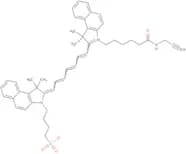
CAS:The non-invasive near-infrared fluorescence imaging dye ICG is used in ophthalmologic angiography to determine cardiac output and liver blood flow and function. The ICG alkyne can be used to label azido functionalised biomolecules eg glycans, lipids and peptides via click chemistry protocols.Fórmula:C48H53N3O4SPureza:Min. 95%Cor e Forma:PowderPeso molecular:768 g/molIndocyanine green
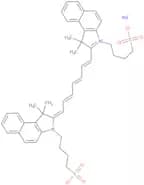
CAS:Indocyanine green is a fluorescent dye with a variety of applications in medical imaging. It has been used to diagnose and evaluate the activity of cancer cells and brain functions. Indocyanine green has also been used as an angiographic agent for diagnosis of solid tumours. In addition, it can be used to evaluate liver function and the blood flow in the brain. The biological properties of indocyanine green have not yet been fully elucidated, but it is known that it binds to hepatocyte-like cells in culture and is found at high levels in human serum. This dye shows fluorescence when bound to DNA or RNA, which indicates its possible use as a molecular probe for detecting carcinoma cells.
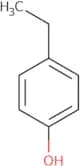
Indocyanine green is a STT3B inhibitor and has been shown to prevent α-amanitin toxicity in mice (Wang et al, 2023). This means it could be a possible antidote to poisoning by Amanita, such as death cap mushroom Amanita phalloides, which is the cause of over 90% of fatal mushroom poisoning.Fórmula:C43H47N2O6S2·NaPureza:(%) Min. 95%Cor e Forma:Green PowderPeso molecular:774.96 g/mol4-Ethylphenol
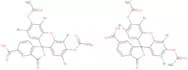
CAS:Produces a fluorogenic signal in the presence of peroxidaseFórmula:C8H10OPureza:Min. 95%Cor e Forma:PowderPeso molecular:122.16 g/mol5(6)-Carboxyeosin diacetate
CAS:Brominated analog of carboxyfluorescein; singlet oxygen generatorFórmula:C25H12Br4O9Pureza:Min. 95%Cor e Forma:PowderPeso molecular:775.97 g/mol5-(6)-Carboxytetramethylrhodamine
CAS:5-(6)-Carboxytetramethylrhodamine (TAMRA) is a fluorescent dye that is used as a probe for DNA-based analysis. It binds to the 5' end of dsDNA, forming an intrastrand duplex. The fluorescence of TAMRA increases when it binds to dsDNA and can be used as a measure of the amount of DNA in a sample. TAMRA has been shown to be useful in the diagnosis of bowel disease and in the investigation of gene expression during body formation. This dye is also used as a marker for covalent linkages and high molecular weight proteins such as cyclin D2.Fórmula:C25H22N2O5Pureza:Min. 95 Area-%Cor e Forma:Red PowderPeso molecular:430.45 g/mol9,10-Bis[2-(4-methoxyphenyl)ethynyl]anthracene
CAS:9,10-Bis[2-(4-methoxyphenyl)ethynyl]anthracene is a reagent for chemiluminescence research.Fórmula:C32H22O2Pureza:Min. 98.0 Area-%Peso molecular:438.52 g/molBenzo[k]fluoranthene
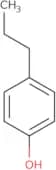
CAS:Produto ControladoBenzo[k]fluoranthene is a polycyclic aromatic hydrocarbon that is used as an optical sensor for transcriptional regulation. It has been shown to activate the transcription factor NF-κB, which induces expression of inflammatory genes in cells. Benzo[k]fluoranthene can be used to measure changes in gene expression and protein levels. The antibody response to benzo[k]fluoranthene was studied using a kinetic data analysis method. Benzo[k]fluoranthene has also been shown to induce genotoxic effects in liver cells and human hepatoma cell line HepG2. This compound also causes light emission when it is excited with light, which can be measured with synchronous fluorescence.Fórmula:C20H12Pureza:Min. 95%Cor e Forma:SolidPeso molecular:252.31 g/mol3-(4-Hydroxyphenyl)-1-propanol
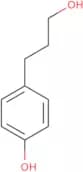
CAS:Produces a fluorogenic signal in the presence of peroxidase
Fórmula:C9H12O2Pureza:Min. 95%Peso molecular:152.19 g/molResazurin
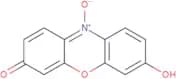
CAS:Weakly fluorescent blue dye; indicator of mitochondrial activity. The reduction of resazurin has been ascribed to a putative reductase or diaphorase-type enzymes from the mitochondria and cytosol but also it might play a role as an intermediate electron acceptor in the electron transport chain between the final reduction of oxygen and cytochrome oxidase.Fórmula:C12H7NO4Pureza:Min. 95%Peso molecular:229.19 g/mol



![9,10-Bis[2-(4-methoxyphenyl)ethynyl]anthracene](/_next/image/?url=https%3A%2Fstatic.cymitquimica.com%2Fproducts%2F3D%2Fthumb-webp%2FJ-650272.webp&w=3840&q=75)
![Benzo[k]fluoranthene](/_next/image/?url=https%3A%2Fstatic.cymitquimica.com%2Fproducts%2F3D%2Fthumb-webp%2FFB157375.webp&w=3840&q=75)