Enzima
Subcategorias de "Enzima"
- Anidrase carbónica(197 produtos)
- Hidroxilase(36 produtos)
- MPO(2 produtos)
- Redutase(51 produtos)
- Tirosinase(71 produtos)
Foram encontrados 3623 produtos de "Enzima"
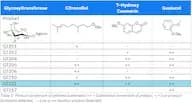
Glucosyltransferase 211-freeze dried
CAS:Glucosyltransferase (GTase) is the enzyme that transfers glucose to another organic molecule (aglycon), establishing glycosidic linkage. UDP-glucose dependent GTases are part of the enzyme family of glucosyltransferases, they are versatile tools in glucosylation reactions. Different GTases have different substrate specificities. For the specificity of GT211 Glucosyltransferase, please see Table 1 that lists the available GTases with GT211 highlighted.Color: beigeForm: lyophilisateProtein content 0.7 mg/mgThe glucosyltransferase was tested in a glucosylation reaction of a preferred substrate. High conversion after up to 24 h reaction time was observed.
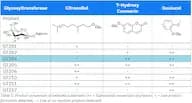
Not sure which GTase to choose? Consider our Glucosyltransferase kit, which contains all 8 Glucosyltransferases.Glucosyltransferase 204-freeze dried
CAS:Glucosyltransferase (GTase) is the enzyme that transfers glucose to another organic molecule (aglycon), establishing glycosidic linkage. UDP-glucose dependent GTases are part of the enzyme family of glucosyltransferases, they are versatile tools in glucosylation reactions. Different GTases have different substrate specificities. For the specificity of GT204 Glucosyltransferase, please see Table 1 that lists the available GTases with GT204 highlighted.Color: beigeForm: lyophilisateProtein content: 0.5 mg/mgThe glucosyltransferase was tested in a glucosylation reaction of a preferred substrate. High conversion after up to 24 h reaction time was observed. Not sure which GTase to choose? Consider our Glucosyltransferase kit, which contains all 8 Glucosyltransferases.Glucosyltransferase 203-freeze dried
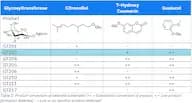
CAS:Glucosyltransferase (GTase) is the enzyme that transfers glucose to another organic molecule (aglycon), establishing glycosidic linkage. UDP-glucose dependent GTases are part of the enzyme family of glucosyltransferases, they are versatile tools in glucosylation reactions. Different GTases have different substrate specificities. For the specificity of GT203 Glucosyltransferase, please see Table 1 that lists the available GTases with GT203 highlighted.Color: beigeForm: lyophilisateProtein content: 0.5 mg/mgThe glucosyltransferase was tested in a glucosylation reaction of a preferred substrate. High conversion after up to 24 h reaction time was observed.
Not sure which GTase to choose? Consider our Glucosyltransferase kit, which contains all 8 Glucosyltransferases.EUCODIS® Nitrilhydratase 22, recombinant enzyme - ENH022
Nitrile hydratase 22 recombinantly expressed in E. coli comes in a freeze-dried formulation. Nitrile hydratases can be utilized to convert nitriles into their corresponding amides, e.g. to produce acrylamide from acrylonitrile. Additional applications include the removal of nitriles from industrial wastewater. Our nitrile hydratases have been tested for hydrolysis of the following substrates:cyclohexanecarbonitrile, cinnamonitrile, benzonitrile, methacrylonitrile, pivalonitrile.
Pureza:Min. 95%Glutamic pyruvic transaminase
CAS:Glutamic pyruvic transaminase (also Alanine transaminase, alanine aminotransferase; E.C. 2.6.1.2) is an enzyme that catalyzes the following reaction: L-alanine + α-ketoglutarate ⇌ pyruvate + L-glutamate One unit of Glutamic pyruvic transaminase will catalyze the conversion of 1.0 µmole per minute of L-alanine and α-ketoglutarate to L-glutamate and pyruvate, at 37°C and pH 7.4.Cor e Forma:PowderPeso molecular:272.25 g/molSucrose phosphorylase, recombinant, expressed in E. coli, ≥45 units/mg
CAS:Sucrose phosphorylase (sucrose glucosyltransferase, disaccharide glucosyltransferase, systemic name Sucrose:orthophosphate α-D-glucosytransferase; EC 2.4.1.7) is an enzyme that catalyzes the following reaction: sucrose + Pi ⇌ D-fructose + α-D-glucose-1-phosphate One unit of Sucrose phosphorylase will produce 1.0 μmole of D-fructose per minute in the presence of sucrose and phosphate at pH 7.6 and 25 °C.EUCODIS® Nitrilhydratase 14, recombinant enzyme - ENH014
Nitrile hydratase 14 recombinantly expressed in E. coli comes in a freeze-dried formulation. Nitrile hydratases can be utilized to convert nitriles into their corresponding amidese, e.g. to produce acrylamide from acrylonitrile. Additional applications include the removal of nitriles from industrial wastewater. Our nitrile hydratases have been tested for hydrolysis of the following substrates:cyclohexanecarbonitrile, cinnamonitrile, benzonitrile, methacrylonitrile, pivalonitrile.EUCODIS® Nitrilhydratase 20, recombinant enzyme - ENH020
Nitrile hydratase 20 recombinantly expressed in E. coli comes in a freeze-dried formulation. Nitrile hydratases can be utilized to convert nitriles into their corresponding amides, e.g. to produce acrylamide from acrylonitrile. Additional applications include the removal of nitriles from industrial wastewater. Our nitrile hydratases have been tested for hydrolysis of the following substrates:cyclohexanecarbonitrile, cinnamonitrile, benzonitrile, methacrylonitrile, pivalonitrile.
Pureza:Min. 95%EUCODIS® Nitrilhydratase 19, recombinant enzyme - ENH019
Nitrile hydratase 19 recombinantly expressed in E. coli comes in a freeze-dried formulation. Nitrile hydratases can be utilized to convert nitriles into their corresponding amides, e.g. to produce acrylamide from acrylonitrile. Additional applications include the removal of nitriles from industrial wastewater. Our nitrile hydratases have been tested for hydrolysis of the following substrates:cyclohexanecarbonitrile, cinnamonitrile, benzonitrile, methacrylonitrile, pivalonitrile.
Glutaminase from escherichia coli
CAS:Glutaminase (glutaminase I, L-glutaminase, glutamine aminohydrolase; EC 3.5.1.2) is an enzyme that catalyzes the following reaction: L-glutamine + H2O → L-glutamate + NH4+ One unit of glutaminase will convert 1.0 μmole of L-glutamine into L-glutamate per min at pH 4.9 and 37 °C.Pureza:Min. 95%EUCODIS® Nitrilhydratase 17, recombinant enzyme - ENH017
Nitrile hydratase 17 recombinantly expressed in E. coli comes in a freeze-dried formulation. Nitrile hydratases can be utilized to convert nitriles into their corresponding amides, e.g. to produce acrylamide from acrylonitrile. Additional applications include the removal of nitriles from industrial wastewater. Our nitrile hydratases have been tested for hydrolysis of the following substrates:cyclohexanecarbonitrile, cinnamonitrile, benzonitrile, methacrylonitrile, pivalonitrile.
Carboxypeptidase A from bovine pancreas
CAS:Carboxypeptidase A (EC 3.4.17.1) is an exopeptidase enzyme. It hydrolyzes peptide bonds of C-terminal residues with aliphatic or aromatic side-chains. One unit of Carboxypeptidase A will hydrolyze 1.0 μmole of hippuryl-L-phenylalanine per min at pH 7.5 and 25 °C.ODC1 Protein, Human, Recombinant (His)
Ornithine decarboxylase (ODC1) is an enzyme which belongs to the Orn/Lys/Arg decarboxylase class-II family.Cor e Forma:Lyophilized PowderPeso molecular:25 &58 KDa (reducing condition)Ref: TM-TMPJ-00839
5µg90,00€10µg130,00€20µg193,00€50µg381,00€100µg600,00€200µg947,00€500µg1.765,00€1mg2.535,00€Beta Lactamase Kit, 6 enzymes of 200 mg, recombinant - EBL_Kit01
Beta lactamase kit consisting of six different beta-lactamases with individual substrate specificity profiles against a broad range of beta-lactam antibiotics including penicilins, cephalosporins as well as carbapenems. The kit is especially designed for screening and finding the most well suited beta-lactamase for your specific process. Each vial contains at least 1000 IU beta I activity. Our beta-lactamases have been optimized for sterility testing and environmental monitoring in the manufacture and dosage formulation of beta-lactam antibiotics and for specific diagnostic purposes.Kit components:Pureza:Min. 95%L-Glutamic dehydrogenase (nadp) from proteus sp.
CAS:L-Glutamic dehydrogenase (NADP+ dependent, from proteus sp., EC 1.4.1.4) is an enzyme that catalyzes the following reaction: L-glutamate + H2O + NADP+ ⇌ 2-oxoglutarate + NH3 + NADPH + H+ One unit of L-Glutamic dehydrogenase will generate 1.0 μmole of 2-oxoglutarate from L-glutamate per min at pH 8.3, 30 °C and the presence of NADPH and ammonium. NADP+ is available here and NADPH is available here, depending on whether you require the reaction to proceed from left to right or from righ to left, respectively.
Pureza:Min. 95%Peso molecular:300 g/molPoly(ADP-ribose) glycohydrolase
CAS:Poly(ADP-ribose) glycohydrolase is an enzyme, which is derived from various organisms, including eukaryotic cells. It plays a crucial role in the regulation of poly(ADP-ribose) (PAR) metabolism. This enzyme functions by hydrolyzing the glycosidic bonds in poly(ADP-ribose) chains, thereby regulating the cellular levels of PAR by converting it back to ADP-ribose units.
EUCODIS® Nitrilhydratase 05, recombinant enzyme - ENH005
Nitrile hydratase 05 recombinantly expressed in E. coli comes in a freeze-dried formulation. Nitrile hydratases can be utilized to convert nitriles into their corresponding amides, e.g. to produce acrylamide from acrylonitrile. Additional applications include the removal of nitriles from industrial wastewater. Our nitrile hydratases have been tested for hydrolysis of the following substrates:cyclohexanecarbonitrile, cinnamonitrile, benzonitrile, methacrylonitrile, pivalonitrile.Urease from Canavalia ensiformis
CAS:Urease from Canavalia ensiformis (Jack bean urease, EC 3.5.1.5) is an enzyme that catalyses the following reaction: (NH2)2CO + H2O → CO2 + 2 NH3 One unit of urease will yield 1.0 µmole of NH3 from urea per min at pH 7.0 and 25 °C.
Peso molecular:480 g/molHeparinase I from flavobacterium heparinum
CAS:Heparinase I (heparin lyase I, heparin eliminase; EC 4.2.2.7) in an enzyme that specifically cleaves oligosaccharides to remove heparan sulfate residues. One unit will form 1.0 μmole of unsaturated uronic acid per minute at pH 7.5 and 25 °C.
Pureza:Min. 95%D-Ribulose 1,5-diphosphate carboxylase from spinach
CAS:D-Ribulose 1,5-diphosphate carboxylase, commonly known as RuBisCO, is an essential enzyme that catalyzes the first major step of carbon fixation, a process by which inorganic carbon from the atmosphere is converted into organic molecules. This enzyme is derived from spinach, a common model organism used in plant biology research due to its accessibility and well-characterized photosynthetic pathways.
Pureza:Min. 95%