PPAR
Os receptores ativados por proliferadores de peroxissomas (PPARs) são um grupo de proteínas receptoras nucleares que funcionam como fatores de transcrição, regulando a expressão de genes envolvidos no metabolismo, particularmente no armazenamento de ácidos graxos e no metabolismo da glicose. Inibidores de PPAR são ferramentas importantes para o estudo de distúrbios metabólicos como diabetes, obesidade e doenças cardiovasculares. Esses inibidores podem modular o metabolismo lipídico, a sensibilidade à insulina e a inflamação, tornando-os valiosos na pesquisa terapêutica. Na CymitQuimica, oferecemos uma gama de inibidores de PPAR para apoiar sua pesquisa em doenças metabólicas, endocrinologia e desenvolvimento de medicamentos.
Foram encontrados 164 produtos de "PPAR"
Ordenar por
Pureza (%)
0
100
|
0
|
50
|
90
|
95
|
100
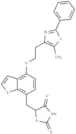
Edaglitazone
CAS:<p>Edaglitazone (R-483) is a PPARγ agonist with antiplatelet activity that can be used in studies of diabetes and obesity.</p>Fórmula:C24H20N2O4S2Pureza:98%Cor e Forma:SolidPeso molecular:464.56LCB-2853
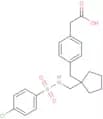
CAS:<p>LCB-2853 is a potent thromboxane A2/prostaglandin H2 (TXA2/PGH2) receptor antagonist with antiplatelet aggregation, antivasospasm, and antithrombotic effects.</p>Fórmula:C21H24ClNO4SPureza:97.15%Cor e Forma:SolidPeso molecular:421.94Imiglitazar
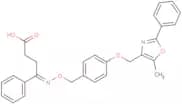
CAS:<p>Imiglitazar (TAK559) is a potent PPAR-β/δ receptor agonist with hypoglycemic effects.</p>Fórmula:C28H26N2O5Pureza:97.33%Cor e Forma:SolidPeso molecular:470.52PPAR agonist 1
CAS:<p>PPAR agonist 1 is an agonist of PPAR α/γ, used for reducing blood glucose, lipid levels, reducing body weight, and lowering cholesterol.</p>Fórmula:C20H25NO6SPureza:98%Cor e Forma:SolidPeso molecular:407.48U-46619
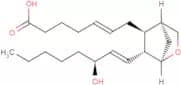
CAS:U-46619 is an effective thromboxane A2 (TXA2) agonist and a thromboxane A2 analog (endoperoxide), capable of inducing contraction in the aortic smooth muscle (Fórmula:C21H34O4Pureza:98%Cor e Forma:SolidPeso molecular:350.49KD-3010
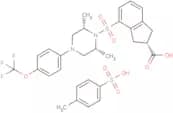
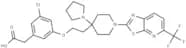
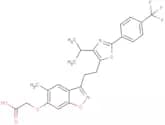
CAS:<p>KD-3010 (Kalypsys) is an orally active potent and selective PPARδ agonist for the study of liver injury.</p>Fórmula:C30H33F3N2O8S2Pureza:99.61%Cor e Forma:SolidPeso molecular:670.72CRX000227
CAS:<p>CRX000227 is a PPAR modulator suitable for researching metabolic and cell proliferative disorders [1].</p>Fórmula:C25H24N4O2SPureza:98%Cor e Forma:SolidPeso molecular:444.55PPARγ agonist 8
CAS:<p>PPARγ agonist 8, a compound that acts on the peroxisome proliferator-activated receptor gamma (PPARγ), has been shown to stimulate peroxisome proliferator</p>Fórmula:C19H12F4O2SPureza:98%Cor e Forma:SolidPeso molecular:380.36Darglitazone
CAS:<p>Darglitazone (CP-86325) is a potent, selective agonist of PPAR-γ with antidiabetic actions.</p>Fórmula:C23H20N2O4SPureza:99.76%Cor e Forma:SolidPeso molecular:420.48PPARδ agonist 9
CAS:<p>PPARδ agonist 9 (compound 21), with an EC50 of 3.6 nM, is effective in vivo, decreasing serum MCP-1 concentrations in mice and markedly reducing atherosclerotic</p>Fórmula:C26H28ClF3N4O3SPureza:98%Cor e Forma:SolidPeso molecular:569.04Ragaglitazar
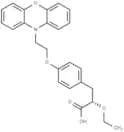
CAS:<p>Ragaglitazar(NNC-61-0029) is a potent dual activator of PPARγ and PPARα.Cost-effective and quality-assured.</p>Fórmula:C25H25NO5Pureza:97.46% - 98.56%Cor e Forma:SolidPeso molecular:419.47Inolitazone
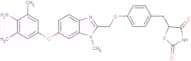
CAS:<p>Inolitazone (RS5444) a high-affinity PPARγ agonist. Inolitazone exhibits IC50 for growth inhibition is ~0.8 nM in vitro.</p>Fórmula:C27H26N4O4SPureza:99.41% - 99.53%Cor e Forma:SolidPeso molecular:502.58Fonadelpar
CAS:<p>Fonadelpar is an agonist of PPARδ. It also is used in the research of neuroparalytic keratopathy.</p>Fórmula:C25H23F3N2O4SPureza:98%Cor e Forma:SolidPeso molecular:504.52Anti-NASH agent 2
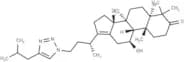
CAS:<p>Anti-NASH agent 2 (compound 21) is an inhibitor of neolipogenesis activity and α-SMA gene expression. It improves hepatic steatosis, edema, inflammatory infiltration, and liver fibrosis in NASH mouse models.</p>Fórmula:C32H51N3O2Cor e Forma:SolidPeso molecular:509.766PPARγ agonist 17
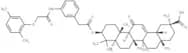
CAS:<p>PPARγ agonist17 (Compound C1) is an orally active PPARγ agonist. It enhances PPARγ activity, arrests the cell cycle of HT-29 cells at the G2/M phase, inhibits cell migration, and induces apoptosis. PPARγ agonist17 exhibits broad-spectrum antiproliferative activity against cancer cells with relatively low toxicity to normal cells and does not cross the blood-brain barrier.</p>Fórmula:C48H63NO7Cor e Forma:SolidPeso molecular:766.016PPARγ modulator-2
CAS:<p>PPARγmodulator-2 (Compound (R)-2n) is a reversible modulator of PPARγ, inhibiting the PPARγ ligand-binding domain (LBD) with an IC50 of 41 nM. It helps lower blood glucose levels, improves glucose tolerance and insulin sensitivity, and demonstrates antidiabetic activity in db/db mouse models.</p>Fórmula:C26H21NO7S3SeCor e Forma:SolidPeso molecular:634.6Amezalpat
CAS:<p>Amezalpat is a PPARα antagonist with an IC50 of 58 nM [nanomolar]. Amezalpat also exhibits antitumor activity.</p>Fórmula:C34H41N3O4Cor e Forma:SolidPeso molecular:555.707PPARγ-IN-5
CAS:<p>PPARγ-IN-5 (Compound A3) is an inhibitor of PPARγ. In liver cells, it reduces lipid accumulation and shows no significant cytotoxicity in HepG2 cells at a concentration of 400 µM. PPARγ-IN-5 is applicable for research on non-alcoholic fatty liver disease.</p>Fórmula:C22H23ClO7Cor e Forma:SolidPeso molecular:434.867PPARα/δ agonist 3
CAS:<p>PPARα/δ agonist 3 (Compound 8) is an orally active PPAR agonist capable of activating PPARα, PPARδ, and PPARγ, with EC50 values of 5.6 nM, 3.4 nM, and 1278 nM, respectively. It exhibits anti-cholestatic activity in mouse models of cholestatic liver disease induced by ANIT or CDCA.</p>Fórmula:C23H25F3N2O4Cor e Forma:SolidPeso molecular:450.451PPARδ agonist 11
CAS:<p>Compound 11, a selective PPARδ agonist, demonstrates an EC50 of 20 nM, indicating its high affinity for PPARδ receptors. This compound efficiently reduces levels of nitric oxide (NO), as well as the pro-inflammatory cytokines TNFα and IL-6 in LPS-stimulated RAW264.7 cells via the NF-κB pathway, showcasing its anti-inflammatory properties. Additionally, Compound 11 exhibits remarkable stability in human liver microsomes and plasma. It significantly ameliorates foot edema induced by Carrageenan, displaying favorable pharmacokinetic properties with a bioavailability of approximately 100%.</p>Fórmula:C19H15F3N2O3S2Cor e Forma:SolidPeso molecular:440.46