Oligossacarídeos
Subcategorias de "Oligossacarídeos"
- Glicosídeos Aminoetil , Glicosídeos de aminopropil(14 produtos)
- Glicanos de ligação Asn(33 produtos)
- Oligossacarídeos de biotinados(13 produtos)
- Grupos sanguíneos e antígenos de Lewis(11 produtos)
- Oligossacarídeos do tipo sanguíneo(13 produtos)
- Celooligossacarídeo(1 produtos)
- Ciclodextrinas(183 produtos)
- Dissacarídeos(190 produtos)
- Epítopos Oligossacarídeos(19 produtos)
- Frutooligossacarídeos(2 produtos)
- Oligossacarídeos funcionais(556 produtos)
- Oligossacarídeos funcionalizados(1 produtos)
- Galactosamina(41 produtos)
- Galactoses(261 produtos)
- Galb (1-3) GalNAc(21 produtos)
- Gânglio - série(11 produtos)
- Globo-/isoglobo-séries(17 produtos)
- Glucosamina(128 produtos)
- Ácidos Glucurónicos(52 produtos)
- Glicoproteínas, Glicopeptídeos(59 produtos)
- Glicosaminoglicanos(26 produtos)
- Oligossacarídeos do leite humano(22 produtos)
- O-Glicanos marcados(9 produtos)
- Oligossacarídeos etiquetados(36 produtos)
- LacNAc(53 produtos)
- Lacto- e Neolacto-séries(14 produtos)
- Lacto-N-biose(10 produtos)
- Lactooligossacarídeos(7 produtos)
- Oligosaccharides anexados Linker(19 produtos)
- Maltooligossacarídeos(6 produtos)
- Oligossacarídeos de leite(31 produtos)
- N-Glicanos(149 produtos)
- Glicósidos naturais(177 produtos)
- Oligossacarídeos naturais(103 produtos)
- O-Glicano(18 produtos)
- Building Blocks de Oligossacarídeos(7 produtos)
- Substituição de oligossacarídeo(2 produtos)
- Oligossacarídeos por Componente de Açúcar(225 produtos)
- Oligoses(24 produtos)
- Outros Oligossacarídeos(14 produtos)
- Oligómeros de PEG(33 produtos)
- Açúcares Fosfatados(17 produtos)
- Açúcares Protegidos(526 produtos)
- Reagentes para Síntese de Oligossacarídeos(254 produtos)
- Ser, Glicanos de ligação Thr(9 produtos)
- Oligossacarídeos sialilados(3 produtos)
- Esfingoglicolipides(42 produtos)
- Aminoácidos de açúcar, Peptídeos de açúcar(20 produtos)
- Antígenos de açúcar(31 produtos)
- Building Blocks de Açúcares por Oligossacarídeos-Alvo(225 produtos)
- Conjugados de açúcar(100 produtos)
- Açúcares sulfatados(16 produtos)
- Tetrassacarídeos(34 produtos)
- Trissacarídeos e Acima(95 produtos)
- Xilooligossacarídeos(5 produtos)
Foram encontrados 2310 produtos de "Oligossacarídeos"
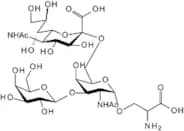
D-Galactopyranosyl-(b1-3)-[N-acetylneuraminyl-(a2-6)]-D-N-acetylgalactosaminyl serine
D-Galactopyranosyl-(b1-3)-[N-acetylneuraminyl-(a2-6)]-D-N-acetylgalactosaminyl serine is a synthetic, fluorinated glycoside that has been modified with methylation and saccharide modifications. It is used in click chemistry to modify proteins and other biomolecules. This compound is available as a custom synthesis, and can be modified with various saccharides or oligosaccharides. D-Galactopyranosyl-(b1-3)-[N-acetylneuraminyl-(a2-6)]-D-N-acetylgalactosaminyl serine is an important carbohydrate in glycosylation reactions as it contains the sugar backbone needed for N-, O-, and S-glycosidic linkages. The CAS number for this compound is 514063-.Fórmula:C28H47N3O21Pureza:Min. 95%Cor e Forma:PowderPeso molecular:761.68 g/mol6-Sialylgalacto-N-biosyl-serine
6-Sialylgalacto-N-biosyl-serine is a custom synthesis product that has been fluorinated and modified. The material is an Oligosaccharide, Polysaccharide, saccharide, Carbohydrate, Fluorination, complex carbohydrate with a CAS number of 60919-07-2. It is highly pure with a purity of > 98% by HPLC analysis. The modification on the sugar molecule includes Click chemistry and Methylation. The monosaccharide sugar is the saccharide part of the molecule.
Fórmula:C28H47N3O21Pureza:Min. 95%Cor e Forma:White/Off-White SolidPeso molecular:761.68 g/mol3'-Sialyl Lewis A-PAA-biotin
3'-Sialyl Lewis A-PAA-biotin is a carbohydrate that is used as a research tool for investigating the structure and function of glycoproteins, glycolipids, and glycosaminoglycans. It contains 3'-sialic acid linked to the terminal β-D-galactopyranosyl residue of a poly(amino acid) backbone. This product has been synthesized by custom synthesis and contains high purity with a custom synthesis.
Pureza:(¹H-Nmr) Min. 95 Area-%Cor e Forma:PowderGalactosyl-Tn-antigen
Galactosyl-Tn-antigen is an antigen that is found in the urine of patients with bladder cancer. It is a glycoprotein that has been shown to be present in the urine of patients with bladder cancer and not in the urine of healthy individuals. Galactosyl-Tn-antigen was detected using a monoclonal antibody against an epitope on the Tn antigen and can be used for diagnosis of bladder cancer. The level of galactosyl-Tn-antigen in the serum varies with age and glomerular filtration rate, suggesting that it may be involved in renal function. Galactosyl-Tn-antigen has also been shown to have a role in cell adhesion and skin reactions, as well as autoimmune diseases such as cancer.Fórmula:C17H30N2O13Pureza:Min. 95%Cor e Forma:PowderPeso molecular:470.43 g/molA1F N-Glycan
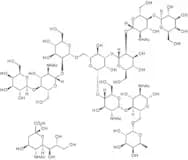
CAS:N-acetylglucosamine is a monosaccharide that is one of the building blocks of complex carbohydrates. It is found in the A1F N-glycan, which is located on the surface of cancer cells and may be a potential biomarker for endometrial cancer. A1F N-glycan has been detected in many types of cancer, including ovarian, breast, prostate, colorectal, lung, and pancreatic cancers. This glycan also has been shown to play a role in autoimmune diseases and cancer pathogenesis. The A1F N-glycan can be profiled by liquid chromatography with mass spectrometry (LC-MS).Fórmula:C68H114N4O50·C11H19NO9Pureza:Min. 95%Cor e Forma:PowderPeso molecular:2,096.9 g/molHeparin derived dp10 saccharide ammonium salt
Heparin-derived dp10 saccharide ammonium salt is a glycosylation product of heparin. This compound is synthesized by the treatment of heparin with a fluorinating agent, such as N-fluoro-N'-(2-chloroethyl)peroxycarbonyl chloride or N-fluoro-N'-(2-bromoethyl)peroxycarbonyl chloride, followed by reaction with an amine. The compound can be modified for specific applications through the use of click chemistry, which allows for the selective modification of either the sugar or side chain of the molecule. This product has been characterized and shown to have high purity and a CAS number.Pureza:Min. 95%Cor e Forma:PowderPeso molecular:~3000 (Average)Blood group A hexasaccharide type II
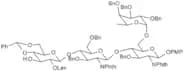
CAS:A antigen hexasaccharide Type II, possible use in antiviral developmentFórmula:C40H68N2O30Pureza:Min. 90 Area-%Cor e Forma:White PowderPeso molecular:1,056.96 g/mol4-Methoxyphenyl 4-O-[4-O-(4,6-O-benzylidene-2-O-levulinoyl-β-D-glucopyranosyl)-3,6-di-O-benzyl-2-deoxy-2-phthalimido-β-D-glucopyrano syl]-3-O-benzyl-6-O-(2,3,4-tri-O-benzyl-α-L-fucopyranosyl)-2-deoxy-2-phthalimido-β-D-glucopyranoside
4-Methoxyphenyl 4-O-[4-O-(4,6-O-benzylidene-2-O-levulinoyl-b-D-glucopyranosyl)-3,6-di-O-benzyl-2-deoxy -2 -phthalimido -b -D -glucopyranoside] (MMPS) is a synthetic compound that has been modified for use as a fluorescent probe for the detection of saccharides. MMPS can be used to detect glycosylation or sugar modifications in proteins and carbohydrates. This compound has been shown to bind to saccharides containing a terminal glucose residue. The MMPS molecule was synthesized and found to be effective in detecting oligosaccharides with a high degree of accuracy. The MMPS molecule was also found to be useful in detecting glucose modifications on proteins and other carbohydrate structures, such as polysaccharides.Fórmula:C101H100N2O25Pureza:Min. 95%Peso molecular:1,741.87 g/molManninotriose
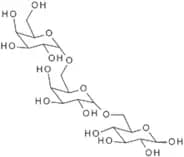
CAS:Manninotriose is a mannose-containing oligosaccharide that has been found to have high resistance against enzymes. This mannose-containing oligosaccharide can be used as a biomarker for the detection of activated macrophages in biological samples, such as serum and urine. It is also used as an activator of monoclonal antibodies, which are used in the diagnosis of autoimmune diseases. Manninotriose may act as a signal peptide for the activation of enzyme activities, such as glycosyl transferase reactions and caffeic acid hydrolase.
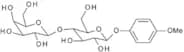
Fórmula:C18H32O16Pureza:Min. 95 Area-%Cor e Forma:White Off-White PowderPeso molecular:504.44 g/mol4-Methoxyphenyl 4-O-(b-D-galactopyranosyl)-b-D-glucopyranoside
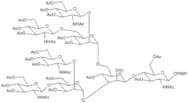
CAS:4-Methoxyphenyl 4-O-(b-D-galactopyranosyl)-b-D-glucopyranoside is a carbohydrate with the CAS number 150412-80-9. It is an Oligosaccharide that is synthesized from monosaccharides and saccharides. This product can be custom synthesized to produce high purity, methylated, glycosylated and fluorinated products. There are many modifications that can be made to this carbohydrate using Click chemistry.Fórmula:C19H28O12Pureza:Min. 95%Cor e Forma:PowderPeso molecular:448.42 g/mol4-Methoxyphenyl 2-acetamido-3,6-di-O-acetyl-4-O-{2,4-di-O-acetyl-3-O-[3,6-di-O-acetyl-2,4-di-O-(3,4,6-tri-O-acetyl-2-acetamido-2-deo xy-b-D-glucopyranosyl)-a-D-mannopyranosyl]-6-O-[3,4-di-O-acetyl-2,6-di-O-(3,4,6-tri-O-acetyl-2-acetamido-2-deoxy-b-D-g
4-Methoxyphenyl 2-acetamido-3,6-di-O-acetyl-4-O-[2,4-di-O-(3,6,9)-triacetyldi-O-(3,4,6)-triacetyldiacetamido]-bDglucopyranoside (MPPA) is a modification of the natural oligosaccharide 3,6,-di-O-(2,4-di-O-(3,6,9)-triacetyldiacyl)-bDmannopyranosyl. MPPA is synthesized by methylation and glycosylation of glucose residues in the backbone of the natural oligosaccharide. The methylated glycosidic linkages are substituted for acetamido groups in order to confer water solubility to the molecule. MPPA has been shown to be an effective inhibitor of influenza virus replication in vitro.
Fórmula:C105H143N5O62Pureza:Min. 95%Peso molecular:2,467.26 g/molChitoheptaose 7HCl
CAS:Chitoheptaose 7HCl is a synthetic, complex carbohydrate with a CAS number of 68232-35-9. This product is custom synthesized to order and can be modified according to your specifications. It is available in high purity.
Fórmula:C42H79N7O29·7HClPureza:Min. 95 Area-%Cor e Forma:PowderPeso molecular:1,401.34 g/molLacto-N-difucohexaose I
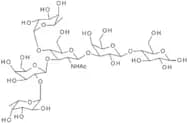
CAS:Fucosyloligosaccharide present in human milk and colostrumFórmula:C38H65NO29Pureza:Min. 95 Area-%Cor e Forma:White PowderPeso molecular:999.91 g/molLactose - anhydrous
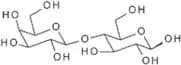
CAS:Anhydrous lactose is an excipient, filler, diluent, and bulking agent in a wide variety of pharmaceutical tablets, capsules, powders and other preparations. It also has applications as a nutrient and multi-functional ingredient in infant formulae, geriatric, dietetic and health foods and may be used as an ingredient in culture media.
Fórmula:C12H22O11Pureza:Min. 98 Area-%Cor e Forma:PowderPeso molecular:342.3 g/molMaltobionic acid
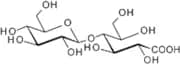
CAS:An antioxidant chelator used in skin care. Also used in organ transplantation preservation solutions, due to its ability to inhibit hydroxyl radical production, via the complexation of oxidation-promoting iron found in blood.Fórmula:C12H22O12Cor e Forma:White PowderPeso molecular:358.3 g/molSucrose dodecanoate
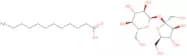
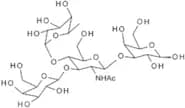
CAS:Sucrose dodecanoate is a sugar ester that has been shown to be a 5-HT agonist. It is used as an absorption enhancer for the treatment of choroidal neovascularization. Sucrose dodecanoate was also found to have trypsin-like protease activity and cyclic peptide properties. This drug has been shown to increase insulin sensitivity and growth factor levels in animal models, which may be due to its effects on serine proteases. Sucrose dodecanoate is available as a pharmaceutical dosage form containing fatty acid esters at a concentration of 10%. It has a viscosity of approximately 100 cP, which is expected to provide good bioavailability.Fórmula:C12H24O2•(C12H22O11)xCor e Forma:Clear LiquidPeso molecular:342.3 g/molLewis A tetrasaccharide
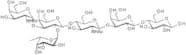
CAS:Lewis A tetrasaccharide is a glycosylated oligosaccharide with the following chemical structure: The Lewis A tetrasaccharide is a carbohydrate that has been modified with fluorination and methylation. This modification has been shown to increase its stability in aqueous environments. The Lewis A tetrasaccharide may be used as a synthetic monosaccharide for custom synthesis. It is also used as an intermediate for the synthesis of glycosylated oligosacscharsides.Fórmula:C26H45NO20Pureza:90%Cor e Forma:White PowderPeso molecular:691.64 g/molLaminaribiose
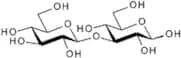
CAS:Disaccharide; substrate for glucanases and laminaribiose phosphorylase
Fórmula:C12H22O11Pureza:Min. 95%Cor e Forma:PowderPeso molecular:342.3 g/molNeoagarobiose
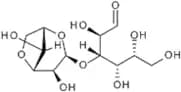
CAS:Agarose is a polysaccharide found in red algae, typically Gelidium and Gracilaria. It is a strictly alternating polysaccharide of α-1,3 linked D-galactose and β-1,4 linked L-3,6 anhydrogalactose, with occasional sulfation at position 6 of the anhydrogalactose residue. Agaro-oligosaccharides result from cleavage at galactose residues and neoagaro-oligosaccharides from cleavage at 3,6-anhydro residues. Neoagarobiose is reported to exhibit skin moisturising and whitening properties.Fórmula:C12H20O10Pureza:Min. 98 Area-%Cor e Forma:PowderPeso molecular:324.28 g/molMethyl 2-acetamido-2-deoxy-3-O-(b-D-galactopyranosyl)-a-D-galactopyranoside
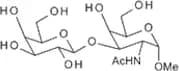
CAS:Methyl 2-acetamido-2-deoxy-3-O-(b-D-galactopyranosyl)-a-D-galactopyranoside is a lectin that binds to the terminal galactose of b-D-galactopyranosides. It has been shown to be a potent inhibitor of cellular death and is able to bind to the surface of cells, preventing their destruction by the immune system or other natural factors. The binding site for MGA is found on cell membranes, and it can also act as an antiinflammatory agent. MGA has also been shown to inhibit interactions between proteins, which may lead to changes in protein synthesis and regulation. Lectins are proteins that bind to specific carbohydrates on the surfaces of cells. They are part of a group called glycoproteins and are often used as probes in techniques such as lectin histochemistry and immunohistochemistry.Fórmula:C15H27NO11Pureza:Min. 98 Area-%Cor e Forma:White PowderPeso molecular:397.38 g/mol
![D-Galactopyranosyl-(b1-3)-[N-acetylneuraminyl-(a2-6)]-D-N-acetylgalactosaminyl serine](/_next/image/?url=https%3A%2Fstatic.cymitquimica.com%2Fproducts%2F3D%2Fthumb-webp%2FOG15272.webp&w=3840&q=75)