Corantes, Pigmentos, Tinturas, Imagens Fluorescentes
Corantes, colorações e tinturas são ferramentas essenciais na biologia molecular, cruciais para visualizar e estudar o DNA, cromossomos e núcleos celulares. Esses compostos permitem que os pesquisadores destaquem componentes celulares específicos, facilitando a observação e análise detalhadas ao microscópio. Nesta categoria, você encontrará uma ampla gama de corantes e colorações de alta qualidade usados em várias técnicas de coloração, incluindo corantes fluorescentes para análise de DNA e cromossomos, colorações histológicas para amostras de tecido e corantes específicos para estruturas celulares. Essas ferramentas são indispensáveis em pesquisas genéticas, citologia, histologia e diagnósticos, proporcionando clareza e contraste em amostras biológicas. Na CymitQuimica, oferecemos uma seleção abrangente de corantes, colorações e tinturas para apoiar sua pesquisa em biologia molecular e garantir resultados precisos e confiáveis em seus estudos.
Subcategorias de "Corantes, Pigmentos, Tinturas, Imagens Fluorescentes"
- Corantes Ácidos(49 produtos)
- Azobenzenos(270 produtos)
- Corantes azóicos(7 produtos)
- Corantes básicos(27 produtos)
- Corantes de Cumarina(71 produtos)
- Corantes de cianina, corantes de Squarylium(53 produtos)
- Corantes de DCM(4 produtos)
- Diariletenos(12 produtos)
- Corantes de Dipirrometeno(26 produtos)
- Corantes directos(17 produtos)
- Corantes dispersos(2 produtos)
- Sensibilizadores de corantes(12 produtos)
- Corantes(414 produtos)
- Corantes e pigmentos(911 produtos)
- Geração de corantes insolúveis(14 produtos)
- Geração de corantes solúveis(11 produtos)
- Hexaarilbiimidazol(4 produtos)
- Indicadores(575 produtos)
- Corantes Mordente(10 produtos)
- Corantes de Infravermelhos-próximo (NIR)(28 produtos)
- Corantes a óleo(15 produtos)
- Outros Pigmentos e Corantes(2 produtos)
- Corantes de Perileno(17 produtos)
- Corantes fotocrómicos(40 produtos)
- Corantes de Ftalocianina, Corantes de Porfirina(101 produtos)
- Corantes de Quinacridona(8 produtos)
- Espiropirano(16 produtos)
- Pigmentos e Corantes(243 produtos)
- Pigmentos e Corantes para Microscopia(5 produtos)
- Corantes Vat(5 produtos)
- Corante Xanteno(65 produtos)
Exibir 23 mais subcategorias
Foram encontrados 755 produtos de "Corantes, Pigmentos, Tinturas, Imagens Fluorescentes"
Ordenar por
Pureza (%)
0
100
|
0
|
50
|
90
|
95
|
100
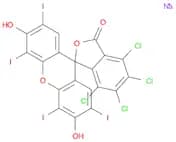
Acid red 26
CAS:<p>Acid Red 26 is a water-soluble dye that can be used in the textile industry and as an indicator for wastewater treatment. It has been shown to have significant up-regulation in biological samples, such as human serum and human immunoglobulin. Acid Red 26 has been tested for its toxicity in a number of studies, with little evidence of carcinogenic potential. The rate constant is not available for this compound.</p>Fórmula:C18H14N2Na2O7S2Pureza:Min. 95%Peso molecular:480.42 g/molSanodure fiery red ML
<p>Please enquire for more information about Sanodure fiery red ML including the price, delivery time and more detailed product information at the technical inquiry form on this page</p>Pureza:Min. 95%1,9-Dimethyl-methylene blue zinc chloride
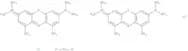
CAS:<p>1,9-Dimethyl-methylene blue zinc chloride double salt is a fluorescent dye that has been used in the study of hyaluronic acid and mesenchymal stem cells. The compound absorbs light at a wavelength of 580 nm, which is the same as the absorption wavelength for hyaluronic acid and mesenchymal stem cells. 1,9-Dimethyl-methylene blue zinc chloride double salt can be used to measure the amount of these compounds in tissues. This dye also shows sensitivity to artifacts such as hemolysis and lipemia, making it useful for research purposes.</p>Fórmula:(C18H22ClN3S)2•ZnCl2Pureza:Min. 95%Cor e Forma:PowderPeso molecular:832.11 g/molC.I.Disperse Orange 25
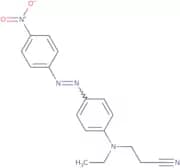
CAS:<p>C.I. Disperse Orange 25 is a dye that has been used in the textile industry for over 30 years. It is soluble in water and has low toxicity, and is not considered hazardous to health. C.I. Disperse Orange 25 is used as an optical sensor and fluorescent agent in kinetic studies of biological treatment of wastewater, and it can also be used as a reactive or activated antimicrobial agent. The dye can be synthesized using supercritical fluid technology, which makes it a potential candidate for use with radiation-sensitive polymers to form polymer matrices with antimicrobial properties that are resistant to microbial attack by radiation.</p>Fórmula:C17H17N5O2Pureza:Min. 95%Peso molecular:323.35 g/molAcid Yellow 3 Aluminum Lake
CAS:<p>Please enquire for more information about Acid Yellow 3 Aluminum Lake including the price, delivery time and more detailed product information at the technical inquiry form on this page</p>Pureza:Min. 95%Cor e Forma:PowderXTT sodium
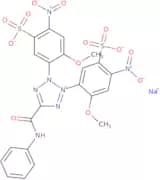
CAS:<p>XTT sodium salt is a tetrazolium salt, which forms water-soluble formazan on bioreduction and has been used to assess cell viability by production of an orange colour.</p>Fórmula:C22H17N7O13S2•NaPureza:Min. 95%Cor e Forma:PowderPeso molecular:674.53 g/molPigment red 48 (C.I. 15865)
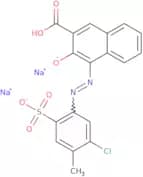
CAS:<p>Pigment Red 48 (C.I. 15865) is a red organic pigment that is soluble in water and most organic solvents. It has a melting point of 200°C and is used in paints, plastics, textiles, paper, and other products. Pigment Red 48 (C.I. 15865) can be synthesized by the diazonium salt coupling reaction between an aromatic amine and an acid chloride. The pigment also has a hydroxyl group that enables it to form covalent bonds with other molecules such as polymers or proteins. Pigment Red 48 (C.I. 15865) is used in many products because of its high stability, excellent heat resistance, low toxicity, non-irritating properties, high transparency, and good color fastness to light and washing.BR> Pigment Red 48 (C.I. 15865) is not considered hazardous according to the Globally Harmonized System of Classification and Lab</p>Fórmula:C18H11ClN2Na2O6SPureza:Min. 95%Peso molecular:464.79 g/molBenz[b]indeno[1,2-d]pyran-3,4,6a,9,10(6H)-pentol, 7,11b-dihydro-,(6aS,11bR)-
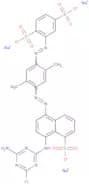
CAS:Fórmula:C16H14O6Pureza:97%Cor e Forma:SolidPeso molecular:302.27876Reactive orange 35
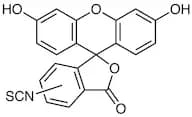
CAS:<p>Reactive orange 35 is a functional group that is used as an analytical reagent in organic solvents. It is also used to introduce additives into polymers, oligosaccharides, and other compounds. Reactive orange 35 has been shown to react with amide groups in the presence of an amine or ammonia at elevated temperatures. This reaction system can be used to produce a variety of compounds, including pharmaceuticals and pesticides. The reactive nature of this compound makes it an excellent plant cell penetrant.</p>Fórmula:C27H19ClN9Na3O9S3Pureza:Min. 95%Peso molecular:814.12 g/molFluorescein Isothiocyanate (mixture of 5- and 6- isomers)
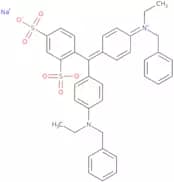
CAS:Fórmula:C21H11NO5SPureza:>97.0%(T)(HPLC)Cor e Forma:Light yellow to Brown powder to crystalPeso molecular:389.38Patent Blue A
CAS:<p>Patent Blue A is a blue pigment with a deep color, which is used in detergent compositions. This pigment has a hydroxyl group on the surface and can be synthesized by reacting zirconium oxide with quinoline derivatives in an acidic solution. Patent Blue A has been shown to have good dispersibility and stability. It is insoluble in water but soluble in organic solvents such as chloroform and benzene. It also shows good radiation resistance and thermodynamic stability, making it suitable for use in medical devices or other products exposed to radiation, such as blood culture plates.</p>Fórmula:C37H35N2O6S2NaPureza:Min. 95%Cor e Forma:PowderPeso molecular:690.81 g/molRef: 3D-FP52704
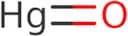
Produto descontinuadoMercuric oxide red
CAS:Produto Controlado<p>Mercuric oxide red is a dinucleotide phosphate that has been used as an oxidation catalyst in organic synthesis. Mercuric oxide red is also used as a reagent for the conversion of glycoside derivatives to their corresponding mercuric salts. It can be used in the determination of certain metabolites, such as amino acids and fatty acids, in biological samples. In addition, it can be used to detect lipid peroxidation and oxidative stress. For example, Mercuric oxide red has been shown to have the ability to bind to Toll-like receptor 4 (TLR4). This binding induces the production of pro-inflammatory cytokines, including IL-6. Mercuric oxide red also inhibits plasma mass spectrometry by suppressing ionization and reducing fragmentation.</p>Fórmula:HgOPureza:Min. 95%Cor e Forma:PowderPeso molecular:216.60 g/molRef: 3D-FM44545
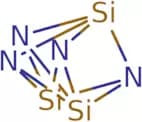
Produto descontinuadoSilicon nitride - predominantly β-phase, -325 mesh
CAS:<p>Silicon nitride is a compound of silicon and nitrogen. It is used in the preparation of high purity silicon, as well as in the production of semiconductors, electronic devices, and other products. Silicon nitride is also used to make parts for aircraft engines and turbines. The thermal expansion coefficient of silicon nitride is typically 5x10⁻⁶/°C, which makes it ideal for use in high-temperature environments. Silicon nitride has antimicrobial properties that may be due to its ability to release hydrogen fluoride and water vapor when heated. These compounds are toxic to bacteria and fungi, making silicon nitride a potential candidate for use in biomedical implants or medical devices such as catheters or prosthetic joints. Silicon nitride is chemically stable at temperatures up to 1000°C, making it an excellent material for high-temperature applications such as aerospace engine components. Silicon nitride can also be used as a sample preparation tool because it can remove impurities from samples without</p>Fórmula:N4Si3Pureza:Min. 95%Cor e Forma:PowderPeso molecular:140.28 g/molRef: 3D-FS168689
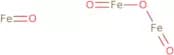
Produto descontinuadoIron oxide black
CAS:Produto Controlado<p>Iron oxide black is a reactive dye that is used in wastewater treatment. It is an oxide of iron that can be synthesized from sodium carbonate and langmuir adsorption isotherm. Iron oxide black has been shown to have a colloidal gold-like color, chemical stability, and constant pressure. The particle size of this compound ranges from 10-1000 nm and it reacts with a solution containing anhydrous sodium carbonate to form magnetite nanoparticles. Iron oxide black also has an asymmetric synthesis reaction with ferric chloride and nitric acid, which produces magnetic nanoparticles.</p>Fórmula:Fe3O4Pureza:Min. 95%Cor e Forma:PowderPeso molecular:231.53 g/molRef: 3D-FI41084
Produto descontinuado
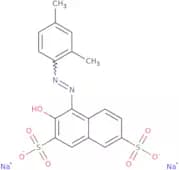

![Benz[b]indeno[1,2-d]pyran-3,4,6a,9,10(6H)-pentol, 7,11b-dihydro-,(6aS,11bR)-](/_next/image/?url=https%3A%2Fstatic.cymitquimica.com%2Fproducts%2FIN%2Fthumb-webp%2FDA00I98R.webp&w=3840&q=75)