Compostos Policiclícos
Subcategorias de "Compostos Policiclícos"
- Acridinas(97 produtos)
- Antraquinonas(533 produtos)
- Ácidos antraquinonasulfónicos(16 produtos)
- Azobenzenos(270 produtos)
- Azonaftalenos(98 produtos)
- Azoxibenzenos(12 produtos)
- Azulenos(11 produtos)
- Benzimidazóis(1.475 produtos)
- Benzodioxanos(27 produtos)
- Benzofuranos(924 produtos)
- Benzotiofenos(700 produtos)
- Benzotriazóis(438 produtos)
- Binaftil(133 produtos)
- Carbazóis(462 produtos)
- Cromanos, Cromenos(480 produtos)
- Cumarinas(1.120 produtos)
- Ciclofanos(11 produtos)
- Fluorenos e Fluorenonas(381 produtos)
- Imidazopiridinas(10 produtos)
- Indans(118 produtos)
- Indazóis(2.038 produtos)
- Indenos(22 produtos)
- Indóis(3.984 produtos)
- Indolinas(119 produtos)
- Isatinas(234 produtos)
- Isobenzofuranos(17 produtos)
- Ftalimidas N-Substituída(153 produtos)
- Naftalenos(2.437 produtos)
- Naftiridina(17 produtos)
- Naftoquinona(2 produtos)
- Perilenos(36 produtos)
- Fenazinas(25 produtos)
- Ftalazinas(33 produtos)
- Ftalimida(153 produtos)
- Hidrocarbonetos aromáticos policíclicos (PAHs)(301 produtos)
- Polifenol(261 produtos)
- Pteridinas(52 produtos)
- Pireno(87 produtos)
- Quinuclidina(1 produtos)
- Tetracenos(7 produtos)
Foram encontrados 4573 produtos de "Compostos Policiclícos"
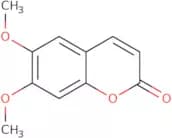
Scoparone
CAS:Scoparone is a bioactive natural compound, which is primarily derived from plants in the Rutaceae family, such as Artemisia species. It is a coumarin derivative, known for its therapeutic properties due to its diverse biological activities. The mode of action of scoparone is multifaceted, involving the modulation of various enzymes and signaling pathways. It acts as an inhibitor of cytochrome P450 enzymes and influences pathways involving nitric oxide and reactive oxygen species, contributing to its anti-inflammatory and hepatoprotective effects.Fórmula:C11H10O4Pureza:Min. 95%Cor e Forma:PowderPeso molecular:206.19 g/mol4,5-Dichloroisatin
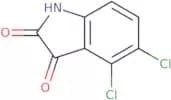
CAS:4,5-Dichloroisatin is a versatile building block that can be used as a reagent for research and as a speciality chemical. It is also useful in the synthesis of complex compounds. 4,5-Dichloroisatin is a high quality compound with a CAS number of 1677-47-0. This compound is not intended for use in humans or animals.
Fórmula:C8H3Cl2NO2Pureza:Min. 95%Cor e Forma:Yellow PowderPeso molecular:216.02 g/mol5-Methoxy-2-methylindole
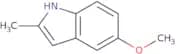
CAS:5-Methoxy-2-methylindole is an organic solvent that has been shown to have a wide range of bioactive properties. It is used in the production of acetylcholine, which is an important neurotransmitter. 5-Methoxy-2-methylindole also reacts with chloride ions, which may be an important factor when considering the life cycles and bioactive substances of this molecule. The reaction yield depends on the pH of the solution. 5-Methoxy-2-methylindole can undergo chlorination reactions to form polychlorinated derivatives, which are used as petrochemicals. This molecule also has retinoid properties and can act as a proton donor or acceptor depending on whether it is protonated or deprotonated.Fórmula:C10H11NOCor e Forma:PowderPeso molecular:161.2 g/mol2-(2-(3(S)-(3-(2-(7-Chloro-2-quinolinyl)-ethenylphenyl)-3-hydroxypropyl)phenyl)-2-propanol
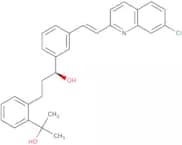
CAS:Covid-19 is a polymer that can be used as a coating for surfaces, such as plastics and metals. Covid-19 has been shown to have antibacterial properties against bacteria, including methicillin-resistant Staphylococcus aureus (MRSA) and Clostridium perfringens. Covid-19 also has functional groups that can be used in analytical methods to determine the concentration of drugs in biological samples. Covid-19 is soluble in polyvinyl alcohol and glycerol, which are both common additives in pharmaceuticals. Covid-19 has optical properties that make it suitable for use as a coating on contact lenses or other ophthalmic devices.Fórmula:C29H28ClNO2Pureza:Min. 95%Cor e Forma:PowderPeso molecular:457.99 g/mol4-Bromoindole
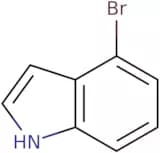
CAS:4-Bromoindole is a model compound that serves as a building block for the synthesis of pharmaceutically important compounds. 4-Bromoindole has been shown to have high catalytic rates for the oxidative coupling of zirconium oxide. This compound can also be used in asymmetric synthesis because it is able to form both R and S enantiomers in moderate yield. The reaction mechanism is thought to involve a nucleophilic attack by bromide on the carbonyl group, followed by elimination of hydrogen bromide from this intermediate. 4-Bromoindole can be synthesized in three ways: (1) via an oxidative coupling reaction with ZrOCl2 and H2O2; (2) via an oxidative coupling reaction with ZrOCl2 and HBr; or (3) by reacting 4-bromoaniline with CuSO4 and Mn(NO3)2.
Fórmula:C8H6BrNPureza:Min. 95%Cor e Forma:Brown Yellow Clear LiquidPeso molecular:196.04 g/molS-(+)-3-Quinuclidinol
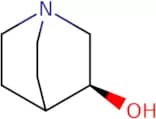
CAS:Produto Controlado3-Quinuclidinol is an alkaloid that is found in the bark of Erythroxylum coca, a plant that has been used for centuries to combat hunger and altitude sickness. It is also found in the leaves of various plants such as khat, betel nut and tea leaves. 3-Quinuclidinol is a nicotinic acetylcholine receptor agonist, which means it stimulates the receptors in the brain that are responsible for transmitting messages from one nerve cell to another. 3-Quinuclidinol also activates certain types of protein kinase enzymes, which play a role in regulating metabolism.
Fórmula:C7H13NOPureza:Min. 98 Area-%Cor e Forma:White Off-White PowderPeso molecular:127.18 g/molIsatin bis-cresol
CAS:Isatin bis-cresol is a silicon-containing compound that can be used as a viscosity modifier and stabilizer in polymers. Isatin bis-cresol has shown resistance to degradation by water, alkali, and acid. It also has a high formation rate and can be used for the production of functionalized polymers such as polycarbonates or phosphonium salts. Isatin bis-cresol is insoluble in water but soluble in organic solvents, which makes it an ideal candidate for use in transesterification reactions. Isatin bis-cresol contains three functional groups: phenolic (OH), carboxylic acid (COOH), and alcohol (OH).
Fórmula:C22H19NO3Pureza:Min. 98 Area-%Cor e Forma:PowderPeso molecular:345.39 g/mol2-Thioxanthine
CAS:2-Thioxanthine is a hydrated form of xanthine, which is a purine base that occurs in all living cells. This compound has been shown to be able to inhibit the growth of resistant mutants and the formation of atherosclerotic lesions in mice. 2-Thioxanthine also inhibits the transfer reactions that are required for bacterial DNA synthesis. The stability of 2-thioxanthine can be increased by forming stable complexes with hydrochloric acid and by reducing the pH to less than 7. 2-Thioxanthine has been shown to have genotoxic effects on mouse liver cells and human fibroblasts, as well as pharmacological properties against cardiovascular disease.Fórmula:C5H4N4OSPureza:Min. 95%Cor e Forma:PowderPeso molecular:168.18 g/mol3-(4-Fluorobenzoyl)-6-Methoxy-2-Methyl-1H-Indole-1-Acetic Acid
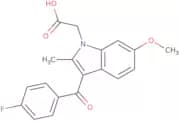
CAS:Produto Controlado3-(4-Fluorobenzoyl)-6-Methoxy-2-Methyl-1H-Indole-1-Acetic Acid is a prodrug that is metabolized to 6-fluoro-3,4 dioxo tamoxifen in the liver. It has been shown to have anticholinergic, cytosolic calcium and c1-4 alkyl properties. 3-(4-Fluorobenzoyl)-6-Methoxy-2-Methylindole Acetic Acid also has a basic group, cyclopentane ring, and pyridine ring.Fórmula:C19H16FNO4Pureza:Min. 95%Peso molecular:341.33 g/molEsculin hydrate
CAS:Fluorescent dye used in diagnostic culture media
Fórmula:C15H16O9·xH2OPureza:Min. 98 Area-%Cor e Forma:White PowderPeso molecular:340.28 g/mol2-Aminopurine
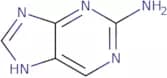
CAS:Purine analog; fluorescent probe; kinase inhibitor; mutagenic
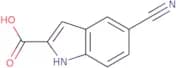
Fórmula:C5H5N5Pureza:Min. 95%Cor e Forma:White PowderPeso molecular:135.13 g/mol5-Cyano-1H-indole-2-carboxylic acid
CAS:5-Cyano-1H-indole-2-carboxylic acid is a high quality reagent that is used as an intermediate in the synthesis of complex compounds. It can also be used as a building block for the synthesis of speciality chemicals and research chemicals. The versatile nature of this compound makes it useful as a reaction component in the synthesis of many different types of compounds, including fine chemicals and pharmaceuticals. 5-Cyano-1H-indole-2-carboxylic acid is available commercially with CAS No. 169463-44-9.Fórmula:C10H6N2O2Pureza:Min. 95%Cor e Forma:PowderPeso molecular:186.17 g/mol5-Bromoisatin
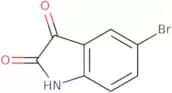
CAS:5-Bromoisatoic anhydride is a potential anticancer agent that contains nitrogen atoms. It inhibits the growth of cancer cells by binding to the enzyme acetylcholine, which is involved in the production of growth factors. The compound also inhibits the production of malonic acid, which is a metabolic disorder. 5-Bromoisatoic anhydride forms stable complexes with malonic acid and does not cause any adverse effects on normal cells.
Fórmula:C8H4BrNO2Pureza:Min. 95%Cor e Forma:PowderPeso molecular:226.03 g/mol2,2'-Bipyridine-5,5'-dicarboxylic acid
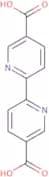
CAS:2,2'-Bipyridine-5,5'-dicarboxylic acid is an algal metabolite that has been shown to have a glucose sensor function. It is synthesized by Chlorella and other green algae in response to light and high concentrations of glucose. This compound can be used as a linker for the immobilization of fluorescent probes or luminescent probes. It also has a catalytic subunit that can be used in oxidation reactions at low temperatures with chloride as the oxidant. 2,2'-Bipyridine-5,5'-dicarboxylic acid is chemically stable and does not react with chloride or ligands. It can also be used as an oxidation catalyst for reactions at high temperatures.Fórmula:C12H8N2O4Cor e Forma:White PowderPeso molecular:244.2 g/mol6-Bromoindole
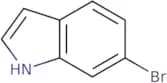
CAS:6-Bromoindole is a synthetic compound that has been shown to have significant anticancer activity in animals. 6-Bromoindole shows cytotoxicity against cervical cancer cells and has been shown to be active against leukemia cells, with the potential for use as a therapeutic agent for both solid tumor cancers and hematological malignancies. The synthesis of 6-bromoindole is based on an asymmetric Friedel-Crafts reaction, which uses hydrochloric acid as a catalyst. This product also shows significant antibacterial activity and has been found to be effective against LPS-stimulated RAW264.7 cells.
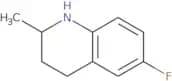
Fórmula:C8H6BrNPureza:Min. 95%Cor e Forma:PowderPeso molecular:196.04 g/mol6-Fluoro-1,2,3,4-tetrahydro-2-methylquinoline
CAS:6-Fluoro-1,2,3,4-tetrahydro-2-methylquinoline is an organocatalytic fluorine compound that has been investigated as a fluoroquinolone antibiotic. It is an enantiopure compound and has been shown to be effective in the treatment of bacterial infections. 6-Fluoro-1,2,3,4-tetrahydro-2-methylquinoline inhibits bacterial growth by binding to DNA gyrase and topoisomerase IV. 6FLMQ is a chiral molecule with two possible configurations (R or S), which can be determined from x-ray crystallography. The S configuration is more potent than the R configuration. 6FLMQ also binds with chloride ions to form a cationic complex that can be used for antibacterial activity against Gram negative bacteria such as Escherichia coli and Pseudomonas aeruginosa. 6FLMQ hasFórmula:C10H12FNPureza:Min. 95%Cor e Forma:PowderPeso molecular:165.21 g/molEsculetin dibenzyl ether
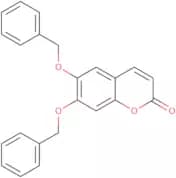
CAS:Esculetin dibenzyl ether is a chemical compound, which is a derivative of esculetin, a natural coumarin obtained chiefly from plant sources such as the bark of horse chestnut and other similar species. The source of esculetin dibenzyl ether is typically synthesized from natural precursors through chemical modifications, allowing for the exploration of its structural analogs.Fórmula:C23H18O4Pureza:Min. 95%Peso molecular:358.39 g/mol6-Hydroxy-4-methylcoumarin
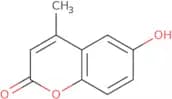
CAS:6-Hydroxy-4-methylcoumarin is a chemical compound that serves as a lactone derivative. It is commonly derived from synthetic sources through various organic reactions involving resorcinol and ethyl acetoacetate. The compound functions primarily through its ability to absorb ultraviolet light and fluoresce, making it highly valuable in spectroscopic analyses.Fórmula:C10H8O3Pureza:Min. 95%Peso molecular:176.17 g/molIndole
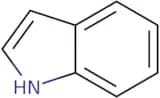
CAS:Indole is a nitrogen-containing heterocyclic aromatic organic compound. Copper chloride in the presence of trifluoroacetic acid and indole gives rise to an indolenine derivative, which reacts with nitrogen atoms to form a copper nitride. This reaction is used as a model system for biological properties of indole. Indolenine has been shown to have bone cancer prevention and treatment effects in mice, and may also be beneficial in autoimmune diseases and metabolic disorders, due to its ability to inhibit toll-like receptor signaling pathways. The wild-type strain has shown resistance to antibiotics, which can be overcome by using mutant strains that are resistant to antibiotic treatments.Fórmula:C8H7NPureza:Min. 95 Area-%Cor e Forma:Off-White PowderPeso molecular:117.15 g/molIndole-3-glyoxylamide
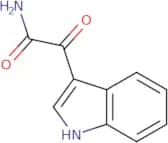
CAS:Indole-3-glyoxylamide is a synthetic compound that was originally developed as a potential anti-cancer drug. It has been shown to inhibit glycogen synthase kinase 3 (GSK-3) and thereby reduce the production of proinflammatory cytokines in bowel disease. Indole-3-glyoxylamide also inhibits inflammatory bowel disease by inhibiting secretory phospholipase A2, which prevents the release of arachidonic acid from phospholipids. This synthesis is required for the production of prostaglandins and leukotrienes, which are involved in the inflammatory process. The compound has been shown to have immunomodulatory effects in chronic bronchitis, with an inhibitory effect on neutrophil chemotaxis, macrophage activity, and cytokine production. Indole-3-glyoxylamide has also been shown to be effective against cancer cells in vitro and in vivo animal models. It is metabolized through
Fórmula:C10H8N2O2Pureza:Min. 95%Cor e Forma:PowderPeso molecular:188.18 g/mol