Compostos Policiclícos
Os compostos policíclicos são moléculas orgânicas que contêm múltiplos anéis interconectados. Esses compostos incluem hidrocarbonetos aromáticos policíclicos e outros sistemas de anéis complexos. Eles são significativos na ciência dos materiais, produtos farmacêuticos e eletrônica orgânica. Na CymitQuimica, oferecemos compostos policíclicos de alta qualidade para apoiar suas pesquisas e aplicações industriais, garantindo resultados confiáveis e eficazes em seus projetos.
Subcategorias de "Compostos Policiclícos"
- Acridinas(97 produtos)
- Antraquinonas(533 produtos)
- Ácidos antraquinonasulfónicos(16 produtos)
- Azobenzenos(270 produtos)
- Azonaftalenos(98 produtos)
- Azoxibenzenos(12 produtos)
- Azulenos(11 produtos)
- Benzimidazóis(1.475 produtos)
- Benzodioxanos(27 produtos)
- Benzofuranos(924 produtos)
- Benzotiofenos(700 produtos)
- Benzotriazóis(438 produtos)
- Binaftil(133 produtos)
- Carbazóis(462 produtos)
- Cromanos, Cromenos(480 produtos)
- Cumarinas(1.122 produtos)
- Ciclofanos(11 produtos)
- Fluorenos e Fluorenonas(381 produtos)
- Imidazopiridinas(10 produtos)
- Indans(118 produtos)
- Indazóis(2.037 produtos)
- Indenos(22 produtos)
- Indóis(3.988 produtos)
- Indolinas(119 produtos)
- Isatinas(234 produtos)
- Isobenzofuranos(17 produtos)
- Ftalimidas N-Substituída(153 produtos)
- Naftalenos(2.436 produtos)
- Naftiridina(17 produtos)
- Naftoquinona(2 produtos)
- Perilenos(36 produtos)
- Fenazinas(25 produtos)
- Ftalazinas(33 produtos)
- Ftalimida(153 produtos)
- Hidrocarbonetos aromáticos policíclicos (PAHs)(270 produtos)
- Polifenol(261 produtos)
- Pteridinas(52 produtos)
- Pireno(87 produtos)
- Quinuclidina(1 produtos)
- Tetracenos(7 produtos)
Exibir 32 mais subcategorias
Foram encontrados 4574 produtos de "Compostos Policiclícos"
Ordenar por
Pureza (%)
0
100
|
0
|
50
|
90
|
95
|
100
5,6-Diaminobenzimidazole dihydrochloride
CAS:Please enquire for more information about 5,6-Diaminobenzimidazole dihydrochloride including the price, delivery time and more detailed product information at the technical inquiry form on this pageFórmula:C7H10Cl2N4Pureza:Min. 95%Cor e Forma:Off-white to pale brown solid.Peso molecular:221.09 g/molMethyl 5-methoxy-2-methylindole-3-acetate
CAS:Methyl 5-methoxy-2-methylindole-3-acetate is a versatile building block that can be used as a research chemical, reagent, or speciality chemical. It is also an intermediate in the synthesis of other compounds and has been shown to be useful in reactions involving nucleophilic substitution and electrophilic addition. This compound can be used as a scaffold for complex organic molecules. CAS No. 7588-36-5Fórmula:C13H15NO3Pureza:Min. 95%Cor e Forma:Beige SolidPeso molecular:233.26 g/molXanthotoxol
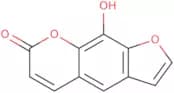
CAS:Xanthotoxol is a naturally occurring furanocoumarin, which is derived from various plant species, primarily within the Apiaceae family. This compound exhibits its biological activity through several mechanisms, including the inhibition of enzyme pathways, modulation of signaling pathways, and interaction with cellular proteins, impacting various physiological processes.Fórmula:C11H6O4Pureza:Min. 95%Cor e Forma:Brown PowderPeso molecular:202.16 g/mol5-Amino-2-methylindole
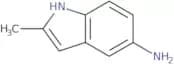
CAS:<p>5-Amino-2-methylindole is a hyaluronic acid inhibitor that has been shown to have an inhibitory effect on the growth of some bacteria. It inhibits the synthesis of bacterial enzymes and growth factors, which are required for bacterial cell division. 5-Amino-2-methylindole also inhibits the production of a number of important enzymes in bacteria, including benzofuran derivatives, as well as p. aeruginosa. This drug is used as a topical treatment in cases where there is tissue damage or inflammation. 5-Amino-2-methylindole has been shown to be effective against gram positive bacteria such as Streptococcus pyogenes and Enterococcus faecalis, but not against gram negative bacteria such as Pseudomonas aeruginosa or Escherichia coli.</p>Fórmula:C9H10N2Pureza:Min. 95%Cor e Forma:Yellow To Dark Brown SolidPeso molecular:146.19 g/mol3-Methyl-2-hydroxy-3H-imidazo[4,5-f]quinoline
CAS:<p>3-Methyl-2-hydroxy-3H-imidazo[4,5-f]quinoline is a high quality reagent that can be used as an intermediate or building block in the synthesis of other compounds. It is a fine chemical with CAS No. 144486-08-8 and can be used as a speciality chemical in research. This compound has versatile building blocks that are useful in reactions and have been shown to be a reaction component in the synthesis of various compounds.</p>Fórmula:C11H9N3OPureza:Min. 95%Cor e Forma:Yellow PowderPeso molecular:199.21 g/mol4-Chloro-6-methoxyquinolin-7-ol
CAS:4-Chloro-6-methoxyquinolin-7-ol (CMQ) is an alkali metal that inhibits the sodium/potassium ATPase pump, which is responsible for maintaining the cell's intracellular ion balance. It was discovered in a search for compounds that inhibit this enzyme and show promise in the treatment of heart diseases. CMQ has been shown to inhibit the sodium concentration in rat hearts with no effect on potassium concentrations, which may be due to its ability to bind to sodium ions but not potassium ions. The long-term effects of CMQ on human populations are unknown, as well as its effects on genotype and parameters. CMQ also has been shown to cause drug resistance mutations in bacteria, such as methicillin resistant Staphylococcus aureus (MRSA), by increasing the mutation rate. This is due to the fact that it inhibits DNA replication and protein synthesis in bacteria cells.Fórmula:C10H8ClNO2Pureza:Min. 95%Cor e Forma:Yellow PowderPeso molecular:209.63 g/mol1-Methylindole-2-Carboxylic Acid
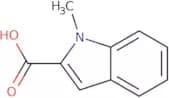
CAS:<p>1-Methylindole-2-Carboxylic Acid is a chemical that belongs to the group of phenylacetic acid compounds. It has been shown to inhibit lymphocyte activation and t-cell proliferation in vitro, which may be due to its ability to interfere with the production of interleukin. 1-Methylindole-2-Carboxylic Acid also has an antitumor effect on animals and can reduce the tumor burden by inhibiting DNA synthesis, protein synthesis, and mineralization. The molecular modeling studies have shown that 1-Methylindole-2-Carboxylic Acid binds in the active site of protein kinase C as a competitive inhibitor and prevents ATP from binding to the enzyme.</p>Fórmula:C10H9NO2Pureza:Min. 95%Cor e Forma:PowderPeso molecular:175.18 g/mol2-Mercapto-1H-imidazole
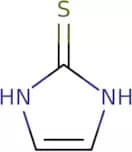
CAS:<p>2-Mercapto-1H-imidazole is an irreversible inhibitor of xanthine oxidase. It binds to the nitrogen atoms of the enzyme's active site and forms a strong hydrogen bond with the oxygen atom of the xanthine substrate. The steric interactions between 2-mercapto-1H-imidazole and the substrate prevent binding and catalysis. The crystal structures of 2-mercapto-1H-imidazole in complex with xanthine oxidase have been determined using X-ray crystallography. FTIR spectroscopy has shown that 2-mercapto-1H-imidazole coordinates in a geometry similar to that of the reactant, hydrochloric acid. Electrochemical impedance spectroscopy (EIS) has revealed that proton transfer takes place when 2-mercapto-1H imidazole binds to xanthine oxidase, which is consistent with reaction mechanism involving elect</p>Fórmula:C3H4N2SPureza:Min. 95%Cor e Forma:PowderPeso molecular:100.14 g/mol7-Bromo-2,3-dioxoindoline
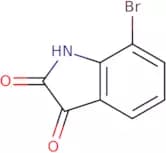
CAS:7-Bromo-2,3-dioxoindoline is a synthetic compound with a vibrational frequency of 249.2 cm−1. It is an inhibitor of the enzyme synthetase and has been shown to have an inhibitory effect on cancer cell viability in vitro. 7-Bromo-2,3-dioxoindoline inhibits the production of cancerous cells by interfering with their ability to synthesize DNA, which is necessary for cell division. This inhibition may be due to its ability to form intermolecular hydrogen bonding interactions with the amine group on the enzyme synthetase. 7-Bromo-2,3-dioxoindoline has also been shown to block the synthesis of 5-chloroisatin, one of its reaction products. The bioassay was carried out by measuring the amount of granulosa cells that were able to produce estrogen after treatment with this compound.Fórmula:C8H4BrNO2Pureza:Min. 98 Area-%Cor e Forma:PowderPeso molecular:226.03 g/mol8-Azahypoxanthine
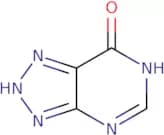
CAS:<p>8-Azahypoxanthine is a hydroxyl analog of hypoxanthine. It contains a nitrogen atom in place of the oxygen atom on the 2-position. 8-Azahypoxanthine has been shown to be an effective inhibitor of purine biosynthesis in yeast cells and can be used as a replacement for xanthine during the synthesis of adenosine triphosphate (ATP) from uracil. 8-Azahypoxanthine was found to have good detection sensitivity, with an estimated detection limit of 0.2 µM. The optimum pH for this compound is 7.8, which is similar to that of wild type strain and tissue culture media. Mutants resistant to 8-azahypoxanthine were generated by exposure to high concentrations (>100 mM) for long periods (>2 days). Mutant strains showed no detectable enzyme activity against orotic acid or glycosidic bond formation with erythromycin</p>Pureza:Min. 95%Cor e Forma:PowderPeso molecular:137.1 g/mol2,2,4-Trimethyl-1,2-dihydroquinolin-6-ol
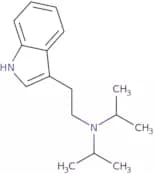
CAS:<p>2,2,4-Trimethyl-1,2-dihydroquinolin-6-ol (TQ) is a naturally occurring phenolic compound that has been shown to inhibit lipid peroxidation in animal and human cells. TQ is an antioxidant that protects against oxidative damage by scavenging free radicals. This compound can act as a nitroxyl radical trap and inhibits the dimerization of quinones and other reactive oxygen species. TQ also has been found to have anti-inflammatory effects, which may be due to its ability to reduce the production of inflammatory cytokines.<br>A new study shows that TQ can inhibit the production of reactive oxygen species in quantum yields up to 10%. It is thought that this effect may be due to TQ’s ability to stabilize different forms of reduced glutathione.</p>Fórmula:C12H15NOPureza:Min. 95%Cor e Forma:PowderPeso molecular:189.25 g/mol3-(2-Diisopropylaminoethyl)indole hydrochloride
CAS:Produto Controlado<p>3-(2-Diisopropylaminoethyl)indole hydrochloride is an inhibitor of the enzyme monoamine oxidase (MAO). MAO is responsible for the degradation of monoamines such as serotonin, dopamine, and norepinephrine. 3-(2-Diisopropylaminoethyl)indole hydrochloride inhibits these enzymes in order to increase the levels of these neurotransmitters in the brain. These effects are observed with a sectional study on the host plant species. 3-(2-Diisopropylaminoethyl)indole hydrochloride has been shown to have low potency for inhibiting 5-HT1A and 5-HT2A receptors in rat studies, but it is not active against 5-HT2C receptors. This drug was used to measure urinary serotonin and dopamine levels in human urine samples.</p>Fórmula:C16H25ClN2Pureza:Min. 95%Peso molecular:280.84 g/mol3-Aminoquinoline
CAS:<p>3-Aminoquinoline is a chemical compound that inhibits the activity of the epidermal growth factor receptor (EGFR). It is a potent inhibitor of cell proliferation and has been shown to have antitumour activity. 3-Aminoquinoline has been shown to inhibit the proliferation of carcinoma cell lines. This drug binds to the EGFR receptor, preventing it from activating downstream signalling pathways that control cell growth. 3-Aminoquinoline also has biological properties, including matrix-assisted laser desorption/ionization time-of-flight mass spectrometry, analytical chemistry, sample preparation, and Suzuki coupling reaction. The molecule is structurally analyzed using chemical structures and structural analysis techniques such as thermodynamic data or proton NMR spectroscopy. 3-Aminoquinoline also interacts with sugars through hydrogen bonding and oligosaccharides. These interactions are found to be high in value in some cases.</p>Fórmula:C9H8N2Pureza:Min. 95%Cor e Forma:White PowderPeso molecular:144.17 g/mol[2,3'-Bipyridin]-6'-amine
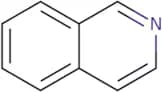
CAS:2,3'-Bipyridin-6'-amine is a chemical compound that is used as a building block for more complex molecules. It has high quality and can be used to make many different compounds. 2,3'-Bipyridin-6'-amine is versatile and can be used in the synthesis of a variety of compounds. It is also an intermediate in a number of reactions, including the formation of pyrimidine analogs. This chemical has been shown to be useful in the creation of new drugs for cancer treatment and other diseases.Fórmula:C10H9N3Pureza:Min. 95%Cor e Forma:Off-White PowderPeso molecular:171.2 g/molIsoquinoline
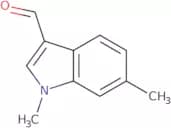
CAS:<p>Isoquinoline is a heterocyclic organic compound that can be synthesized by the asymmetric addition of hydrochloric acid to an isoquinol. It has been shown to inhibit the enzyme DPP-IV, which is involved in the degradation of glucagon-like peptide-1 (GLP-1). Isoquinoline is also a potent antagonist of the NMDA receptor, and has been shown to have anti-inflammatory properties in HLA-60 cells. This drug is soluble in organic solvents and forms crystalline polymorphs. Isoquinoline has been used in polymerase chain reactions as a hydrogen bond donor.</p>Fórmula:C9H7NPureza:Min. 95%Cor e Forma:PowderPeso molecular:129.16 g/mol1,6-Dimethyl-1H-indole-3-carbaldehyde
CAS:1,6-Dimethyl-1H-indole-3-carbaldehyde is a compound that can be used in the synthesis of many organic and pharmaceutical compounds. It is also an intermediate for the production of other chemicals. 1,6-Dimethyl-1H-indole-3-carboxylic acid has been shown to be useful as a building block in organic synthesis, due to its versatility and reactivity. The compound is also a reagent and can be used as part of research studies. This chemical has CAS number 202584-14-3.Fórmula:C11H11NOPureza:Min. 95%Cor e Forma:PowderPeso molecular:173.21 g/molIndole-3-acetonitrile
CAS:Indole-3-acetonitrile is a natural product that belongs to the class of antimicrobial agents. It has been shown to have antiinflammatory activity in mice and to inhibit enzyme activities in the plasma of rats. This compound was also found to be an inhibitor of indole synthesis, which may provide insight into its potential use as a therapeutic agent for cancer treatment. Indole-3-acetonitrile has been shown to have antimicrobial properties against galleria mellonella, which are insect larvae that are used as model organisms for research on development and genetics. The biological properties of this compound have been studied using structural analysis and biochemical research.Fórmula:C10H8N2Pureza:Min. 95%Cor e Forma:Yellow To Brown SolidPeso molecular:156.18 g/mol3-Methyl-3,8-diaza-bicyclo[3.2.1]octane dihydrochloride
CAS:3-Methyl-3,8-diaza-bicyclo[3.2.1]octane dihydrochloride is a high quality reagent that is useful as an intermediate in the synthesis of complex compounds and as a reagent for fine chemicals. 3-Methyl-3,8-diaza-bicyclo[3.2.1]octane dihydrochloride can be used as a versatile building block in the synthesis of speciality chemicals and research chemicals. It can also be used to synthesize a variety of reaction components, such as amines, carboxylic acids, alcohols, amides, and nitriles.Fórmula:C7H16Cl2N2Pureza:Min. 95%Cor e Forma:PowderPeso molecular:199.12 g/mol1,5-Dimethyl-1H-indole-3-carbaldehyde
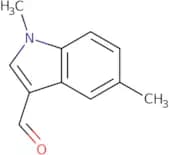
CAS:1,5-Dimethyl-1H-indole-3-carbaldehyde is a useful building block for organic synthesis. It is an important reagent for the synthesis of complex compounds and it has been used as a versatile building block in organic chemistry. This compound can be used as a starting point for the preparation of other chemicals, such as pharmaceuticals, pesticides, and dyes. 1,5-Dimethyl-1H-indole-3-carbaldehyde is also a fine chemical that has been used for research purposes. There are no known commercial uses for this compound.Fórmula:C11H11NOPureza:Min. 95%Cor e Forma:PowderPeso molecular:173.21 g/mol6-Ethylmercaptopurine
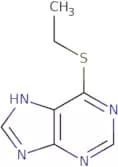
CAS:<p>6-Ethylmercaptopurine is a purine analogue that inhibits the synthesis of DNA. It is used as an inhibitor of protein synthesis and in the treatment of inflammatory bowel disease. 6-Ethylmercaptopurine has been shown to inhibit the activity of ATPase, which may be responsible for its ability to suppress the proliferation of cells. This drug can also act as an analog to adenosine, which can be used to determine ATP levels in a cell or tissue sample by measuring the amount of p-nitrophenyl phosphate produced. 6-Ethylmercaptopurine has been shown to block phosphatase activity, which may lead to inflammation in some cases.<br>6-Ethylmercaptopurine has a molecular weight of 194.2 g/mol and an optimum pH of 4.5</p>Fórmula:C7H8N4SPureza:Min. 95%Cor e Forma:Off-White PowderPeso molecular:180.23 g/mol


![3-Methyl-2-hydroxy-3H-imidazo[4,5-f]quinoline](/_next/image/?url=https%3A%2Fstatic.cymitquimica.com%2Fproducts%2F3D%2Fthumb-webp%2FFM25639.webp&w=3840&q=75)



![[2,3'-Bipyridin]-6'-amine](/_next/image/?url=https%3A%2Fstatic.cymitquimica.com%2Fproducts%2F3D%2Fthumb-webp%2FFB141123.webp&w=3840&q=75)

![3-Methyl-3,8-diaza-bicyclo[3.2.1]octane dihydrochloride](/_next/image/?url=https%3A%2Fstatic.cymitquimica.com%2Fproducts%2F3D%2Fthumb-webp%2FFM140947.webp&w=3840&q=75)