


Compostos Policiclícos
Os compostos policíclicos são moléculas orgânicas que contêm múltiplos anéis interconectados. Esses compostos incluem hidrocarbonetos aromáticos policíclicos e outros sistemas de anéis complexos. Eles são significativos na ciência dos materiais, produtos farmacêuticos e eletrônica orgânica. Na CymitQuimica, oferecemos compostos policíclicos de alta qualidade para apoiar suas pesquisas e aplicações industriais, garantindo resultados confiáveis e eficazes em seus projetos.
Subcategorias de "Compostos Policiclícos"
- Acridinas(97 produtos)
- Antraquinonas(533 produtos)
- Ácidos antraquinonasulfónicos(16 produtos)
- Azobenzenos(270 produtos)
- Azonaftalenos(98 produtos)
- Azoxibenzenos(12 produtos)
- Azulenos(11 produtos)
- Benzimidazóis(1.470 produtos)
- Benzodioxanos(27 produtos)
- Benzofuranos(923 produtos)
- Benzotiofenos(690 produtos)
- Benzotriazóis(436 produtos)
- Binaftil(133 produtos)
- Carbazóis(462 produtos)
- Cromanos, Cromenos(480 produtos)
- Cumarinas(1.121 produtos)
- Ciclofanos(11 produtos)
- Fluorenos e Fluorenonas(381 produtos)
- Imidazopiridinas(10 produtos)
- Indans(118 produtos)
- Indazóis(2.029 produtos)
- Indenos(22 produtos)
- Indóis(3.984 produtos)
- Indolinas(119 produtos)
- Isatinas(231 produtos)
- Isobenzofuranos(17 produtos)
- Ftalimidas N-Substituída(153 produtos)
- Naftalenos(2.427 produtos)
- Naftiridina(17 produtos)
- Naftoquinona(2 produtos)
- Perilenos(36 produtos)
- Fenazinas(25 produtos)
- Ftalazinas(33 produtos)
- Ftalimida(153 produtos)
- Hidrocarbonetos aromáticos policíclicos (PAHs)(270 produtos)
- Polifenol(261 produtos)
- Pteridinas(52 produtos)
- Pireno(87 produtos)
- Quinuclidina(1 produtos)
- Tetracenos(7 produtos)
Exibir 32 mais subcategorias
Foram encontrados 4574 produtos de "Compostos Policiclícos"
Ordenar por
Pureza (%)
0
100
|
0
|
50
|
90
|
95
|
100
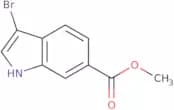
Methyl 3-bromoindole-6-carboxylate
CAS:<p>Please enquire for more information about Methyl 3-bromoindole-6-carboxylate including the price, delivery time and more detailed product information at the technical inquiry form on this page</p>Fórmula:C10H8BrNO2Pureza:Min. 95%Peso molecular:254.08 g/mol7-Azaspiro[4.5]decane
CAS:<p>Please enquire for more information about 7-Azaspiro[4.5]decane including the price, delivery time and more detailed product information at the technical inquiry form on this page</p>Fórmula:C9H17NPureza:Min. 95%Cor e Forma:Clear LiquidPeso molecular:139.24 g/molUmbelliprenin
CAS:<p>Umbelliprenin is a naturally occurring prenylated coumarin, which is primarily isolated from plants in the Apiaceae family. These plants are rich sources of various biologically active compounds. The mode of action of umbelliprenin is attributed to its ability to modulate multiple cellular pathways, including apoptosis and cell cycle arrest. This modulation is largely due to its interaction with reactive oxygen species and various signaling molecules within the cell.</p>Fórmula:C24H30O3Pureza:Min. 95%Peso molecular:366.49 g/mol4,7-Diazaspiro[2.5]octane dihydrochloride
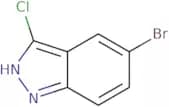
CAS:<p>Please enquire for more information about 4,7-Diazaspiro[2.5]octane dihydrochloride including the price, delivery time and more detailed product information at the technical inquiry form on this page</p>Pureza:Min. 95%5-Bromo-3-chloro-1H-indazole
CAS:<p>Please enquire for more information about 5-Bromo-3-chloro-1H-indazole including the price, delivery time and more detailed product information at the technical inquiry form on this page</p>Fórmula:C7H4BrClN2Pureza:Min. 95%Peso molecular:231.48 g/mol1-Benzyl-3-[3-(diethylamino)propoxy]-1H-indazole
CAS:Produto Controlado<p>Please enquire for more information about 1-Benzyl-3-[3-(diethylamino)propoxy]-1H-indazole including the price, delivery time and more detailed product information at the technical inquiry form on this page</p>Fórmula:C21H27N3OPureza:Min. 98 Area-%Cor e Forma:Clear LiquidPeso molecular:337.46 g/mol1,4-Diazabicyclo[2.2.2]octane
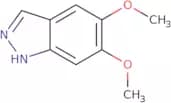
CAS:<p>1,4-Diazabicyclo[2.2.2]octane is an organic compound that belongs to the group of coordination compounds and has antimicrobial activity. It is a colorless solid with a melting point of -117°C and a boiling point of 245°C. The molecular geometry is planar, which means that all bonds are linear. The compound can be found in water vapor or as colloidal gold sols in reaction with water vapor. It can also be obtained by reacting triethylenediamine with hydrochloric acid at 100°C under vacuum conditions. 1,4-Diazabicyclo[2.2.2]octane has been shown to have antibiotic properties and is able to inhibit the growth of bacteria through coordination geometry and phase transition temperature effects on the bacterial cell membrane.</p>Fórmula:C6H12N2Pureza:Min. 98%Cor e Forma:PowderPeso molecular:112.17 g/mol5,6-Dimethoxy-1H-indazole
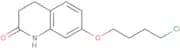
CAS:<p>5,6-Dimethoxy-1H-indazole is a phosphite that has been used as an intermediate in the synthesis of some pharmaceuticals. It has been shown to have hypotensive effects in rats and depressant effects in mice. The nitro group on 5,6-dimethoxy-1H-indazole can be reduced to an aminopropyl group by reaction with chloride and methyl alcohol or piperazine. This reaction produces two products: 1) a chloro compound that is not pharmacologically active and 2) a methylated product that retains all the original activity of 5,6-dimethoxy-1H-indazole. 5,6-Dimethoxy-1H-indazole also interacts with DNA by binding to nitrous oxide (N2O), which is present at high levels in clinical settings such as dentists' offices. Nitrous oxide reacts with 5,6-dimethoxy-1H</p>Fórmula:C9H10N2O2Pureza:Min. 95%Cor e Forma:PowderPeso molecular:178.19 g/mol3,4-Dihydro-7-(4-chlorobutoxy)-2(1H)-Quinolinone
CAS:<p>3,4-Dihydro-7-(4-chlorobutoxy)-2(1H)-Quinolinone is a crystalline organic base. It is used as an intermediate in the synthesis of piperazine derivatives. 3,4-Dihydro-7-(4-chlorobutoxy)-2(1H)-Quinolinone can be used to acetylate phenols and amines. This compound also has been shown to be useful in the industrial production of carbostyril and other pharmaceuticals. 3,4-Dihydro-7-(4-chlorobutoxy)-2(1H)-Quinolinone is also a high yield coupling agent for the production of heterocyclic compounds such as 1,5,6,8-tetrahydropyrimidines and benzimidazoles.</p>Pureza:Min. 95%5-Amino-8-hydroxyquinoline dihydrochloride
CAS:<p>5-Amino-8-hydroxyquinoline dihydrochloride (5-AQDH) is an anticancer drug that inhibits the activity of survivin, a protein that is overexpressed in cancer cells. It has been shown to be effective in vivo against melanoma tumor growth. 5-AQDH binds to the unpaired cysteine residues of the survivin molecule and inhibits its function by binding to the active site, blocking access to ATP and preventing DNA synthesis. The efficacy of 5-AQDH has been confirmed in vitro by studying the effect on cell viability and DNA synthesis, as well as by measuring plasma mass spectrometry data from melanoma patients. This drug is currently being investigated for its potential use as an anticancer agent.</p>Fórmula:C9H8N2O•(HCl)2Pureza:Min. 95%Peso molecular:212.63 g/mol7-Geranyloxycoumarin
CAS:<p>7-Geranyloxycoumarin is a naturally occurring coumarin derivative, which is primarily sourced from plant species in the Rutaceae family. It is a bioactive compound known for its presence in various essential oils and its contribution to the properties of these plant extracts. The mode of action of 7-Geranyloxycoumarin involves interactions at the cellular level, including enzyme inhibition and modulation of signal transduction pathways, which can lead to diverse pharmacological effects.</p>Fórmula:C19H22O3Pureza:Min. 95%Cor e Forma:PowderPeso molecular:298.38 g/molTert-butyl(8-anti)-3-azabicyclo[3.2.1]oct-8-ylcarbamate
CAS:<p>Tert-butyl(8-anti)-3-azabicyclo[3.2.1]oct-8-ylcarbamate (tBAA) is a heterocycle that has been modified to enhance its pharmacokinetic properties. Tert-butyl(8-anti)-3-azabicyclo[3.2.1]oct-8-ylcarbamate was designed to be metabolically stable and have a high bioavailability and isosteric properties with phosphatidylinositol, which it uses as a substrate in the catalytic cycle. This modification also increased tBAA's stability in vivo, leading to an increase in efficacy. The covalent attachment of the phenyl ring on the tertiary amine nitrogen of tBAA provides additional protection against hepatic metabolism by CYP450 enzymes, making it more potent than other compounds with similar structures that are not covalently attached to the amine group.</p>Fórmula:C12H22N2O2Pureza:Min. 95%Peso molecular:226.32 g/molAnhydrobyankangelicin
CAS:<p>Anhydrobyankangelicin is a coumarin derivative, which is a specialized type of organic compound commonly found in the plant family Apiaceae. This compound is biosynthetically sourced from the roots of plants such as Angelica species, where it is observed in varying concentrations. Anhydrobyankangelicin operates through interactions with several biological pathways, including modulating calcium channels and inhibiting certain enzymes involved in oxidative stress. This mechanism of action contributes to its efficacy in providing neuroprotective effects.</p>Fórmula:C17H16O6Pureza:Min. 95%Peso molecular:316.31 g/molEthyl5-acetyloxy-1,2-dimethylindole-3-carboxylate
CAS:Produto Controlado<p>Please enquire for more information about Ethyl5-acetyloxy-1,2-dimethylindole-3-carboxylate including the price, delivery time and more detailed product information at the technical inquiry form on this page</p>Fórmula:C15H17NO4Pureza:Min. 95%Peso molecular:275.3 g/molSelinidin
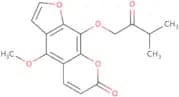
CAS:<p>Selinidin is a phytochemical compound, which is derived from the natural source of the Brunsvigia bosmaniae plant. As a bioactive constituent of this plant, it is characterized by its unique structure and chemical properties, enabling it to interact with a variety of cellular targets, primarily through modulation of inflammatory pathways. The mode of action of Selinidin involves the inhibition of pro-inflammatory cytokines and mediators, thereby reducing inflammation and oxidative stress at the cellular level.</p>Fórmula:C19H20O5Pureza:Min. 95%Peso molecular:328.36 g/mol5-Methoxyquinoline
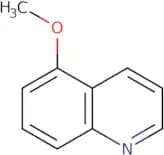
CAS:<p>5-Methoxyquinoline (5MQ) is a chemical compound that belongs to the quinoline derivatives. It has shown anticancer activity in tumor models through a proton-transfer mechanism. 5MQ reacts with an acidic proton, such as the hydronium ion, to produce a reactive intermediate that can react with DNA and other cellular macromolecules. The drug also has been shown to inhibit the growth of bacteria by inhibiting protein synthesis. This inhibition is due to its ability to transfer protons from one molecule to another, which alters the charge distribution on that molecule and prevents it from reacting with other molecules.</p>Fórmula:C10H9NOPureza:Min. 95%Cor e Forma:LiquidPeso molecular:159.18 g/mol5-Nitrosoquinolin-8-ol
CAS:<p>5-Nitrosoquinolin-8-ol is a chemical inhibitor that can be used in the study of enzyme function. It reacts with the active site of the enzymes and prevents them from carrying out their normal functions. 5-Nitrosoquinolin-8-ol has been shown to inhibit the growth of cancer cells and to have antiinflammatory properties. 5-Nitrosoquinolin-8-ol has been shown to bind to sephadex G-100 and potassium dichromate, which are both types of ion exchangers. The redox potential for this compound is -0.84 V. This means it will not react easily with other compounds, which makes it a good candidate for use as an inhibitor in biochemical studies. The nitrogen atoms in this compound are reactive, which means they can form covalent bonds with other molecules in a reaction called nitrosation. Structural biology is a branch of science that deals with studying the three dimensional structure of biological mac</p>Fórmula:C9H6N2O2Pureza:Min. 95%Cor e Forma:Yellow To Green SolidPeso molecular:174.16 g/mol7-Azaindole-5-carboxylic acid methyl ester
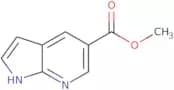
CAS:<p>7-Azaindole-5-carboxylic acid methyl ester is an ester derivative that can be synthesized from the reaction of acetyl chloride and diazotization. 7-Azaindole-5-carboxylic acid methyl ester has been used in research for its biological activity, specifically as a cytotoxic agent. It has also been shown to inhibit the growth of cancer cells by alkylation reactions and cyclization reactions. 7-Azaindole-5-carboxylic acid methyl ester has been shown to have antitumor properties with a mechanism that is not yet fully understood.</p>Fórmula:C9H8N2O2Pureza:Min. 95%Peso molecular:176.17 g/mol3-Azabicyclo[3,3,0]octane HCl
CAS:<p>3-Azabicyclo[3,3,0]octane HCl is an inorganic base that is used as a catalyst for organic reactions. It is often used to convert ester hydrochlorides into chiral esters. 3-Azabicyclo[3,3,0]octane HCl has been shown to be a suitable reducing agent for the reduction of various substances. The reaction proceeds via an intramolecular process and can be used with various parameters. 3-Azabicyclo[3,3,0]octane HCl is crystalline and has a melting point of 179 degrees Celsius. It also has optical activity due to its chirality.</p>Fórmula:C7H14ClNPureza:Min. 98 Area-%Cor e Forma:White Off-White PowderPeso molecular:147.65 g/mol4-Methylquinoline
CAS:<p>4-Methylquinoline is a natural compound that is structurally related to coumarin. It serves as an enzyme substrate for various types of enzymes, and has been shown to inhibit the activity of enzymes such as N-acetyltransferase, indoleamine 2,3-dioxygenase, and tryptophan 2,3-dioxygenase. 4-Methylquinoline has also been shown to be effective against infectious diseases such as toxoplasmosis and leishmaniasis. Furthermore, 4-methylquinoline has been shown to have anti-inflammatory properties in autoimmune diseases such as multiple sclerosis. The mechanism of action of 4-methylquinoline is not fully understood but it may interfere with the production of nitric oxide by inhibiting the enzyme nitric oxide synthase.</p>Fórmula:C10H9NPureza:Min. 95%Peso molecular:143.19 g/mol

![7-Azaspiro[4.5]decane](/_next/image/?url=https%3A%2Fstatic.cymitquimica.com%2Fproducts%2F3D%2Fthumb-webp%2FFA122892.webp&w=3840&q=75)

![4,7-Diazaspiro[2.5]octane dihydrochloride](/_next/image/?url=https%3A%2Fstatic.cymitquimica.com%2Fproducts%2F3D%2Fthumb-webp%2FFD141902.webp&w=3840&q=75)
![1-Benzyl-3-[3-(diethylamino)propoxy]-1H-indazole](/_next/image/?url=https%3A%2Fstatic.cymitquimica.com%2Fproducts%2F3D%2Fthumb-webp%2FFB162091.webp&w=3840&q=75)
![1,4-Diazabicyclo[2.2.2]octane](/_next/image/?url=https%3A%2Fstatic.cymitquimica.com%2Fproducts%2F3D%2Fthumb-webp%2FFD14322.webp&w=3840&q=75)


![Tert-butyl(8-anti)-3-azabicyclo[3.2.1]oct-8-ylcarbamate](/_next/image/?url=https%3A%2Fstatic.cymitquimica.com%2Fproducts%2F3D%2Fthumb-webp%2FFT167890.webp&w=3840&q=75)



![3-Azabicyclo[3,3,0]octane HCl](/_next/image/?url=https%3A%2Fstatic.cymitquimica.com%2Fproducts%2F3D%2Fthumb-webp%2FFA38235.webp&w=3840&q=75)
