Compostos Policiclícos
Subcategorias de "Compostos Policiclícos"
- Acridinas(97 produtos)
- Antraquinonas(533 produtos)
- Ácidos antraquinonasulfónicos(16 produtos)
- Azobenzenos(270 produtos)
- Azonaftalenos(98 produtos)
- Azoxibenzenos(12 produtos)
- Azulenos(11 produtos)
- Benzimidazóis(1.475 produtos)
- Benzodioxanos(27 produtos)
- Benzofuranos(924 produtos)
- Benzotiofenos(700 produtos)
- Benzotriazóis(438 produtos)
- Binaftil(133 produtos)
- Carbazóis(462 produtos)
- Cromanos, Cromenos(480 produtos)
- Cumarinas(1.122 produtos)
- Ciclofanos(11 produtos)
- Fluorenos e Fluorenonas(381 produtos)
- Imidazopiridinas(10 produtos)
- Indans(118 produtos)
- Indazóis(2.037 produtos)
- Indenos(22 produtos)
- Indóis(3.988 produtos)
- Indolinas(119 produtos)
- Isatinas(234 produtos)
- Isobenzofuranos(17 produtos)
- Ftalimidas N-Substituída(153 produtos)
- Naftalenos(2.437 produtos)
- Naftiridina(17 produtos)
- Naftoquinona(2 produtos)
- Perilenos(36 produtos)
- Fenazinas(25 produtos)
- Ftalazinas(33 produtos)
- Ftalimida(153 produtos)
- Hidrocarbonetos aromáticos policíclicos (PAHs)(270 produtos)
- Polifenol(261 produtos)
- Pteridinas(52 produtos)
- Pireno(87 produtos)
- Quinuclidina(1 produtos)
- Tetracenos(7 produtos)
Foram encontrados 4574 produtos de "Compostos Policiclícos"
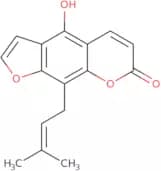
Alloisoimperatorin
CAS:Alloisoimperatorin is a naturally occurring furanocoumarin compound, which is extracted from certain plant species, primarily those belonging to the Apiaceae family. As a type of coumarin derivative, it is synthesized through intricate plant metabolic pathways involving the precursors umbelliferone and isopentenyl pyrophosphate, among others.Fórmula:C16H14O4Pureza:Min. 95%Peso molecular:270.28 g/molIsosibiricin
CAS:Isosibiricin is a naturally occurring lignan, which is extracted from certain plant sources. This compound is derived from the genus Daphne, traditionally known for its diverse range of biologically active constituents. Its mode of action is primarily through the modulation of key signaling pathways involved in cell proliferation and apoptosis. Isosibiricin exhibits notable inhibitory effects on specific enzymes and receptors implicated in oncogenic processes, making it a subject of interest for cancer research.
Fórmula:C16H18O5Pureza:Min. 95%Cor e Forma:PowderPeso molecular:290.31 g/mol6-Chloroisatin
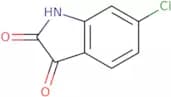
CAS:6-Chloroisatin is a potent inhibitor of bacterial growth that binds to the 50S ribosomal subunit. It has been shown to have strong inhibitory activity against tuberculosis and sulphamethoxazole-resistant strains of Mycobacterium tuberculosis. 6-Chloroisatin inhibits bacterial growth by binding to the 50S ribosomal subunit, thereby preventing protein synthesis and cell division. The electron deficient form of 6-chloroisatin reacts with the electron rich sulphamethoxazole by displacement of chloride ion from the sulphonamide ring, forming a regiospecific product that inhibits bacterial respiration. This reaction system is inhibited by activated carbon, which may be a potential therapeutic strategy for patients with drug resistant tuberculosis.
Fórmula:C8H4ClNO2Pureza:Min. 95%Peso molecular:181.58 g/mol4-[(7-Chloro-4-quinolinyl)amino]-1-pentanol
CAS:4-[(7-Chloro-4-quinolinyl)amino]-1-pentanol (QLT) is a drug that has been shown to be effective against both healthy volunteers and malaria patients. It is a prodrug that is metabolized by the liver into 7-chloroquinalone, which inhibits the growth of plasmodium falciparum. QLT has been shown to be safe and well tolerated in studies with healthy volunteers, and it does not appear to cause significant adverse effects. QLT also has an effect on T cells, which may be due to its ability to inhibit protein synthesis and cell division.Fórmula:C14H17ClN2OPureza:Min. 95%Cor e Forma:Yellow SolidPeso molecular:264.75 g/molIndoline-2-carboxylic acid
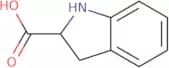
CAS:Indoline-2-carboxylic acid is a photophysical molecule with an absorption maximum at 518 nm. It has been shown to inhibit the activity of enzymes such as cyclooxygenase, lipoxygenase, and monoamine oxidases. This compound has been found to be effective in the treatment of cancer cells. Indoline-2-carboxylic acid is also used in pharmaceutical preparations, where it binds to enantiomers of other molecules and inhibits their biological activity. Indoline-2-carboxylic acid reacts with hydrochloric acid to form allyl carbonate and amide.
Fórmula:C9H9NO2Pureza:Min. 97 Area-%Cor e Forma:PowderPeso molecular:163.17 g/mol4-Hydroxy-2-methylindole
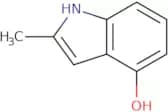
CAS:4-Hydroxy-2-methylindole is an organic compound that belongs to the class of metal salts. It can be obtained as a white solid by reacting indole with alkali metal hydroxide or alkali metal carbonate in the presence of water at high temperatures. The reaction yields 4-hydroxy-2-methylindole and hydrogen chloride gas, which are removed by distillation. 4-Hydroxy-2-methylindole is used in the production of epichlorohydrin, which is a raw material for polyurethane resins and olefins.Fórmula:C9H9NOPureza:Min. 95%Cor e Forma:PowderPeso molecular:147.17 g/molFraxin
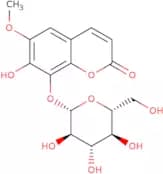
CAS:Fraxin is a naturally occurring anticoagulant, which is derived from the bark of certain species of the Fraxinus tree. It functions by inhibiting thrombin and other key enzymes in the coagulation cascade, thus preventing the formation of blood clots. This mode of action makes it particularly valuable in research settings focused on cardiovascular diseases, as well as in the development of therapeutic agents targeting coagulopathies.Fórmula:C16H18O10Pureza:Min. 95%Cor e Forma:PowderPeso molecular:370.31 g/molQuinoline 2,4-dicarboxylic acid
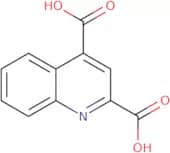
CAS:Quinoline 2,4-dicarboxylic acid (QDA) is a novel cytotoxic agent that targets cervical cancer cells. It inhibits the uptake of glucose and other nutrients by cervical cancer cells, leading to cell death through apoptosis. QDA also inhibits the expression of genes involved in cross-linking reactions, which are important for the structural integrity of proteins. This agent has been shown to inhibit the growth of aniline-induced breast cancer cells and glutamate-stimulated PC12 cells. QDA binds to DNA and forms covalent bonds with nucleotide bases, inhibiting DNA synthesis, as well as interfering with protein synthesis and cell division. The QDA mechanism is similar to that of benzoquinolines and estrone sulfate.
Fórmula:C11H7NO4Pureza:Min. 95%Cor e Forma:White PowderPeso molecular:217.18 g/mol13,4-diaza-5-(tert-butyl)-2-hydroxy-7-oxotricyclo[6.4.0.0<2,6>]dodeca-1(8),4,9,11-tetraene-3-carboxamide
CAS:Please enquire for more information about 13,4-diaza-5-(tert-butyl)-2-hydroxy-7-oxotricyclo[6.4.0.0<2,6>]dodeca-1(8),4,9,11-tetraene-3-carboxamide including the price, delivery time and more detailed product information at the technical inquiry form on this pagePureza:Min. 95%4-Imidazoleacetic acid HCl
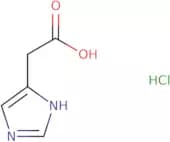
CAS:4-Imidazoleacetic acid HCl is a fluorescent probe that binds to the α1 subunit of the dinucleotide phosphate (NADH) oxidoreductase. It has been shown to inhibit mitochondrial functions, which may be due to its ability to inhibit the pentose phosphate pathway and reduce reactive oxygen species levels. 4-Imidazoleacetic acid HCl has also shown inhibitory properties against congestive heart failure by acting on the mitochondria and inhibiting energy metabolism. It can also be used as a chemical biology tool for studying protein interactions with NADH dehydrogenase. The x-ray crystal structures have revealed that 4-imidazoleacetic acid HCl binds to the active site of NADH oxidoreductase with an orientation that mimics a substrate molecule. This allows it to bind tightly and disrupt enzyme activity.
Fórmula:C5H6N2O2·HClPureza:Min. 95%Cor e Forma:PowderPeso molecular:162.57 g/molEthyl 5-Nitroindole-2-Carboxylate
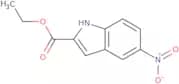
CAS:Ethyl 5-Nitroindole-2-Carboxylate is a precursor to the anti-HIV drug Delavirdine. It is synthesized by condensation of ethyl pyruvate and urea derivative in the presence of thionyl chloride. This compound can be used as an intermediate in the synthesis of other compounds such as ethyl ester and ethyl pyruvate. The chemical reaction is carried out at room temperature using a chlorinated solvent such as methylene chloride or chloroform. Ethyl 5-nitroindole-2-carboxylate can also be used for the synthesis of other drugs, including antitumor agents.
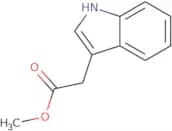
Fórmula:C11H10N2O4Pureza:Min. 95%Cor e Forma:PowderPeso molecular:234.21 g/molMethyl indole-3-acetate
CAS:Methyl indole-3-acetate is a phytochemical that inhibits the growth of cells. It has been shown to induce apoptosis in cancer cells, and also to inhibit carcinogenesis. Methyl indole-3-acetate is found at higher concentrations in the target tissue, such as the prostate gland, than in other tissues. This compound has been shown to inhibit lipid peroxidation in vitro and may be useful for the prevention of oxidative damage as well as for its antitumor activity. The effects of methyl indole-3-acetate on cell growth are related to its ability to bind with amines and uroquinase enzymes. Methyl indole-3-acetate has been shown to have anti-cancer properties in various model systems, including microbial metabolism studies.Fórmula:C11H11NO2Pureza:Min. 99 Area-%Cor e Forma:PowderPeso molecular:189.21 g/mol6-Methylmercaptopurine
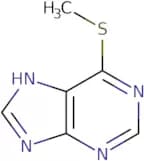
CAS:6-Methylmercaptopurine is an important metabolite of 6-methylmercaptopurine, which is a vital component of the nucleotide synthesis pathway. It is used in analytical methods to determine levels of nucleotides, as well as in biological studies for its effect on autoimmune diseases. 6-Methylmercaptopurine can inhibit replication by inhibiting the methyltransferase enzyme.Fórmula:C6H6N4SPureza:Min. 95%Cor e Forma:Off-White Yellow PowderPeso molecular:166.2 g/mol5-Benzyloxyindole-3-acetic acid
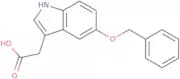
CAS:5-Benzyloxyindole-3-acetic acid is a synthetic chemical that is used as a plant growth regulator. It inhibits the uptake of other plant nutrients, such as nitrates and phosphate ions by roots, which leads to decreased plant growth. This compound also has an inhibitory effect on membranes and morphology. The inhibition of membrane transport can lead to cell death, which can be seen in the case of plants treated with this chemical. 5-Benzyloxyindole-3-acetic acid has been shown to affect the response pathway of plants at temperatures between c1-c3 degrees Celsius.Fórmula:C17H15NO3Pureza:Min. 95%Cor e Forma:PowderPeso molecular:281.31 g/mol2-(2-(3(S)-(3-(2-(7-Chloro-2-quinolinyl)-ethenylphenyl)-3-hydroxypropyl)phenyl)-2-propanol
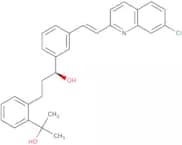
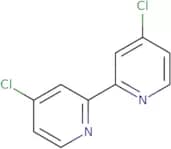
CAS:Covid-19 is a polymer that can be used as a coating for surfaces, such as plastics and metals. Covid-19 has been shown to have antibacterial properties against bacteria, including methicillin-resistant Staphylococcus aureus (MRSA) and Clostridium perfringens. Covid-19 also has functional groups that can be used in analytical methods to determine the concentration of drugs in biological samples. Covid-19 is soluble in polyvinyl alcohol and glycerol, which are both common additives in pharmaceuticals. Covid-19 has optical properties that make it suitable for use as a coating on contact lenses or other ophthalmic devices.Fórmula:C29H28ClNO2Pureza:Min. 95%Cor e Forma:PowderPeso molecular:457.99 g/mol4,4'-Dichloro-2,2'-bipyridine
CAS:4,4'-Dichloro-2,2'-bipyridine (4,4'-DDBP) is a polydentate ligand that has been shown to be highly cytotoxic against cancer cells. 4,4'-DDBP binds to amines in the cancer cell and uses its nucleophilic character to activate the amine by displacement of chloride ions. This leads to the production of an excited state that can be used for photodynamic therapy or as a fluorescence probe. This compound has also been shown to have operational kinetic properties in the inhibition of bilirubin oxidase.Fórmula:C10H6Cl2N2Pureza:Min. 95%Cor e Forma:White PowderPeso molecular:225.07 g/mol(1R)-(-)-2-Azabicyclo[2.2.1]hept-5-en-3-one
CAS:(1R)-(-)-2-Azabicyclo[2.2.1]hept-5-en-3-one is a carbocyclic nucleoside that has been used as a flow rate standard to measure the rate of liquid chromatography. It is an organic solvent, which has been shown to have kinetic properties in the ring opening of lactams and the hydrolysis of esters. (1R)-(-)-2-Azabicyclo[2.2.1]hept-5-en-3-one can be synthesized by reacting with a cocatalyst and a reaction time of less than 5 minutes at room temperature in a high performance liquid chromatography method or by liquid chromatography with preparative methods.br>br> (1R)-(-)-2-Azabicyclo[2.2.1]hept-5-en-3-one is used as a binding agent forFórmula:C6H7NOPureza:Min. 98 Area-%Cor e Forma:White PowderPeso molecular:109.13 g/mol4,4'-Dibromo-2,2'-bipyridine
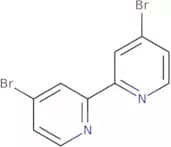
CAS:4,4'-Dibromo-2,2'-bipyridine is a nucleophilic compound that can react with a wide range of electrophiles. It has been used in medications as a thermally stable and non-toxic ligand for metal ions. 4,4'-Dibromo-2,2'-bipyridine is an efficient ligand for the coordination of many transition metals. This compound also has high values in light emission and is used in crystallography to study protein binding sites. The n-oxide form of 4,4'-dibromo-2,2'-bipyridine has biological properties that have not yet been studied.
Fórmula:C10H6Br2N2Pureza:Min. 97 Area-%Cor e Forma:PowderPeso molecular:313.98 g/mol5-Amino-(3,4'-bipyridin)-6(1H)-one
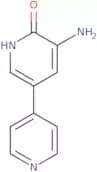
CAS:Phosphodiesterase type 3 inhibitor; positive inotropic agent; vasodilatoryFórmula:C10H9N3OPureza:Min. 95%Cor e Forma:PowderPeso molecular:187.2 g/molN1-(6-Methoxy-8-quinolinyl)-1,4-pentanediamine
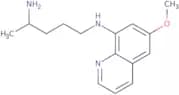
CAS:Impurity found in Primaquine diphosphateFórmula:C15H21N3OPureza:Min. 95%Cor e Forma:Yellow PowderPeso molecular:259.35 g/mol

![4-[(7-Chloro-4-quinolinyl)amino]-1-pentanol](/_next/image/?url=https%3A%2Fstatic.cymitquimica.com%2Fproducts%2F3D%2Fthumb-webp%2FFC20107.webp&w=3840&q=75)
![13,4-diaza-5-(tert-butyl)-2-hydroxy-7-oxotricyclo[6.4.0.0<2,6>]dodeca-1(8),4,9,11-tetraene-3-carbo…](/_next/image/?url=https%3A%2Fstatic.cymitquimica.com%2Fproducts%2F3D%2Fthumb-webp%2FFD169872.webp&w=3840&q=75)
![(1R)-(-)-2-Azabicyclo[2.2.1]hept-5-en-3-one](/_next/image/?url=https%3A%2Fstatic.cymitquimica.com%2Fproducts%2F3D%2Fthumb-webp%2FFA18047.webp&w=3840&q=75)