Compostos Policiclícos
Subcategorias de "Compostos Policiclícos"
- Acridinas(97 produtos)
- Antraquinonas(533 produtos)
- Ácidos antraquinonasulfónicos(16 produtos)
- Azobenzenos(270 produtos)
- Azonaftalenos(98 produtos)
- Azoxibenzenos(12 produtos)
- Azulenos(11 produtos)
- Benzimidazóis(1.475 produtos)
- Benzodioxanos(27 produtos)
- Benzofuranos(924 produtos)
- Benzotiofenos(700 produtos)
- Benzotriazóis(438 produtos)
- Binaftil(133 produtos)
- Carbazóis(462 produtos)
- Cromanos, Cromenos(480 produtos)
- Cumarinas(1.122 produtos)
- Ciclofanos(11 produtos)
- Fluorenos e Fluorenonas(381 produtos)
- Imidazopiridinas(10 produtos)
- Indans(118 produtos)
- Indazóis(2.037 produtos)
- Indenos(22 produtos)
- Indóis(3.988 produtos)
- Indolinas(119 produtos)
- Isatinas(234 produtos)
- Isobenzofuranos(17 produtos)
- Ftalimidas N-Substituída(153 produtos)
- Naftalenos(2.437 produtos)
- Naftiridina(17 produtos)
- Naftoquinona(2 produtos)
- Perilenos(36 produtos)
- Fenazinas(25 produtos)
- Ftalazinas(33 produtos)
- Ftalimida(153 produtos)
- Hidrocarbonetos aromáticos policíclicos (PAHs)(270 produtos)
- Polifenol(261 produtos)
- Pteridinas(52 produtos)
- Pireno(87 produtos)
- Quinuclidina(1 produtos)
- Tetracenos(7 produtos)
Foram encontrados 4574 produtos de "Compostos Policiclícos"
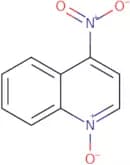
4-Nitroquinoline-N-oxide
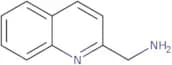
CAS:4-Nitroquinoline-N-oxide is a polymerase chain reaction (PCR) inhibitor that blocks the activity of methyltransferases, which are enzymes involved in DNA replication and repair. The mechanism of action has been shown to be due to the inhibition of the activities of these enzymes in cancer tissues. The efficacy of 4-Nitroquinoline-N-oxide has been demonstrated using an experimental model system composed of cells from Candida glabrata and other cancers, as well as a model system for carcinogenesis in vitro. This compound also shows antiinflammatory activity and can be used as a natural compound for chemotherapy. Chromatographic analysis has revealed that 4-Nitroquinoline-N-oxide is not toxic to wild type strains, but it is toxic to cancer cells with mutations in their DNA repair mechanisms.Fórmula:C9H6N2O3Pureza:Min. 95%Cor e Forma:PowderPeso molecular:190.16 g/molQuinolin-2-yl-methylamine
CAS:Quinolin-2-yl-methylamine is an amine that is used in the synthesis of other compounds. It can be prepared by protonation of quinoline with methylamine, followed by crystallization. The yield of this reaction is dependent on the purity of the starting materials and the reaction conditions. This compound has a molecular weight of 169.07 g/mol and a melting point at 217 °C. The infrared spectrum for Quinolin-2-yl-methylamine shows peaks at 2900 cm−1, 1670 cm−1, and 1590 cm−1. It also has x-ray crystallography data (space group P21/c).Fórmula:C10H10N2Pureza:Min. 96 Area-%Cor e Forma:PowderPeso molecular:158.2 g/mol5-Acetylindole
CAS:5-Acetylindole is a synthetic compound that has been shown to have anticancer activity. It inhibits the growth of cancer cells by disrupting their mitochondria, which leads to cell death. 5-Acetylindole was synthesized in an attempt to increase the anticancer efficacy of indole compounds and acetylation of indole rings was found to be an effective strategy for this purpose. Acetylation of the 5 position on the indole ring leads to a more potent antiproliferative agent with decreased potential for resistance development. This compound has been shown to disrupt cellular function in k562 cells, leading to cell death.Fórmula:C10H9NOPureza:Min. 95%Peso molecular:159.18 g/molIndole-3-acetyl-L-valine
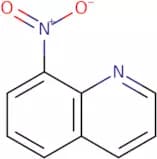
CAS:Indole-3-acetyl-L-valine (IAV) is a naturally occurring amino acid that binds to the surface glycoprotein of wild-type viruses. It inhibits viral replication by inhibiting the production of basic proteins, which are necessary for viral life. IAV also has inhibitory properties against the toll-like receptor, which may be due to its ability to inhibit growth factor signaling. IAV has been shown to decrease the number of opportunistic fungal and bacterial infections in humans, with no adverse effects on human health. This drug has no effect on healthy cells and can be used as an adjuvant for the treatment of HIV and other viral infections.Fórmula:C15H18N2O3Pureza:Min. 95%Cor e Forma:PowderPeso molecular:274.32 g/mol8-Nitroquinoline
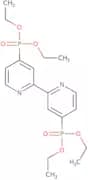
CAS:8-Nitroquinoline is a nitrogenous compound that has been used as an inhibitor of Leishmania, a parasite that causes leishmaniasis. 8-Nitroquinoline inhibits the growth of Leishmania by inhibiting the enzyme hepg2, which is involved in the synthesis of lipids and cholesterol. The inhibition of this enzyme leads to the accumulation of malonic acid, which inhibits the production of ATP. This inhibition may lead to cell death or inhibitory effects on other enzyme activities. 8-Nitroquinoline has been shown to be effective against Leishmania parasites in vivo.Fórmula:C9H6N2O2Pureza:Min. 95%Cor e Forma:PowderPeso molecular:174.16 g/molTetraethyl 2,2'-bipyridine-4,4'-diylbisphosphonate
CAS:Tetraethyl 2,2'-bipyridine-4,4'-diylbisphosphonate is a chemical that is used as an intermediate in the synthesis of other fine chemicals. Tetraethyl 2,2'-bipyridine-4,4'-diylbisphosphonate can be used as a building block for synthesis of more complex compounds with high chemical and biological activity. Tetraethyl 2,2'-bipyridine-4,4'-diylbisphosphonate can also be used to synthesize speciality chemicals or research chemicals. This compound has many versatile uses due to its ability to react with different substances to form new chemical compounds.
Fórmula:C18H26N2O6P2Pureza:Min. 95%Cor e Forma:PowderPeso molecular:428.36 g/mol4,5,6-Trimethoxyindole
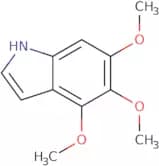
CAS:4,5,6-Trimethoxyindole is a chemical compound that is found in the plant Chinensis. This compound has been shown to have potent anticancer properties and can be used as a treatment for inflammatory diseases. 4,5,6-Trimethoxyindole has been shown to modulate the activity of some bacteria and it has been hypothesized that this may be due to its interaction with formylation. The acidic nature of 4,5,6-Trimethoxyindole makes it soluble in ethanol. It can also be synthesised from butyric acid and other chemicals.
Fórmula:C11H13NO3Pureza:Min. 95%Cor e Forma:SolidPeso molecular:207.23 g/mol4'-Iodo-2,2':6',2''-terpyridine
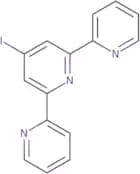
CAS:4'-Iodo-2,2':6',2''-terpyridine is a transoid that has two conformations: one with the pyridine ring in the cisoid position and one with the pyridine ring in the transoid position. It can form intermolecular interactions with other molecules of 4'-iodo-2,2':6',2''-terpyridine. These interactions may be due to stacking or planar interactions.Fórmula:C15H10IN3Pureza:Min. 95%Cor e Forma:PowderPeso molecular:359.16 g/mol[(8S,9R,10S,11S,13S,14S,16S,17R)-9-Fluoro-11-Hydroxy-17-(2-Methoxyacetyl)-10,13,16-Trimethyl-3-Oxo-6,7,8,11,12,14,15,16-Octahydrocyc lopenta[a]Phenanthren-17-Yl] Propanoate
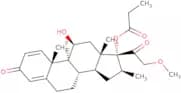
CAS:Produto ControladoBetamethasone is a corticosteroid that is used to treat inflammation, ankylosing spondylitis, and rheumatoid arthritis. It has been shown to have efficacy in the treatment of pediatric patients with asthma, as well as animal models of cardiac arrest and stroke. Betamethasone has also been shown to be effective in the treatment of potassium ion-associated death due to cardiac arrhythmia or repolarization abnormalities. This drug can be administered orally or topically; it binds to the glucocorticoid receptor on cells and modulates gene transcription. The primary mechanism of action for betamethasone is not fully understood but may involve inhibition of protein synthesis and suppression of inflammatory cells.Fórmula:C26H35FO6Pureza:Min. 95%Peso molecular:462.55 g/mol4-Aminoindole hydrochloride
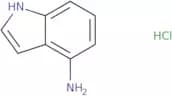
CAS:4-Aminoindole hydrochloride is a white crystalline solid that can be used as a versatile building block in organic synthesis. It is also used as an intermediate in the production of various pharmaceuticals and other chemical compounds. 4-Aminoindole hydrochloride is soluble in most polar solvents, but insoluble in ethers and oils. This compound is also a useful reagent for the conversion of nitrobenzenes to aminobenzoic acids. CAS Number 174854-93-4
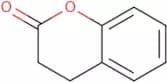
Fórmula:C8H9ClN2Pureza:Min. 95%Cor e Forma:PowderPeso molecular:168.62 g/molDihydro coumarin
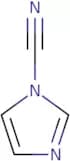
CAS:Dihydro coumarin is a cyclic organic compound, which is a derivative of coumarin primarily obtained through synthetic processes. It possesses the characteristic odor reminiscent of freshly mown hay, contributing to its widespread application in various industries. The primary mode of action of dihydro coumarin involves its role as a fragrance and flavoring agent, capitalizing on its aromatic profile to enhance products’ sensory attributes.Fórmula:C9H8O2Pureza:Min. 95%Peso molecular:148.16 g/mol1-Cyanoimidazole
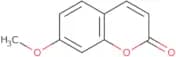
CAS:1-Cyanoimidazole is a phosphodiester that is used in the chemical ligation of nucleic acids. It reacts with terminal alkynes to form covalent linkages between DNA molecules, and can be used as a crosslinker for dna duplexes. 1-Cyanoimidazole can be used as a phosphate group replacement in DNA replication. This compound has been shown to react with terminal alkyne groups on DNA templates, forming stable covalent linkages between strands in the presence of an appropriate nucleophile. 1-Cyanoimidazole has been shown to have sequence specificity and efficient method for linking strands of DNA.Fórmula:C4H3N3Pureza:Min. 95%Cor e Forma:Off-White PowderPeso molecular:93.09 g/mol7-Methoxycoumarin
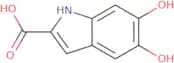
CAS:7-Methoxycoumarin is a fluorescent compound, which is a derivative of coumarin. It is synthesized through chemical modification processes of natural coumarin, typically sourced from plant extracts of the Apiaceae and Rutaceae families.Fórmula:C10H8O3Pureza:Min. 95%Cor e Forma:PowderPeso molecular:176.17 g/mol5,6-Dihydroxy-1H-indole-2-carboxylic acid
CAS:5,6-Dihydroxy-1H-indole-2-carboxylic acid (5,6 DHICA) is a photosensitizing agent with a long detection time. It has been used in the treatment of cervical cancer and skin cancer. 5,6 DHICA is an inhibitor of tyrosinase, which is responsible for the synthesis of melanin. 5,6 DHICA prevents the conversion of dopachrome to eumelanin by binding to the active site of tyrosinase and inhibiting its activity. This makes it an important drug for the treatment of hyperpigmentation disorders such as vitiligo and melasma.Fórmula:C9H7NO4Pureza:Min. 95%Cor e Forma:PowderPeso molecular:193.16 g/mol1-(5-Isoquinolinesulfonyl)piperazine hydrochloride
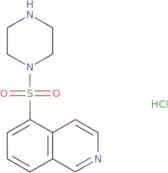
CAS:1-(5-Isoquinolinesulfonyl)piperazine hydrochloride (1-ISOQ-PIP) is a chemical compound that has been shown to inhibit the growth of leukemia cells. It inhibits the expression of leukemia inhibitory factor, which may be due to its ability to introduce modifications into the sequence of DNA. 1-ISOQ-PIP also inhibits pluripotent stem cells and induces adipocyte differentiation. This substance can be used for cancer treatment by inhibiting the growth of leukemia cells and inducing differentiation.Fórmula:C13H16ClN3O2SPureza:Min. 95%Cor e Forma:PowderPeso molecular:313.8 g/mol4-Benzyloxyindole-2-carboxylic acid
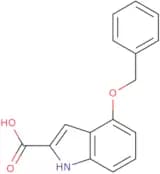
CAS:4-Benzyloxyindole-2-carboxylic acid is a synthetic intermediate. It can be prepared from the hydrazide by reaction with benzaldehyde and subsequent reduction. The carboxylic acid moiety of 4-benzyloxyindole-2-carboxylic acid reacts with an electron source to form a class of compounds that can be used as synthetic intermediates. The diazonium salts formed in this process are then reacted with different electrophiles to give other useful products. 4-Benzyloxyindole-2-carboxylic acid has been used for the synthesis of many organic compounds, such as active compounds, intermediates, and synthetic intermediates, by spectroscopic techniques.
Fórmula:C16H13NO3Pureza:Min. 95%Cor e Forma:PowderPeso molecular:267.28 g/mol7-Ethylindole
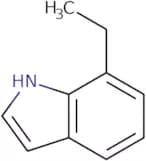
CAS:7-Ethylindole is a fatty acid with a cationic surfactant that belongs to the group of mesoporous materials. It has been synthesized by using chromatographic method and sample preparation techniques. The synthetic process is based on the protonation of 7-ethylindole. It undergoes dehydrogenation and activation energy, which is programmed in copper chromite. The chemical compositions are chloride, hydrogenated, and activated 7-ethylindole.Fórmula:C10H11NPureza:Min. 95%Peso molecular:145.2 g/molOroselol
CAS:Oroselol is an innovative beta-adrenergic blocker, which is a synthetic derivative with unique cardiovascular targeting properties. It is sourced from engineered chemical synthesis, utilizing advanced molecular design to enhance selectivity for beta-adrenergic receptors. The mode of action of Oroselol involves competitive antagonism of beta-1 and beta-2 adrenergic receptors, leading to a decrease in heart rate and myocardial contractility. This blockade of adrenergic stimulation results in reduced cardiac output and lower blood pressure.
Fórmula:C14H12O4Pureza:Min. 95%Cor e Forma:PowderPeso molecular:244.24 g/mol5-Fluoroindole-3-acetic acid
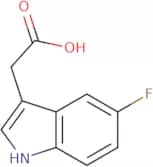
CAS:5-Fluoroindole-3-acetic acid is a fluorine-containing drug that inhibits the transport of indoleacetic acid (IAA), an auxin, in the peo-iaa system. It has been shown to inhibit cancer cell growth and induce apoptosis in a variety of tumour cells. 5-Fluoroindole-3-acetic acid can be used as a chemotherapeutic agent for cancers such as bladder, breast, and prostate cancers. This drug also activates enzymatic reactions by introducing fluorine atoms into reaction sites.Fórmula:C10H8FNO2Cor e Forma:PowderPeso molecular:193.17 g/mol4-Acetoxyindole
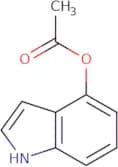
CAS:4-Acetoxyindole is a chromophore that belongs to the pyrrole family of compounds. It has been shown to react with an ionic liquid under acidic conditions to form a protonated intermediate, which can be deprotonated by a nucleophile. This reaction yields an acetate anion and a fluorescing product. 4-Acetoxyindole also reacts with deuterium gas, yielding an acetate, a deuterium atom, and fluorescing product. The reaction is reversible and the yield of the product depends on the concentration of the reactants. 4-Acetoxyindole has strong carbonyl groups that make it reactive towards other functional groups. These reactions are useful for synthesizing heterocycles such as indoles and isoquinolines.
Fórmula:C10H9NO2Pureza:Min. 97 Area-%Cor e Forma:White PowderPeso molecular:175.18 g/mol