


Compostos Policiclícos
Os compostos policíclicos são moléculas orgânicas que contêm múltiplos anéis interconectados. Esses compostos incluem hidrocarbonetos aromáticos policíclicos e outros sistemas de anéis complexos. Eles são significativos na ciência dos materiais, produtos farmacêuticos e eletrônica orgânica. Na CymitQuimica, oferecemos compostos policíclicos de alta qualidade para apoiar suas pesquisas e aplicações industriais, garantindo resultados confiáveis e eficazes em seus projetos.
Subcategorias de "Compostos Policiclícos"
- Acridinas(97 produtos)
- Antraquinonas(533 produtos)
- Ácidos antraquinonasulfónicos(16 produtos)
- Azobenzenos(270 produtos)
- Azonaftalenos(98 produtos)
- Azoxibenzenos(12 produtos)
- Azulenos(11 produtos)
- Benzimidazóis(1.475 produtos)
- Benzodioxanos(27 produtos)
- Benzofuranos(924 produtos)
- Benzotiofenos(700 produtos)
- Benzotriazóis(438 produtos)
- Binaftil(133 produtos)
- Carbazóis(462 produtos)
- Cromanos, Cromenos(480 produtos)
- Cumarinas(1.122 produtos)
- Ciclofanos(11 produtos)
- Fluorenos e Fluorenonas(381 produtos)
- Imidazopiridinas(10 produtos)
- Indans(118 produtos)
- Indazóis(2.037 produtos)
- Indenos(22 produtos)
- Indóis(3.988 produtos)
- Indolinas(119 produtos)
- Isatinas(234 produtos)
- Isobenzofuranos(17 produtos)
- Ftalimidas N-Substituída(153 produtos)
- Naftalenos(2.436 produtos)
- Naftiridina(17 produtos)
- Naftoquinona(2 produtos)
- Perilenos(36 produtos)
- Fenazinas(25 produtos)
- Ftalazinas(33 produtos)
- Ftalimida(153 produtos)
- Hidrocarbonetos aromáticos policíclicos (PAHs)(270 produtos)
- Polifenol(261 produtos)
- Pteridinas(52 produtos)
- Pireno(87 produtos)
- Quinuclidina(1 produtos)
- Tetracenos(7 produtos)
Exibir 32 mais subcategorias
Foram encontrados 4574 produtos de "Compostos Policiclícos"
Ordenar por
Pureza (%)
0
100
|
0
|
50
|
90
|
95
|
100
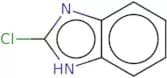
2-Chlorobenzimidazole
CAS:2-Chlorobenzimidazole is an analog of benzimidazole that has been synthesized by Langmuir adsorption isotherm. It is a white crystalline solid that can be dissolved in water and hydrochloric acid. 2-Chlorobenzimidazole inhibits the growth of herpes simplex virus by acting as a competitive inhibitor for the viral enzyme thymidine kinase, which catalyzes the conversion of thymine to thymidine. 2-Chlorobenzimidazole also binds to monoclonal antibodies, inhibiting their binding to their corresponding antigens. This activity may be due to its ability to bind covalently with amino groups on proteins and other molecules. Magnetic resonance spectroscopy has shown that 2-chlorobenzimidazole binds tightly with protonated (positively charged) phosphorous atoms within cells.Fórmula:C7H5ClN2Pureza:Min. 95%Cor e Forma:White PowderPeso molecular:152.58 g/mol(1,10)Phenanthrolin-5-ylamine
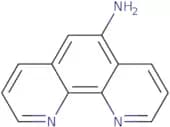
CAS:<p>(1,10)Phenanthrolin-5-ylamine is a sample preparation reagent that has been used in the production of polymers with redox potentials below 0.2 V. This compound is also an antimicrobial agent that has shown to be effective against bacteria and fungi. The detection sensitivity of (1,10)phenanthrolin-5-ylamine is high, making it suitable for use in human serum samples. It can be protonated by a base such as sodium hydroxide or ammonia to form its cationic form, which can then react with nucleophiles such as thiols and amines to produce an alkylating agent. It has been used in the synthesis of l1210 murine leukemia cells and has been observed to have photophysical properties that are sensitive to neutral pH levels. <br>(1,10)Phenanthrolin-5-ylamine can be used for process optimization</p>Fórmula:C12H9N3Pureza:Min. 95%Cor e Forma:Off-White PowderPeso molecular:195.22 g/mol5-Methoxy-3-(1,2,5,6-tetrahydro-4-pyridinyl)-1H-indole hemisuccinate
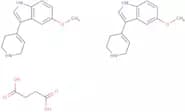
CAS:<p>5-Methoxy-3-(1,2,5,6-tetrahydro-4-pyridinyl)-1H-indole hemisuccinate is a serotonin receptor agonist that has been shown to stimulate the 5HT1A receptor. It stimulates insulin secretion and glucose uptake in rats and inhibits feeding behavior in mice. It has also been shown to have antihypertensive effects on rats by blocking the 5HT2 receptors. In addition, it stimulates regeneration of injured nerve cells. This drug has potential uses as a treatment for neurological diseases such as Parkinson's disease and depression.</p>Fórmula:C14H16N2O•(C4H6O4)0Pureza:Min. 95%Cor e Forma:Yellow solid.Peso molecular:287.33 g/mol5,7-Dimethoxyindole
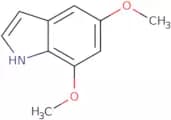
CAS:<p>5,7-Dimethoxyindole is a potent inhibitor of the enzyme oxidase. 5,7-Dimethoxyindole has been shown to inhibit the growth of a number of fungi, including Phytophthora infestans and Cryptococcus neoformans. The molecular modeling studies have shown that this molecule can form an H-bond with the acceptor in the active site of the enzyme and prevent access by substrate. This inhibition has been shown to be competitive with respect to ferrous ions and noncompetitive with respect to other cofactors. 5,7-Dimethoxyindole also inhibits integrase enzymes, which are involved in DNA integration during viral replication. 5,7-Dimethoxyindole was found to bind to a pharmacophore model for integrase inhibitors and formylation reactions. This compound is also magnetic due to its high electron density at the methoxy group.</p>Fórmula:C10H11NO2Pureza:Min. 95%Cor e Forma:PowderPeso molecular:177.2 g/mol6-Ethoxypurine
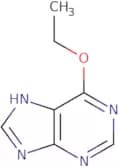
CAS:6-Ethoxypurine is a nucleoside analog that inhibits the enzyme ribonucleotide reductase, which converts ribonucleotides to deoxyribonucleotides. It is used in cell culture to measure the effects of radiation and hydrochloric acid on the production of ATP. 6-Ethoxypurine has been shown to inhibit influenza virus replication with an IC50 of 10 μM. This compound has reactive hydroxyl groups that allow it to participate in hydrogen bonding, which can be beneficial for interactions with other molecules. 6-Ethoxypurine also exhibits nucleophilic properties, which allows it to react with other chemical species and can be useful for generating new chemical compounds.Fórmula:C7H8N4OPureza:Min. 95%Cor e Forma:PowderPeso molecular:164.16 g/mol1,2,3,4-Tetrahydrocyclopenta[b]indole
CAS:<p>1,2,3,4-Tetrahydrocyclopenta[b]indole is a synthetic drug that has been shown to be an effective antidepressant in animal models of depression. It has also been shown to inhibit the replication of HIV and Hepatitis C virus in cell culture. It is thought that 1,2,3,4-tetrahydrocyclopenta[b]indole's anti-depressant effects are due to its ability to block the α2-adrenergic receptor and cholinergic receptors. The drug also inhibits the synthesis of amines including serotonin, dopamine and noradrenaline. This compound may be used as a treatment for depression because it does not have any significant side effects on the central nervous system or other organs.</p>Fórmula:C11H11NPureza:Min. 95%Peso molecular:157.21 g/mol3-Aminoquinuclidine dihydrochloride
CAS:<p>3-Aminoquinuclidine dihydrochloride (3-AQDH) is a chiral quinuclidine derivative that is an acetylcholine receptor agonist. It has been shown to bind to the α7 nicotinic acetylcholine receptor with high affinity and selectivity. 3-AQDH has also been shown to crosslink the cholinergic receptor, which may lead to increased sensitivity of the receptor. The binding constants between 3-AQDH and the α7 nicotinic acetylcholine receptors are very high and it has been shown to be enantiopure in its synthesis. 3-AQDH also has a hydrophilic interaction chromatography profile, which separates it from other compounds. This agent may have potential use as a drug for treating Alzheimer's disease and Parkinson's disease due to its ability to inhibit acetylcholinesterase activity.</p>Pureza:Min. 95%Cor e Forma:PowderPeso molecular:199.12 g/mol6-Hydroxyquinoline-(1H)-2-one
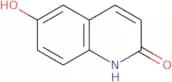
CAS:<p>6-Hydroxyquinoline-(1H)-2-one is an organic compound that has been shown to inhibit the uptake of carbostyril by bacterial cells. This inhibition causes increased uptake of xanthurenic acid and anthranilic acid, which are two compounds that are found in wastewater treatment. 6-Hydroxyquinoline-(1H)-2-one may be a potential anticancer agent, as it inhibits the growth of astroglia cells and bladder cancer cells. It also reacts with acylation reactions to form quinolinic acid, which has been shown to have anticancer effects.</p>Fórmula:C9H7NO2Pureza:Min. 95%Cor e Forma:White SolidPeso molecular:161.16 g/mol7-Chloroquinoline-3-carboxylicacid
CAS:7-Chloroquinoline-3-carboxylicacid (7CQCA) is a synthetic compound that has been shown to have regulatory, immunomodulatory, and anticancer properties. It is a potent inhibitor of mammalian DNA polymerase beta and it has been shown to induce apoptosis in human prostate cancer cells by inhibiting the production of cAMP. 7CQCA also inhibits the proliferation of mouse CD1 leukemia cells in vitro and induces apoptosis in these cells. The compound was found to be more effective when used with other agents such as triticum aestivum extract, which may be due to its synergistic interaction with these compounds.Fórmula:C10H6ClNO2Pureza:Min. 95%Cor e Forma:Off-White PowderPeso molecular:207.61 g/mol3-Quinuclidinone hydrochloride
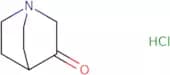
CAS:Produto Controlado<p>3-Quinuclidinone hydrochloride is an organic compound that is used as a reagent in organic synthesis. It is synthesized by the acylation of 3-quinuclidinol with ethyl bromoacetate in the presence of a base. This reaction occurs in an isolated yield, and the product can be purified by rotary evaporation. 3-Quinuclidinone hydrochloride has a high affinity for GABA receptors, which are found on nerve cells in the brain and inhibitory neurons throughout the body. The binding of 3-quinuclidinone hydrochloride to these receptors leads to a decrease in neuronal excitability. This drug also has been shown to have effects on motor function, including a positive effect on motor performance when tested using a rotarod test. The rate of this reaction can be increased by adding chloride or sodium carbonate as a catalyst and by increasing the reaction time. Substrate binding plays an important</p>Fórmula:C7H12CINOPureza:Min. 95%Cor e Forma:White PowderPeso molecular:161.63 g/mol2-(2-Butoxyethyl)-1H-isoindole-1,3(2H)-dione
CAS:<p>2-(2-Butoxyethyl)-1H-isoindole-1,3(2H)-dione is a versatile building block and intermediate with a range of chemical properties. It is a useful scaffold for the synthesis of complex compounds with different functional groups. 2-(2-Butoxyethyl)-1H-isoindole-1,3(2H)-dione can be used as an organic solvent and reaction component in organic synthesis as well as being an effective catalyst or reagent in reactions involving other chemicals. This compound has been selected by the Chemical Abstracts Service (CAS) as one of their high quality products.</p>Fórmula:C14H17NO3Pureza:Min. 95%Cor e Forma:PowderPeso molecular:247.29 g/mol4,4'-Bis(ethoxycarbonyl)-2,2'-bipyridine
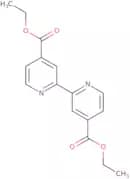
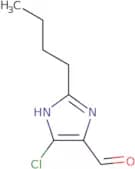
CAS:4,4'-Bis(ethoxycarbonyl)-2,2'-bipyridine (BEBCP) is a dithiolate chromophore. BEBCP has a redox potential of 1.3 volts and the electronic interaction of the carbonyl groups with the electron cloud of the bipyridine nucleus is responsible for this property. The photochemical properties of BEBCP can be systematically studied by using electrochemical data such as voltammetry and cyclic voltammetry. These methods are useful in determining the nature and constant of BEBCP as well as its interaction with ligands.Fórmula:C16H16N2O4Pureza:Min. 95%Cor e Forma:PowderPeso molecular:300.31 g/mol2-Butyl-4-chloro-1H-imidazole-5-carboxaldehyde
CAS:Glyoxal is a chemical compound that has shown to have bactericidal activity against human pathogens such as Mycobacterium tuberculosis, Helicobacter pylori, and Staphylococcus aureus. It is used in the synthesis of heterocyclic amines and can be found as an impurity in imidazole derivatives. Glyoxal is a broad-spectrum antimicrobial that has been shown to inhibit the growth of fungi and bacteria by reacting with functional groups on the microorganisms' cell walls. It reacts with bacterial cell walls by forming an intermediate molecule, which reacts with other molecules present in the microorganism's environment to form carbon dioxide, water, and glyoxal. The reaction time for glyoxal depends on temperature; higher temperatures will result in faster reactions. Techniques used to synthesize glyoxal include dehydration of oximes or by reaction with phosphorus oxychloride.Fórmula:C8H11ClN2OPureza:Min. 95%Cor e Forma:PowderPeso molecular:186.64 g/mol3-Quinolinecarboxylic acid
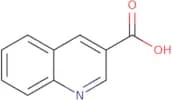
CAS:<p>3-Quinolinecarboxylic acid is a water-soluble drug that is soluble in both organic solvents and water. It is reactive, which limits its therapeutic use. 3-Quinolinecarboxylic acid is used to treat inflammatory disease by inhibiting the production of prostaglandins and leukotrienes in the body. 3-Quinolinecarboxylic acid has been shown to have genotoxic effects on primary cells, as well as an antiinflammatory effect. It also has been shown to be effective for treating rheumatoid arthritis in animal models, but not humans.</p>Fórmula:C10H7NO2Pureza:Min. 95%Cor e Forma:PowderPeso molecular:173.17 g/molEthyl 4-oxo-7-(benzyloxy)hydroquinoline-3-carboxylate
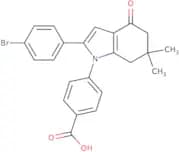
CAS:Please enquire for more information about Ethyl 4-oxo-7-(benzyloxy)hydroquinoline-3-carboxylate including the price, delivery time and more detailed product information at the technical inquiry form on this pagePureza:Min. 95%4-(2-(4-Bromophenyl)-6,6-dimethyl-4-oxo-5,6,7-trihydroindolyl)benzoic acid
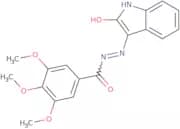
CAS:<p>Please enquire for more information about 4-(2-(4-Bromophenyl)-6,6-dimethyl-4-oxo-5,6,7-trihydroindolyl)benzoic acid including the price, delivery time and more detailed product information at the technical inquiry form on this page</p>Fórmula:C23H20BrNO3Pureza:Min. 95%Cor e Forma:PowderPeso molecular:438.3 g/mol3-(3,4,5-Trimethoxybenzoylhydrazidyl)-2-oxoindoline
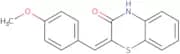
CAS:<p>Please enquire for more information about 3-(3,4,5-Trimethoxybenzoylhydrazidyl)-2-oxoindoline including the price, delivery time and more detailed product information at the technical inquiry form on this page</p>Fórmula:C18H17N3O5Pureza:Min. 95%Cor e Forma:PowderPeso molecular:355.34 g/mol3-((4-Methoxyphenyl)methylene)-1,4-dihydro-4-thiaquinolin-2-one
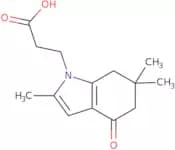
CAS:<p>Please enquire for more information about 3-((4-Methoxyphenyl)methylene)-1,4-dihydro-4-thiaquinolin-2-one including the price, delivery time and more detailed product information at the technical inquiry form on this page</p>Fórmula:C16H13NO2SPureza:Min. 95%Cor e Forma:PowderPeso molecular:283.35 g/mol3-(2,6,6-Trimethyl-4-oxo-5,6,7-trihydroindolyl)propanoic acid
CAS:Please enquire for more information about 3-(2,6,6-Trimethyl-4-oxo-5,6,7-trihydroindolyl)propanoic acid including the price, delivery time and more detailed product information at the technical inquiry form on this pageFórmula:C14H19NO3Pureza:Min. 95%Cor e Forma:PowderPeso molecular:249.31 g/mol5-methyl-3-methylthio-1,2,4-triazino[5,6-b]indole
CAS:Please enquire for more information about 5-methyl-3-methylthio-1,2,4-triazino[5,6-b]indole including the price, delivery time and more detailed product information at the technical inquiry form on this pagePureza:Min. 95%

![1,2,3,4-Tetrahydrocyclopenta[b]indole](/_next/image/?url=https%3A%2Fstatic.cymitquimica.com%2Fproducts%2F3D%2Fthumb-webp%2FFT119279.webp&w=3840&q=75)



![5-methyl-3-methylthio-1,2,4-triazino[5,6-b]indole](/_next/image/?url=https%3A%2Fstatic.cymitquimica.com%2Fproducts%2F3D%2Fthumb-webp%2FFM169855.webp&w=3840&q=75)