Cumarinas
As cumarinas são uma classe de compostos aromáticos policíclicos que consistem em um anel benzênico fundido a um anel de pirona. Esses compostos são amplamente utilizados como fragrâncias, agentes aromatizantes e na síntese de produtos farmacêuticos e agroquímicos. As cumarinas exibem várias atividades biológicas, incluindo propriedades anticoagulantes, anti-inflamatórias e antimicrobianas. Na CymitQuimica, oferecemos uma ampla seleção de cumarinas de alta qualidade para apoiar suas pesquisas e aplicações industriais.
Foram encontrados 1122 produtos de "Cumarinas"
Ordenar por
Pureza (%)
0
100
|
0
|
50
|
90
|
95
|
100
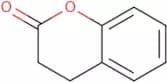
Dihydro coumarin
CAS:Dihydro coumarin is a cyclic organic compound, which is a derivative of coumarin primarily obtained through synthetic processes. It possesses the characteristic odor reminiscent of freshly mown hay, contributing to its widespread application in various industries. The primary mode of action of dihydro coumarin involves its role as a fragrance and flavoring agent, capitalizing on its aromatic profile to enhance products’ sensory attributes.Fórmula:C9H8O2Pureza:Min. 95%Peso molecular:148.16 g/molRef: 3D-M-3330
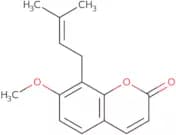
25gA consultar50gA consultar100gA consultar250gA consultar500gA consultar-Unit-ggA consultarOsthole
CAS:Osthole is a coumarin derivative, which is a type of natural compound. It is predominantly sourced from the Cnidium monnieri plant, as well as other Apiaceae family members. Osthole exerts its effects primarily through modulation of various molecular pathways, including the suppression of inflammatory mediators and the modulation of calcium channels, which results in vasodilation and various other physiological effects.Fórmula:C15H16O3Pureza:Min. 95%Cor e Forma:PowderPeso molecular:244.29 g/mol7-Ethoxycoumarin
CAS:7-Ethoxycoumarin is a fluorescent substrate used in biochemical research, which is derived synthetically. It undergoes biotransformation primarily via oxidative dealkylation, catalyzed by cytochrome P450 enzymes, resulting in the formation of 7-hydroxycoumarin. By monitoring the fluorescent 7-hydroxycoumarin, researchers can assess enzymatic activity and study metabolic pathways.Fórmula:C11H10O3Pureza:Min. 95%Cor e Forma:PowderPeso molecular:190.2 g/molMarmin
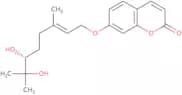
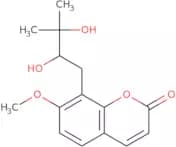
CAS:<p>Marmin is a natural bioactive compound, which is a type of limonoid. It is primarily sourced from citrus fruits, especially those belonging to the Rutaceae family, such as lemons and oranges. The compound exhibits a range of biological activities due to its multifaceted mode of action.</p>Fórmula:C19H24O5Pureza:Min. 98 Area-%Cor e Forma:PowderPeso molecular:332.39 g/mol7,8-Dihydroxycoumarin
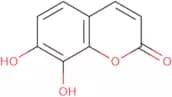
CAS:7,8-Dihydroxycoumarin is a naturally occurring coumarin, which is derived from plants and certain fungi. It possesses a distinct chemical structure characterized by a benzopyrone core with hydroxyl groups at the 7th and 8th positions, contributing to its distinct biochemical properties. The mode of action of 7,8-Dihydroxycoumarin is largely attributed to its ability to act as a potent antioxidant, scavenging free radicals and chelating metal ions, thus mitigating oxidative stress at the cellular level.Fórmula:C9H6O4Pureza:Min. 95%Cor e Forma:PowderPeso molecular:178.14 g/molFraxetin
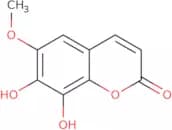
CAS:<p>Fraxetin is a coumarin compound, which is a type of secondary metabolite commonly found in plants. It is principally derived from sources such as Fraxinus rhynchophylla and other related species. Fraxetin functions through various biological mechanisms, including antioxidant, anti-inflammatory, and neuroprotective activities. It accomplishes this by scavenging free radicals, modulating inflammatory pathways, and inhibiting specific enzymes associated with oxidative stress.</p>Fórmula:C10H8O5Pureza:Min. 95%Cor e Forma:PowderPeso molecular:208.17 g/mol6,7,8-Trimethoxycoumarin
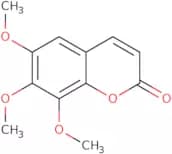
CAS:6,7,8-Trimethoxycoumarin is a methoxylated coumarin compound, which is a derivative of the natural product coumarin. It is primarily sourced from certain plant species where methoxylation occurs naturally as part of plant secondary metabolism. The compound exhibits interesting properties due to its structural modifications, particularly in its potential interactions with biological molecules.Fórmula:C12H12O5Pureza:Min. 95%Cor e Forma:PowderPeso molecular:236.22 g/mol3-Cyano-7-ethoxycoumarin
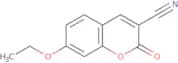
CAS:<p>3-Cyano-7-ethoxycoumarin is a specialized fluorescent probe, which is a synthetic organic compound designed for use in biochemical assays. This compound is sourced from the broader family of coumarins, which are known for their versatile fluorescence properties. The mode of action of 3-Cyano-7-ethoxycoumarin involves its ability to exhibit strong fluorescent emission when excited by specific wavelengths of light, making it a valuable tool for monitoring biochemical reactions and interactions.</p>Fórmula:C12H9NO3Pureza:Min. 95%Cor e Forma:PowderPeso molecular:215.2 g/mol5,7-Dihydroxy-4-methylcoumarin monohydrate
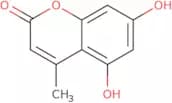
CAS:<p>5,7-Dihydroxy-4-methylcoumarin monohydrate is an organic chemical compound, specifically a type of coumarin derivative. Coumarins are a class of naturally occurring aromatic compounds that are found in various plant sources, such as tonka beans, sweet clover, and other botanicals. This particular compound, with its distinct hydroxyl and methyl groups, falls under the broader category of hydroxycoumarins, which are of significant interest in biochemical research due to their various functional properties.</p>Fórmula:C10H8O4·H2OPureza:Min. 95%Cor e Forma:Off-White Yellow PowderPeso molecular:210.18 g/molApterin
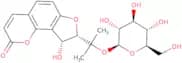
CAS:Apterin is a naturally occurring compound, classified as a coumarin derivative, which is isolated from members of the Apiaceae family. Its source is primarily derived from plant species known for their therapeutic properties.Fórmula:C20H24O10Pureza:Min. 95 Area-%Cor e Forma:White PowderPeso molecular:424.4 g/molEsculetin
CAS:<p>Esculetin is a naturally occurring coumarin compound, which is predominantly derived from various plant sources, such as the bark and leaves of certain trees and shrubs. As a member of the coumarin family, it is characterized by its benzopyrone structure and is often isolated from botanicals through organic solvent extraction methods. <br><br>Its mode of action primarily involves its ability to scavenge free radicals and chelate metal ions, contributing to its notable antioxidant capacity. Furthermore, Esculetin exerts anti-inflammatory effects by inhibiting the activity of enzymes such as cyclooxygenase and lipoxygenase, which are integral to the inflammatory pathway.<br><br>Common applications of Esculetin are found in scientific research where it is utilized for its potential therapeutic properties. Studies have investigated its role in modulating oxidative stress, its protective effects in neurodegenerative disorders, and its capability to inhibit the proliferation of certain cancer cell lines. Additionally, it serves as a useful biochemical tool in elucidating the pathways of inflammation and oxidative stress within cellular models. Scientists continue to explore its potential as a lead compound in drug discovery and development.</p>Fórmula:C9H6O4Pureza:Min. 98.0 Area-%Peso molecular:178.15 g/molEsculetin dibenzyl ether
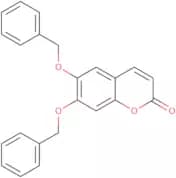
CAS:<p>Esculetin dibenzyl ether is a chemical compound, which is a derivative of esculetin, a natural coumarin obtained chiefly from plant sources such as the bark of horse chestnut and other similar species. The source of esculetin dibenzyl ether is typically synthesized from natural precursors through chemical modifications, allowing for the exploration of its structural analogs.</p>Fórmula:C23H18O4Pureza:Min. 95%Peso molecular:358.39 g/molImperatorin
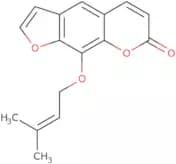
CAS:<p>Imperatorin is a furanocoumarin compound, which is a natural product primarily isolated from plants in the Apiaceae family, such as Angelica dahurica and Citrus species. This compound is characterized by its unique chemical structure that includes a furan ring fused to a coumarin backbone. Imperatorin exerts its biological activities through multiple modes of action, including the modulation of enzymatic activity, interference with cellular signaling pathways, and binding to specific biological targets.</p>Fórmula:C16H14O4Pureza:Min. 98 Area-%Cor e Forma:White PowderPeso molecular:270.28 g/molPoncimarin
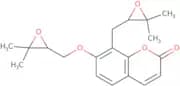
CAS:Poncimarin is a citrus-derived flavor compound, which is extracted from the peels of citrus fruits. Its mode of action involves mimicking natural citrus flavors, providing authentic taste profiles through a combination of volatile compounds that resemble those found in fresh citrus. The primary application of Poncimarin lies in its utilization as a flavoring agent in the food and beverage industry. It is incorporated to enhance the sensory attributes of products like beverages, confectioneries, and baked goods, delivering a refreshing citrus note that is both recognizable and appealing. Poncimarin's efficacy is attributed to its ability to integrate seamlessly with the existing flavor matrices of these products, ensuring a balanced and natural sensory experience. Its use extends to applications requiring stable, long-lasting flavor profiles, contributing to product innovation and development within sensory science.Fórmula:C19H22O5Pureza:Min. 95%Cor e Forma:PowderPeso molecular:330.37 g/mol4-Hydroxycoumarin
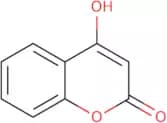
CAS:4-Hydroxycoumarin is a synthetic organic compound, which is a derivative of coumarin. This compound derives from a benzopyrone structure, specifically known as a precursor in the synthesis of various anticoagulant agents. Its mode of action involves the inhibition of the enzyme vitamin K epoxide reductase. This inhibition subsequently decreases the synthesis of active clotting factors II, VII, IX, and X by preventing the regeneration of reduced vitamin K.Fórmula:C9H6O3Pureza:Min. 97.5 Area-%Cor e Forma:PowderPeso molecular:162.14 g/mol8-Methoxypsoralen
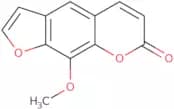
CAS:<p>8-Methoxypsoralen is a furocoumarin compound, which is derived from natural plant sources such as the seeds of the Ammi majus plant. Its primary mode of action involves intercalation into DNA strands and the formation of covalent bonds with pyrimidine bases upon exposure to ultraviolet A (UVA) light. This interaction results in the inhibition of DNA synthesis and cell proliferation.</p>Fórmula:C12H8O4Pureza:Min. 95%Cor e Forma:White PowderPeso molecular:216.19 g/molScopoletin
CAS:Scopoletin is a naturally occurring coumarin derivative, which is primarily isolated from plants such as those in the Solanaceae and Asteraceae families. It exhibits a diverse range of biological activities due to its multifaceted mode of action, which includes antioxidant, anti-inflammatory, and antimicrobial properties. As a phytochemical, scopoletin can modulate various biochemical pathways, influencing both enzymatic and receptor-mediated processes.Fórmula:C10H8O4Pureza:Min. 95%Cor e Forma:Slightly Yellow PowderPeso molecular:192.17 g/molDecursinol
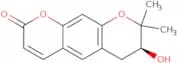
CAS:<p>Decursinol is a coumarin derivative, which is sourced from the roots of the plant Angelica gigas, commonly found in East Asia. The compound is recognized for its biochemical properties, specifically as a secondary metabolite in the umbelliferous family. Its mode of action involves the inhibition of key inflammatory pathways, notably through the suppression of pro-inflammatory cytokines and enzymes such as COX-2 and NF-κB. This molecular interaction effectively reduces inflammatory responses at the cellular level.</p>Fórmula:C14H14O4Pureza:Min. 98 Area-%Cor e Forma:White Off-White PowderPeso molecular:246.26 g/molMeranzin
CAS:<p>Meranzin is a bioactive compound, which is a naturally occurring coumarin derivative found in various citrus fruits. Its source lies primarily in the peels and seeds of specific citrus species, notably within the Rutaceae family. The mode of action of Meranzin involves the inhibition of acetylcholinesterase, thereby influencing neurotransmitter activity, specifically in the modulation of acetylcholine levels. This action can have significant implications in research focused on neurodegenerative disorders.</p>Fórmula:C15H16O4Pureza:Min. 98 Area-%Cor e Forma:PowderPeso molecular:260.29 g/mol