Cumarinas
As cumarinas são uma classe de compostos aromáticos policíclicos que consistem em um anel benzênico fundido a um anel de pirona. Esses compostos são amplamente utilizados como fragrâncias, agentes aromatizantes e na síntese de produtos farmacêuticos e agroquímicos. As cumarinas exibem várias atividades biológicas, incluindo propriedades anticoagulantes, anti-inflamatórias e antimicrobianas. Na CymitQuimica, oferecemos uma ampla seleção de cumarinas de alta qualidade para apoiar suas pesquisas e aplicações industriais.
Foram encontrados 1122 produtos de "Cumarinas"
Ordenar por
Pureza (%)
0
100
|
0
|
50
|
90
|
95
|
100
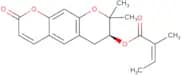
Decursinol angelate
CAS:<p>Decursinol angelate is a bioactive compound, which is derived from the roots of plants such as Angelica gigas, a species commonly used in traditional Asian medicine. This compound is a coumarin derivative, known for its potential pharmacological properties. Decursinol angelate’s mode of action involves the modulation of inflammatory pathways, particularly through the inhibition of key enzymes and cytokines involved in inflammatory responses, such as COX-2 and TNF-alpha. This modulation leads to a reduction in the synthesis of pro-inflammatory mediators, which can be beneficial in managing inflammation-related conditions.</p>Fórmula:C19H20O5Pureza:Min. 95%Cor e Forma:PowderPeso molecular:328.36 g/molNordalbergin
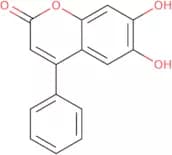
CAS:Please enquire for more information about Nordalbergin including the price, delivery time and more detailed product information at the technical inquiry form on this pageFórmula:C15H10O4Peso molecular:254.24 g/molIsopteryxin
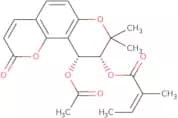
CAS:Isopteryxin is a natural compound classified as a furanocoumarin, which is primarily derived from plants in the Apiaceae family, such as various species of Angelica. It is synthetically produced or extracted from these botanical sources using advanced chromatographic techniques. The mode of action of Isopteryxin involves interactions with cellular and molecular targets through its capability to intercalate with DNA and modulate enzyme activity. This confers notable biological activities, including antimicrobial, antifungal, and potentially anticancer effects. It may inhibit certain cell signaling pathways, thus influencing cellular processes such as apoptosis and proliferation.Fórmula:C21H22O7Pureza:Min. 95%Cor e Forma:PowderPeso molecular:386.4 g/molDaphnetin dimethyl ether
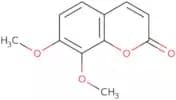
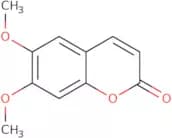
CAS:Daphnetin dimethyl ether is a synthetic chemical compound, which is a derivative of the naturally occurring coumarin scaffold. It is primarily sourced through chemical synthesis rather than extraction from natural compounds, allowing for precise control over purity and structural modifications that are otherwise challenging to achieve through natural means.Fórmula:C11H10O4Pureza:Min. 95%Cor e Forma:PowderPeso molecular:206.19 g/molScoparone
CAS:<p>Scoparone is a bioactive natural compound, which is primarily derived from plants in the Rutaceae family, such as Artemisia species. It is a coumarin derivative, known for its therapeutic properties due to its diverse biological activities. The mode of action of scoparone is multifaceted, involving the modulation of various enzymes and signaling pathways. It acts as an inhibitor of cytochrome P450 enzymes and influences pathways involving nitric oxide and reactive oxygen species, contributing to its anti-inflammatory and hepatoprotective effects.</p>Fórmula:C11H10O4Pureza:Min. 95%Cor e Forma:PowderPeso molecular:206.19 g/mol6-Methylcoumarin
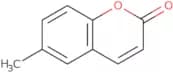
CAS:<p>The 6-methylcoumarin is a benzalkonium chloride that can be used as a stabilizer for biological samples. It has been shown to inhibit the activity of coumarin derivatives, which are receptors that are involved in the transmission of pain signals in the brain. The 6-methylcoumarin is also able to inhibit signal peptide, which is a protein that is secreted by cells and functions as a messenger between cells. This compound was found to have hypoglycemic effects due to its ability to stimulate glucose uptake in the body.</p>Fórmula:C10H8O2Pureza:Min. 95%Cor e Forma:PowderPeso molecular:160.17 g/molAlloisoimperatorin
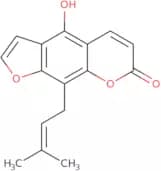
CAS:<p>Alloisoimperatorin is a naturally occurring furanocoumarin compound, which is extracted from certain plant species, primarily those belonging to the Apiaceae family. As a type of coumarin derivative, it is synthesized through intricate plant metabolic pathways involving the precursors umbelliferone and isopentenyl pyrophosphate, among others.</p>Fórmula:C16H14O4Pureza:Min. 95%Peso molecular:270.28 g/mol8-Hydroxy-7-methoxycoumarin
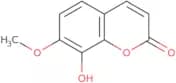
CAS:<p>8-Hydroxy-7-methoxycoumarin is a fluorescent compound, which is a derivative of the coumarin family. This compound is typically sourced through synthetic organic chemistry processes involving the modification of natural coumarin compounds. Its mode of action involves the ability to absorb ultraviolet light and re-emit it as visible light, a characteristic feature of fluorescent molecules. This property makes it particularly useful in scientific research.</p>Fórmula:C10H8O4Pureza:Min. 95%Cor e Forma:PowderPeso molecular:192.17 g/molOxypeucedanin
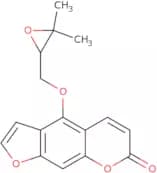
CAS:<p>Oxypeucedanin is a furanocoumarin compound, which is derived from various plant sources, most notably those in the Apiaceae family such as Peucedanum and Angelica species. It functions primarily as a photoreactive agent, capable of interacting with DNA under ultraviolet (UV) light through a process called photoactivation. Upon UV exposure, it forms covalent bonds with DNA, leading to cross-linking that can disrupt cellular functions.</p>Fórmula:C16H14O5Pureza:Min. 95%Cor e Forma:Clear LiquidPeso molecular:286.28 g/molSkimmin
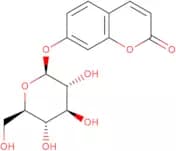
CAS:<p>Skimmin is a bioactive compound, classified as a coumarin, which is derived from various plant sources, particularly the bark of certain tree species. It functions through the modulation of enzyme activity, including antioxidant and anti-inflammatory pathways, by interacting with specific cellular receptors and enzymes.</p>Fórmula:C15H16O8Pureza:Min. 95%Cor e Forma:PowderPeso molecular:324.28 g/molDaphnetin-8-glucoside
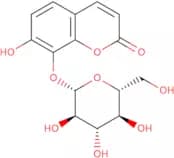
CAS:Daphnetin-8-glucoside is a natural phenolic glucoside compound derived from plants of the Thymelaeaceae family, specifically from the Daphne genus. This compound is produced by the glycosylation of daphnetin, a coumarin derivative found in various botanical sources. The glycoside linkage enhances its solubility and stability, facilitating its bioavailability. Daphnetin-8-glucoside exhibits potent antioxidant and anti-inflammatory activities, mediated through the scavenging of free radicals and inhibition of pro-inflammatory cytokine production. Additionally, it modulates signal transduction pathways involved in cellular oxidative stress responses.Fórmula:C15H16O9Pureza:Min. 95%Cor e Forma:PowderPeso molecular:340.28 g/molIsosibiricin
CAS:<p>Isosibiricin is a naturally occurring lignan, which is extracted from certain plant sources. This compound is derived from the genus Daphne, traditionally known for its diverse range of biologically active constituents. Its mode of action is primarily through the modulation of key signaling pathways involved in cell proliferation and apoptosis. Isosibiricin exhibits notable inhibitory effects on specific enzymes and receptors implicated in oncogenic processes, making it a subject of interest for cancer research.</p>Fórmula:C16H18O5Pureza:Min. 95%Cor e Forma:PowderPeso molecular:290.31 g/molCoumarin
CAS:Coumarin is an organic chemical compound, which is a naturally occurring substance found in various plants, including tonka beans, sweet clover, and cinnamon. Structurally, it is a benzopyrone, characterized by a benzene ring fused to a lactone. Coumarin acts primarily as an anticoagulant by inhibiting the synthesis of vitamin K-dependent clotting factors in the liver. This mode of action disrupts the coagulation cascade, reducing the blood’s ability to clot effectively.Fórmula:C9H6O2Pureza:Min. 95%Cor e Forma:White PowderPeso molecular:146.14 g/molUmbelliferone
CAS:<p>Umbelliferone or 7-hydroxycoumarin is a widespread natural product of the coumarin family. It occurs in many familiar plants from the umbelliferae family. Umbelliferone can be used as a fluorescence indicator for metal ions such as copper and calcium. It acts as a pH indicator in the range 6.5-8.9.</p>Fórmula:C9H6O3Pureza:Min. 98.0 Area-%Peso molecular:162.15 g/molRef: 3D-U-3000
1kgA consultar50gA consultar100gA consultar250gA consultar500gA consultar-Unit-ggA consultarPsoralen
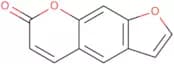
CAS:<p>Psoralen is a naturally occurring furocoumarin compound, which is derived from various plants, including those in the Apiaceae family, such as parsley and celery. Its mode of action involves intercalating into DNA and forming covalent cross-links when activated by ultraviolet A (UVA) light. This photoreactivity enables it to modify the biological activity of nucleic acids, making it a valuable tool in both therapeutic and experimental settings.</p>Fórmula:C11H6O3Pureza:Min. 98 Area-%Cor e Forma:White PowderPeso molecular:186.16 g/mol4-Methylesculetin
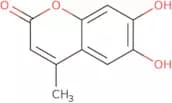
CAS:<p>4-Methylesculetin is a coumarin derivative, which is a type of organic compound. This compound is primarily sourced from various plant species, where it occurs naturally as a secondary metabolite. Known for its bioactive properties, 4-Methylesculetin exhibits significant antioxidant activity by scavenging free radicals and protecting against oxidative stress.</p>Fórmula:C10H8O4Pureza:Min. 95%Cor e Forma:PowderPeso molecular:192.17 g/molFraxin
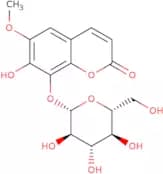
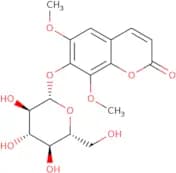
CAS:<p>Fraxin is a naturally occurring anticoagulant, which is derived from the bark of certain species of the Fraxinus tree. It functions by inhibiting thrombin and other key enzymes in the coagulation cascade, thus preventing the formation of blood clots. This mode of action makes it particularly valuable in research settings focused on cardiovascular diseases, as well as in the development of therapeutic agents targeting coagulopathies.</p>Fórmula:C16H18O10Pureza:Min. 95%Cor e Forma:PowderPeso molecular:370.31 g/molIsoscopoletin
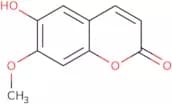
CAS:<p>Isoscopoletin is a naturally occurring coumarin derivative, which is typically sourced from various plants, including some medicinal herbs. This compound is found in a variety of plant species, where it plays a role in the plant's defense mechanisms against pathogens. It is known for its characteristic chemical structure that belongs to the coumarin family, which is widespread in the plant kingdom.</p>Fórmula:C10H8O4Pureza:Min. 95%Cor e Forma:PowderPeso molecular:192.17 g/molCalycanthoside
CAS:<p>Calycanthoside is a phenolic glycoside, which is a type of natural compound characterized by a glycosidic bond linking a phenolic moiety. It is derived from the plant Calycanthus chinensis, known for its rich array of bioactive compounds. The extraction and isolation processes of Calycanthoside involve sophisticated chromatographic techniques to ensure its purity and activity.</p>Fórmula:C17H20O10Pureza:Min. 95%Cor e Forma:PowderPeso molecular:384.33 g/molAngelicin
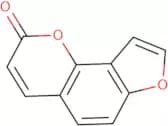
CAS:<p>Angelicin is a furanocoumarin compound, which is derived from various plant sources, particularly within the Apiaceae family. The source of angelicin is often linked to traditional medicinal plants, where it is extracted and subsequently isolated for scientific investigation. Angelicin's mode of action involves intercalating within DNA strands, thereby affecting transcription and replication processes. This action is understood to be primarily photoactivated, leading to the formation of covalent bonds with DNA upon exposure to ultraviolet light, which can result in cross-linking.</p>Fórmula:C11H6O3Pureza:Min. 95%Cor e Forma:PowderPeso molecular:186.16 g/mol