Ligas Organometálicas
Nesta categoria, você encontrará um grande número de moléculas organometálicas usadas como ligantes em biomoléculas. Esses ligantes organometálicos podem ser usados em química orgânica e síntese no laboratório. Eles desempenham um papel crucial na formação de complexos de coordenação e na catálise de várias reações químicas. Na CymitQuimica, oferecemos uma seleção diversificada de ligantes organometálicos de alta qualidade para apoiar suas pesquisas e necessidades industriais.
Subcategorias de "Ligas Organometálicas"
- Ligantes de Buchwald(22 produtos)
- DPEN(4 produtos)
- DPHEN(4 produtos)
- JOSIPHOS(4 produtos)
- Fosfina(497 produtos)
- Porfirinas(75 produtos)
Foram encontrados 2887 produtos de "Ligas Organometálicas"
Ordenar por
Pureza (%)
0
100
|
0
|
50
|
90
|
95
|
100
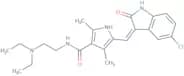
SU11652
CAS:<p>Inhibitor of FLT3 kinase and acid sphingomyelinase</p>Fórmula:C22H27ClN4O2Pureza:Min. 95%Peso molecular:414.93 g/molMk2 inhibitor III
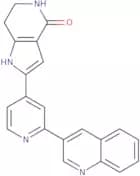
CAS:<p>MK2 Inhibitor III is a pharmacological agent, specifically a selective inhibitor, that intervenes in the MAPKAPK2 (MK2) signaling pathway. It is derived through chemical synthesis, designed to obstruct the activity of the mitogen-activated protein kinase-activated protein kinase 2 (MK2). This inhibition occurs through competitive binding at the ATP-binding site of MK2, effectively reducing the activity of this kinase involved in the stress response pathway.</p>Fórmula:C21H16N4OPureza:Min. 95%Peso molecular:340.4 g/molBay 41-4109 racemate
CAS:<p>Bay 41-4109 racemate is a small molecule inhibitor, which is synthetically derived, with a specific mode of action that involves the modulation of cGMP-dependent protein kinase (PKG) pathways. This modulation affects various cellular processes, particularly those related to viral replication and protein expression.</p>Fórmula:C18H13ClF3N3O2Pureza:Min. 95%Peso molecular:395.76 g/molPF-06649283
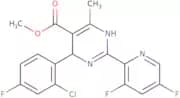
CAS:<p>PF-06649283 is an antibody-drug conjugate (ADC), which is a targeted biopharmaceutical agent designed to deliver cytotoxic agents specifically to cancer cells. This innovative product is derived from a combination of a monoclonal antibody, which is utilized for its ability to bind selectively to specific antigens on tumor cells, and a potent cytotoxic drug, which is linked to the antibody. The mode of action involves the ADC binding to its target antigen on the cancer cell surface, followed by internalization of the ADC-antigen complex. Once inside the cell, the cytotoxic drug is released, leading to disruption of critical cellular functions and subsequent cancer cell death.</p>Fórmula:C18H19F2N3O2SPureza:Min. 95%Peso molecular:379.4 g/molTCS-OX2-29
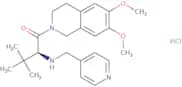
CAS:<p>TCS-OX2-29 is an oxygen permeability analyzer, which is a scientific instrument designed to accurately measure the rate at which oxygen gas passes through barrier materials. It leverages precise electrochemical or coulometric sensors, which serve as the core technology for detecting and quantifying oxygen transmission rates under controlled conditions.</p>Fórmula:C23H31N3O3Pureza:Min. 95%Peso molecular:397.51 g/molDS21360717
CAS:<p>DS21360717 is a synthetic compound, classified as a small-molecule inhibitor, which originates from advanced chemical synthesis techniques within pharmaceutical research. Its mode of action involves targeting and modulating specific cellular pathways, often through inhibiting key enzymes or receptors involved in disease processes. This targeted interaction allows for precise modulation of biological reactions, making it a valuable tool in both research and therapeutic settings.</p>Fórmula:C21H23N7OPureza:Min. 95%Peso molecular:389.5 g/molA-192621
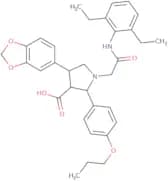
CAS:<p>A-192621 is a selective blocker of T-type calcium channels, which is a synthetic compound. It specifically interacts with the alpha-1G subtype of calcium channels, thereby inhibiting calcium ion influx through these channels. This blockade allows researchers to study the physiological and pathological roles of T-type calcium channels in the central nervous system and peripheral tissues.</p>Fórmula:C33H38N2O6Pureza:Min. 95%Peso molecular:558.7 g/molTC-P 262
CAS:<p>TC-P 262 is a synthetic chemical reagent, classified as an organic compound, which is derived from a series of controlled laboratory processes ensuring high purity and stability. This product exhibits its function primarily through catalytic properties, enabling the acceleration of specific chemical reactions without itself being consumed. Its mode of action involves facilitating the transition state of a reaction, thereby lowering the activation energy and increasing reaction efficiency.</p>Fórmula:C14H18N4OPureza:Min. 95%Peso molecular:258.32 g/molPKC-IN-1
CAS:<p>PKC-IN-1 is a highly specific protein kinase C (PKC) inhibitor, which is synthetically derived to target PKC isoforms selectively. Its mode of action involves the inhibition of PKC activity through competitive binding at the ATP-binding site, effectively modulating the phosphorylation of downstream substrates. This regulatory effect on PKC activity makes it an essential tool for elucidating the role of PKC in various signaling pathways.</p>Fórmula:C25H37FN8O2Pureza:Min. 95%Peso molecular:500.61 g/molCompound 3a
CAS:<p>Compound 3a is a synthetic herbicide, which is a laboratory-engineered chemical agent with a unique mode of action. It is derived through an intricate process involving chemical synthesis techniques that target specific biochemical pathways in plants. The mode of action of Compound 3a involves the inhibition of a critical enzyme in the photosynthetic pathway, leading to disrupted energy production and ultimately plant death.</p>Fórmula:C21H20N6Pureza:Min. 95%Peso molecular:356.4 g/molRo 64-5229
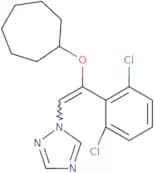
CAS:<p>Ro 64-5229 is a selective inverse agonist for the histamine H3 receptor, which is a synthetic small molecule. Its source is laboratory-synthesized, involving complex organic chemistry techniques tailored to specifically interact with the H3 receptor subtype. The mode of action of Ro 64-5229 involves binding to the histamine H3 receptor, which leads to a decrease in the constitutive activity of this receptor, effectively opposing its natural agonists.</p>Fórmula:C17H19Cl2N3OPureza:Min. 95%Peso molecular:352.3 g/molCU-115
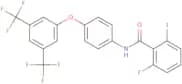
CAS:<p>CU-115 is an advanced anti-corrosion compound, which is a chemical formulation designed to protect metal surfaces. It is sourced from specialized synthesis processes involving corrosion inhibitors and binders that offer high efficacy in harsh environments. The mode of action involves forming a protective layer over metal surfaces, preventing exposure to moisture and corrosive agents, thus inhibiting oxidation and degradation.</p>Fórmula:C21H11F7INO2Pureza:Min. 95%Peso molecular:569.2 g/molXMD16-5
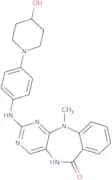
CAS:<p>XMD16-5 is a small molecule kinase inhibitor, which is a synthetic chemical compound specifically designed to target and inhibit kinase enzymes. These enzymes are crucial for various signaling cascades that regulate cellular functions such as growth and differentiation. The source of XMD16-5 involves meticulous chemical synthesis, often derived from high-throughput screening of chemical libraries or rational drug design.</p>Fórmula:C23H24N6O2Pureza:Min. 95%Peso molecular:416.48 g/molOPC 3930
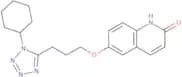
CAS:<p>OPC 3930 is a polymer-based coating, which is synthesized from advanced polymer composites. It functions through a mechanism of thermal insulation, where the composite structure significantly reduces thermal conductivity. This is achieved by incorporating a microscale porous architecture that traps air and minimizes heat transfer.</p>Fórmula:C19H23N5O2Pureza:Min. 95%Peso molecular:353.4 g/molCholestenoic acid-d5
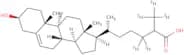
CAS:Produto Controlado<p>Cholestenoic acid-d5 is an isotopically labeled product, which is a derivative of cholestenoic acid used primarily in scientific research. This compound is sourced from synthetic processes specifically designed to incorporate deuterium atoms, resulting in the stable isotope labeling with five deuterium (d5) atoms. The stable isotopic labeling of such compounds is crucial in tracing metabolic pathways, studying cholesterol metabolism, and understanding lipid profiles in biological systems.</p>Fórmula:C27H39D5O3Pureza:Min. 95%Peso molecular:421.67 g/molSB 611812
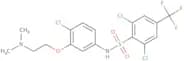
CAS:Produto ControladoSB 611812 is a chemical agent, which is derived from natural sources, with a targeted mode of action that involves specific interactions at the molecular level. This product acts by potentially inhibiting or modifying biological pathways, making it particularly relevant for studies into cellular processes and molecular interactions.Fórmula:C17H16Cl3F3N2O3SPureza:Min. 95%Peso molecular:491.7 g/molTC-T 6000
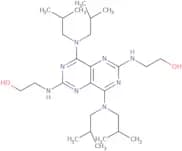
CAS:<p>TC-T 6000 is an advanced chemical compound synthesized from sustainable raw materials, designed to enhance industrial processes. As a high-performance additive, TC-T 6000 acts through its unique molecular structure, facilitating efficient catalysis and improving reaction kinetics in various chemical processes. This product is known for its stability and effectiveness under diverse conditions, making it a versatile tool for researchers and engineers.</p>Fórmula:C26H48N8O2Pureza:Min. 95%Peso molecular:504.7 g/molGENZ-882706
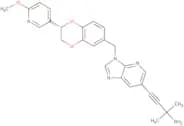
CAS:<p>GENZ-882706 is a synthetic chemical compound designed as a modulator of glycosylation processes, which is a crucial biochemical reaction mediated by enzymatic interactions that attach glycans to proteins and lipids. These processes are fundamental in cell recognition, signaling, and protein stability. This compound functions as a potent inhibitor that alters specific glycosyltransferase activities. By modulating these enzymes, GENZ-882706 facilitates precise control over glycan structures, which is essential in studying glycoprotein functions and developing novel therapeutics for various diseases, including cancer and genetic disorders.</p>Fórmula:C26H25N5O3Pureza:Min. 95%Peso molecular:455.51 g/molHS-10296
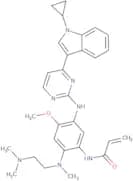
CAS:<p>HS-10296 is a novel pharmaceutical compound that functions as a specific inhibitor of EGFR (epidermal growth factor receptor), which is a key therapeutic target in certain cancer pathways. This compound is derived from a synthetic source, meticulously designed to target and interrupt the signaling pathways involved in tumor proliferation and survival. The mode of action of HS-10296 involves the competitive inhibition of the ATP-binding domain of EGFR tyrosine kinase, thereby preventing phosphorylation and subsequent activation of downstream signaling proteins involved in cell division and survival.</p>Fórmula:C30H35N7O2Pureza:Min. 95%Peso molecular:525.64 g/mol17:0(2R-OH) ceramide
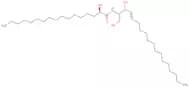
CAS:<p>17:0(2R-OH) ceramide is a synthetic type of ceramide, which is a subclass of sphingolipids. It is typically derived from bioengineered sources and manufactured through sophisticated chemical synthesis techniques to ensure high purity and specific stereochemistry. This compound is characterized by a saturated 17-carbon acyl chain with a hydroxyl group at the second carbon, which plays a crucial role in its biochemical behavior.</p>Fórmula:C35H69NO4Pureza:Min. 95%Peso molecular:567.93 g/mol