Bioquímicos e reagentes
Os bioquímicos e reagentes são substâncias fundamentais para a pesquisa e desenvolvimento em campos como biotecnologia, biologia molecular, farmacologia e medicina. Esses produtos são essenciais para uma variedade de aplicações, incluindo a síntese de compostos, a análise de amostras biológicas, a pesquisa de processos metabólicos e a produção de medicamentos. Na CymitQuimica, oferecemos uma ampla seleção de bioquímicos e reagentes de alta qualidade e pureza, adequados para diversas necessidades científicas e industriais. Nosso catálogo inclui enzimas, anticorpos, ácidos nucleicos, aminoácidos e muitos outros produtos, todos projetados para apoiar pesquisadores e profissionais em seus projetos de pesquisa e desenvolvimento, garantindo resultados confiáveis e reproduzíveis.
Subcategorias de "Bioquímicos e reagentes"
- Biomoléculas(99.117 produtos)
- Por Alvo Biológico(99.161 produtos)
- Por uso/Efeitos Farmacológicos(6.787 produtos)
- Compostos relacionados à criopreservação e aos crioconservantes(21 produtos)
- Desinfetantes, aditivos para aquecimento de líquidos de banho e compostos relacionados(28 produtos)
- Hormónios(346 produtos)
- Biologia Vegetal(6.710 produtos)
- Metabólitos secundários(14.222 produtos)
Foram encontrados 130581 produtos de "Bioquímicos e reagentes"
Ordenar por
Pureza (%)
0
100
|
0
|
50
|
90
|
95
|
100
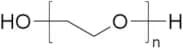
Poly(ethylene Glycol) ~9000
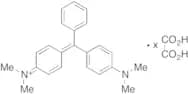
CAS:Produto ControladoFórmula:H2O(C2H4O)nCor e Forma:White To Off-WhitePeso molecular:62.07Malachite Green Oxalate
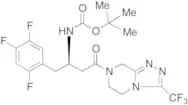
CAS:Produto Controlado<p>Applications A triphenylmethane dye with fungicidal and limited antiseptic activity. The term Malachine green applies to the oxalate as well as the chloride. Harmful if swallowed. Avoid release to the environment. Dyes and metabolites.<br> Not a dangerous good if item is equal to or less than 1g/ml and there is less than 100g/ml in the package<br>References Carter, S.G., et al.: J. Biochem. Biophys. Methods, 7, 7 (1982), Saikan, S., et al.: J. Chem. Phys., 79, 4154 (1983), Clemmensen, S., et al.: Arch. Toxicol., 56, 43 (1984),<br></p>Fórmula:C23H25N2·C2H2O4·2C2HO4Cor e Forma:Green To Dark GreenPeso molecular:927.00N-Boc-Sitagliptin
CAS:Produto Controlado<p>Applications N-Boc-Sitagliptin is the N-Boc protected derivative of Sitagliptin (S490990), a dipeptidyl peptidase-4 inhibitor that is used for glycemic control for patients with type 2 diabetes.<br>References Aschner, P., et al.: Diabetes Care, 29, 2632 (2006); Charbonnel, B., et al.: Diabetes Care, 29, 2638 (2006)<br></p>Fórmula:C21H23F6N5O3Cor e Forma:NeatPeso molecular:507.433-Chloro-L-tyrosine
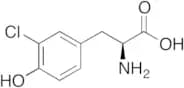
CAS:Produto Controlado<p>Stability Hygroscopic<br>Applications 3-Chloro-L-tyrosine was used in the enzymatic synthesis of halogen derivatives of aromatic amino acids labeled with hydrogen isotope. 3-Chloro-L-tyrosine exhibited stronger antioxidant properties in Hb-induced oxidative stress as was evident by higher efficiency of reduction of ferryl species.<br>References Winnicka, E., et al.: J. Chem. Eng., 8, 54 (2014); Lu, N., et al.: Toxicol. In Vitro, 28, 847 (2014);<br></p>Fórmula:C9H10NO3ClCor e Forma:NeatPeso molecular:215.63Veratrole
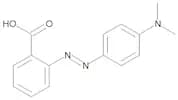
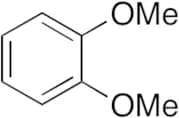
CAS:<p>Applications Veratrole is common reagent in organic synthesis such as the synthesis of arizonins B1 and C1. Also used in the synthesis of pharmacophores of salmeterol and roflumilast as dual β2-adrenoreceptor agonists-PDE4 inhibitors.<br>References Fernandes, R. et al.: Tetrahedron: Asymm., 24, 1548 (2013); Liu, A. et al.: Bioorg. Med. Chem. Lett., 23, 1548 (2013);<br></p>Fórmula:C8H10O2Cor e Forma:NeatPeso molecular:138.16Disperse Red 1 (Technical Grade)
CAS:Produto Controlado<p>Applications Disperse Red 1 is an azo disperse dye which is water insoluble. Disperse Red 1 can be used to dye polyester and acetate fibers. Dyes and metabolites, Environmental Testing.<br>References Sareek, J.: J. Soc. Dyers Colour., 78, 326 (1962); Iskender, M., et al.: Textile Res. J., 75, 462 (2005)<br></p>Fórmula:C16H18N4O3Cor e Forma:NeatPeso molecular:314.34Cyclo(Leu-Gly)
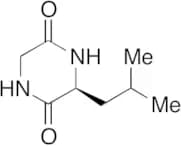
CAS:Produto Controlado<p>Applications Cyclo(Leu-Gly) is an antimicrobial compound produced by Latobacillus plantarum.<br>References Niku-Paavola, M., et al.: J. Appl. Microbiol., 86, 29 (1999)<br></p>Fórmula:C8H14N2O2Cor e Forma:Off-WhitePeso molecular:170.21Lecithin (Technical Grade)
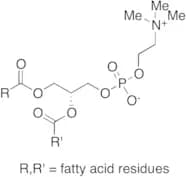
CAS:Produto Controlado<p>Stability Moisture Sensitive<br>Applications Lecithin has emulsification and lubricant properties, and is a surfactant.<br>References Shah, D.: J. Colloid and Interface Sci., 37, 744 (1971); Scholfield, C.: J. Am. Oil. Chem. Soc., 58, 889 (1981)<br></p>Fórmula:C7H7N3O4SCor e Forma:Light Yellow To Dark Brown2-Amino-1-naphthalenesulfonic Acid
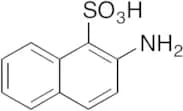
CAS:Produto Controlado<p>Applications 2-Amino-1-naphthalenesulfonic Acid has been used in the preparation of oligomeric acid azo dyes and yields a reddish orange color in the dye.<br>References Shah, T.B., et. al.: Int. J. Polyemric Mater., 58, 681 (2009); Smith, K., et. al.: J. Environ., Res. Development, 2, 20 (2007)<br></p>Fórmula:C10H9NO3SCor e Forma:NeatPeso molecular:223.25Folcysteine
CAS:Produto Controlado<p>Applications A cysteine derivative as potential antitumor agent. (A609645)A vitamin needed to synthesize DNA, conduct DNA repair and methylate DNA, it also acts as a cofactor in biological reactions involving folate. (F680300)<br>References Paul, B., et al.: J. Med. Chem., et al.: 19, 1002 (1976), Xu, L., et al.: Mol. Pharm., 7, 1311 (2010), Everette, J., et al.: J. Agric. Food Chem., 58, 8139 (2010), Alshatwi, A., et al.: Food, Chem., Toxicol., 48, 1881 (2010), McKay, D., et al.: Nut. J., 9 (2010),<br></p>Fórmula:C19H19N7O6·C6H9NO3SCor e Forma:YellowPeso molecular:616.17Poly(ethylene Glycol) ~600
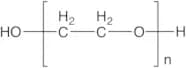
CAS:Produto Controlado<p>Applications Poly(ethylene Glycol) molecules of an average molecular mass of 600. Poly(ethylene Glycol) is used in various applications from industrial chemistry to biological chemistry. Recent research has shown PEG maintains the ability to aid the spinal cord injury recovery process, helping the nerve impulse conduction process in animals. In rats, it has been shown to aid in the repair of severed sciatic axons, helping with nerve damage recovery. It is industrially produced as a lubricating substance for various surfaces to reduce friction. PEG is also used in the preparation of vesicle transport systems in with application towards diagnostic procedures or drug delivery methods.<br>References Borgens, R. et al.: J. Neurosci. Res., 66, 1179 (2001); Stavisky, R. et al.: Neurosci. Lett., 376, 98 (2005); Nalam, P. et al.: Tribiol. Lett., 37, 541 (2010); Steinmetz, N. et al.: J. Am. Chem. Soc., 131, 17093 (2009); Li, X. et al.: J. Am. Chem. Soc., 133, 11147 (2011); Li, L. et al.: Int. J. Pharm., 447, 192 (2013);<br></p>Fórmula:H2O(C2H4O)nCor e Forma:Colourless To Off-WhitePeso molecular:62.07O-Phospho-L-tyrosine
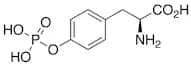
CAS:<p>Applications Useful in the study of tyrosine-phosphorylation, which has been linked with the malignant transformation of cells by some RNA tumour viruses.<br>References Sefton, B.M., et al.: Cell, 20, 807 (1980), Erikson, R., et al.: Perspect. Virol., 11, 93 (1981), Lee, E-S, et al.: J. Org. Chem., 59, 2086 (1994)<br></p>Fórmula:C9H12NO6PCor e Forma:NeatPeso molecular:261.1711-Hydroxylauric Acid
CAS:<p>Applications 11-Hydroxylauric Acid is used as a substrate to determine the functional expression and characterization of cytochrome P450 52A21.<br>References Kuehnel, K., et al.: Adv. Synthesis. Cata., 349, 1451 (2007); Kim, D.H., et al.: Arch. Biochem. Biophy., 464, 213 (2007);<br></p>Fórmula:C12H24O3Cor e Forma:NeatPeso molecular:216.32ThioGlo1
CAS:Produto Controlado<p>Applications ThioGlo1 is thiol-reactive dye used for fluorescence labeling of proteomic samples.<br>References Tyagarajan, K., et al.: Electrophoresis, 24, 2348 (2003);<br></p>Fórmula:C20H13NO7Cor e Forma:NeatPeso molecular:379.324a-Methyl-cholesterol
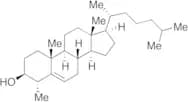
CAS:<p>Applications 4α-Methyl-cholest-5-en-3β-ol is a derivative of Cholesterol (C432501), a major component of all biological membranes; ~25% of total brain lipid is Cholesterol. Cholesterol is the principal sterol of the higher animals. Cholesterol was found in all body tissues, especial in the brain, spinal cord, and in animal fats or oils. Cholesterol is the main constituent of gallstones.<br>References Rosin, Z., et al.: Physiol. Chem., 124, 282 (1923), Schoenheimer, et al.: J. Biol. Chem., 105, 355 (1934), Gemant, et al.: Life Sci., 1, 233 (1962), Johnson, K., et al.: 4, 457 (1964),<br></p>Fórmula:C28H48OCor e Forma:White To Off-WhitePeso molecular:400.68Stearoyl L-a-Lysolecithin
CAS:<p>Stability Hygroscopic, moisture sensitive<br>Applications Stearoyl L-α-Lysolecithin is an bioactive lysophosphatidylcholine derived compound found to be released by bronchial epithelial cells. Stearoyl L-α-Lysolecithin have also been utilized in the development of liposomes and michelles by drug transdermal delivery devices.<br>References Zhuge, Y., et al.: Allergy Asthma Immunol Res., 6, 66 (2014)<br></p>Fórmula:C26H54NO7PCor e Forma:NeatPeso molecular:523.6811-Deoxy Corticosterone
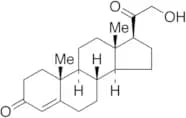
CAS:Produto Controlado<p>Applications A mineralocorticoid that occurs in adrenal cortex. It acts as a precursor to Aldosterone (A514700).<br>References Bohl, C., et al.: J. Med.Chem., 47, 3765 (2004), Smith, J., et al.: Steroids, 73, 1160 (2008),<br></p>Fórmula:C21H30O3Cor e Forma:White To Light YellowPeso molecular:330.46