Bioquímicos e reagentes
Os bioquímicos e reagentes são substâncias fundamentais para a pesquisa e desenvolvimento em campos como biotecnologia, biologia molecular, farmacologia e medicina. Esses produtos são essenciais para uma variedade de aplicações, incluindo a síntese de compostos, a análise de amostras biológicas, a pesquisa de processos metabólicos e a produção de medicamentos. Na CymitQuimica, oferecemos uma ampla seleção de bioquímicos e reagentes de alta qualidade e pureza, adequados para diversas necessidades científicas e industriais. Nosso catálogo inclui enzimas, anticorpos, ácidos nucleicos, aminoácidos e muitos outros produtos, todos projetados para apoiar pesquisadores e profissionais em seus projetos de pesquisa e desenvolvimento, garantindo resultados confiáveis e reproduzíveis.
Subcategorias de "Bioquímicos e reagentes"
- Biomoléculas(99.185 produtos)
- Por Alvo Biológico(99.150 produtos)
- Por uso/Efeitos Farmacológicos(6.789 produtos)
- Compostos relacionados à criopreservação e aos crioconservantes(21 produtos)
- Desinfetantes, aditivos para aquecimento de líquidos de banho e compostos relacionados(28 produtos)
- Hormónios(346 produtos)
- Biologia Vegetal(6.764 produtos)
- Metabólitos secundários(14.307 produtos)
Foram encontrados 130581 produtos de "Bioquímicos e reagentes"
Ordenar por
Pureza (%)
0
100
|
0
|
50
|
90
|
95
|
100
Dipropylene Glycol Diacrylate (~80%)
CAS:<p>Applications Dipropylene Glycol Diacrylate 57472-68-1 (cas# 57472-68-1) is a useful research chemical.<br></p>Fórmula:C12H18O5Pureza:~80%Cor e Forma:NeatPeso molecular:242.274-Acetyl-L-phenylalanine Hydrochloride
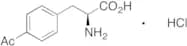
CAS:<p>Applications 4-Acetyl-L-phenylalanine Hydrochloride is the 4-acetyl analogue of the essential amino acid L-phenylaniline. 4-Acetyl-L-phenylalanine as well as other unnatural amino acids can be genetically incorporated successfully into proteins in Escherichia coli as well as mammalian cells.<br>References Liu, W. et al.: Nature Meth., 4, 239 (2007); Liu, C. et al.: Nature Biotechnol., 29, 164 (2011);<br></p>Fórmula:C11H13NO3•HClCor e Forma:NeatPeso molecular:207.233646Basic Green 4 (Technical Grade)
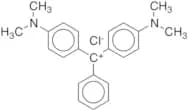
CAS:<p>Stability Light Sensitive<br>Applications Basic Green 4 (cas# 569-64-2) is a useful research chemical.<br></p>Fórmula:C23H25N2·ClCor e Forma:NeatPeso molecular:364.91(25R)-26-Hydroxy-cholest-4-en-3-one
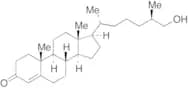
CAS:Produto Controlado<p>Applications (25R)-26-Hydroxy-cholest-4-en-3-one is an oxygenated sterol which has many important biological activities. (25R)-26-Hydroxy-cholest-4-en-3-one has been used as a reactant for the synthesis of other sterols.<br>References Li, S., et. al.: Chem. Phys. Lipids, 99, 33 (1999); Khripach, V., et. al.: Steroids, 70, 551 (2005)<br></p>Fórmula:C27H44O2Cor e Forma:NeatPeso molecular:400.64Flavine Adenine Dinucleotide Disodium Salt
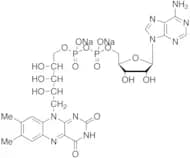
CAS:Produto Controlado<p>Stability Hygroscopic<br>Applications The prosthetic group of certain flavoproteins including D-amino acid oxidase, glucose oxidase, glycine oxidase, fumaric hydrogenase, histaminase, and xanthine oxidase. Riboflavin kinase tumor necrosis factor receptor 1 NADPH oxidase.<br>References DeLuca, K., et al.: J. Biol. Chem., 223, 569 (1956), Yagi, K., et al.: Biochemistry, 19, 1553 (1980), Li, G., et al.: J. Phys. Chem., 112, 4573 (2008),<br></p>Fórmula:C27H31N9O15P2·2NaCor e Forma:NeatPeso molecular:829.516-[(E)-4-Hydroxy-3-methylbut-2-enylamino]-9-β-D-ribofuranosylpurine
CAS:Produto Controlado<p>Applications A well-known, highly active stimulant of cell divisions in plant tissue cultures.<br>References D.S. Letham: Phytochemistry, 12, 2445 (1973)<br></p>Fórmula:C15H21N5O5Cor e Forma:NeatPeso molecular:351.36β-NADPH Tetrasodium Salt Hydrate
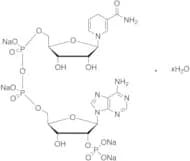
CAS:Produto Controlado<p>Applications One of the biologically active forms of nicotinic acid. Differs from NAD by an additional phosphate group at the 2’-position of the adenosine moiety. Serves as a coenzyme of hydrogenases and dehydrogenases. Present in living cells primarily in the reduced form (NADPH) and is involved in synthetic reactions.<br>References Bartlett, G.R., et al.: J. Biol. Chem., 234, 449 (1959), Dixon, M., et al.: Science, 132, 1548 (1960), Heyes, D., et al.: Biochemistry, 43, 8265 (2004), Dietzek, B., et al.: Chem. Phys. Chem., 7, 1727 (2006),<br></p>Fórmula:C21H26N7O17P3·4Na·xH2OCor e Forma:White To Light YellowPeso molecular:833.35Acid Orange 8 (Technical Grade)
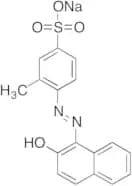
CAS:Produto ControladoFórmula:C17H13N2NaO4SCor e Forma:NeatPeso molecular:364.35L-Valine-13C5,15N
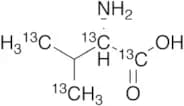
CAS:Produto Controlado<p>Applications Labelled analogue of L-Vailne. L-Valine is an essential amino acid and one of 20 proteinogenic amino acids. L-Valine cannot be manufactured by the body and must be acquired through diet or supplementation. L-valine is found in grains, dairy products, mushrooms, meats, peanuts and soy proteins. L-Valine has been used in studies to attenuate arrhythmias and induce hypotensive effects.<br>References Choi, C.W. et al.: Anim. Feed Sci. Technol., 102, 15 (2002); Kolarski, D. et al.: Krmiva, 30, 155 (1988); Oba, M. et al.: J. Dairy Sci., 93, 2044 (2010); Mitrega, K. et al.: Pharmacol. Res., 64, 218 (2011);<br></p>Fórmula:C5H1115NO2Cor e Forma:NeatPeso molecular:123.12,2-Diselanediyldiethanamine Dihydrochloride
CAS:Produto Controlado<p>Stability Hygroscopic<br>Applications 2,2-Diselanediyldiethanamine dihydrochloride (cas# 3542-13-0) is a useful research chemical.<br></p>Fórmula:C13H16N2O10Cor e Forma:NeatPeso molecular:360.2742-Ethyl-3-methylpyrazine
CAS:Produto Controlado<p>Applications 2-Ethyl-3-methylpyrazine (CAS# 15707-23-0) is a useful research chemical compound.<br></p>Fórmula:C7H10N2Cor e Forma:NeatPeso molecular:122.17Poly(ethylene Glycol) ~200
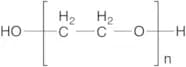
CAS:Produto Controlado<p>Applications Poly(ethylene Glycol) molecules of an average molecular mass of 200. Poly(ethylene Glycol) is used in various applications from industrial chemistry to biological chemistry. Recent research has shown PEG maintains the ability to aid the spinal cord injury recovery process, helping the nerve impulse conduction process in animals. In rats, it has been shown to aid in the repair of severed sciatic axons, helping with nerve damage recovery. It is industrially produced as a lubricating substance for various surfaces to reduce friction. PEG is also used in the preparation of vesicle transport systems in with application towards diagnostic procedures or drug delivery methods.<br>References Borgens, R. et al.: J. Neurosci. Res., 66, 1179 (2001); Stavisky, R. et al.: Neurosci. Lett., 376, 98 (2005); Nalam, P. et al.: Tribiol. Lett., 37, 541 (2010); Steinmetz, N. et al.: J. Am. Chem. Soc., 131, 17093 (2009); Li, X. et al.: J. Am. Chem. Soc., 133, 11147 (2011); Li, L. et al.: Int. J. Pharm., 447, 192 (2013);<br></p>Fórmula:H2O(C2H4O)nCor e Forma:ColourlessPeso molecular:62.07Aliquat 336
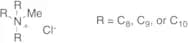
CAS:Produto Controlado<p>Applications Aliquat 336 is a reagent in the synthesis of Iso Promethazine (I822500, HCl); an impurity of Promethazine (P757000, HCl) which is an antihistaminic, antiemetic, and CNS depressant.<br> Not a dangerous good if item is equal to or less than 1g/ml and there is less than 100g/ml in the package<br>References Gasco, M.R., et al.: J. Pharma. Sci., 68, 612 (1979); Edge, W., et al.: J. Pharm. Pharmacol., 5, 279 (1953); Huang, et al.: J. Pharm. Sci., 59, 772 (1970); Shearer, C.M., et al.: Anal. Profiles Drug Subs., 5, 429 (1976)<br></p>Fórmula:(R3NCH3)ClCor e Forma:Neat5-Fluorodihydropyrimidine-2,4-dione
CAS:Produto Controlado<p>Applications A metabolite of 5-Fluorouracil. (F596000)<br>References Bocci, G., et al.: Eur. J. Clin. Pharmacol., 58, 593 (2002), Longley, D.B., Nature Rev. Cancer, 3, 330 (2003), Fischel, J., et al.: Anti-Cancer Drugs, 15, 969 (2004)<br></p>Fórmula:C4H5FN2O2Cor e Forma:NeatPeso molecular:132.093Dl-lysine Monohydrate
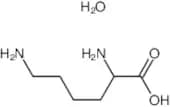
CAS:Produto Controlado<p>Applications Dl-lysine monohydrate<br></p>Fórmula:C6H14N2O2·H2OCor e Forma:NeatPeso molecular:164.20Laurocapram
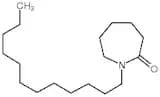
CAS:Produto Controlado<p>Applications Laurocapram is a useful intermediate.<br></p>Fórmula:C18H35NOCor e Forma:NeatPeso molecular:281.48D-Glutamic Acid 1-tert-Butyl Ester
CAS:Produto Controlado<p>Applications D-Glutamic acid 1-tert-butyl ester is a protected form of D-Glutamic acid (G596965). D-Glutamic acid is an unnatural isomer of L-Glutamic acid (G596960), and is found in bacterial cell wall peptidoglycan of gram-positive and gram-negative bacteria. D-Glutamic acid also occurs as poly-gamma-Glutamic acid, which is a weak immunogen but is capable of acting as a hapten (a small molecule that induces the production of antibodies, as well as binding to them).<br>References Dougherty, T., et al.: J. Bacteriol., 175, 111 (1993); Goodman, J. & Nitecki, D.: Immunology, 13, 577 (1967); Robinson, T.: Life Sci., 19, 1097 (1976)<br></p>Fórmula:C9H17NO4Cor e Forma:NeatPeso molecular:203.24


![6-[(E)-4-Hydroxy-3-methylbut-2-enylamino]-9-β-D-ribofuranosylpurine](/_next/image/?url=https%3A%2Fstatic.cymitquimica.com%2Fproducts%2FTR%2Fthumb-webp%2FH946500.webp&w=3840&q=75)