Antibióticos
Subcategorias de "Antibióticos"
- Antibióticos macrolídeos(26 produtos)
- Antibióticos Esteróides(31 produtos)
- Antibióticos de tetraciclina(20 produtos)
- Antibióticos β-Lactâmicos(11 produtos)
Foram encontrados 4104 produtos de "Antibióticos"
Cefepime dihydrochloride monohydrate
CAS:Cefepime dihydrochloride monohydrate is a fourth-generation cephalosporin antibiotic with action on bacterial cell wall synthesis and is used for treating severe bacterial infections, including pneumonia and urinary tract infections.Fórmula:C19H25N6O5S2Cl•HCl•H2OPureza:Min. 95%Cor e Forma:PowderPeso molecular:571.5 g/molCinoxacin
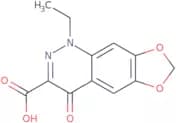
CAS:Cinoxacin is a quinolone antibiotic with action on bacterial DNA synthesis inhibition and is used for treating urinary tract infections.Fórmula:C12H10N2O5Pureza:Min. 98 Area-%Cor e Forma:PowderPeso molecular:262.22 g/molOxacillin sodium monohydrate
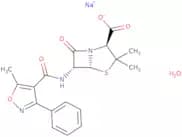
CAS:Oxacillin sodium monohydrate is a hydrated form of oxacillin sodium with similar action and applications as oxacillin sodium.Fórmula:C19H18N3NaO5S·H2OPureza:(%) Min. 95%Cor e Forma:White PowderPeso molecular:441.43 g/molAmpicillin
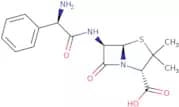
CAS:Antibiotic of penicillin class; inhibits bacterial cell wall biogenesisFórmula:C16H19N3O4SPureza:Min. 98%Cor e Forma:PowderPeso molecular:349.41 g/molDequalinium chloride
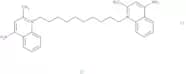
CAS:Dequalinium chloride is a quaternary ammonium compound that has been discovered to be an inhibitor of the cytopathic effects of some syndrome viruses. It is able to inhibit the replication of the virus in various clinical isolates and in cell culture models. Dequalinium chloride also inhibits acetylcholine receptor-mediated endocytosis, which is one of the mechanisms by which cells resist infection. The mechanism by which dequalinium chloride inhibits acetylcholine receptor-mediated endocytosis is not yet known, but it has been suggested that it might be due to its inhibitory activity on mitochondrial uncoupler proteins. This property may make dequalinium chloride an effective treatment against bacterial infections and respiratory diseases such as cystic fibrosis and asthma.Fórmula:C30H40Cl2N4Pureza:Min. 95%Cor e Forma:PowderPeso molecular:527.57 g/molTazobactam sodium
CAS:Inhibitor of beta-lactamase; inhibitor of cell wall synthesis; beta-lactam classFórmula:C10H11NaN4O5SPureza:Min. 90%Cor e Forma:PowderPeso molecular:322.27 g/molDoxycycline hyclate
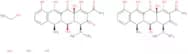
CAS:Antibiotic; anti-protozoal; anti-helmintic; protein synthesis inhibitorFórmula:C22H24N2O8•HCl•(C2H6O)0•(H2O)0Pureza:Min. 95 Area-%Cor e Forma:Yellow PowderPeso molecular:512.94 g/molα-Apo-oxytetracycline
CAS:α-Apo-oxytetracycline is a degradation product of oxytetracycline with action on bacterial protein synthesis inhibition and is used for research on antibiotic activity and bacterial resistance.Fórmula:C22H22N2O8Pureza:Min. 90 Area-%Cor e Forma:Slightly Yellow Green PowderPeso molecular:442.42 g/molDoxycycline monohydrate
CAS:Antibiotic; anti-protozoal; anti-helmintic; protein synthesis inhibitorFórmula:C22H24N2O8·H2OPureza:Min. 96.0 Area-%Cor e Forma:Yellow PowderPeso molecular:462.45 g/molBenethamine penicillin
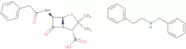
CAS:Produto ControladoBenethamine penicillin is a beta-lactam antibiotic, which is a semi-synthetic derivative of penicillin. It is sourced from the modification of naturally occurring penicillin compounds, typically produced through the fermentation of Penicillium mold cultures. Benethamine penicillin operates by inhibiting bacterial cell wall synthesis. It targets the penicillin-binding proteins within bacterial cell membranes, disrupting peptidoglycan cross-linking, which is essential for cell wall structural integrity. This leads to cell lysis and death in susceptible bacteria.
Fórmula:C16H18N2O4S·C15H17NPureza:Min. 95%Peso molecular:545.69 g/molGentamicin C1a
CAS:Gentamicin C1a is an aminoglycoside antibiotic, which is a secondary metabolite derived from the bacterium Micromonospora. This antibiotic functions through a mode of action that involves binding to the 30S subunit of bacterial ribosomes. This binding disrupts protein synthesis by causing misreading of the mRNA, ultimately leading to inhibition of bacterial growth and cellular death.
Fórmula:C19H39N5O7Pureza:Min. 98 Area-%Cor e Forma:PowderPeso molecular:449.54 g/molAmdinocillin
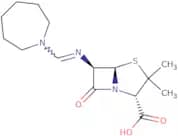
CAS:Amdinocillin is a semisynthetic antibiotic with broad-spectrum activity that is part of the aminopenicillin family. It is used in the treatment of bacterial infections such as those caused by Gram-negative bacteria, and to treat methicillin-resistant Staphylococcus (MRSA). The clinical isolate Amdinocillin has an inhibitory concentration (IC) of 0.25 μg/mL against Enterobacter aerogenes and Enterobacter cloacae, and it displays a synergistic effect in combination with other antibiotics. The mechanism of action is that prevents bacterial growth and proliferation by inhibiting cell wall synthesis and causing lysis, which allows for drug therapy against specific types of bacteria.Fórmula:C15H23N3O3SPureza:(%) Min. 97%Cor e Forma:White Slightly Yellow PowderPeso molecular:325.43 g/molCefacetrile
CAS:Cefacetrile is a first-generation cephalosporin antibiotic with action on bacterial cell wall synthesis and is used for treating bacterial infections in humans and animals.Fórmula:C13H13N3O6SPureza:Min. 95%Cor e Forma:Beige PowderPeso molecular:339.32 g/molErythromycinacistrate
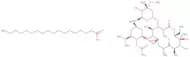
CAS:Erythromycinacistrate is a macrolide antibiotic, which is derived from the bacterium *Saccharopolyspora erythraea*. Its mode of action involves binding to the 50S ribosomal subunit of susceptible bacteria, thereby inhibiting protein synthesis. This action effectively halts bacterial growth and replication, making it particularly effective against a wide range of Gram-positive and some Gram-negative bacteria.Fórmula:C39H69NO14·C18H36O2Pureza:Min. 95%Peso molecular:1,060.44 g/molPirarubicin
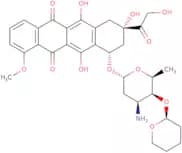
CAS:Antibiotic of anthracycline class; DNA synthesis inhibitorFórmula:C32H37NO12Pureza:Min. 95%Cor e Forma:PowderPeso molecular:627.64 g/molEnrofloxacin
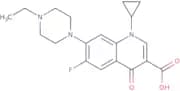
CAS:Enrofloxacin is a fluoroquinolone antibiotic with action on bacterial DNA gyrase and topoisomerase IV and is used for treating bacterial infections in animals.Fórmula:C19H22FN3O3Pureza:Min. 95%Cor e Forma:White PowderPeso molecular:359.39 g/molChloroeremomycin
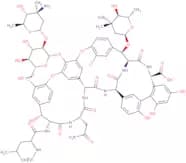
CAS:Fementation intermediate of OritavancinFórmula:C73H88Cl2N10O26Pureza:Min. 95%Cor e Forma:White PowderPeso molecular:1,592.44 g/molGriselimycin
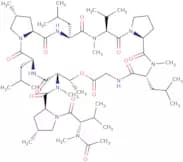
CAS:Griselimycin is an antibiotic, which is derived from the bacterial genus *Streptomyces*. This compound exhibits its mode of action by targeting bacterial protein synthesis, specifically binding to the DNA polymerase sliding clamp, thereby inhibiting replication and cell division in a range of bacterial pathogens. Griselimycin has been the focus of renewed scientific interest due to its potent activity against Mycobacterium tuberculosis, including multi-drug-resistant strains. The compound’s unique mode of action makes it a promising candidate for further development in the treatment of tuberculosis and potentially other bacterial infections that have developed resistance to more commonly used antibiotics. Advances in understanding its biosynthesis have facilitated semi-synthetic modifications, potentially enhancing its pharmacokinetic properties and antimicrobial spectrum. The applications of Griselimycin extend to research contexts where understanding resistance mechanisms and novel antibiotic development are critical. Continued exploration of this compound may contribute significantly to addressing the global challenge of antibiotic resistance.
Fórmula:C57H96N10O12Pureza:Min. 95%Peso molecular:1112.72092Secnidazole
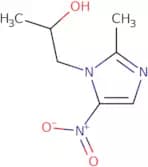
CAS:Antimicrobial agentFórmula:C7H11N3O3Pureza:Min. 95%Cor e Forma:White PowderPeso molecular:185.18 g/molErythromycin
CAS:A broad-spectrum antibiotic of macrolide class, which targets 50S ribosomal subunit and inhibits protein synthesis. Erythromycin is widely used in molecular biology and biotechnology as a selection marker. Erythromycin is also an agonist of the motilin receptor, and it has prokinetic activity on the gut.Fórmula:C37H67NO13Pureza:Min. 95%Cor e Forma:PowderPeso molecular:733.93 g/mol