Antibióticos
Subcategorias de "Antibióticos"
- Antibióticos macrolídeos(26 produtos)
- Antibióticos Esteróides(31 produtos)
- Antibióticos de tetraciclina(20 produtos)
- Antibióticos β-Lactâmicos(11 produtos)
Foram encontrados 4104 produtos de "Antibióticos"
Piromidic acid
CAS:Quinolone antibiotic; antimalarialFórmula:C14H16N4O3Pureza:Min. 95%Cor e Forma:Off-White PowderPeso molecular:288.3 g/molVancomycin hydrochloride, Antibiotic for Culture Media Use Only
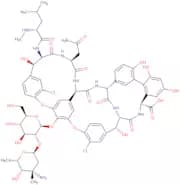
CAS:Vancomycin hydrochloride is an antibiotic that is used against Gram-positive bacteria, including Staphylococcus aureus. It has been shown to inhibit the growth of bacteria by binding the D-alanyl-D-alanine moiety of the peptidoglycan cell wall precursor, inhibiting the peptidoglycan synthesis and disrupting its cross linking. It also inhibits particle formation when it reacts with human plasma, which can lead to hemolysis and hemagglutination. The absorption spectrum for vancomycin hydrochloride shows maxima at 230, 260, 290, and 320 nm, which are characteristic for this compound. Vancomycin has been used in several studies for treatment of methicillin-resistant Staphylococcus aureus infections.
Fórmula:C66H76Cl3N9O24Peso molecular:1,485.71 g/molRef: 3D-Q-201920
25gA consultar50gA consultar100gA consultar250gA consultar500gA consultar-Unit-ggA consultarIsochlortetracycline
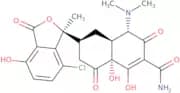
CAS:Isochlortetracycline is a tetracycline antibiotic with a mode of action that inhibits bacterial protein synthesis by binding to the 30S ribosomal subunit. It is used for treating bacterial infections in both humans and animals.Fórmula:C22H23ClN2O8Pureza:Min. 95%Cor e Forma:Off-White PowderPeso molecular:478.88 g/molDifloxacin HCl
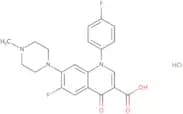
CAS:Difloxacin HCl is a fluoroquinolone antibiotic with action on bacterial DNA gyrase inhibition and is used for treating bacterial infections in veterinary medicine.Fórmula:C21H20ClF2N3O3Pureza:Min. 95 Area-%Cor e Forma:White PowderPeso molecular:435.85 g/molEnrofloxacin lactate
CAS:Enrofloxacin lactate is a synthetic antimicrobial agent, which is derived from the fluoroquinolone class of antibiotics. It is sourced through chemical synthesis, wherein the base compound, enrofloxacin, is combined with lactate to enhance its pharmacokinetic properties, particularly solubility and bioavailability. Its mode of action is the inhibition of bacterial DNA gyrase and topoisomerase IV, enzymes crucial for DNA replication, transcription, and repair in susceptible bacteria. This interference ultimately leads to bacterial cell death, making enrofloxacin lactate a bactericidal agent.Pureza:Min. 95%2,4-Diacetylphloroglucinol
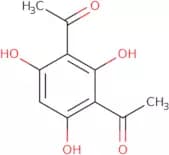
CAS:2,4-Diacetylphloroglucinol is a natural phenol produced by certain bacteria, used for its biocontrol properties against plant pathogens.
Fórmula:C10H10O5Pureza:Min. 95%Cor e Forma:Beige PowderPeso molecular:210.18 g/mol1,6'-Di-HABA kanamycin A
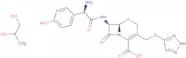
CAS:1,6'-Di-HABA kanamycin A is a derivative of kanamycin A, an aminoglycoside antibiotic used to treat bacterial infections by blocking cell wall synthesis or by inhibiting protein synthesis.Fórmula:C26H50N6O15Pureza:Min. 95 Area-%Cor e Forma:PowderPeso molecular:686.71 g/molCefatrizine propylene glycol
CAS:Cefatrizine propylene glycol is a cephalosporin antibiotic with action against gram-positive and gram-negative bacteria and is used for treating respiratory and skin infections.Fórmula:C21H26N6O7S2Pureza:Min. 95%Cor e Forma:PowderPeso molecular:538.6 g/molPenicillin G sodium
CAS:Penicillin G sodium is a natural penicillin antibiotic with action on bacterial cell wall synthesis and is used for treating bacterial infections such as pneumonia, gonorrhea, and anthrax.Fórmula:C16H17N2NaSO4Cor e Forma:White PowderPeso molecular:356.37 g/molCycloheximide
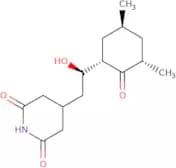
CAS:Cycloheximide is produced by the bacteria Streptomyces griseus. In eukaryotic organisms, it acts as an inhibitor of protein biosynthesis, interfering with protein elongation by binding to the E-site of ribosomes, after two elongation cycles. It has many in vitro applications, with the most popular being to determine a proteins half-life. It is used as an antifungal in VTM. It does not appear to inhibit cell culture or viral replication at a concentration of 10ug/ml.
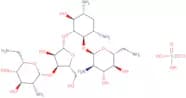
Fórmula:C15H23NO4Pureza:Min. 90%Cor e Forma:White PowderPeso molecular:281.35 g/molNeomycin trisulfate, Antibiotic for Culture Media Use Only
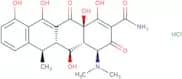
CAS:Neomycin, one of the many oligosaccharide containing antibiotics, is an aminoglycoside antibiotic found in Streptomyces fradiae (Collins, 2006) with wide spectrum, active against Gram-negative Gram-positive bacteria. Neomycin is commony used as a selection marker in cloning, and is therefore used in growth media to select colonies with the neomycin resistance cassette integrated into their genome. Neomycin is a mixture of neomycin B (Framycetin) and its epimer Neomycin C, the latter component accounting for some 5â15% of the mixture.Fórmula:C23H52N6O25S3Peso molecular:908.88 g/molDoxycycline hydrochloride
CAS:Antibiotic; anti-protozoal; anti-helmintic; protein synthesis inhibitorFórmula:C22H24N2O8•HClPureza:Min. 95%Peso molecular:480.9 g/molAvibactam sodium
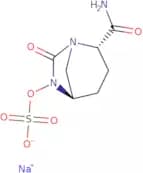
CAS:Avibactam sodium is a β-lactamase inhibitor and is used for the treatment of complicated intra-abdominal and urinary tract infections in combination with ceftazidime. Its mode of action is similar to avibactam free acid
Fórmula:C7H10N3O6S·NaPureza:Min. 97 Area-%Cor e Forma:White PowderPeso molecular:287.23 g/molBleomycin sulfate - mixture of Bleomycin A2, B2
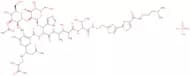
CAS:Inducer of DNA strand breaks; glycopeptide antibiotic, anti-neoplasticFórmula:C55H84N17O21S3·xH2SO4Pureza:Min. 77 Area-%Cor e Forma:PowderPeso molecular:1,415.56 g/molErtapenem sodium
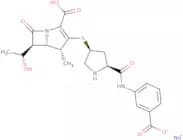
CAS:Ertapenem sodium is a carbapenem antibiotic with action on bacterial cell wall synthesis and is used for treating severe bacterial infections like intra-abdominal infections and pneumonia.Fórmula:C22H24N3NaO7SPureza:Min. 85 Area-%Cor e Forma:PowderPeso molecular:497.5 g/molTobramycin A
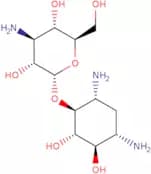
CAS:Inhibitor of protein synthesis; aminoglycoside
Fórmula:C12H25N3O7Pureza:Min. 95%Cor e Forma:White PowderPeso molecular:323.34 g/molVancomycin
CAS:Inhibitor of cell wall biogenesis; glycopeptide antibioticFórmula:C66H75Cl2N9O24Cor e Forma:PowderPeso molecular:1,449.25 g/molParomomycin sulfate, Antibiotic for Culture Media Use Only
CAS:Paromomycin sulfate is an antibiotic used for culture media to control bacterial contamination of mediums and other laboratory substances. Most Gram-negative bacteria strains are sensitive to paromomycin sulfate, showing a low sensitivity (â€10%) in Enterobacteriaceae, Pseudomonas aeruginosa, Escherichia coli, Proteus vulgaris, Klebsiella pneumoniae and Serratia marcescens. Paromomycin sulfate is also used in the treatment of colorectal cancer by blocking DNA synthesis through inhibition of protein synthesis in susceptible cells. This can result in reduced damage in colon tumor cells within the body, although it may have neurotoxic effects on brain tissue. Furthermore, it has anti-inflammatory properties when given orally or intravenously at therapeutic doses. Acridine orange can be used to identify sulfuric acid resistant gram.Fórmula:C23H47N5O18SPureza:Min. 95.0 Area-%Peso molecular:713.71 g/molRef: 3D-Q-201537
1kgA consultar100gA consultar250gA consultar500gA consultar2500gA consultar-Unit-ggA consultarBesifloxacin hydrochloride
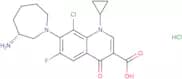
CAS:Antibiotic of fluoroquinolone class; DNA replication inhibitorFórmula:C19H22Cl2FN3O3Pureza:Min. 98 Area-%Cor e Forma:PowderPeso molecular:430.3 g/molGentamicin C2a sulfate
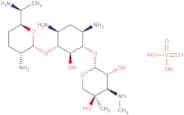
CAS:Gentamicin C2a sulfate is one epimeric form of the aminoglycoside antibiotic gentamicin (a.k.a. gentamycin). Gentamicin interferes with the correct protein production in bacterial cells, by binding to the 16s rRNA at the 30s ribosomal subunit. Gentamicin is a natural mixture of four congeners, one of which is gentamicin C2a. Gentamicin is active against clinically relevant aerobic gram-negative bacteria. Gentamicin C2a has been shown to be biodegradable in the environment, to some extent.
Fórmula:C20H41N5O7·xH2SO4Pureza:Min. 95%