Antibióticos
Os antibióticos são compostos projetados para destruir ou inibir o crescimento de vários microrganismos, desempenhando um papel crucial no tratamento de infecções e na prevenção da disseminação de doenças. Esta categoria oferece uma ampla variedade de ingredientes ativos especificamente para pesquisa no campo bioquímico. Esses compostos são ferramentas essenciais no estudo dos mecanismos bacterianos, padrões de resistência e no desenvolvimento de novos agentes terapêuticos. Os pesquisadores podem explorar uma grande variedade de antibióticos para entender seus efeitos, otimizar seu uso e desenvolver novos tratamentos para combater ameaças microbianas emergentes. A disponibilidade de um espectro tão amplo de antibióticos apoia a pesquisa avançada e a inovação em microbiologia e ciências farmacêuticas.
Subcategorias de "Antibióticos"
- Antibióticos macrolídeos(26 produtos)
- Antibióticos Esteróides(31 produtos)
- Antibióticos de tetraciclina(20 produtos)
- Antibióticos β-Lactâmicos(11 produtos)
Foram encontrados 4100 produtos de "Antibióticos"
Ordenar por
Pureza (%)
0
100
|
0
|
50
|
90
|
95
|
100
Kasugamycin
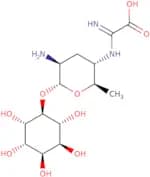
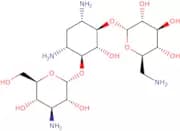
CAS:Kasugamycin is an aminoglycoside antibiotic, which is derived from the actinomycete Streptomyces kasugaensis. Its mode of action involves the inhibition of protein synthesis by interfering with the function of the 30S ribosomal subunit, ultimately preventing the growth and proliferation of sensitive organisms. In agricultural contexts, Kasugamycin is primarily utilized to control bacterial and fungal diseases in a variety of crops, including rice and fruit trees. It is particularly effective against Xanthomonas oryzae, which causes bacterial leaf blight in rice, and other pathogenic organisms detrimental to plant health. The application of Kasugamycin has been an important tool for integrated pest management programs focusing on sustainable agricultural practices. As a compound with a specific mode of activity, it helps to reduce the environmental impact typically associated with broader-spectrum antibiotics, while offering target-specific disease control. Its careful application supports the minimization of resistance development, ensuring continued efficacy in protecting crop yields.Fórmula:C14H25N3O9Pureza:Min. 95%Peso molecular:379.36 g/molNafcillin sodium
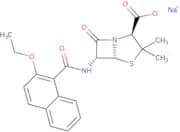
CAS:<p>Nafcillin sodium is a beta-lactam antibiotic, which is a semisynthetic derivative of the organic compound penicillin. It is specifically engineered to be resistant to the inactivation by penicillinase enzymes produced by certain bacteria. This feature allows it to remain effective against a range of penicillinase-producing staphylococcal infections.</p>Fórmula:C21H21N2NaO5SPureza:Min. 95%Cor e Forma:PowderPeso molecular:436.46 g/molPazufloxacin
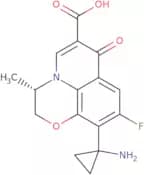
CAS:<p>Pazufloxacin is an antibacterial agent, which is a synthetic derivative originating from the fluoroquinolone class of compounds. This source categorizes it alongside a group of broad-spectrum antibiotics known for their efficacy against a wide variety of bacterial pathogens. The mode of action of pazufloxacin involves the inhibition of bacterial DNA gyrase and topoisomerase IV. These are essential enzymes for bacterial DNA replication, transcription, repair, and recombination processes. By inhibiting these enzymes, pazufloxacin disrupts the bacterial DNA processes, ultimately leading to cell death.</p>Fórmula:C16H15FN2O4Pureza:Min. 95%Peso molecular:318.3 g/molCephamycin C
CAS:<p>Cephamycin C is a cephalosporin antibiotic, which is a type of β-lactam antibiotic. It is derived from the fermentation process of certain Streptomyces species and other actinomycetes. Its mode of action involves inhibiting bacterial cell wall synthesis by binding to penicillin-binding proteins (PBPs). This inhibition disrupts the structural integrity of the bacterial cell wall, leading to cell lysis and death.</p>Fórmula:C16H22N4O9SPureza:Min. 95%Cor e Forma:PowderPeso molecular:446.4 g/molErythromycin iactobionate
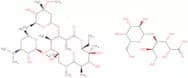
CAS:<p>Erythromycin lactobionate is a macrolide antibiotic, which is derived from the bacterium *Saccharopolyspora erythraea*. Its mode of action involves binding to the 50S subunit of the bacterial ribosome, thereby inhibiting protein synthesis and leading to the suppression of bacterial growth. This mechanism effectively targets gram-positive bacteria and some gram-negative bacteria, making it a crucial agent in the fight against various bacterial infections.</p>Fórmula:C49H87NO24Pureza:Min. 95%Cor e Forma:White To Off-White SolidPeso molecular:1,074.21 g/molKanamycin A
CAS:<p>Inhibitor of protein synthesis; aminoglycoside</p>Fórmula:C18H36N4O11Pureza:Min. 95%Cor e Forma:White Clear LiquidPeso molecular:484.5 g/molLincomycin B hydrochloride
CAS:<p>Inhibitor of protein synthesis; lincosamide</p>Fórmula:C17H33ClN2O6SPureza:Min. 95%Peso molecular:428.97 g/molNeomycin B
CAS:<p>Neomycin B is an aminoglycoside antibiotic, which is derived from the bacterium *Streptomyces fradiae*. It exerts its antibacterial effects by binding to the 30S subunit of bacterial ribosomes, leading to the inhibition of protein synthesis. This binding disrupts the translation process, thereby preventing the growth and proliferation of bacteria. Neomycin B is effective against a wide range of Gram-negative and some Gram-positive bacteria, making it a valuable tool in both medical and research settings.</p>Fórmula:C23H46N6O13Pureza:Min. 95%Peso molecular:614.64 g/molGeneticin Disulfate (G418), Antibiotic for Culture Media Use Only
CAS:Geneticin is very efficient against gram-negative bacteria, however it is not applied for treating infections due to high renal toxicity. Geneticin and its resistance genes found application in the selection of transgenic cell lines including yeasts such as P. pastoris and S. serevisiae, other eukaryotic cell lines such as CHO or HEK293, but also plant cells and bacterial cells.Fórmula:C20H44N4O18S2Pureza:Min. 97.0 Area-%Peso molecular:692.71 g/molRef: 3D-G-2400
10gA consultar25gA consultar50gA consultar100gA consultar250gA consultar-Unit-ggA consultarTobramycin, Antibiotic for Culture Media Use Only
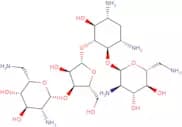
CAS:Produto ControladoTobramycin is used to treat severe infections with gram-negative bacteria and it is often applied in combination with beta-lactams. It has similar antimicrobial effects to gentamicin and is effective against all Enterobacteriacae, but more effective than gentamicin against P. aeruginosa, which is why it is often used for gentamicin-resistant strains, especially in the case of cystic fibrosis.Fórmula:C18H37N5O9Pureza:Min. 97 Area-%Peso molecular:467.51 g/molRef: 3D-Q-201837
10gA consultar25gA consultar50gA consultar100gA consultar250gA consultar-Unit-ggA consultarDicloxacillin sodium salt
CAS:<p>Dicloxacillin is a penicillin antibiotic that is used to treat bacterial infections of the gastrointestinal tract, skin, and urinary tract. It binds to the penicillin-binding proteins in bacterial cell walls by competitive inhibition. Dicloxacillin inhibits bacterial growth by binding to the enzyme cell wall synthesis that is required for cell wall biosynthesis, inhibiting protein synthesis and cell division. This drug also has a toxic effect on respiratory system cells, which may be due to its ability to induce apoptosis. Dicloxacillin sodium salt is available as tablets for oral administration or as an intravenous solution for injection. It can interact with other drugs, such as benzalkonium chloride and matrix effect; it also has analytical methods such as chromatographic analysis and rate constant.</p>Fórmula:C19H17Cl2N3O5S·NaPureza:Min. 95%Peso molecular:493.32 g/molClindamycin
CAS:<p>Inhibitor of protein synthesis; lincosamide class</p>Fórmula:C18H33ClN2O5SPureza:Min. 95%Peso molecular:424.98 g/molPlazomicin sulfate
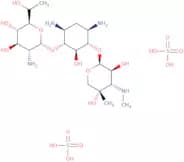
CAS:<p>An aminoglycoside antibiotic. Found applications in treatment of UTi's as it decreases the ability of bacteria to make protein.</p>Fórmula:C25H48N6O10·XH2SO4Pureza:Min. 85%Cor e Forma:PowderPeso molecular:592.69 g/molCefteram
CAS:<p>Cefteram is a third-generation cephalosporin antibiotic, which is synthesized through chemical processes starting from cephalosporin C, a compound derived from the fungus Acremonium. As a cephalosporin, it functions by inhibiting bacterial cell wall synthesis. This is achieved through the binding to penicillin-binding proteins (PBPs), which are critical in the formation of the bacterial cell wall. By disrupting this process, Cefteram leads to the lysis and death of the bacteria.</p>Fórmula:C16H17N9O5S2Pureza:Min. 95%Cor e Forma:White To Off-White SolidPeso molecular:479.5 g/molDesmethyl doxorubicin oxalate
CAS:<p>Desmethyl doxorubicin oxalate is an anthracycline-type chemotherapeutic agent, which is derived from the naturally occurring antibiotic doxorubicin. This compound comprises a desmethylated form of doxorubicin combined with oxalate. Its mode of action involves intercalating DNA strands and inhibiting topoisomerase II, thereby disrupting DNA replication and transcription. This interference leads to the inhibition of cancer cell proliferation and induces apoptosis.</p>Fórmula:C26H27NO11Pureza:Min. 95%Peso molecular:529.49 g/mol7-Descarbamoyl 17-amino geldanamycin
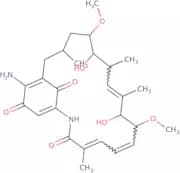
CAS:7-Descarbamoyl 17-amino geldanamycin is a semi-synthetic derivative of the benzoquinone ansamycin antibiotic geldanamycin, which is naturally produced by the bacterium *Streptomyces hygroscopicus*. As an inhibitor of the Heat Shock Protein 90 (Hsp90), it targets this molecular chaperone crucial for the stability and function of numerous oncoproteins. By inhibiting Hsp90, 7-Descarbamoyl 17-amino geldanamycin disrupts protein folding processes, leading to the degradation of client proteins and subsequent disruption of cell signaling pathways involved in tumor growth and survival.Fórmula:C27H38N2O7Pureza:Min. 95%Peso molecular:502.6 g/molVancomycin CDP-1
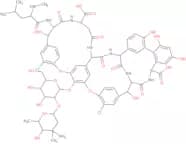
CAS:<p>Vancomycin CDP-1 is a degradation product of vancomycin with no direct therapeutic action but used in research for analytical method development and validation.</p>Fórmula:C66H74Cl2N8O25Pureza:Min. 95%Cor e Forma:PowderPeso molecular:1,450.24 g/molNarasin
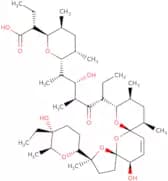
CAS:<p>Narasin is an ionophore antibiotic, which is a fermentation product derived from certain strains of the bacterium *Streptomyces aureofaciens*. It functions by disrupting the ion gradients across cell membranes, specifically facilitating the transport of sodium and potassium ions. This action interferes with the energy metabolism of certain pathogenic microorganisms, rendering them unable to proliferate effectively.</p>Fórmula:C43H72O11Pureza:Min. 95%Peso molecular:765.03 g/molSulbenicillin
CAS:<p>Sulbenicillin is a semi-synthetic penicillin antibiotic, which is derived from 6-aminopenicillanic acid, a natural precursor in the biosynthesis of penicillins. With its beta-lactam structure, Sulbenicillin disrupts bacterial cell wall synthesis by inhibiting penicillin-binding proteins, which are essential enzymes in the cross-linking of peptidoglycan layers. This disruption compromises the structural integrity of the bacterial cell wall, resulting in cell lysis and death, particularly in Gram-negative bacteria.</p>Fórmula:C16H18N2O7S2Pureza:Min. 95%Peso molecular:414.46 g/molSulfadiazine-d4
CAS:<p>Sulfadiazine-d4 is an isotopically labeled antibiotic, which is a derivative of sulfadiazine containing four deuterium atoms. This compound is synthesized using advanced chemical techniques to replace hydrogen atoms with deuterium in the molecular structure. The mechanism of action involves inhibition of bacterial dihydropteroate synthase, an enzyme critical in the folate synthesis pathway. By preventing the production of folic acid, sulfadiazine-d4 effectively halts bacterial growth and replication.</p>Fórmula:C10H6D4N4O2SPureza:Min. 95%Peso molecular:254.3 g/mol