


Heterociclos com Nitrogénio (N)
Nesta categoria, você encontrará uma grande variedade de heterociclos contendo nitrogênio. Heterociclos são cadeias de carbono que formam um ciclo em que pelo menos uma posição é ocupada por um heteroátomo, neste caso, o nitrogênio. Esses compostos são essenciais na síntese de produtos farmacêuticos, agroquímicos e corantes, oferecendo reatividade e estabilidade únicas. Na CymitQuimica, oferecemos uma seleção abrangente de heterociclos contendo nitrogênio de alta qualidade para apoiar suas pesquisas e aplicações industriais.
Subcategorias de "Heterociclos com Nitrogénio (N)"
- Azepano(434 produtos)
- Benzotriazóis(436 produtos)
- Diazepinas(331 produtos)
- Imidazóis(4.006 produtos)
- Imidazolinas(385 produtos)
- Isoxazol(1.077 produtos)
- Piperazinas(3.735 produtos)
- Piperidinas(8.398 produtos)
- Pirazinas(1.299 produtos)
- Pirazol(5.919 produtos)
- Pirazolidina(21 produtos)
- Pirazolina(142 produtos)
- Piridazina(856 produtos)
- Piridinas(21.911 produtos)
- Pirimidina(6.038 produtos)
- Pirróis(2.440 produtos)
- Pirrolidinas(5.814 produtos)
- Pirrolina(48 produtos)
- Pirrolo[1,2-b]piridazina(10 produtos)
- Tetrazola(510 produtos)
- Triazinas(462 produtos)
- Triazolas(1.679 produtos)
Exibir 14 mais subcategorias
Foram encontrados 17855 produtos de "Heterociclos com Nitrogénio (N)"
Ordenar por
Pureza (%)
0
100
|
0
|
50
|
90
|
95
|
100
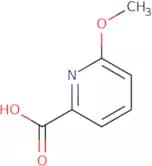
2-Methoxy-6-picolinic acid
CAS:<p>2-Methoxy-6-picolinic acid (2MPA) is a picolinate that has been shown to be an effective catalyst for the conversion of alcohols into allylic alcohols. 2MPA is able to catalyze the reaction by abstracting hydrogen from the carbonyl group, and then adding it to the adjacent carbon. This reaction can produce peroxide as a byproduct, which is subsequently hydrolyzed to form water and alcohol. The β-unsaturated carbonyl group of 2MPA provides additional stability for this catalytic process.<br>2MPA can also be used as a catalyst in other reactions, such as the oxidation of benzylic alcohols with hydrogen peroxide to form benzylic carbonyl compounds.</p>Fórmula:C7H7NO3Pureza:Min. 95%Cor e Forma:PowderPeso molecular:153.14 g/mol2,5-Dibromo-3-aminopyrazine
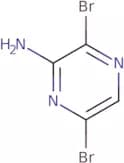
CAS:<p>2,5-Dibromo-3-aminopyrazine is an experimental drug with anticancer activity. It has been shown to have a high affinity for DNA and inhibit the growth of tumor cells in vivo. 2,5-Dibromo-3-aminopyrazine has undergone stability tests in vivo and in vitro and also completed clinical trials. This drug binds to DNA and inhibits the enzyme protein kinase C, leading to suppression of cellular proliferation. The pharmacokinetics of this drug were evaluated by measuring the concentration of 2,5-dibromo-3-aminopyrazine in plasma after oral administration to mice. This study found that the maximum concentration was achieved at 1 hour post dose and that there was a decrease in concentration over time. The drug has been shown to bind to the dimethoxybenzene metabolic pathway, which is involved in regulating cell proliferation.<br>2,5-Dibromo-3-aminopyrazine</p>Fórmula:C4H3Br2N3Pureza:Min. 95%Cor e Forma:PowderPeso molecular:252.89 g/mol3-(cis-4-(2-(4-(2,3-Dichlorophenyl)piperazin-1-yl)ethyl)cyclohexyl)-1,1-dimethylurea
CAS:<p>Please enquire for more information about 3-(cis-4-(2-(4-(2,3-Dichlorophenyl)piperazin-1-yl)ethyl)cyclohexyl)-1,1-dimethylurea including the price, delivery time and more detailed product information at the technical inquiry form on this page</p>Fórmula:C21H32Cl2N4OPureza:Min. 95%Peso molecular:427.41 g/molGSK3008348 monohydrochloride
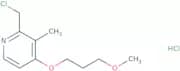
CAS:<p>Please enquire for more information about GSK3008348 monohydrochloride including the price, delivery time and more detailed product information at the technical inquiry form on this page</p>Fórmula:C29H37N5O2•HClPureza:Min. 95%Peso molecular:524.1 g/mol2-Chloromethyl-4-(3-methoxypropoxy)-3-methylpyridine hydrochloride
CAS:<p>Please enquire for more information about 2-Chloromethyl-4-(3-methoxypropoxy)-3-methylpyridine hydrochloride including the price, delivery time and more detailed product information at the technical inquiry form on this page</p>Fórmula:C11H17Cl2NO2Pureza:Min. 95%Peso molecular:266.16 g/mol4-{[4-(4-Methyloxyphenyl)-piperazin-1-yl]-phenyl}-2,4-dihydro-[1,2,4]-triazol-3-one
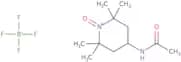
CAS:<p>Please enquire for more information about 4-{[4-(4-Methyloxyphenyl)-piperazin-1-yl]-phenyl}-2,4-dihydro-[1,2,4]-triazol-3-one including the price, delivery time and more detailed product information at the technical inquiry form on this page</p>Fórmula:C19H21N5O2Pureza:Min. 95%Peso molecular:351.4 g/molBobbitt's salt
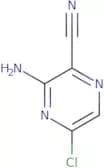
CAS:<p>4-Acetamido-2,2,6,6-tetramethyl-1-oxopiperidinium tetrafluoroborate, most commonly known as Bobbitt's salt, is a cheap and benign oxidant. It’s an oxoamonium salt that is used in oxidative cleveage of C-C and C-O bonds. The most common application of Bobbitt's salts is as a catalyst for the synthesis of dimethylbenzoquinones or DMBQs.</p>Fórmula:C11H21BF4N2O2Pureza:Min. 95%Cor e Forma:Red PowderPeso molecular:300.1 g/mol3-Amino-5-chloropyrazine-2-carbonitrile
CAS:<p>Please enquire for more information about 3-Amino-5-chloropyrazine-2-carbonitrile including the price, delivery time and more detailed product information at the technical inquiry form on this page</p>Fórmula:C5H3ClN4Pureza:Min. 95%Peso molecular:154.56 g/mol(2R,4R)-1-[(2S)-5-Amino-1-oxo-2-[[(1,2,3,4-tetrahydro-3-methyl-8-quinolinyl)sulfonyl]amino]pentyl]-4-methyl-2-piperidinecarboxylic a cid
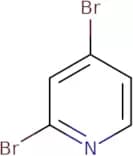
CAS:<p>Please enquire for more information about (2R,4R)-1-[(2S)-5-Amino-1-oxo-2-[[(1,2,3,4-tetrahydro-3-methyl-8-quinolinyl)sulfonyl]amino]pentyl]-4-methyl-2-piperidinecarboxylic a cid including the price, delivery time and more detailed product information at the technical inquiry form on this page</p>Fórmula:C22H34N4O5SPureza:Min. 95%Peso molecular:466.6 g/mol2,4-Dibromopyridine
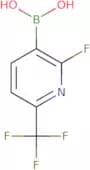
CAS:<p>2,4-Dibromopyridine is a brominated derivative of pyridine. It is synthesized through the substitution of two bromine atoms for two hydrogens on the pyridine ring. This synthesis can be achieved by disubstitution or cross-coupling reactions. The reaction products are nucleophilic and react with electrophiles to produce substitution products. The reaction mechanism is thought to involve a six-membered transition state, which has been observed using X-ray absorption spectroscopy.</p>Fórmula:C5H3Br2NPureza:Min. 95%Cor e Forma:White To Off-White SolidPeso molecular:236.89 g/mol2-Fluoro-6-(trifluoroMethyl)pyridine-3-boronic acid
CAS:<p>Please enquire for more information about 2-Fluoro-6-(trifluoroMethyl)pyridine-3-boronic acid including the price, delivery time and more detailed product information at the technical inquiry form on this page</p>Fórmula:C6H4BF4NO2Pureza:Min. 95%Peso molecular:208.91 g/molPiperonyl acetone
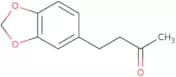
CAS:Produto Controlado<p>Piperonyl acetone is an organic solvent that has been shown to have an anti-aging effect on skin cells. It inhibits the growth of bacteria by binding to the carbonyl group in the molecule and preventing them from producing proteins, which are needed for cell division. Piperonyl acetone has been shown to be a good deodorizer, with a target pest of insects. This agent also has a high boiling point and can be used as an organic solvent in analytical toxicology. Piperonyl acetone is metabolized into piperonal and ethanol extracts when it is administered orally or intravenously. Piperonyl acetone may interact with certain drugs; therefore, it should be taken with caution if you are taking other medications.</p>Fórmula:C11H12O3Pureza:Min. 95%Cor e Forma:White PowderPeso molecular:192.21 g/mol2,3-Dimethylpyrazine
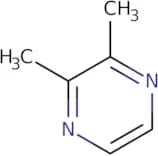
CAS:<p>2,3-Dimethylpyrazine (DMPA) is a compound that belongs to the group of fatty acid derivatives. It has been shown to enhance the transfer of hydrocarbons from water to organic solvents by reducing the surface tension. DMPA also produces hydrogen bonding interactions with ethylene diamine, which leads to increased phase equilibrium and a more efficient transfer mechanism. These interactions may be due to its structural analysis and x-ray crystal structures. The molecule is at a distance of 0.7 Å from the oxygen atoms in ethylene diamine and 2.6 Å from the hydrogen atoms in ethyl decanoate, which are both within hydrogen bond range. This proximity suggests that it will have an increased chance of interacting with these molecules compared to other compounds that do not have this ability.</p>Fórmula:C6H8N2Pureza:Min. 95%Peso molecular:108.14 g/mol1-(4-Nitrophenyl)piperazine
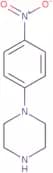
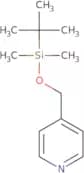
CAS:<p>1-(4-Nitrophenyl)piperazine is a nitro compound with a molecular weight of 147.2. It is soluble in DMSO and ethanol, but not in water. 1-(4-Nitrophenyl)piperazine has the ability to absorb ultraviolet radiation (UV) and it can be used as a UV-absorbing agent in plastics. 1-(4-Nitrophenyl)piperazine can also be used as an intermediate for the synthesis of triazole antifungal agents. The molecule has been shown to have high values at magnetic resonance spectroscopy (NMR). The crystal structure of 1-(4-nitrophenyl)piperazine was determined by x-ray diffraction data and molecular modeling techniques. This molecule's melting point was determined by titration calorimetry, which showed that its melting point is around 195 degrees Celsius.br> 1-(4-Nitrophenyl)piper</p>Fórmula:C10H13N3O2Pureza:Min. 95%Peso molecular:207.23 g/mol4-(tert-Butyldimethylsilyloxymethyl)pyridine
CAS:<p>4-(tert-Butyldimethylsilyloxymethyl)pyridine is a reagent that is used to prepare stoichiometric quantities of triethyloxonium ions in the presence of catalytic amounts of palladium. 4-(tert-Butyldimethylsilyloxymethyl)pyridine is also used as an anticancer agent, which may be due to its ability to inhibit cell proliferation and induce apoptosis. This compound has been shown to prevent the growth of micellar structures and reduce the rate of ester hydrolysis. It also has the ability to convert into two enantiomers, one with a hydroxyl group on the methylene carbon at position 4 and another with an alcohol group on this same carbon.</p>Fórmula:C12H21NOSiPureza:Min. 95%Cor e Forma:Yellow LiquidPeso molecular:223.39 g/molD-Carnosine trifluoroacetate
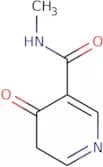
CAS:<p>Please enquire for more information about D-Carnosine trifluoroacetate including the price, delivery time and more detailed product information at the technical inquiry form on this page</p>Fórmula:C9H14N4O3•(C2HF3O2)xPureza:Min. 95%N-Methyl-4-oxo-4,5-dihydropyridine-3-carboxamide
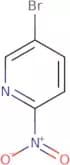
CAS:<p>N-Methyl-4-oxo-4,5-dihydropyridine-3-carboxamide is a fine chemical that can be used as a reagent or intermediate. It is a versatile building block that can be used in the production of useful scaffolds or useful intermediates. This compound has been shown to react with many different types of chemicals, including alcohols and amines. N-Methyl-4-oxo-4,5-dihydropyridine-3-carboxamide can also be used as a reaction component in the synthesis of diverse compounds.</p>Fórmula:C7H8N2O2Pureza:Min. 95%Cor e Forma:White to grey solid.Peso molecular:152.15 g/mol5-Bromo-2-nitropyridine
CAS:<p>5-Bromo-2-nitropyridine is a hydrogen bond donor. It is an organic molecule with the chemical formula C5H5BrN3. The compound has been used in the synthesis of other molecules, such as nicotinic acetylcholine and mitochondrial membrane potential inhibitors. 5-Bromo-2-nitropyridine is also a good candidate for cancer treatment due to its ability to inhibit cell cycle progression at G2/M phase. 5-Bromo-2-nitropyridine can be synthesized by reacting 2,4,6-trinitrobenzenesulfonic acid with bromine and potassium carbonate in a reaction vessel at 200 °C for about 30 minutes.</p>Fórmula:C5H3BrN2O2Cor e Forma:PowderPeso molecular:202.99 g/mol4-Aminopicolinic acid
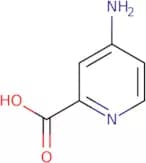
CAS:<p>4-Aminopicolinic acid is a synthetic amine that has been shown to activate plant science. 4-Aminopicolinic acid is a cyclic peptide with two subunits, one of which is 4-amino-3-pyridinecarboxylic acid. This compound has been synthesized from picolinic acid, an agriculturally important compound that is found in plant and animal tissues. The synthesis of 4-aminopicolinic acid involves the reaction of picolinic acid with nitrous oxide, followed by hydrolysis and oxidation to form the desired product. Hplc analyses have confirmed the presence of picolinic acid in extracts from various plants containing this compound.</p>Fórmula:C6H6N2O2Pureza:Min. 95%Cor e Forma:White To Beige Or Pink To Light Brown SolidPeso molecular:138.12 g/mol4-Hydroxy-6-mercaptopyrazolo[3,4-d]pyrimidine
CAS:<p>4-Hydroxy-6-mercaptopyrazolo[3,4-d]pyrimidine is a pyrimidine compound that is a competitive inhibitor of xanthine oxidase (XO) with an IC50 of 0.5 μM. It binds reversibly to the XO enzyme and reverses the effect of the enzyme, thereby inhibiting the production of uric acid. 4-Hydroxy-6-mercaptopyrazolo[3,4-d]pyrimidine does not bind to any other enzymes in the body or affect serum protein levels, which makes it an ideal drug for patients with gout who are at risk for developing renal failure. The drug has been shown to be effective in animal models and is currently undergoing clinical trials in humans.</p>Fórmula:C5H4N4OSPureza:Min. 95%Cor e Forma:PowderPeso molecular:168.18 g/mol

![4-{[4-(4-Methyloxyphenyl)-piperazin-1-yl]-phenyl}-2,4-dihydro-[1,2,4]-triazol-3-one](/_next/image/?url=https%3A%2Fstatic.cymitquimica.com%2Fproducts%2F3D%2Fthumb-webp%2FFM25920.webp&w=3840&q=75)
![(2R,4R)-1-[(2S)-5-Amino-1-oxo-2-[[(1,2,3,4-tetrahydro-3-methyl-8-quinolinyl)sulfonyl]amino]pentyl]…](/_next/image/?url=https%3A%2Fstatic.cymitquimica.com%2Fproducts%2F3D%2Fthumb-webp%2FFA182661.webp&w=3840&q=75)
![4-Hydroxy-6-mercaptopyrazolo[3,4-d]pyrimidine](/_next/image/?url=https%3A%2Fstatic.cymitquimica.com%2Fproducts%2F3D%2Fthumb-webp%2FFH09751.webp&w=3840&q=75)